
Galvanic Corrosion and Fastener Selection for Color-Coated Aluminum Roofing
The choice of fastener material directly dictates the long-term structural integrity of color-coated aluminum roofing panels by mitigating or accelerating galvanic corrosion. When two dissimilar metals contact each other in the presence of an electrolyte (such as rainwater or coastal moisture), a galvanic cell is formed.
Stainless steel fasteners (specifically Grade 304 or 316) are the industry standard because their electrochemical potential is relatively close to aluminum, and their passive oxide layer significantly restricts electron transfer, limiting localized galvanic degradation.
Conversely, galvanized steel fasteners rely on a sacrificial zinc coating; once this thin zinc layer consumes itself through atmospheric exposure, the underlying carbon steel directly contacts the aluminum panel. This triggers rapid, aggressive galvanic corrosion of the aluminum matrix surrounding the fastener hole, leading to premature structural failure, coating delamination, and water ingress.
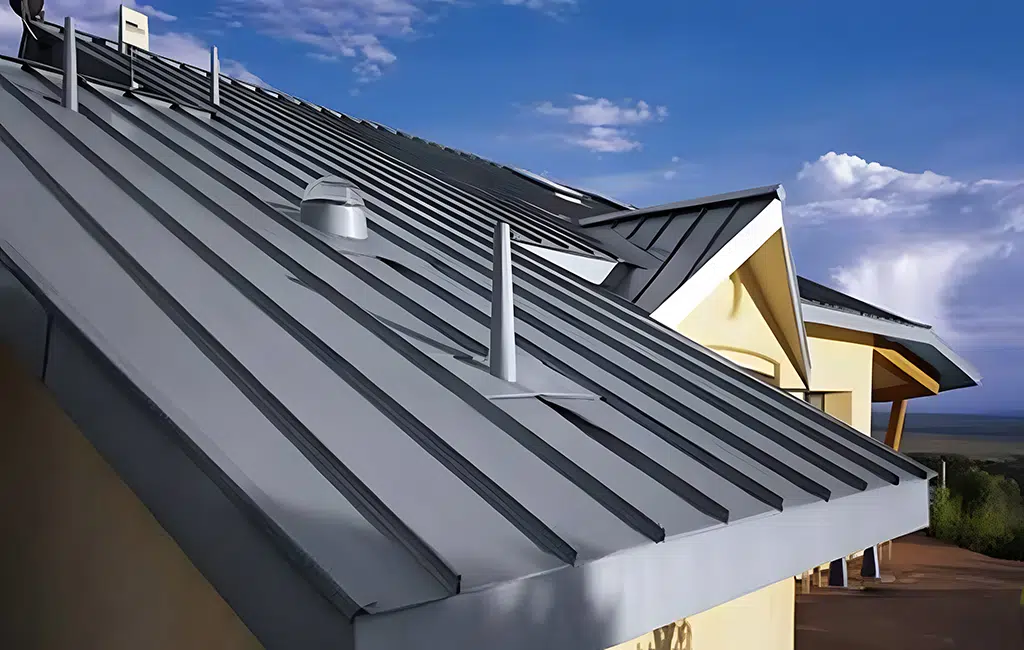
Technical Parameter Matrix: Fastener Compatibility with Color Aluminum
The following matrix outlines the electrochemical, mechanical, and performance metrics of different fastener materials when paired with standard architectural color-coated aluminum alloy panels.
| Technical Parameter | 316 Stainless Steel Fasteners | 304 Stainless Steel Fasteners | Hot-Dip Galvanized Steel Fasteners |
| Compatible Aluminum Alloys | 5052, 5754, 5083 (Marine/Industrial) | 3003, 3004, 3105 (Standard Architectural) | 1100, 3003 (Mild Environments Only) |
| Electrochemical Potential Difference (ΔV) | ~0.15 V to 0.20 V (Highly Compatible) | ~0.18 V to 0.23 V (Compatible) | >0.50 V (Once zinc layer depletes) |
| Recommended Coating System | PVDF (25 μm to 30 μm) / FEVE | PVDF (25 μm) / High-Durability Polyester (HDP) | Polyester (PE) / Silicone Modified Polyester (SMP) |
| Salt Spray Resistance (ASTM B117) | 3,000 Hours (No red rust) | 1,500 Hours (No red rust) | 400 – 800 Hours (Until zinc depletion) |
| UV & Weathering Exposure (ISO 4892-3) | Outstanding; no impact on fastener integrity | Excellent; stable performance | Moderate; zinc oxidation yields white rust |
| Color Retention Rate of Adjacent Aluminum | 95% after 10 years (No bleeding stains) | 92% after 10 years (Minimal staining) | <70% after 5 years (Severe rust bleeding) |
| Primary Application Scenarios | Coastal facades, chemical plants, offshore roofing | Commercial curtain walls, industrial roofing | Temporary structures, low-humidity inland warehouses |
Mechanics of Galvanic Corrosion in Roofing Assemblies
PVDF Coated Color Aluminum Substrates
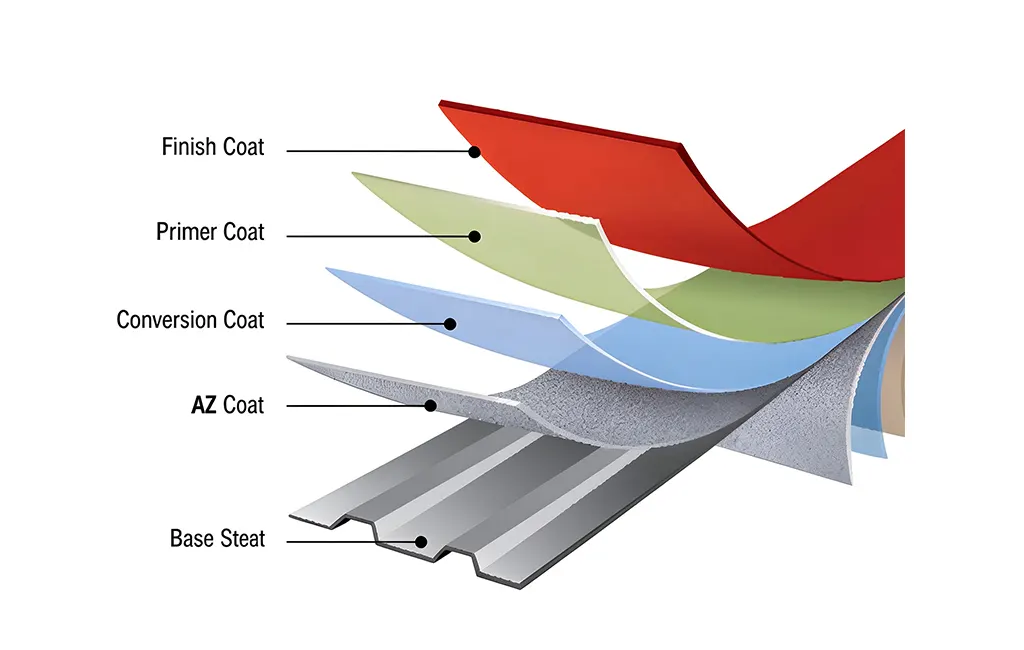
Architectural roofing panels typically utilize 3000 series (Al-Mn) or 5000 series (Al-Mg) aluminum alloys because of their inherent formability and high strength-to-weight ratios. In high-performance B2B applications, these alloys undergo a chemical pre-treatment process (such as chromating or chrome-free conversion) before receiving a premium Polyvinylidene Fluoride (PVDF) Coating compliant with AAMA 2605.
The PVDF layer acts as a primary dielectric barrier, preventing external moisture from acting as an electrolyte. However, the installation of fasteners creates an intentional penetration point, exposing the internal aluminum matrix.
The Stainless Steel Passivation Advantage
When a Grade 304 or 316 stainless steel fastener is driven into a color-coated aluminum panel, a galvanic couple is technically established. However, stainless steel undergoes immediate self-passivation, forming a microscopic chromium oxide (Cr₂O₃) film. This film possesses high electrical resistance. Because the surface kinetic activity of the passive stainless steel is heavily restricted, the galvanic current density remains remarkably low.
Furthermore, the unfavorable area ratio (a small stainless steel cathode coupled with a massive aluminum anode panel) naturally dilutes the corrosive current, ensuring that the aluminum around the borehole retains its structural properties without localized pitting or strength loss over decades of outdoor exposure.
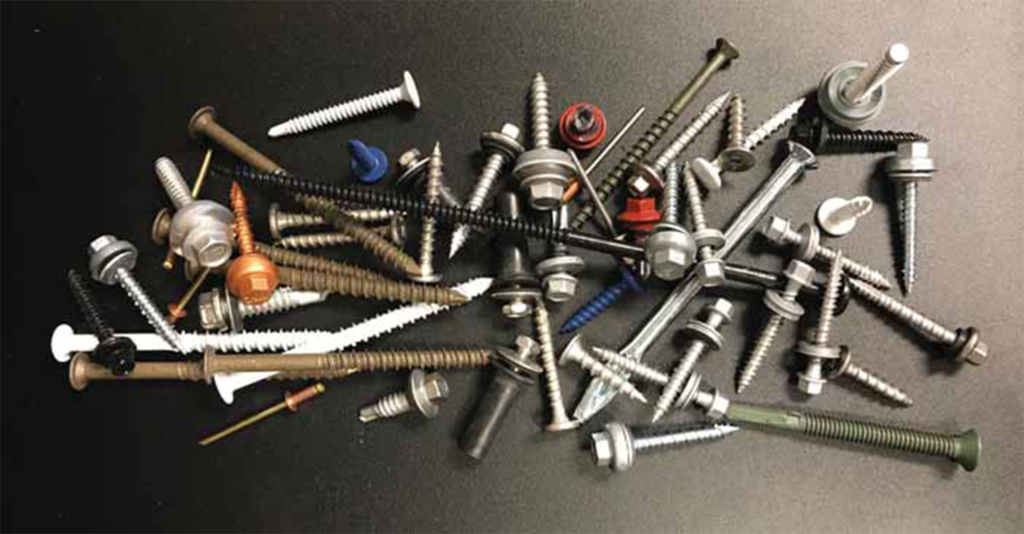
The Galvanized Steel Degradation Cycle
Galvanized steel fasteners introduce a multi-stage degradation risk when paired with color aluminum:
- Phase 1 (Sacrificial Zinc Action): Initially, the zinc coating on the galvanized fastener acts as an anode relative to both the underlying steel and the adjacent aluminum panel. The zinc sacrifices itself to protect the surrounding system.
- Phase 2 (Zinc Depletion): Due to the thin profile of typical mechanical zinc platings (5 μm – 15 μm), atmospheric weathering and acid rain rapidly deplete the zinc layer. This depletion is accelerated in industrial environments categorized under ISO 9223 Category C4 or C5.
- Phase 3 (Aggressive Galvanic Attack): Once the zinc is gone, bare carbon steel is exposed. Carbon steel possesses a significantly more noble potential than aluminum. The aluminum roofing panel now becomes the sacrificial anode to the carbon steel screw.
This leads to localized galvanic current concentration, breaking down the adhesion of the adjacent PVDF or Powder Coating. The resulting rust bleeding (Fe₂O₃) creates unsightly orange streaks, reduces color fastness, and causes severe structural thinning of the aluminum panel, culminating in catastrophic wind-uplift vulnerability.