
Factory Quality Testing for Color-Coated Aluminum Coils
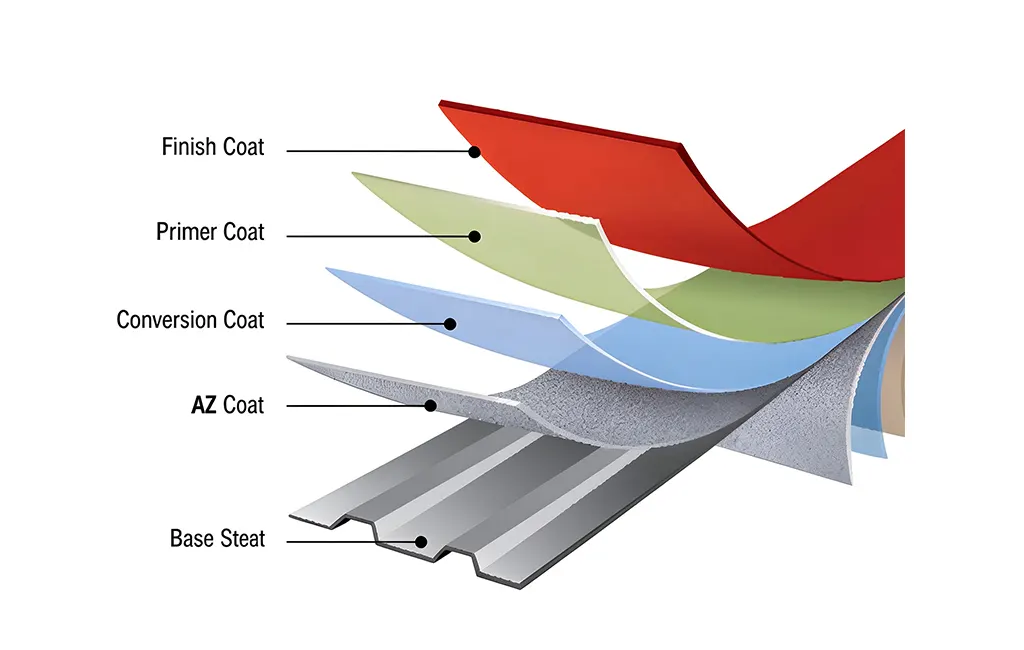
Before leaving the factory, color-coated aluminum coils must undergo rigorous quality control testing to ensure mechanical integrity, coating adhesion, and environmental durability. Industry specifications mandate a baseline protocol including Coating Thickness Verification (ISO 2360), MEK Solvent Resistance Rub Testing (ASTM D5402), T-Bend Flexibility Evaluation (ASTM D4145), Impact Resistance Testing (ASTM D2794), and Color Difference Evaluation (ASTM D2244). These tests ensure the coated substrate—typically AA3003, AA3004, or AA5052 alloys—withstands severe roll-forming, slitting, and long-term UV exposure without experiencing paint delamination, micro-cracking, or premature coating degradation.
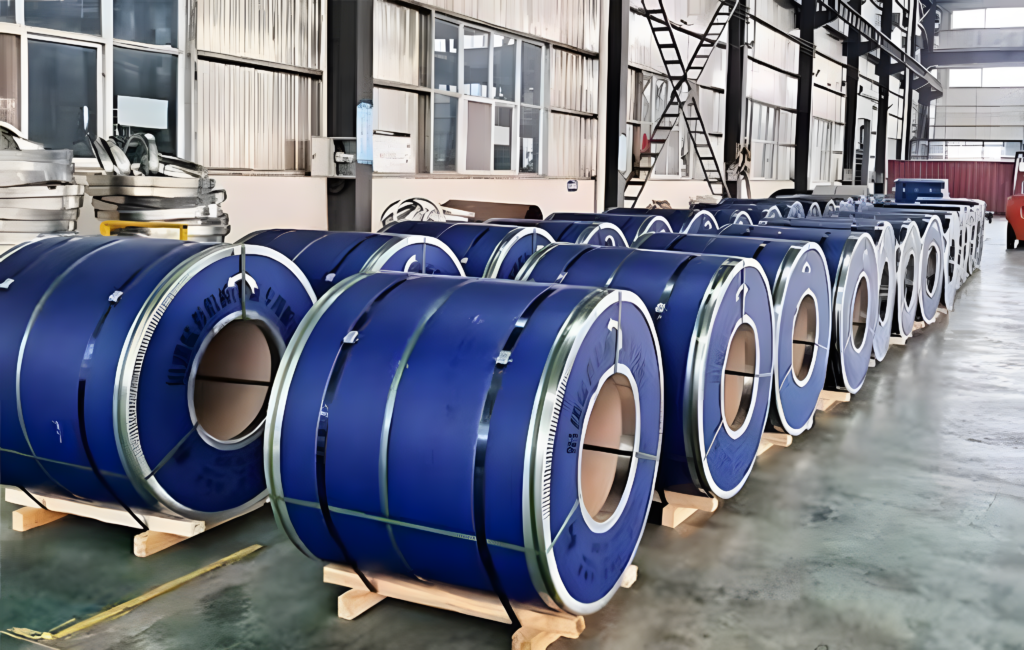
Technical Parameter Matrix: Standard Factory Quality Test Benchmarks
The following data matrix details the key quality control tests, testing standards, and compliance benchmarks for premium color-coated aluminum coils.
| Quality Test Parameter | Testing Standard | PVDF Coating Baseline | HDP Coating Baseline | PE (Polyester) Coating Baseline |
| Coating Thickness (DFT) | ISO 2360 / ASTM D7091 | Topcoat: ≥ 20 μmPrimer: 5 μm ± 1 μm | Topcoat: 15–18 μmPrimer: 5 μm ± 1 μm | Topcoat: 13–15 μmPrimer: 5 μm |
| Curing Degree (MEK Rubs) | ASTM D5402 | ≥ 100 Double Rubs (No substrate exposure) | ≥ 100 Double Rubs | ≥ 50 Double Rubs |
| Flexibility / Adhesion | ASTM D4145 (T-Bend) | ≤ 2T (No cracking, no taping loss) | ≤ 2T | ≤ 3T |
| Impact Resistance | ASTM D2794 | ≥ 9 J (No peeling or cracking) | ≥ 9 J | ≥ 7 J |
| Pencil Hardness | ASTM D3363 | ≥ 1H – 2H | ≥ F – H | ≥ F |
| Color Uniformity (ΔE) | ASTM D2244 / Hunter | ΔE ≤ 0.5 (Intra-batch variation) | ΔE ≤ 0.8 | ΔE ≤ 1.0 |
| Gloss Level (60° Geometric) | ASTM D523 | 25% – 35% (Or per client spec ±5%) | 30% – 40% | 30% – 60% |
Atomic Testing Breakdown: Coating Adhesion and Formability
The Crucial Role of T-Bend Testing in B2B Profiling
For industrial roofing and architectural sandwich panel manufacturers, the T-Bend test (ASTM D4145) is a vital metric. During the cold roll-forming process, the color-coated aluminum profile undergoes extreme mechanical deformation along its ribs and corners.
If the coating film lacks matching elasticity, micro-fissures develop along the bend line. These micro-cracks act as entry points for atmospheric moisture and industrial pollutants (SO₂), causing localized filiform corrosion and rapid paint delamination. A standard rating of ≤ 2T guarantees that the coating retains sufficient molecular elongation to handle heavy machinery processing without structural fracturing.
MEK Solvent Rubbing and Curing Kinetics
The MEK double rub test (ASTM D5402) acts as a direct indicator of PMT (Peak Metal Temperature) accuracy inside the curing oven. If the aluminum coil passes through the oven too quickly, or if the temperature zoning is incorrect, the organic resin matrix (such as 70% Kynar 500 PVDF) fails to achieve full cross-linking. Under-cured coatings exhibit low hardness, poor chemical resistance, and accelerated chalking under outdoor UV light. If a sample shows softening or substrate exposure under 100 double rubs, the coil must be rejected due to incomplete curing kinetics.

Advanced Destructive and Environmental Performance Testing
While mechanical tests are performed on every production lot, random batch validation requires rigorous simulated environmental testing to ensure long-term E-E-A-T (Experience, Expertise, Authoritativeness, Trustworthiness) compliance.
Accelerated Corrosion and Salt Spray Verification
Representative panels undergo continuous salt spray testing per ASTM B117 or ISO 9227 for a minimum duration of 3,000 to 4,000 hours for high-performance architectural specifications (such as AAMA 2605-20). After exposure, technicians check the panel for creep or blistering around a scribed line.
- Compliance Criteria: The blistering density must not exceed size 8, crew group 1 per ASTM D714, and corrosion creepage from the scribe line must remain < 1 mm, verifying that the chemical pre-treatment (e.g., Titanium-Zirconium conversion coating) provides excellent interfacial bonding.
Humidity and Water Resistance Testing
To safeguard against coating degradation from tropical humidity or water ponding, sample sheets are loaded into a cyclic condensation chamber per ASTM D2247 at 100% relative humidity and 40°C. The tested panels must exhibit zero blistering, wrinkling, or softening after 3,000 hours of continuous exposure, confirming that the primer coat offers long-term resistance to water vapor transport.