
Technical Evaluation: Long-Term Color Fastness of PVDF Coated Aluminum Coil Under Solar Radiation
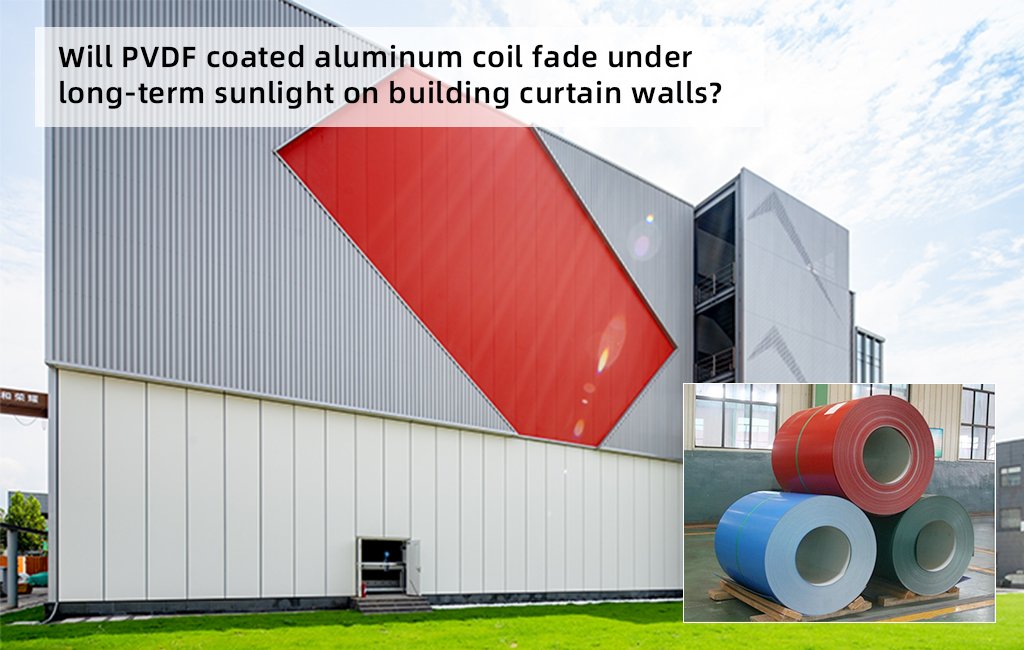
PVDF (Polyvinylidene Fluoride) coated aluminum coil experiences minimal, clinically measured color fading over extended outdoor exposure due to its strong chemical bonds. High-performance exterior coatings formulated with 70% PVDF resin (Kynar 500® / Hylar 5000®) blended with 30% acrylic resin resist degradation from ultraviolet (UV) radiation, atmospheric moisture, and chemical pollutants. Under standard environmental conditions, a properly applied 25–30μm PVDF coating retains over 85–90% of its original color and gloss for 20 to 30 years, typically yielding a total color change (ΔE) of less than 5 units (NBS) per AAMA 2605 testing standards.
Technical Parameter & Performance Comparison Matrix
The following data matrix compares PVDF against alternative exterior coil coatings applied to architectural aluminum alloys (e.g., AA 3003-H24 or AA 5052-H32).
| Performance Criteria | 70% PVDF Coating (2-Coat/3-Coat) | High-Durable Polyester (HDP) | Standard Polyester (PE) | Anodized Aluminum (Class I) |
| Coating Thickness (μm) | 25 – 35 | 20 – 25 | 15 – 20 | 18 – 25 (Oxide Film) |
| UV Resistance (QUV-A 340nm) | > 4,000 Hours | 2,000 Hours | 1,000 Hours | N/A (Inorganic) |
| Salt Spray Test (ASTM B117) | > 3,000 Hours | 1,500 Hours | 1,000 Hours | > 3,000 Hours |
| Color Retention Rate (20 Yrs) | > 85% | 65% – 70% | < 50% | > 90% |
| Color Variance Limit (ΔE) | ≤ 5.0 Units (20 Yrs) | ≤ 5.0 Units (10 Yrs) | > 5.0 Units (5 Yrs) | ≤ 3.0 Units (20 Yrs) |
| Operating Temp. Range (°C) | -50°C to +150°C | -30°C to +100°C | -20°C to +80°C | -50°C to +200°C |
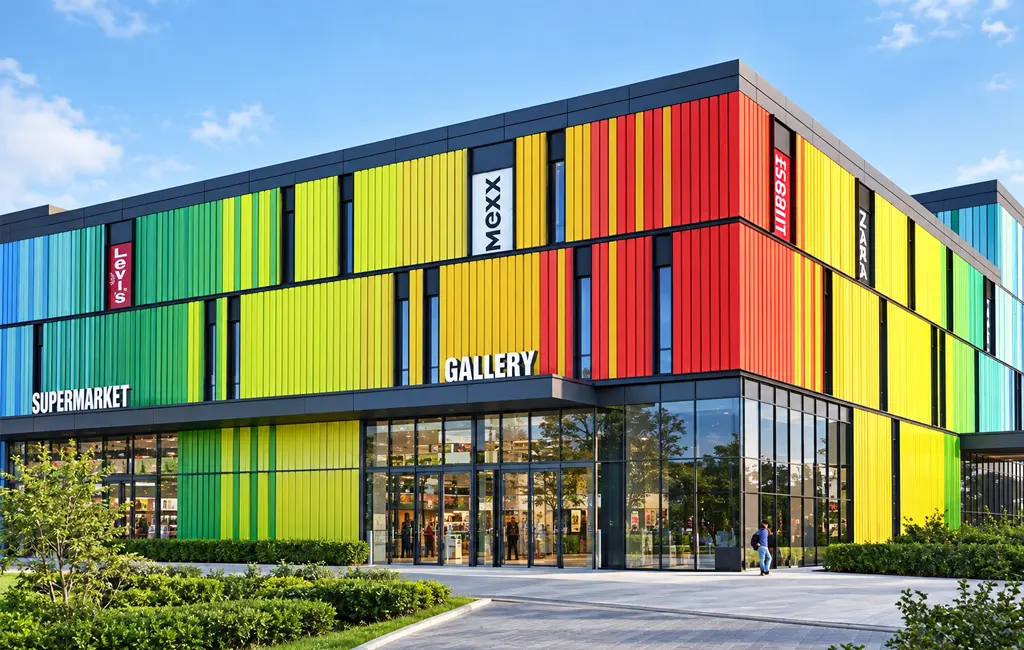
| Primary Architectural Use | Commercial Curtain Walls, High-Rises, Airports | Low-Rise Commercial, Roofing | Interior Panels, Residential Accessories | Institutional Facades, Premium Framing |
Technical Factors Influencing PVDF Coating Weatherability
Carbon-Fluorine (C-F) Molecular Bond Stability
The superior fade resistance of PVDF coatings stems from the molecular structure of Polyvinylidene Fluoride. The Carbon-Fluorine (C-F) bond energy is approximately 485 kJ/mol, which significantly exceeds the energy delivered by terrestrial ultraviolet radiation (UV-A and UV-B wavelengths deliver between 300–400 kJ/mol). Because UV light lacks the energy required to cleave the C-F chemical bond, the polymer binder resists photo-oxidation, chain scission, and chalking over decades of sunlight exposure.
Inorganic Ceramic Pigments
Color stability depends equally on the pigment systems integrated into the liquid coating. Architectural-grade PVDF coil coatings utilize Complex Inorganic Color Pigments (CICPs), such as mixed metal oxides (e.g., cobalt aluminate blue, chromium iron oxide brown). Unlike organic pigments (which break down under UV exposure), CICPs exhibit thermal stability above 800°C, zero chemical reactivity to atmospheric ozone or acid rain, and resistance to color shifting.
Pre-treatment and Multi-Coat Systems
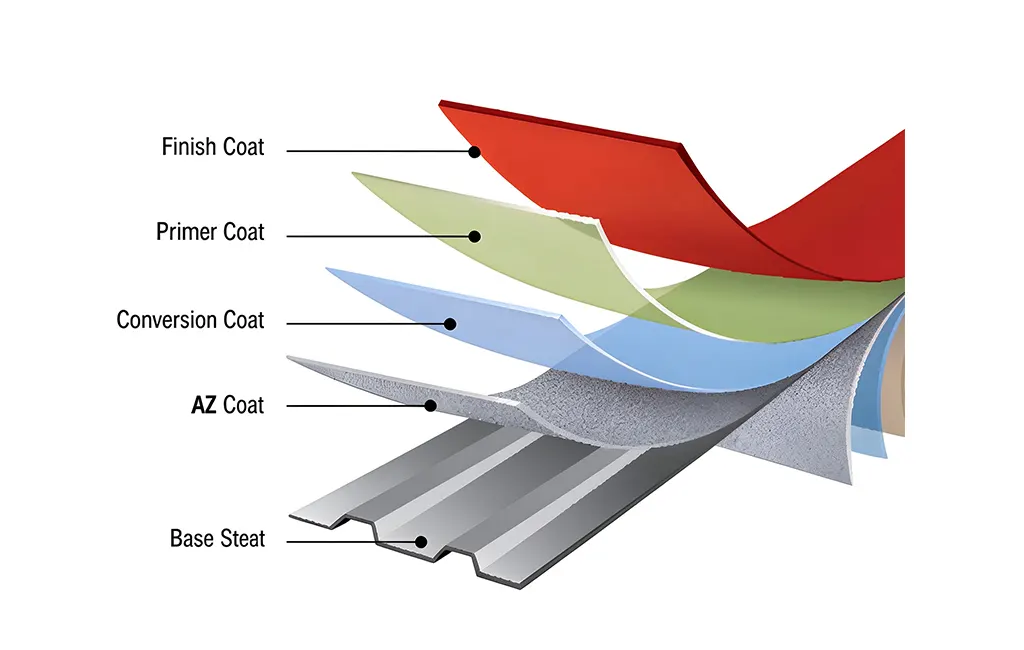
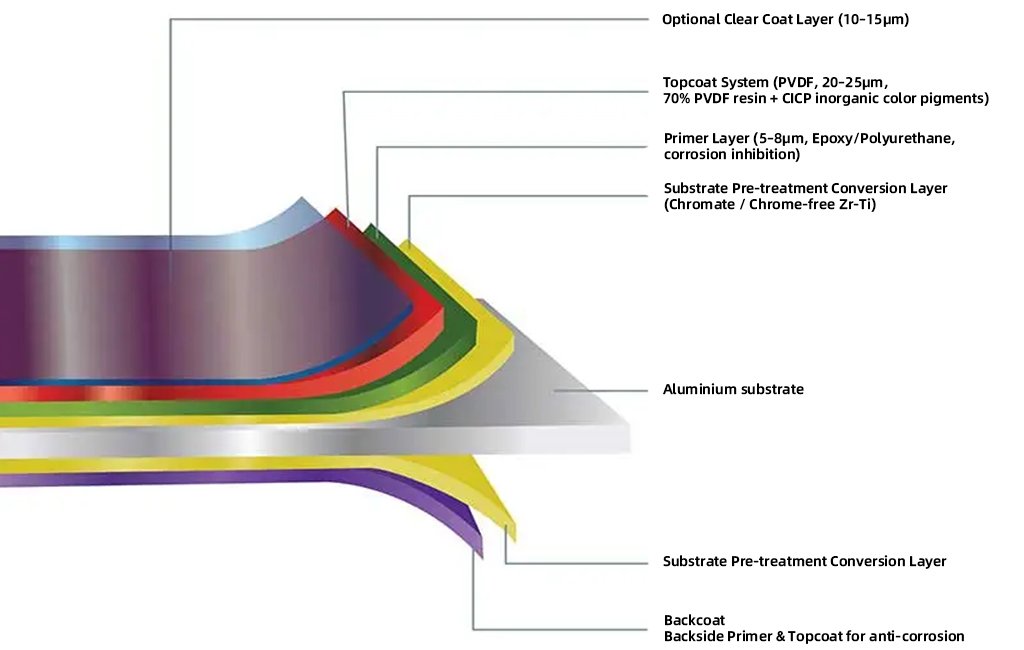
Long-term performance relies on a controlled coil coating line process involving three structural layers:
- Substrate Pre-treatment: Conversion coatings (Chromate or Non-Chromate Zirconium/Titanium) ensure adhesion and prevent sub-film corrosion.
- Primer Layer (5–8μm): Epoxy or polyurethane primer provides corrosion inhibition and flexible bonding between the metal and topcoat.
- Topcoat Layer (20–25μm): The 70% PVDF resin system containing CICP pigments protects against solar radiation.
- Clear Coat Layer (10–15μm, Optional 3-Coat System): Added for metallic/mica finishes to prevent pigment oxidation.