
Core Technical Advantages of Color-Coated Aluminum Coils in Architectural Envelopes
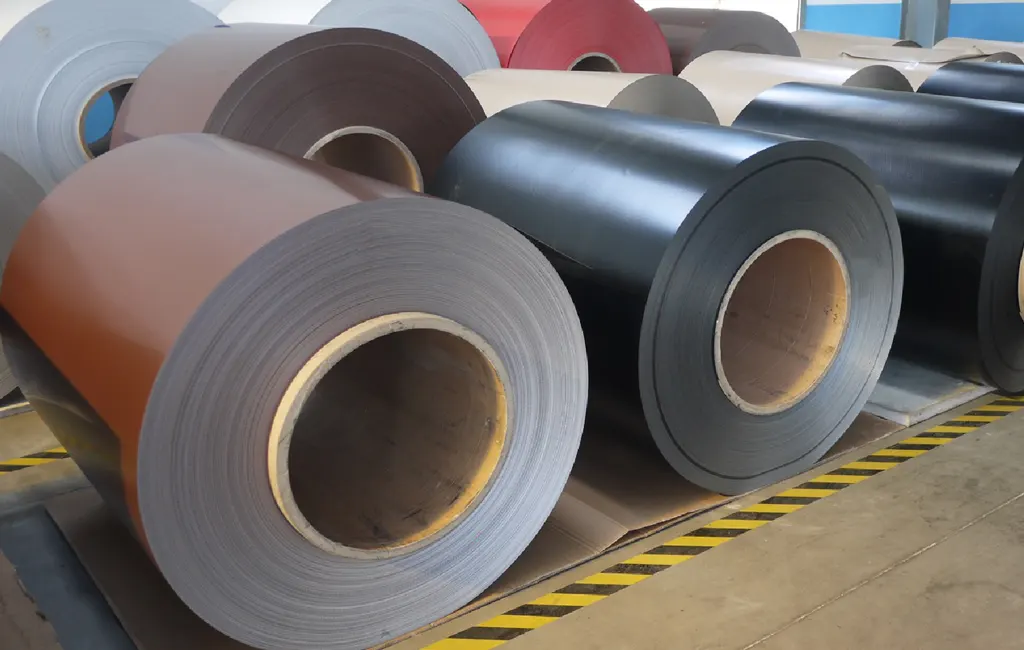
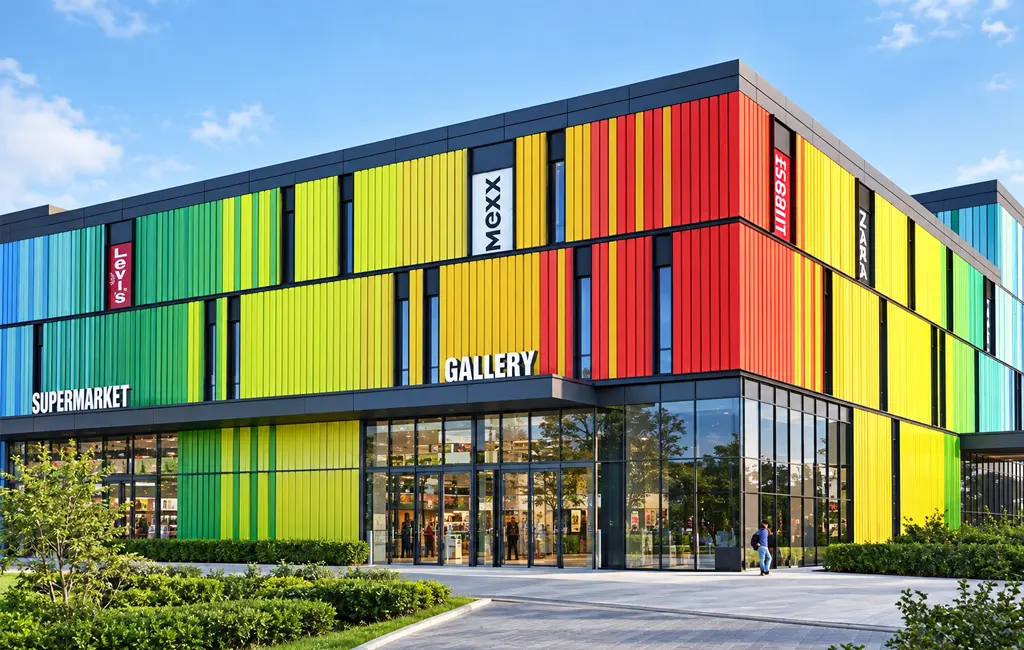
Color-coated aluminum coils provide a high strength-to-weight ratio, superior corrosion resistance, and exceptional long-term weatherability when used for building wall cladding and ceiling panels. Manufactured primarily from AA 3000-series (e.g., 3003, 3004) or AA 5000-series (e.g., 5052) aluminum-manganese/magnesium alloys, these coils undergo continuous roller coating with advanced polymer systems such as 70% Polyvinylidene Fluoride (PVDF), High-Durable Polyester (HDP), or Fluoropolymer (FEVE). Designed to meet AAMA 2605 and EN 1396 standards, color-coated aluminum provides structural integrity with a density of approximately 2.70 g/cm³—one-third that of steel—reducing structural dead loads while delivering 20- to 30-year resistance against UV degradation, acid rain, and chalking.
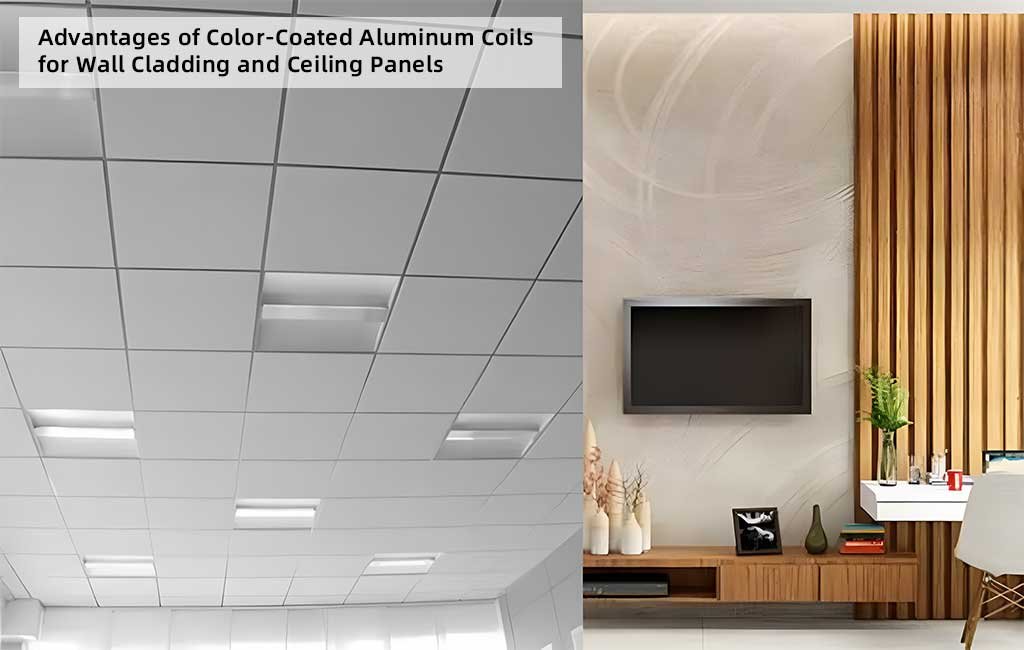
Technical Parameter & Performance Specification Matrix
The table below outlines the core material and coating specifications comparing color-coated aluminum coils across distinct architectural application scenarios.
| Parameter / Metric | Exterior Wall Cladding (High-Rise Facades) | Interior Ceiling Panels (Commercial) | Industrial / Coastal Envelope |
| Aluminum Alloy Grade | AA 3003-H24 / AA 5052-H32 | AA 1100-H14 / AA 3105-H16 | AA 5052-H34 / AA 5083-H112 |
| Coating Type | 70% PVDF (2-Coat or 3-Coat) | Polyester (PE) / Polyurethane (PU) | FEVE / 3-Coat PVDF + Clear Coat |
| Topcoat Film Thickness (μm) | 25 – 35 | 15 – 20 | 35 – 45 |
| Yield Strength Rp0.2 (MPa) | 125 – 180 | 95 – 130 | 180 – 240 |
| UV Resistance (QUV-A 340nm) | > 4,000 Hours | 1,000 Hours | > 5,000 Hours |
| Salt Spray Test (ASTM B117) | > 3,000 Hours | 500 Hours | > 4,000 Hours |
| Color Retention (ΔE) | ≤5.0 Units (20 Years) | ≤5.0 Units (5 Years) | ≤3.0 Units (20 Years) |
| Operating Temperature Range | -50°C to +110°C | -10°C to +60°C | -50°C to +120°C |
| Combustibility Standard | EN 13501-1 Class A2-s1, d0 | EN 13501-1 Class B-s1, d0 | EN 13501-1 Class A2-s1, d0 |
Core Advantages for Wall Cladding Applications
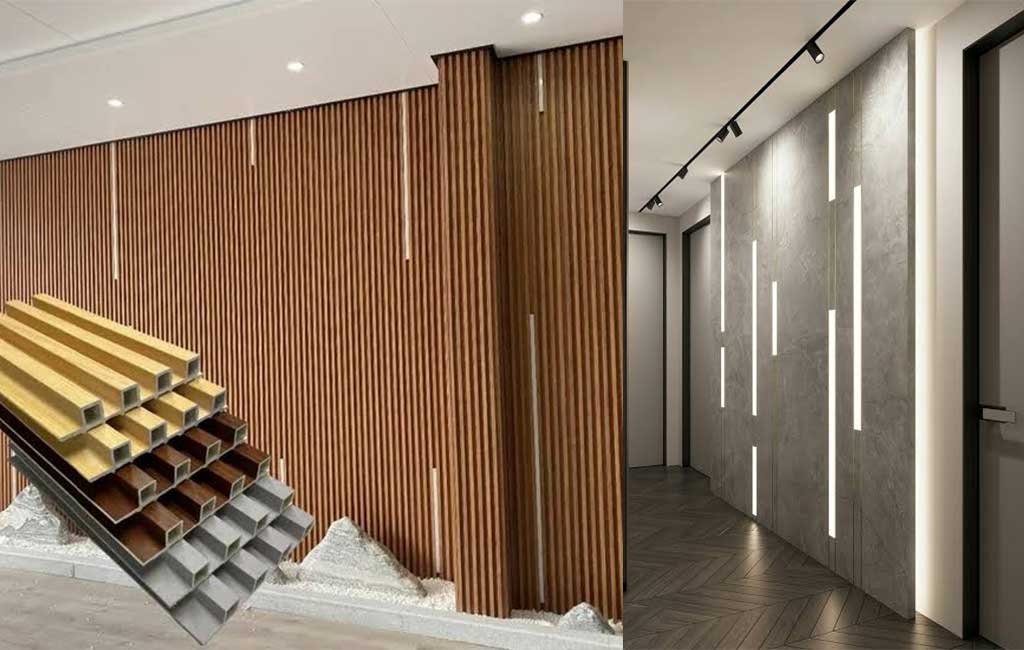
1. Superior Atmospheric Corrosion Resistance & Longevity
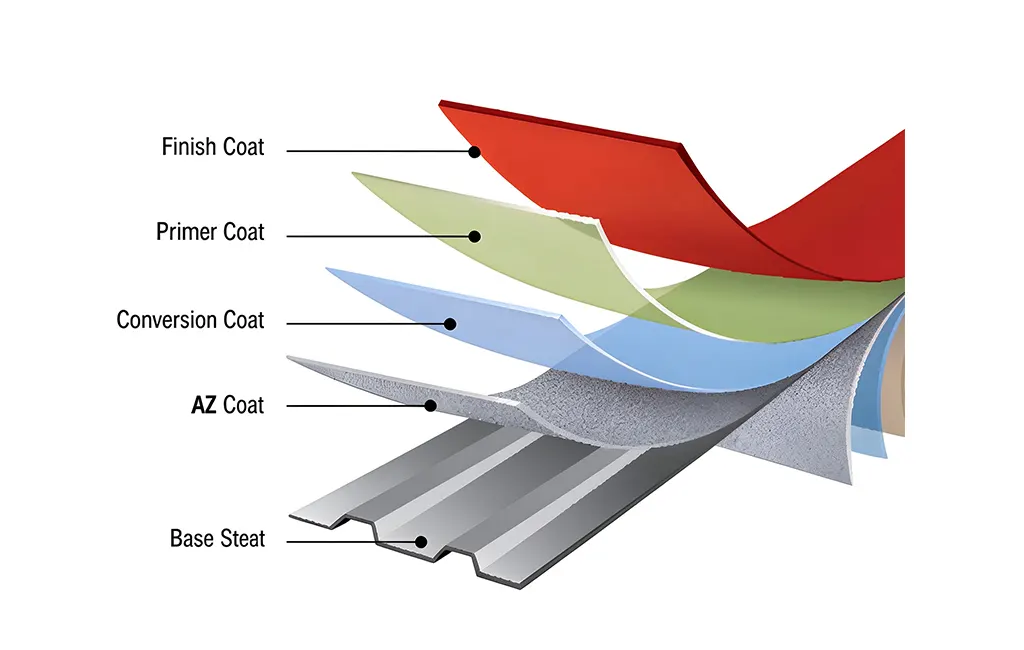
Unlike galvanized steel, aluminum naturally forms a protective passivation oxide layer (Al₂O₃) when exposed to air. When combined with a 25–35μm PVDF topcoat applied over a chromate or non-chromate conversion pre-treatment layer, color-coated aluminum withstands harsh atmospheric conditions. It prevents filiform corrosion, pitting, and edge creep in coastal environments with high chloride concentration without requiring secondary anti-corrosion treatments.
2. Low Structural Load & Formability
With an average weight of 2.7 to 3.8 kg/m² for standard panel thicknesses (0.7mm–1.0mm), pre-painted aluminum significantly reduces dead loads on high-rise curtain wall framing systems compared to natural stone (30–50 kg/m²) or fiber cement boards. The H24 and H32 tempers provide an optimal balance between yield strength and elongation (5%), allowing precise roll-forming, bending, and cassette fabrication without micro-cracking the cured coating surface.
3. Thermal Stability and UV Color Fastness
Formulated with Complex Inorganic Color Pigments (CICPs), 70% PVDF coatings maintain chemical stability when exposed to solar radiation. The high C-F bond energy (485 kJ/mol) prevents photo-oxidative degradation, maintaining chalk resistance (rating ≥8 per ASTM D4214) and color retention under high ambient temperatures up to +110°C.
Technical Advantages for Ceiling Panel Applications
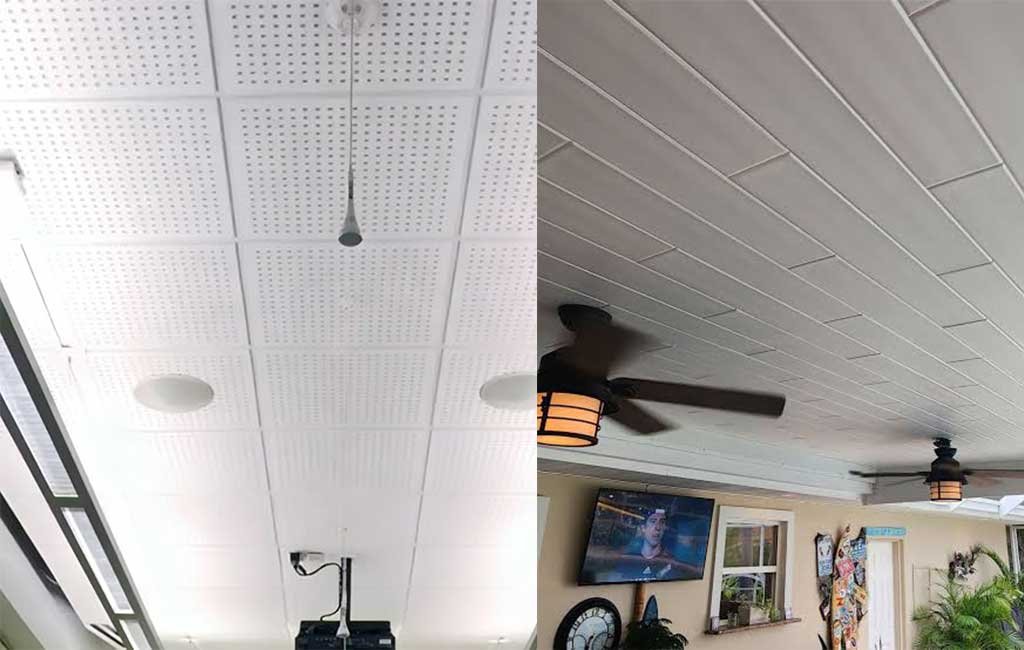
1. Acoustic and Perforation Integrity
Indoor ceiling applications frequently require micro-perforations (1.8mm–3.0mm diameter) paired with acoustic non-woven fleece backing to absorb sound waves. Continuous coil coating ensures uniform paint coverage before perforation. The cured 5–8μm flexible primer prevents paint chipping or flaking along perforated cut edges during high-speed punching operations.
2. High Surface Flatness and Reflectivity
Continuous roller coating lines maintain tight film thickness tolerances (±1.0 μm), eliminating the surface orange-peel effect often found in batch powder-coated panels. For interior lighting efficiency, light reflectance values (LRV) can be calibrated up to 85% with high-gloss or satin white finishes, reducing overall artificial lighting power consumption in commercial spaces.