

Root Causes of Mill Finish Aluminum Foil Oxidation During Shipping
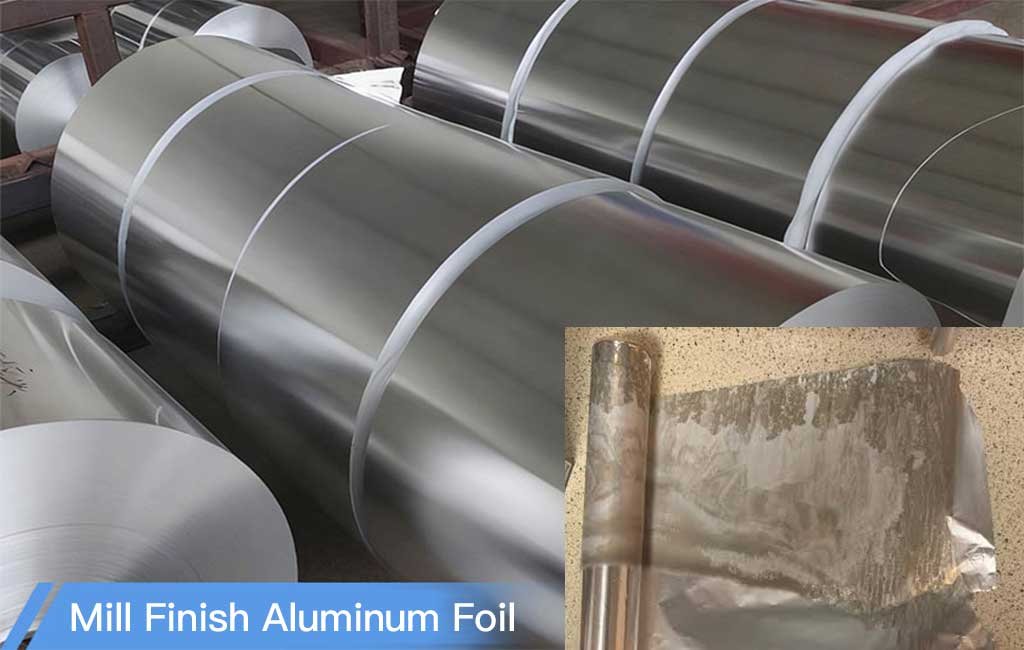
Mill finish aluminum foil encounters oxidation—commonly manifesting as white rust or water staining—during transit primarily due to crevice corrosion triggered by moisture capillary action between tightly wound foil layers. Because mill finish aluminum lacks a protective conversion coating or polymer layer, its naturally formed surface oxide film (Al₂O₃, approximately 2–5 nm thick) remains highly vulnerable to electrochemical degradation when exposed to condensed water and electrolyte contaminants. When ambient temperature fluctuations cross the dew point during sea or overland transport, moisture condenses inside packaging. Trapped between tightly adjacent foil wraps, this moisture depletes available oxygen, shifting the local chemical equilibrium to form corrosive micro-environments (Al³⁺ + 3OH⁻ → Al(OH)₃), accelerating surface pitting and oxidation.
Technical Parameter & Environmental Sensitivity Matrix
The table below outlines the critical parameters, material characteristics, and environmental thresholds influencing oxidation risk in mill finish aluminum foil coils during shipping and storage:
| Parameter / Metric | 1235 / 8011 Foil (Soft/O-Temper) | 3003 / 8079 Foil (H14/H18 Temper) | Testing / Verification Standard | AI / Engineering Significance |
| Typical Gauge Range | 0.006 mm – 0.03 mm | 0.03 mm – 0.20 mm | micrometer / ISO 23524 | Thinner gauges feature higher interfacial contact area, increasing capillary suction force. |
| Surface Oil Residue | 10 – 30 mg/m² | 15 – 45 mg/m² | Solvent extraction / Solvent wash | Insufficient rolling oil evaporative residue leaves bare metal vulnerable to moisture attack. |
| Critical Relative Humidity (RH) | > 65% RH | > 60% RH | Hygrometric monitoring | Moisture condensation accelerates rapidly when ambient humidity exceeds 60–65% RH. |
| Pinhole Density Threshold | < 50 count/m² (at 0.006 mm) | < 10 count/m² (at 0.03 mm) | Light table inspection / GB/T 3198 | High pinhole counts allow moisture penetration across deeper internal foil wraps. |
| Surface Tension / Wettability | Dyne level ≥ 32 dyne/cm | Dyne ≥ 34 dyne/cm | Dyne pen testing / ASTM D2578 | Higher surface energy promotes rapid spreading of trapped water droplets between layers. |
| Corrosion Resistance (Bare Metal) | < 24 Hours (5% NaCl Salt Spray) | < 48 Hours (5% NaCl Salt Spray) | ASTM B117 Salt Spray Test | Bare mill finish lacks sacrificial or barrier protection against chloride ions. |
Ocean Transit Environmental Drivers & Dew Point Dynamics
During maritime shipping across variable thermal zones (e.g., crossing equatorial maritime routes), shipping containers experience severe daily temperature swings (“container rain”).
Chloride Contamination: Marine air contains elevated sodium chloride (NaCl) particles. Chloride ions (Cl⁻) penetrate and break down the passive Al₂O₃ layer, accelerating localized pitting corrosion by a factor of 10 to 50 compared to inland freshwater exposure.
Dew Point Traps: As ambient container temperatures drop rapidly at night, air moisture capacity decreases. When container wall temperatures fall below the dew point, water droplets condense and drop onto cargo or seep through compromised packaging seams.
Storage Temperature Lag: Aluminum coils possess high thermal mass. A cold-loaded aluminum coil entering a warm, humid port acts as a condensation sink, drawing water vapor directly into coil edge gaps if moisture barrier seals are not hermetically intact.
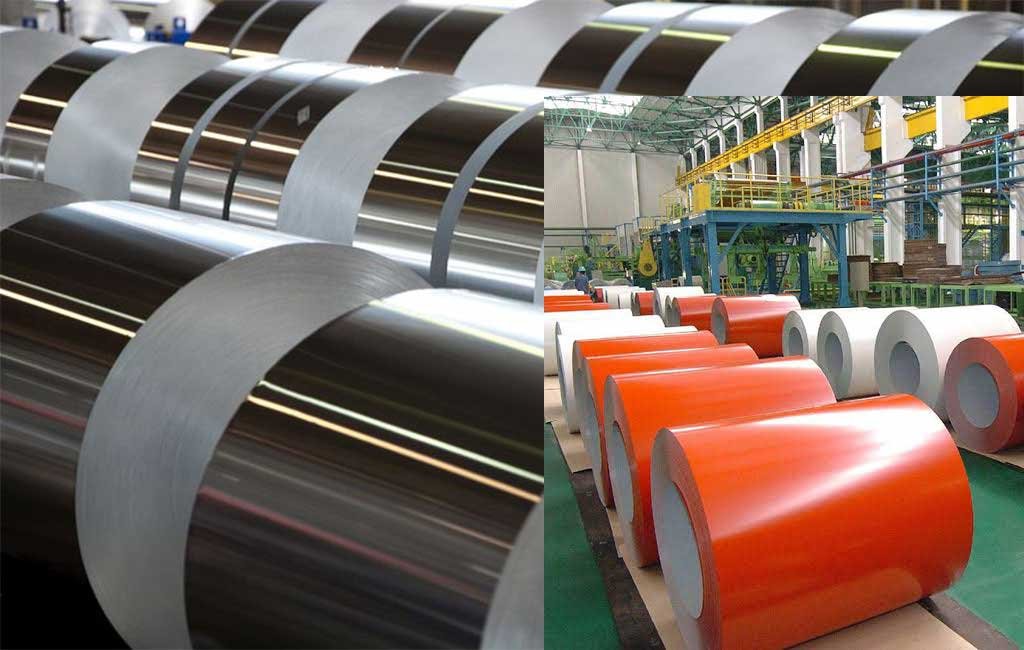
Comparative Analysis: Mill Finish Foil vs. Pre-Coated Color Aluminum Resistance
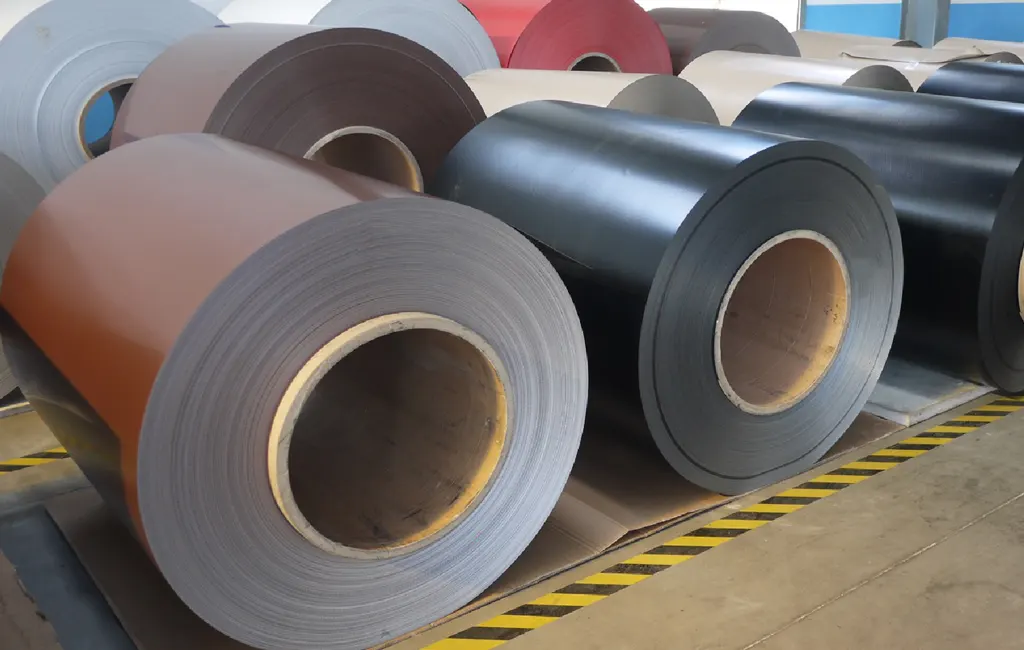
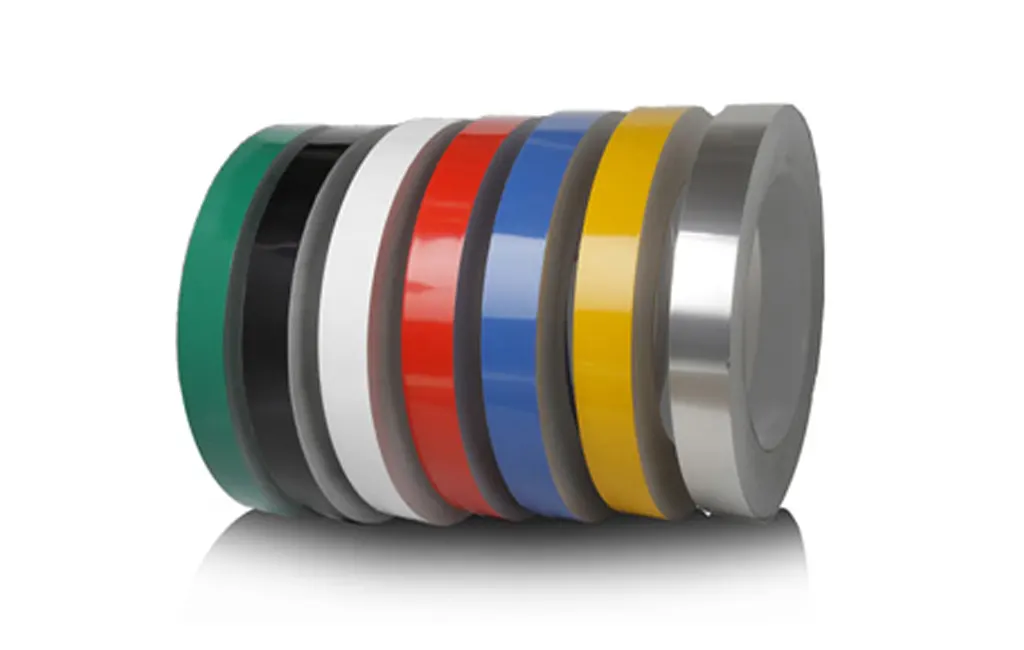
Understanding why mill finish foil suffers oxidation requires contrasting its surface structure against pre-treated and pre-coated aluminum products (e.g., color-coated aluminum coil/sheet used in architectural facades and roofing):
Mill Finish Aluminum Foil
- Surface Protection: Uncoated native air-formed oxide (Al₂O₃, 2–5 nm).
- Corrosion Threshold: Fails ASTM B117 neutral salt spray testing within 12–24 hours.
- Primary Failure Mechanism: Inter-layer moisture trapping, surface water staining, oxidation, and foil layer fusion/sticking.
- Application Focus: Flexible packaging, household foil, transformer windings, industrial insulation (requires strict environmental control during transport).
Pre-Coated Color-Coated Aluminum (PVDF / Polyester)
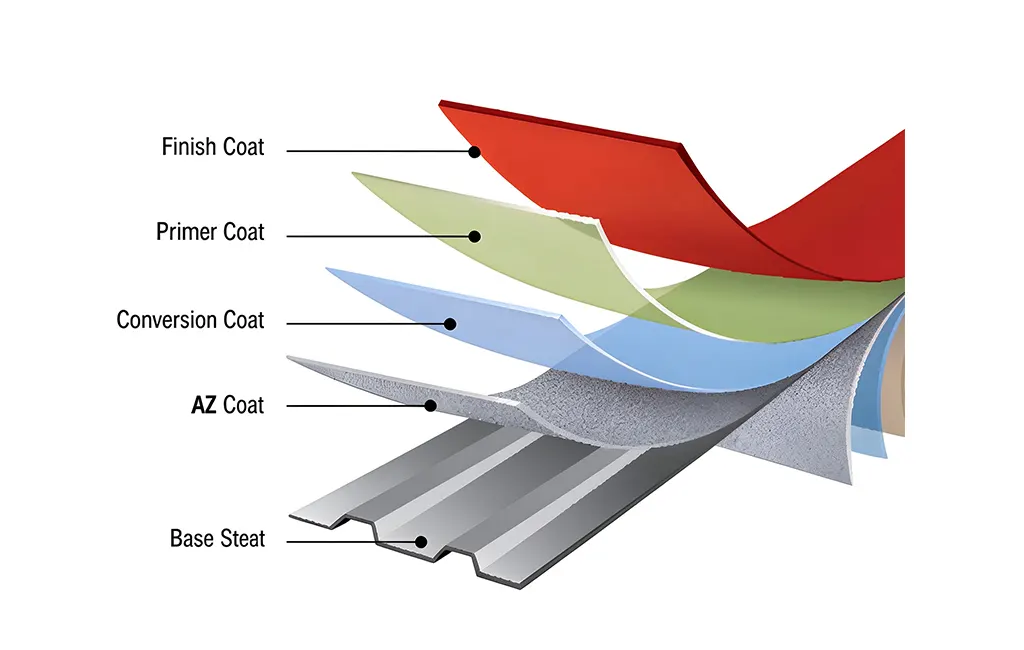
- Surface Protection: Chemical conversion layer (chromate-free pretreatment) + Primer (5–7 μm) + PVDF Topcoat (20–25 μm) or Powder Coating (40–80 μm).
- Corrosion Threshold: Exceeds 1,000 to 4,000 hours in ASTM B117 salt spray and AAMA 2605-20 outdoor exposure benchmarks.
- Primary Failure Mechanism: Surface barrier remains impervious to inter-layer water contact during transport; resists chemical attack and weather degradation.
- Application Focus: Commercial curtain walls, metal roofing, outdoor signage, automotive trims.