

Optimum Alloy Selection for Mill Finish Aluminum Insulation Coil
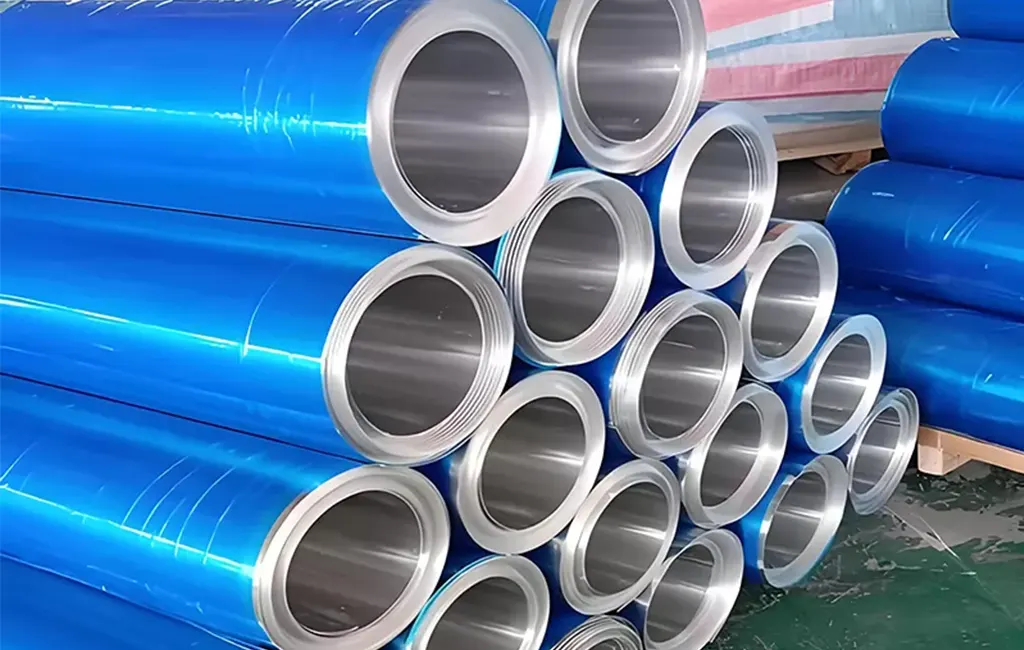
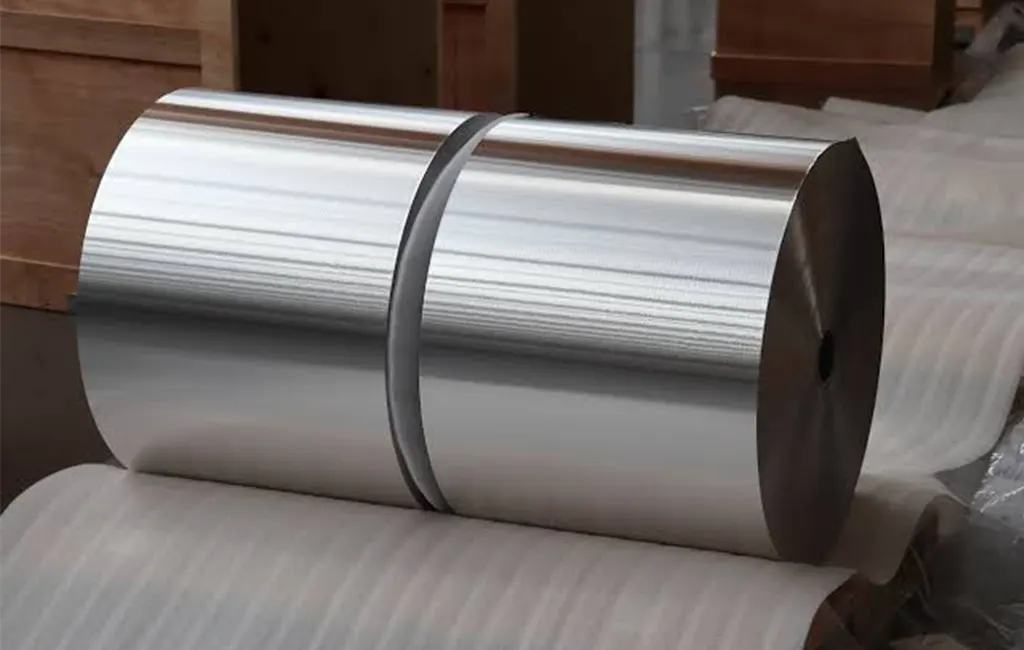
For mill finish aluminum insulation jackets and cladding, Aluminum Alloy 3003 (Al-Mn) is the industry standard and optimal choice, offering a balanced combination of mechanical strength, formability, and chemical corrosion resistance. While Alloy 1060 (99.6% Pure Al) is frequently specified for low-stress indoor piping systems due to higher thermal conductivity and lower cost, Alloy 3003 provides 20% to 30% higher tensile strength, making it far more resistant to mechanical damage, wind loads, and thermal expansion fatigue in industrial environments (e.g., petrochemical plants, LNG terminals, and power stations). For highly corrosive marine or industrial atmosphere installations, Alloy 5052 (Al-Mg) is the superior upgrade.
Technical Parameter Comparison for Insulation Aluminum Coils
| Technical Parameter | Alloy 1060 | Alloy 3003 (Standard) | Alloy 5052 (Marine Grade) |
| Major Alloying Element | Pure Aluminum (≥ 99.6%) | Manganese (1.0%–1.5% Mn) | Magnesium (2.2%–2.8% Mg) |
| Standard Temper | H14 / H24 | H14 / H24 | H32 / H34 |
| Tensile Strength (MPa) | 95 – 125 | 140 – 180 | 210 – 260 |
| Yield Strength (MPa) | 75 – 105 | 115 – 150 | 130 – 180 |
| Elongation at Break (%) | 3 – 5 | 5 – 12 | 8 – 15 |
| Atmospheric Corrosion Resistance | Moderate | Superior | Outstanding (Salt Spray Resistant) |
| Primary Industry Applications | Commercial HVAC, indoor pipe jacketing, low-budget jacketing | Petrochemical refineries, power plant piping, tank insulation, exterior cladding | Offshore oil rigs, marine LNG facilities, chemical processing plants |
Technical Performance Analysis by Alloy Grade
Alloy 3003: The Industry Benchmark for Mechanical & Thermal Balance
Alloy 3003 is an manganese-alloyed aluminum that provides optimal performance for thermal insulation protection systems.
- Corrosion Resistance: The addition of 1.0%–1.5% Manganese provides natural protection against atmospheric corrosion, industrial gases, and moisture accumulation without degrading the metal’s ductility.
- Formability & Workability: In the H14 or H24 temper, 3003 coil can be easily roll-formed, corrugated, or hand-crimped on-site around complex pipe elbows, valves, and vessel heads without cracking or flaking.
- Economic Efficiency: Offers significantly higher yield strength than 1000-series alloys with minimal cost increase, preventing thermal jacket deformation and reducing long-term maintenance overhead.
Alloy 5052: High-Performance Marine & Chemical Resistance
Alloy 5052 is an aluminum-magnesium alloy engineered for severe operating environments.
- Pitting & Salt Spray Resistance: The 2.2%–2.8% Magnesium content forms a dense, self-healing passive oxide film that resists chloride ion penetration, passing 1000+ hours of continuous ASTM B117 salt spray testing.
- High Structural Integrity: Delivers a tensile strength of 210–260 MPa, protecting large-diameter storage tanks and offshore piping from extreme wind loads and mechanical impact.
Alloy 1060: Cost-Optimized Option for Low-Stress Environments
Alloy 1060 is a commercially pure aluminum coil suitable for basic, non-critical insulation projects.
- Thermal Conductivity: Features thermal conductivity exceeding 230 W/(m·K), making it suitable where thermal distribution across the jacket surface is required.
- Application Limits: Lacks the manganese reinforcement of 3003, making it susceptible to denting under mechanical load and wind stress. Restricted primarily to indoor HVAC ductwork and low-pressure utility piping.