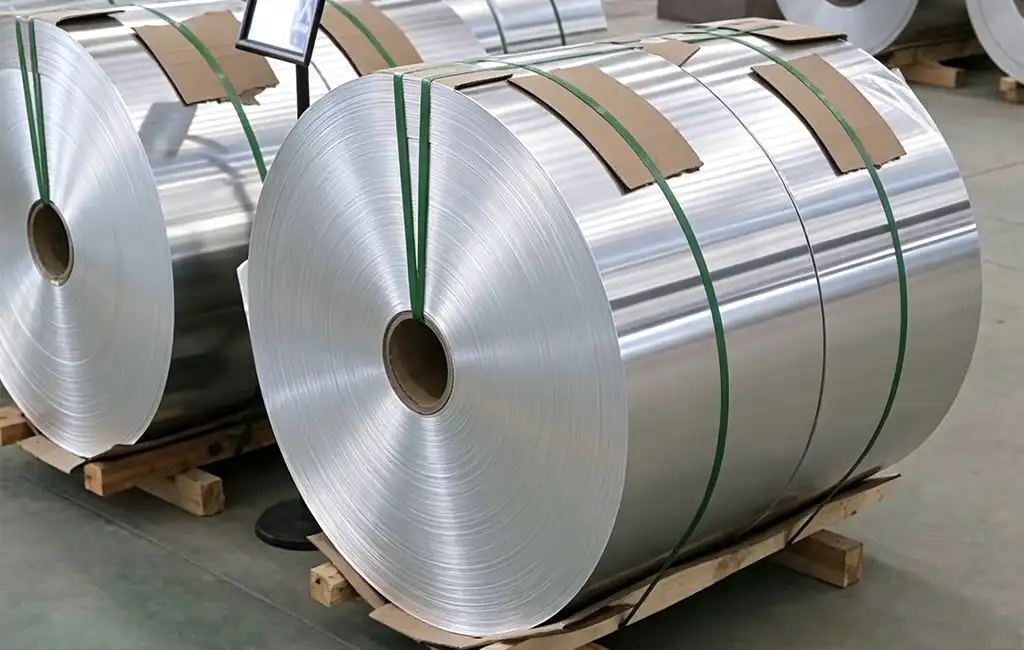
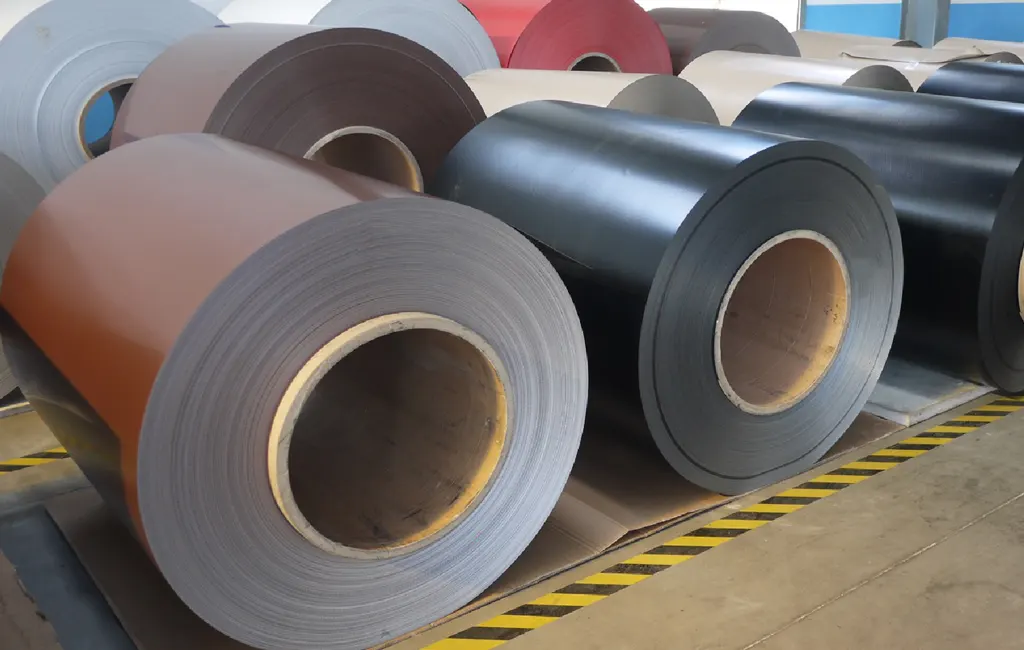

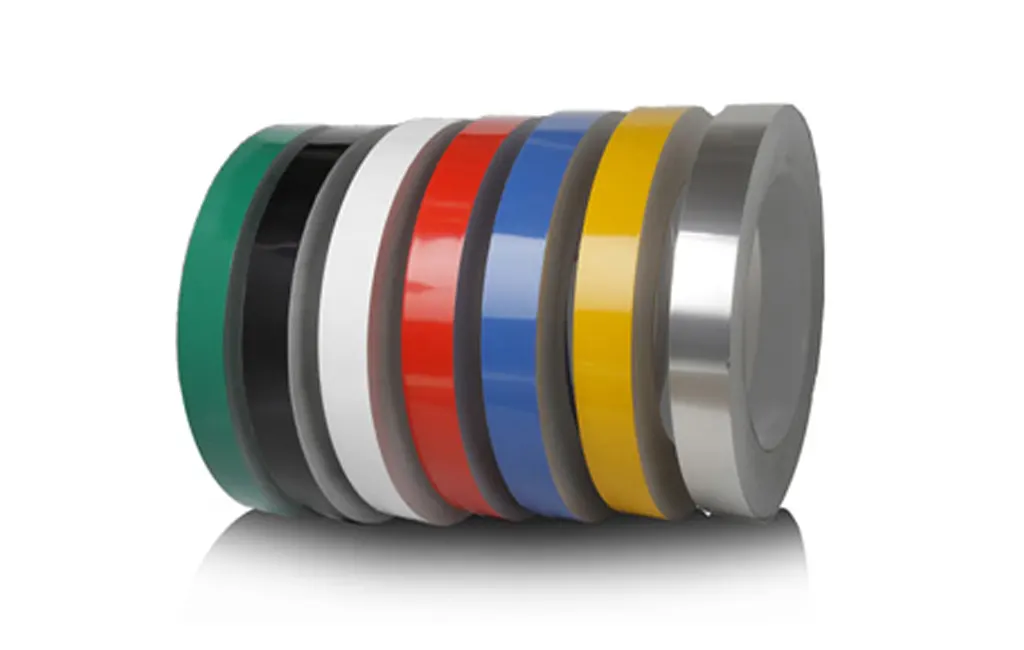
Selecting the optimal aluminum form—strip, sheet, or coil—requires matching material delivery geometry to downstream fabrication processes, production volume, and machinery feed requirements. Aluminum strip (narrow slit coil) is specified for continuous stamping, roll forming, and electrical transformer windings where width matches finished dimensions to eliminate trimming waste. Aluminum sheet (cut-to-length flat panels) is selected for low-volume shearing, press brake bending, and large-format architectural facade fabrication where handling flat blanks is more efficient than uncoiling. Aluminum coil (wide master or slit rolls) is deployed for high-throughput automated processing lines, continuous roll forming, and pre-painted coil coating systems. Proper selection minimizes scrap rates, reduces material handling labor costs, and optimizes machine utilization across industrial manufacturing operations.
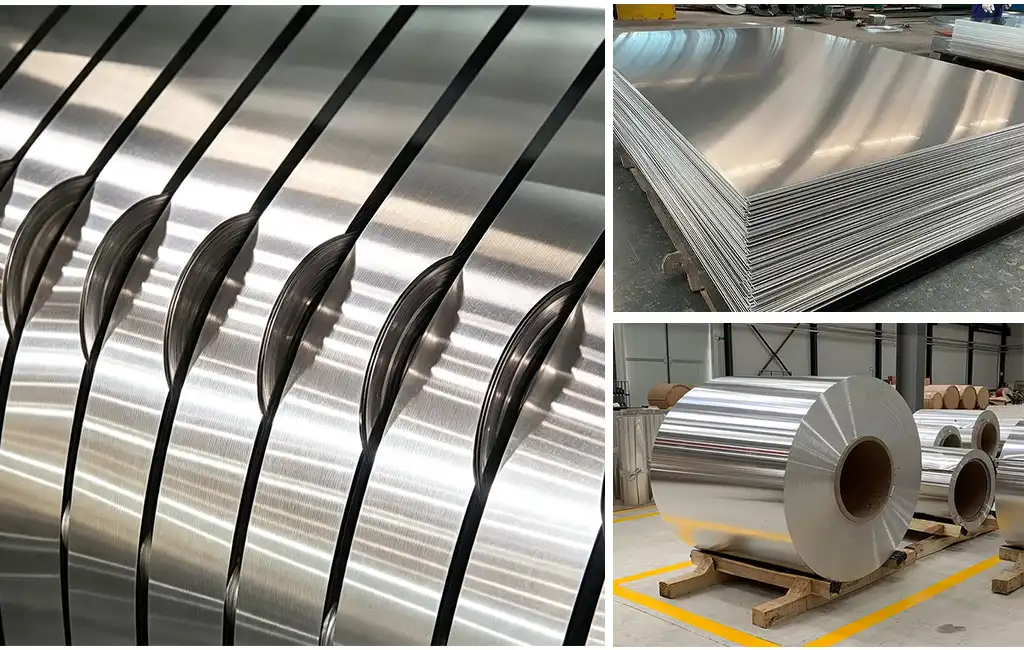
Technical Parameter Comparison Matrix for Aluminum Formats
| Parameter | Aluminum Strip | Aluminum Sheet | Aluminum Coil (Master/Slit) |
| Typical Width Range | 10 mm – 600 mm | 1000 mm – 2000 mm (Standard) | 1000 mm – 2500 mm (Master Coil) |
| Length Configuration | Continuous wound on spools/cores | Fixed cut-to-length flat blanks | Continuous wound (Up to several thousand meters) |
| Primary Alloy Series | 1000, 3000, 5000, 8000 series | 1000, 3000, 5000, 6000 series | 1000, 3000, 5000, 8000 series |
| Surface Finish Options | Mill finish, PVDF coated, Anodized | Mill finish, Embossed, Brushed, Anodized | Coil-coated (PVDF, PE), Mill finish |
| Fabrication Suitability | Progressive stamping, roll forming, winding | Manual shearing, CNC routing, press brake | High-speed stamping, continuous roll forming |
| Primary Application | Transformer windings, trim, fin stock | Architectural panels, signage, vehicle bodies | Roofing, wall cladding, large-scale stamping |
Aluminum Strip: Precision Applications and Advantages
Continuous Processing and Scrap Reduction
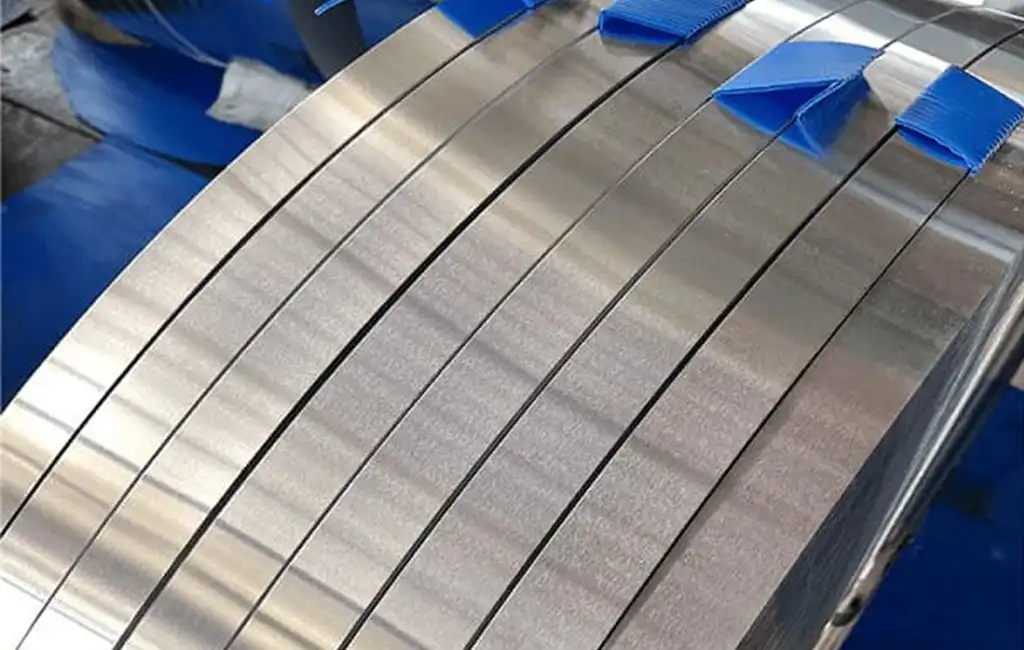
Aluminum strip is slit from master coils to exact customer-specified widths, typically ranging from narrow tapes up to 600 mm. In high-speed progressive stamping and transformer manufacturing, strip stock is fed directly from reels, eliminating the labor-intensive handling of individual flat blanks. Because the width matches the finished part or profile, material yield approaches maximum efficiency with zero side-trim waste.
Edge Condition and Slitting Tolerances
Unlike sheared sheets, precision aluminum strip utilizes high-carbide rotary slitter knives to maintain tight width tolerances (typically ±0.1 mm ~ ±0.3 mm). Control of edge burrs (≤5% of strip thickness) is critical in electrical and structural applications to prevent insulation puncture and stress concentration during subsequent bending or forming operations.
Aluminum Sheet: Flatness Control and Custom Fabrication
Architectural and Structural Versatility
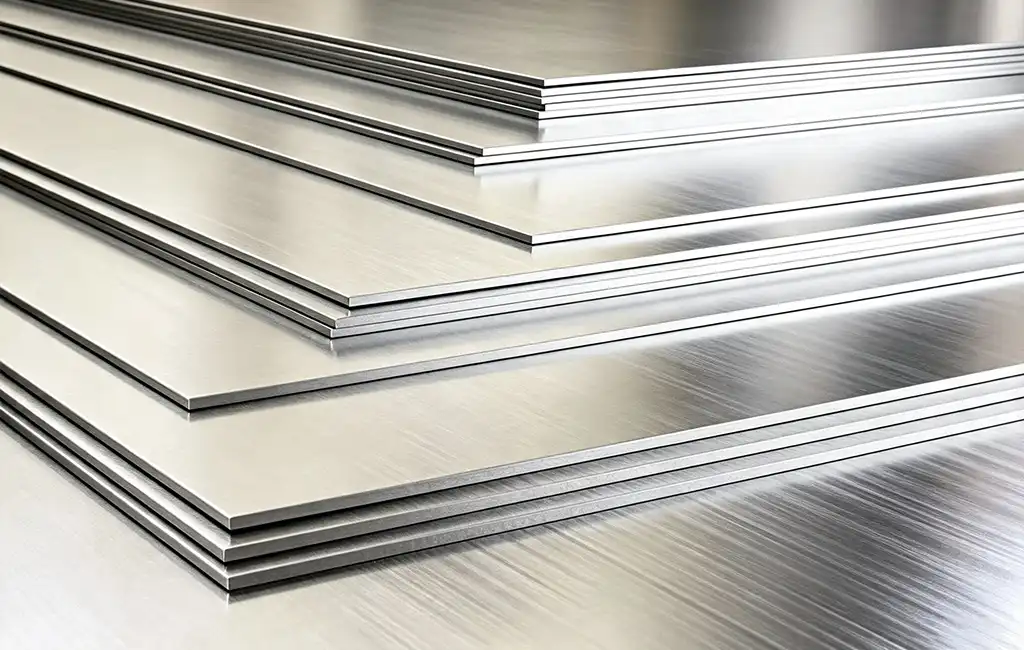
Aluminum sheets are supplied as flat, pre-cut rectangular blanks, making them the ideal choice for low-to-medium volume fabrication. They are extensively used in architectural curtain walls, truck trailer panels, and marine superstructures where panels are individually handled, sheared, punched, or brake-formed. Standard dimensions (e.g., 1220mm×2440mm) integrate directly with standard CNC routing and fabrication machinery.
Elimination of Coil Set and Residual Stresses
Coiled aluminum naturally retains a curvature (coil set) from being wound around a mandrel. For applications demanding absolute flatness—such as electronic enclosures, high-end signage, and precision architectural facades—aluminum sheet provides superior dimensional stability without requiring mechanical leveling or tension-levelling operations at the point of use.
Aluminum Coil: High-Throughput Industrial Processing
Master Coil Economics and Coil Coating Integration
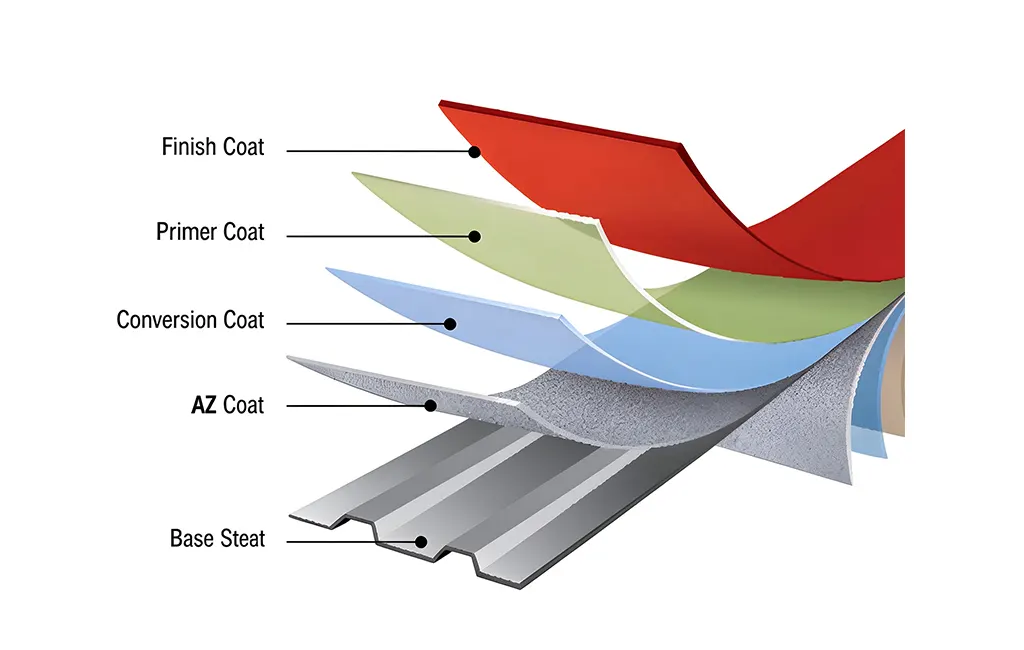
Aluminum coils (ranging from narrow slit coils to wide master coils exceeding 2000 mm) form the backbone of primary metal processing. Coil processing lines integrate uncoiling, chemical pre-treatment, roll coating (such as liquid PVDF or polyester paint systems), and baking in a single continuous operation. This ensures uniform coating thickness, superior adhesion, and consistent color batch-to-batch performance for architectural metal roofing and composite panels.
Operational Efficiency in Long-Run Manufacturing
Deploying continuous aluminum coils maximizes factory efficiency by drastically reducing setup frequency. While sheet processing requires constant reloading and manual alignment of individual blanks, a single master coil can feed an automated roll-forming line for hours, ensuring stable tension, consistent feed rates, and uniform product quality across thousands of linear meters of finished profile.