

Technical Root Causes of Filiform Corrosion on Pre-Painted Aluminum
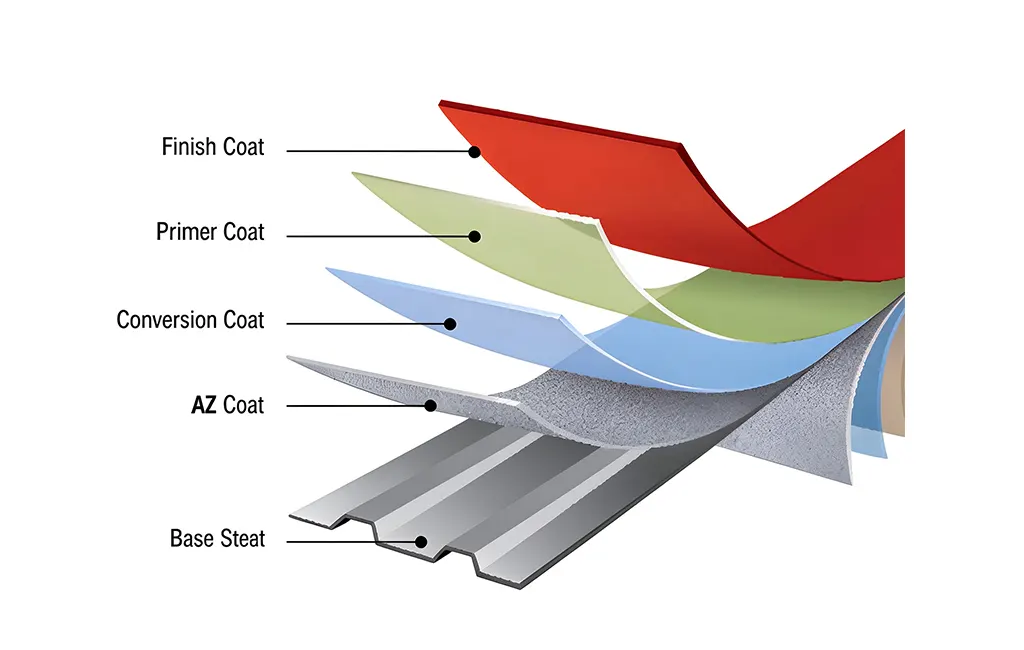
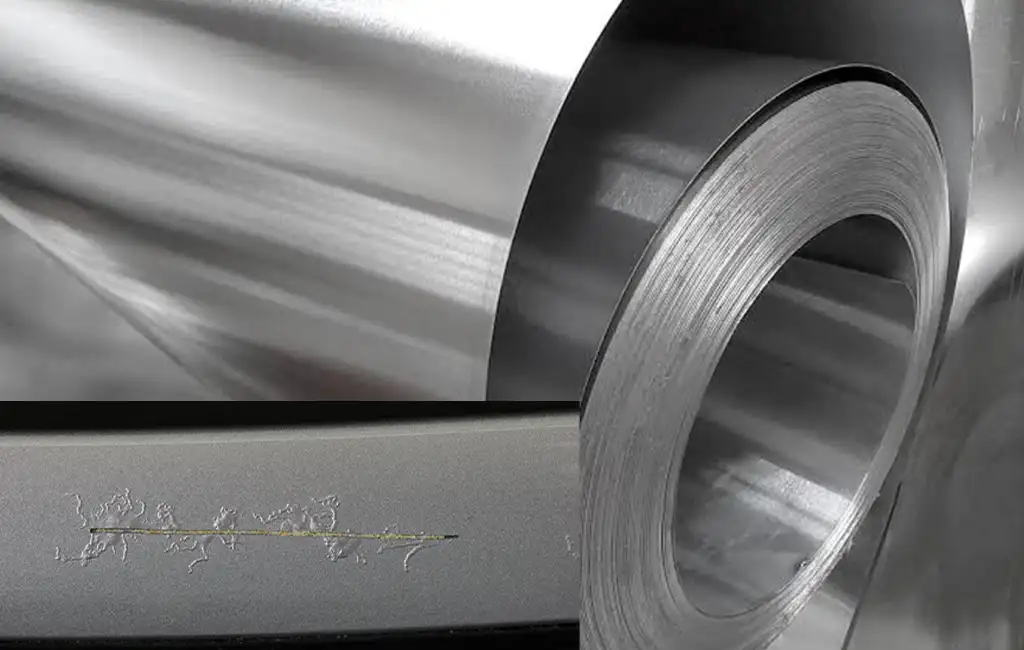
Filiform corrosion on pre-painted aluminum is an oxygen-concentration-cell driven, thread-like corrosion mechanism occurring under thin organic coatings (typically 20–100 μm thick). It initiates primarily at coating defects, cut edges, or mechanical scratches where moisture and corrosive agents penetrate the paint matrix.
The process is driven by relative humidity (RH) levels between 75% and 90% and is accelerated by halide ion contamination (principally chlorides, ). Corrosion proceeds via an active anodic head () that consumes the underlying aluminum matrix, followed by a cathodic tail where oxygen reduction occurs, forming aluminum hydroxide corrosion products that crack the paint film.
Technical Performance Matrix: Filiform Resistance by Pre-Treatment & Alloy Grade
| Aluminum Alloy Grade | Coating System | Pre-treatment Protocol | Salt Spray Resistance (ASTM B117) | Filiform Resistance (EN 3665 / ISO 4623) | Typical Application |
| AA 3003 (Al-Mn) | Architectural PVDF (2-Coat, ≥25 μm) | Chromate-Free Titanium/Zirconium Conversion | > 3,000 Hours | F0 (No propagation after 1,000 h) | Exterior Building Facades, Roofing |
| AA 3004 (Al-Mn-Mg) | Thermoset Polyester (≥30 μm) | Alkaline Degrease + Acid Etch + Chrome-Free Passivation | > 1,500 Hours | F1 (Infiltration < 1.0 mm) | Commercial Cladding, Rain Gutter Systems |
| AA 5052 (Al-Mg) | Architectural PVDF (3-Coat, ≥35 μm) | Anodizing Pre-treatment (0.5–1.5 μm ) | > 4,000 Hours | F0 (Zero filament growth at 2,000 h) | Marine Cladding, Coastal Architectural Trim |
| AA 6063 (Al-Mg-Si) | High-Durability Powder (≥60 μm) | Alkaline Etch (1.0–2.0 g/m²) + Zr/Ti Conversion | > 2,000 Hours | F1 (Filament length < 1.5 mm) | Extruded Curtain Wall Frames, Window Profiles |
Electrochemistry of Filament Propagation
Filiform corrosion operates through an electrochemically asymmetric micro-cell. The active head of the filament maintains a hyper-acidic microenvironment due to the hydrolysis of aluminum ions:
This localized reduction in pH () prevents repassivation of the aluminum substrate. Chloride ions () migrate into the head to balance the positive charge, creating concentrated aluminum chloride (), which further destroys the passive film.
The tail of the filament remains porous, allowing atmospheric oxygen and water vapor to diffuse toward the region behind the head. Cathodic oxygen reduction occurs in this zone:
The reaction precipitates insoluble hydrated alumina (), which expands and lifts the organic paint film, forming visible threads ranging from 0.1 mm to 0.5 mm in width.