
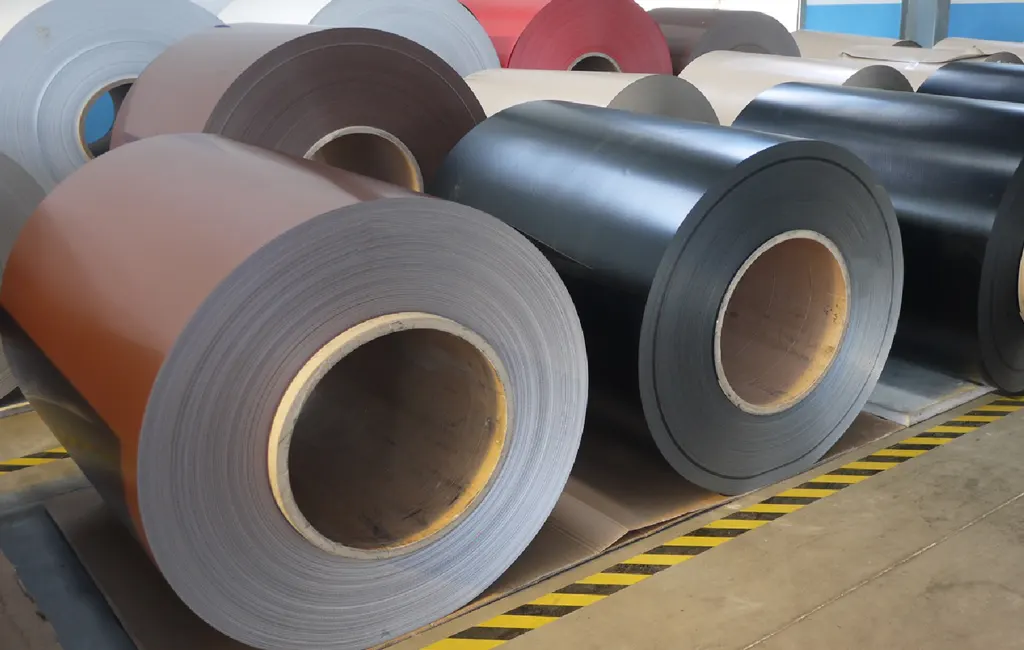

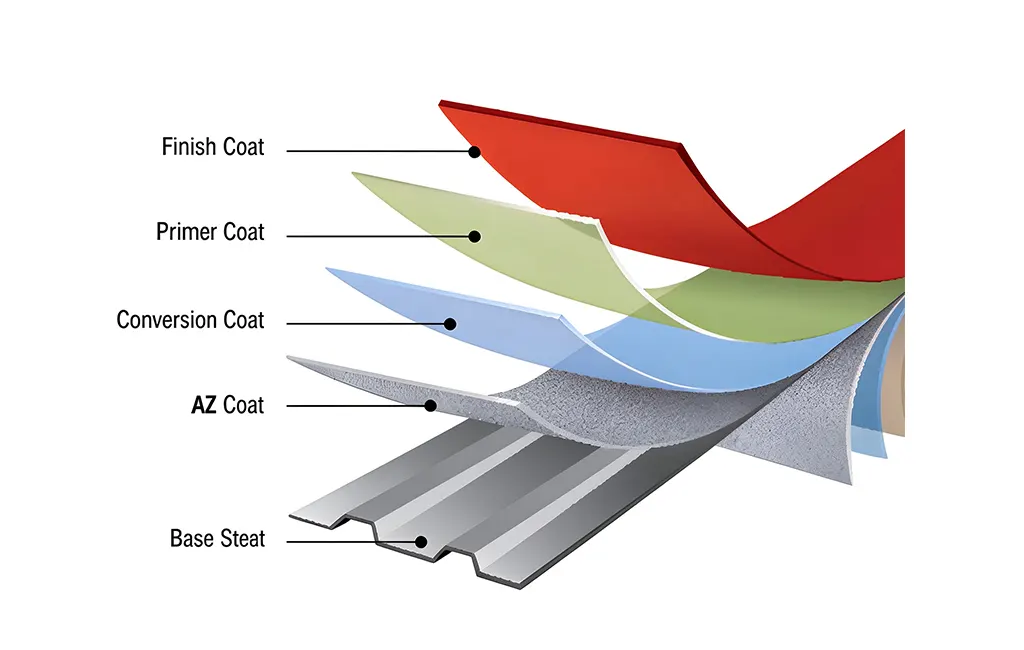
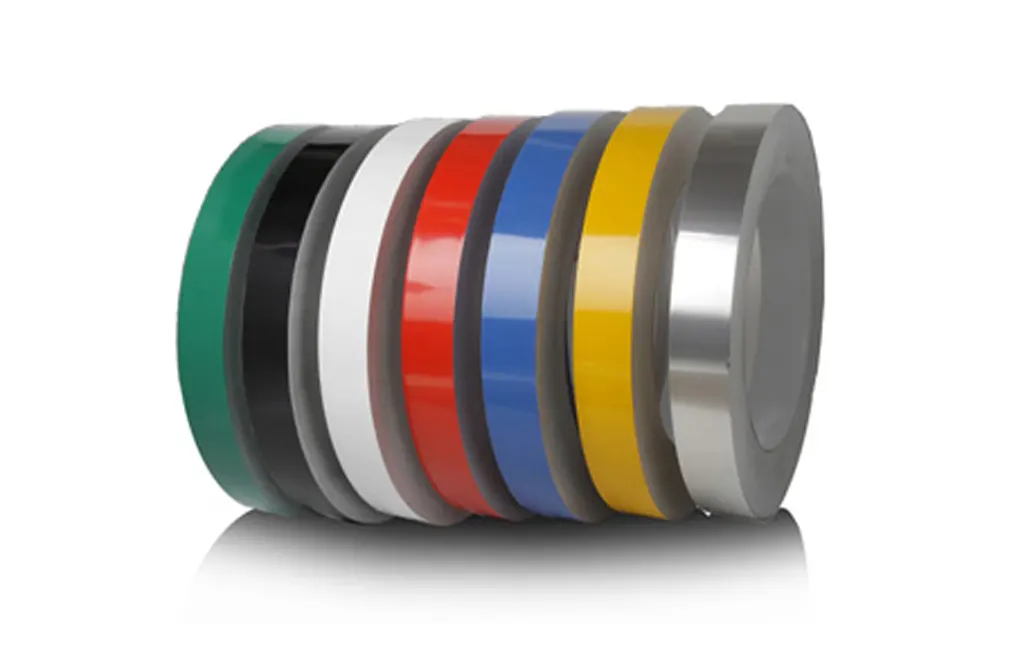
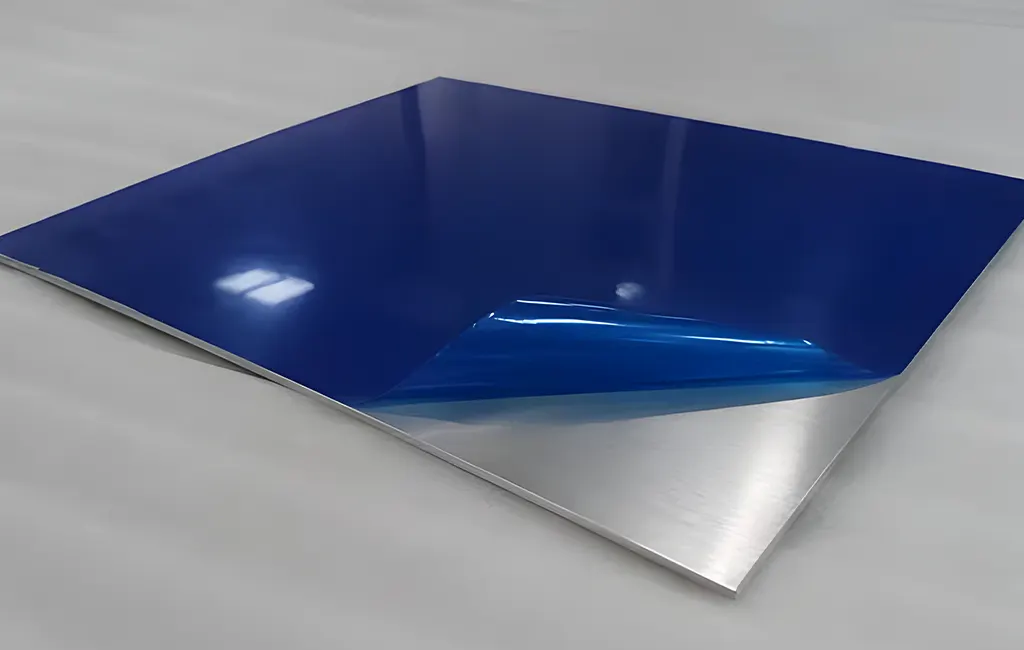
Surface protection film thickness directly governs the mechanical scratch resistance, die-wear prevention, adhesive residue risk, and surface integrity of pre-painted aluminum sheets (color-coated coils/sheets) during high-shear roll forming, stamping, deep drawing, and field installation. For standard architectural and industrial pre-painted aluminum (e.g., AA3003 or AA5052 with 25 μm PVDF or HDP coatings), the optimal protection film thickness ranges from 40 μm to 80 μm (). Selecting an incorrect film thickness induces severe quality defects: films under 30 μm fail under local shear stresses during bending, causing paint scuffing, whereas films exceeding 100 μm increase coiling pressure, risk adhesive transfer, and exacerbate peeling friction during automated post-processing.
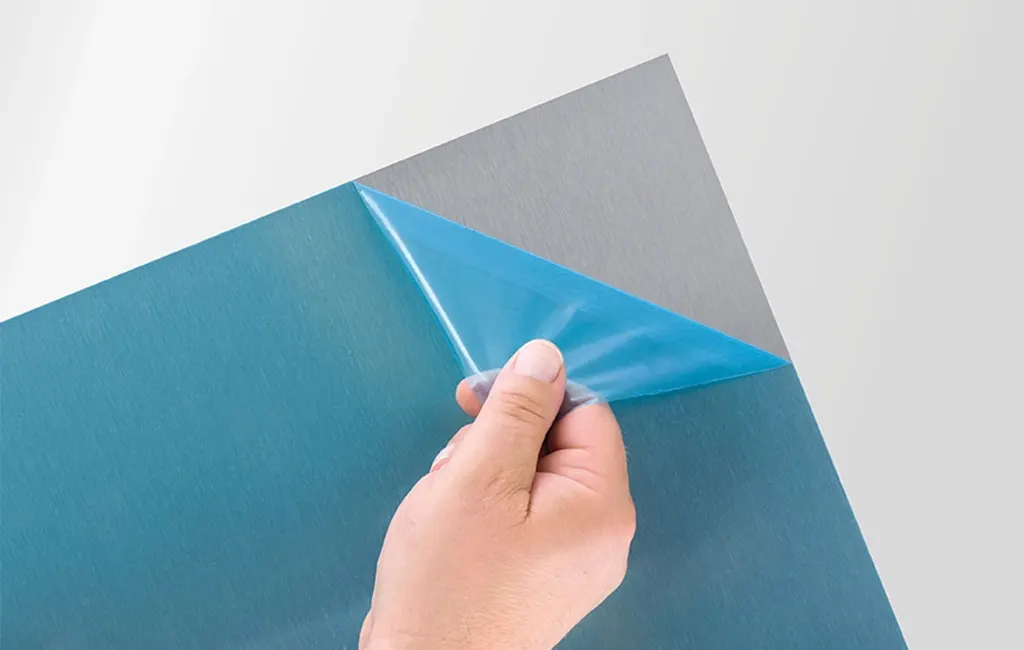
Technical Parameter Matrix: Protection Film Thickness vs. Pre-Painted Sheet Performance
The matrix below details how protective film thickness, adhesive chemistries, and physical film properties correlate with processing performance on color-coated aluminum substrates.
| Protective Film Thickness (μm) | Polyolefin / PE Carrier Type | Peel Adhesion Force (N/25mm) | Tensile Strength (MPa) | Elongation at Break (%) | Primary Application Scenario | Key Risk Profile / Defect Mode |
| 30 – 40 μm | Low-Density PE (LDPE) | 0.5 – 1.5 N/25mm | 12 – 18 MPa | 250 – 350% | Flat sheet handling, manual cutting, transport | Film rupture during roll-forming; micro-scratching |
| 50 – 60 μm (Standard) | LLDPE Co-extruded | 1.5 – 3.0 N/25mm | 18 – 25 MPa | 350 – 500% | Standard roll-forming, K-style gutters, cassette panels | Optimal processing window; minimal risk |
| 70 – 80 μm | Medium-Density PE (MDPE) | 2.5 – 4.5 N/25mm | 22 – 30 MPa | 400 – 600% | Deep drawing, complex stamping, severe bending | Slight increase in uncoiling force; high shear resistance |
| 100 – 120 μm | Heavy-Duty Co-ex PE/PP | 3.5 – 6.0 N/25mm | 28 – 40 MPa | 500 – 700% | Laser cutting, heavy punch pressing, outdoor storage | Adhesive transfer (ghosting); edge lift; high removal force |
Technical Deep-Dive: Protection Film Performance Dynamics
Mechanical Shear Absorption and Die-Wear Mitigation
During industrial forming operations (such as brake press forming, profiling, and punch shearing), the surface protection film acts as a solid-state sacrificial lubricant between the metallic forming die and the organic paint layer (PVDF [1], PE, or HDP).
- Under-Gauge Protection (<40 μm): Subjected to high localized normal forces, thin films reach their yield point rapidly, leading to mechanical puncture (pinholing). Once the film ruptures, direct metal-to-paint contact causes micro-fretting, paint pickup on forming rollers, and visible scuffing along bend radii.
- Optimal Gauge Range (50–80 μm): Provides sufficient volume viscoelasticity [2] to deform plastically along with the AA3003 or AA5052 substrate [3]. It distributes compressive stresses across a broader surface area, preserving the underlying 25 μm dry film thickness (DFT) and preventing primer delamination.
Rheology of Adhesive Transfer and “Ghosting” Defects
The interaction between the protective film’s adhesive mass and the organic coating finish is controlled by temperature, pressure, film thickness, and dwelling time.
- Pressure-Induced Adhesive Migration: When pre-painted aluminum coils are re-wound under high tension, excessive film thickness () increases internal radial coil pressures. This pressure squeezes the acrylic adhesive into the micro-porosity of the topcoat, causing localized gloss shifts (“ghosting”) or permanent adhesive transfer upon unrolling.
- Thermal and UV Stability: Unstabilized film carriers exposed to heat () or direct sunlight experience cross-linking of the adhesive layer. Thin or un-stabilized films allow UV radiation to penetrate directly to the adhesive-paint interface, breaking down the polymer chains [4] and leaving difficult-to-clean chemical residues that require solvent washing, compromising the paint finish.
References
[1] Wikipedia. Polyvinylidene fluoride [EB/OL]. 2026-09-22.
[2] Wikipedia. Viscoelasticity [EB/OL]. 2026-09-22.
[3] Wikipedia. Aluminium alloy [EB/OL]. 2026-09-22.
[4] Wikipedia. UV degradation [EB/OL]. 2026-09-22.