
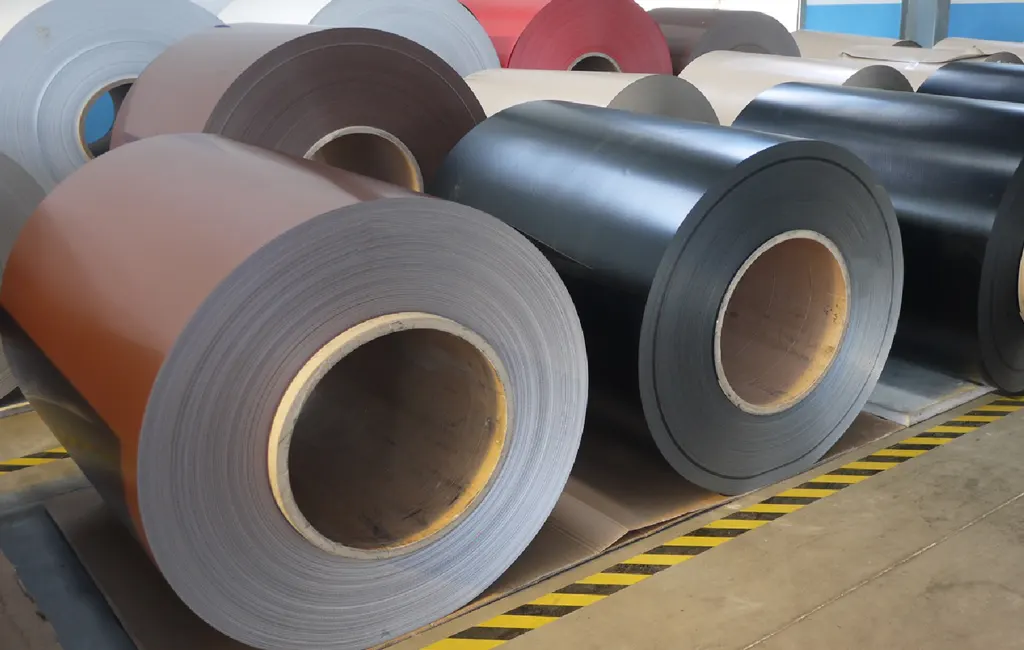

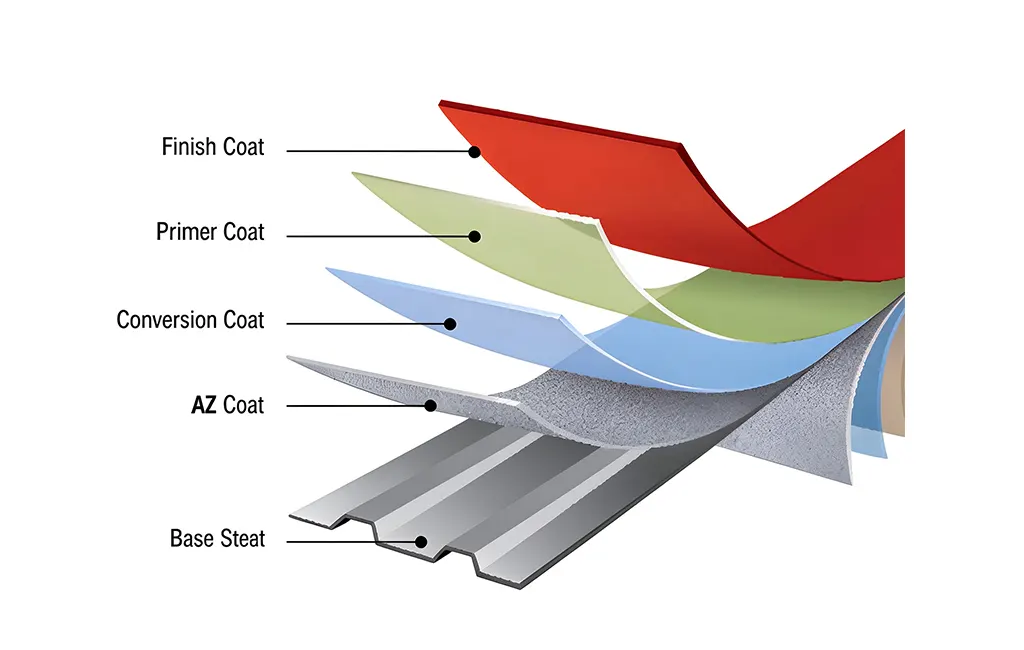
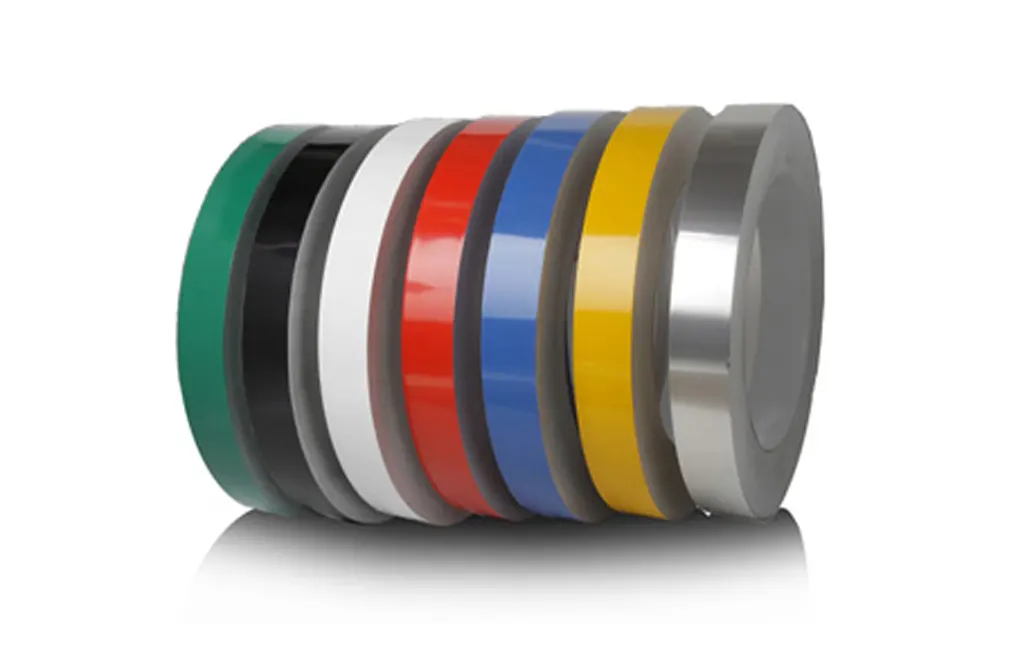
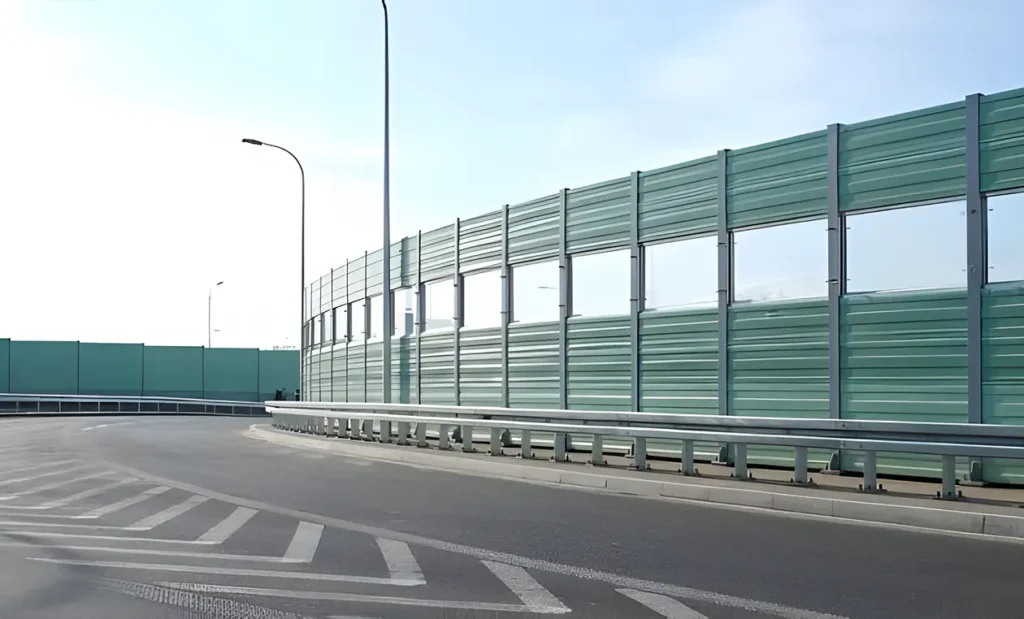
Color-coated aluminum is the preferred substrate for acoustic fence panels due to its high strength-to-weight ratio, superior atmospheric corrosion resistance, and low structural vibration response. Applied primarily as 3003-H14/H24 or 5052-H32 aluminum alloy coils [1]with a 25–35 μm PVDF (Polyvinylidene Fluoride) [2]or FEVE (Fluoroethylene Vinyl Ether) coating system, pre-painted aluminum withstands severe outdoor exposure, dynamic wind pressure loads, and highway de-icing salts. Meeting stringent standards such as AAMA 2605 [3]and EN 1793, color-coated aluminum provides noise reduction coefficients (NRC) up to 0.85–0.95 in perforated sound barrier assemblies while drastically reducing structural load on elevated bridges and highway structures.
Technical Parameter & Performance Specification Matrix
The table below summarizes the key engineering parameters, coating properties, and physical performance specifications of color-coated aluminum substrates used in noise barrier and acoustic panel manufacturing:
| Performance Metric | 3003-H14 PVDF Coated Panel | 5052-H32 PVDF Marine Grade | 3004-H24 FEVE High-Gloss | 3105-H14 HDP Economy Grade |
| Alloy Composition | Al-Mn (1.0–1.5% Mn) | Al-Mg (2.2–2.8% Mg, 0.15–0.35% Cr) | Al-Mn-Mg (1.0–1.5% Mn, 0.8–1.3% Mg) | Al-Mn-Mg (0.3–0.8% Mn, 0.2–0.8% Mg) |
| Tensile Strength () | ||||
| Yield Strength () | ||||
| Standard Sheet Thickness | ||||
| Coating Chemistry | 2-Coat PVDF () | 3-Coat PVDF () | 2-Coat / 3-Coat FEVE | High-Durable Polyester (HDP) |
| Coating Thickness (DFT) | ||||
| Salt Spray Resistance (ASTM B117) | [4] | |||
| QUV Exposure (ASTM G154) | () | () | () | () |
| Acoustic Panel NRC Rating | (Perforated) | (Perforated) | (Perforated) | (Perforated) |
| Operating Temp. Range | to | to | to | to |
| Primary Application | Urban Highways, Rail Lines | Coastal Roads, Industrial Zones | High-Visibility Commercial Fences | Secondary Roads, Rural Enclosures |
Technical Breakdown: Structural, Chemical & Acoustic Advantages
Light Weight and Load Reduction on Elevated Infrastructure
Dead weight is a crucial design constraint for sound barriers placed on bridges, overpasses, and elevated transit structures.
- Installation Efficiency: Lightweight panels reduce crane capacity requirements, enabling faster installation windows during highway closures.
- Weight Comparison: A standard 1.2 mm color-coated aluminum sheet weighs approximately 3.24 kg/m², compared to 9.42 kg/m² for galvanized steel of equivalent thickness and 25–30 kg/m² for precast concrete noise panels.
- Structural Efficiency: Reducing dead load by over 60% lowers the shear stress on bridge structural supports and cantilever girders.
Chemical Weatherability and Corrosion Mechanisms
Highway noise barriers operate in aggressively corrosive micro-environments containing vehicle combustion byproducts (, ), ozone, UV exposure, and airborne sodium chloride () from de-icing spray.
- Passivation Properties: Bare aluminum rapidly forms a dense, self-healing oxide film (). When paired with a multi-layer coil coating system, this prevents sub-film corrosion drift even if mechanical scratches penetrate to the metal substrate.
- PVDF Fluoropolymer Durability: The chemical bond energy of the carbon-fluorine () bond in PVDF resin () exceeds the energy of terrestrial ultraviolet light (). This provides gloss retention exceeding 80% and chalk resistance ratings of 8 or higher after 10 years of continuous outdoor exposure (under ASTM D4214).
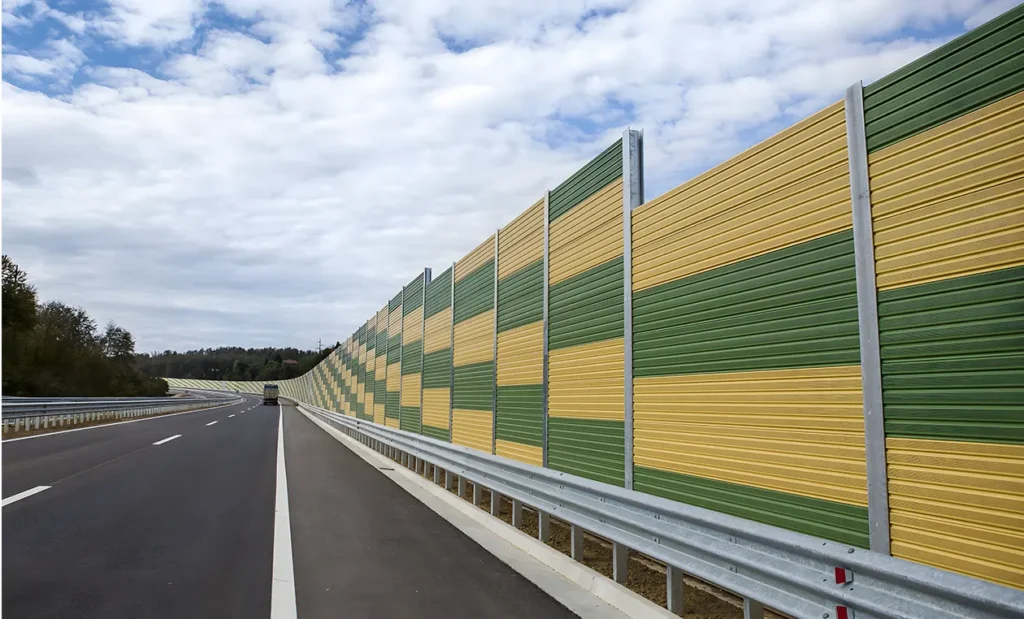
Acoustic Performance & Vibration Damping
Acoustic fence systems perform two primary functions: sound reflection (Weighted Sound Reduction Index ) and sound absorption (Single-Number Rating ).
- Sound Transmission Class (STC): A solid back sheet of 1.5 mm color aluminum delivers an STC rating of 25–28 dB, meeting standard requirements for highway sound reflection according to ASTM E90.
- Sound Absorption (NRC): When configured as a perforated cassette filled with high-density mineral wool, the micro-perforated front aluminum facing channels sound waves into the core material, achieving sound absorption values up to NRC 0.90 or Class A4/B3 performance under EN 1793-1.
- Resonance Control: Aluminum’s relatively low elastic modulus () combined with internal damping layers prevents mid-frequency panel resonance rattle caused by low-frequency exhaust pulses from heavy transport vehicles.
References
[1] Wikipedia. Aluminium alloy[EB/OL]. 2026-09-30.
[2] Wikipedia. Polyvinylidene fluoride[EB/OL]. 2026-09-30.
[3] Wikipedia. American Architectural Manufacturers Association[EB/OL]. 2026-09-30.
[4] Wikipedia. Salt spray test[EB/OL]. 2026-09-30.