
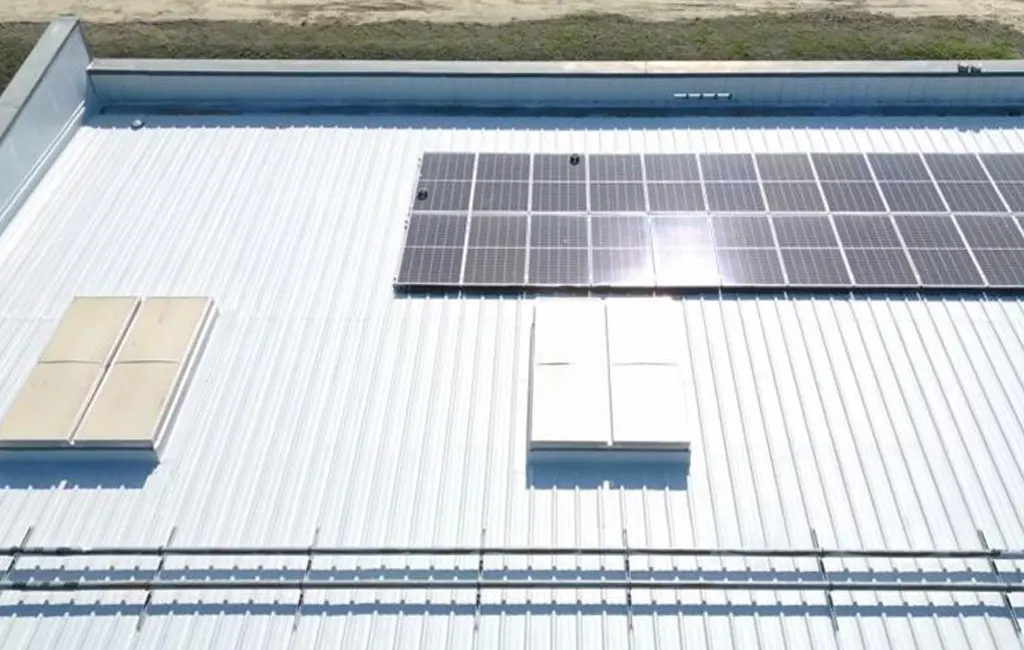
Selecting a reflective color-coated aluminum roofing system requires balancing solar reflectance, thermal emittance, coating durability, and architectural appearance. Unlike conventional roofing materials that may absorb substantial solar radiation, reflective aluminum roofing uses engineered coating systems and carefully selected pigments to reduce solar heat gain. When properly specified, these systems can help lower roof surface temperatures, reduce building cooling demand, and maintain long-term exterior performance.
Solar Reflectance and Thermal Performance
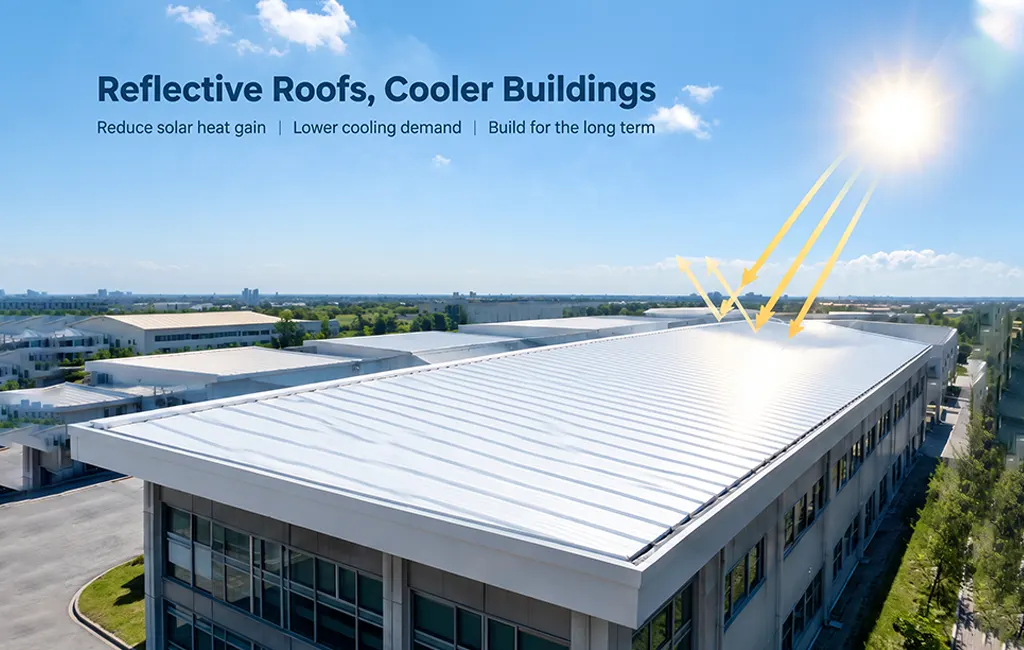
The thermal performance of a reflective aluminum roof depends primarily on two optical properties: solar reflectance and thermal emittance. Solar reflectance measures the proportion of incoming solar energy reflected by the roof surface, while thermal emittance describes its ability to release absorbed heat as infrared radiation. The Solar Reflectance Index (SRI), calculated using ASTM E1980 [1], combines these properties to evaluate the surface’s relative heating behavior under specified conditions.
High-reflectance white coatings are commonly selected for warehouses, factories, commercial buildings, and other structures with large roof areas. However, modern cool-roof pigments can also improve near-infrared reflectance in selected colored finishes, helping designers balance thermal performance with aesthetic requirements. Actual energy savings depend on climate, insulation, ventilation, building orientation, HVAC efficiency, and the existing roof assembly.
Technical Comparison of Reflective Aluminum Roofing Coatings
The coating system plays a critical role in determining the roof’s weather resistance, color stability, and service life. PVDF, high-durability polyester (HDP), and standard polyester (PE) coatings offer different performance and cost profiles.
| Technical Parameter | PVDF Coating | HDP Coating | PE Coating |
| Weather resistance | Excellent for demanding exterior exposure | Good to very good | Suitable for less demanding exposure |
| UV and color retention | Excellent | Good to very good | Generally lower than PVDF |
| Corrosion protection | High when properly formulated and applied | Good with suitable pretreatment | Depends on formulation and environment |
| Solar reflectance | Depends on pigment and surface formulation | Depends on pigment and surface formulation | Depends on pigment and surface formulation |
| Typical application | Premium architectural and industrial roofing | Commercial and industrial roofing | General-purpose roofing and interior applications |
| Relative coating cost | Higher | Moderate | Generally lower |
Note: This is a qualitative comparison. Actual performance depends on coating formulation, film thickness, pretreatment, substrate, exposure conditions, and the manufacturer’s test data.
Aluminum Substrate, Pigments, and Coating Durability
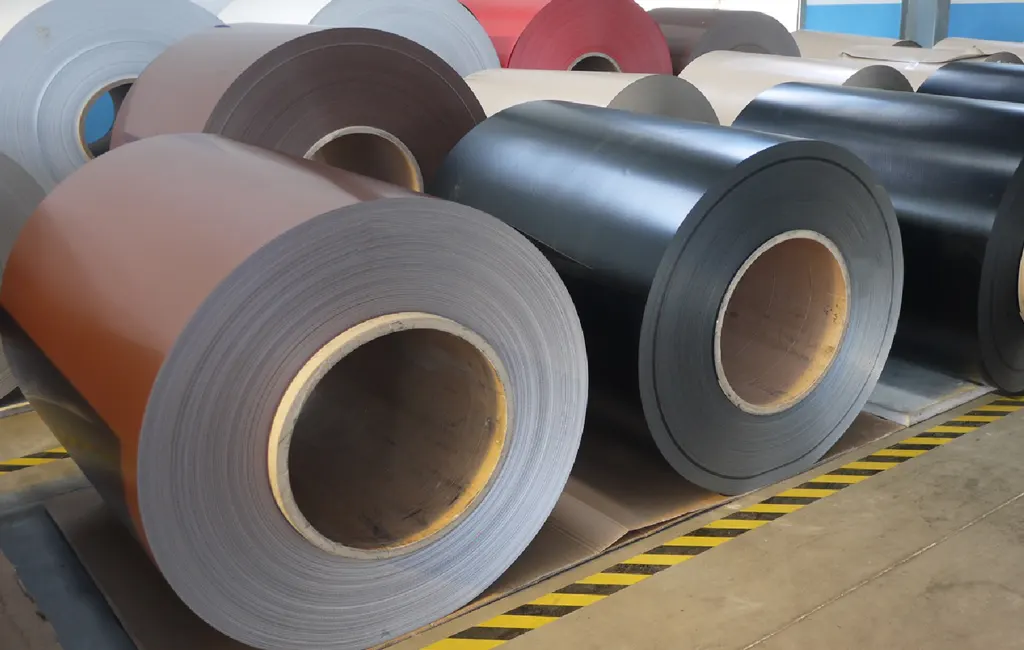
Reflective roofing performance begins with the aluminum substrate. Commonly used alloys, including 3003 and 3004 [3], provide a practical balance of formability, strength, and corrosion resistance for many roofing applications. The appropriate alloy and temper should be selected according to panel geometry, forming requirements, structural design, and local environmental conditions.
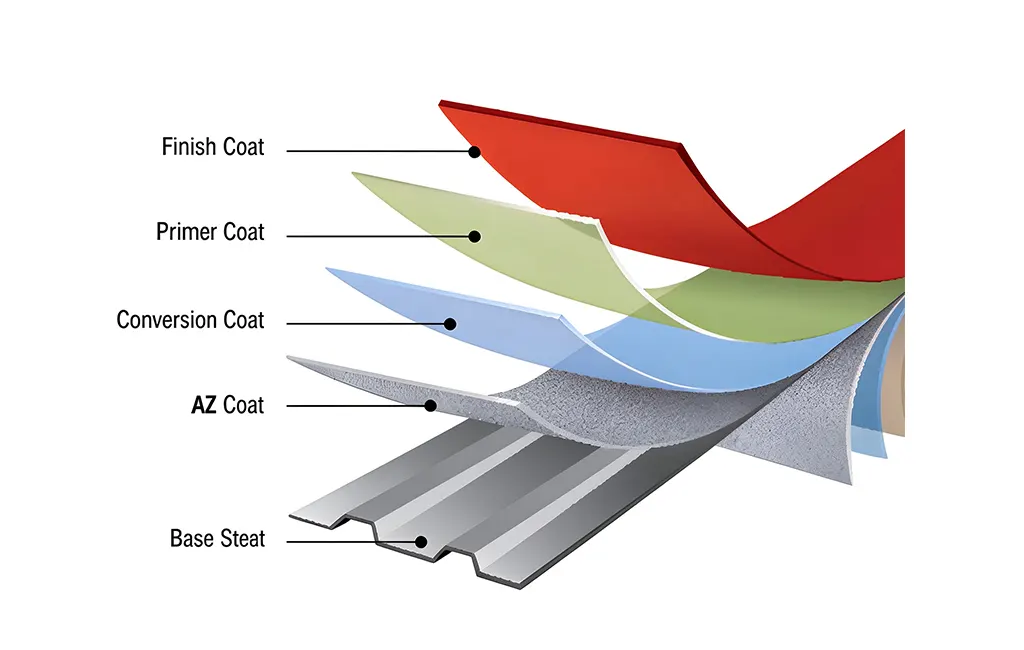
The coating formulation is equally important. High-performance fluoropolymer coatings, such as PVDF systems [2], provide strong resistance to ultraviolet exposure, weathering, and color degradation. Meanwhile, specialized inorganic and near-infrared-reflective pigments can improve solar reflectance without restricting the design to white or other very light colors. Proper surface pretreatment, primer compatibility, coating adhesion, and controlled curing are essential to minimize premature peeling, chalking, and corrosion-related defects.
For coastal, tropical, or industrial environments, specifications should also account for salt exposure, humidity, airborne pollutants, and temperature cycling. Coating selection should therefore be based on documented performance tests and project-specific exposure conditions rather than color or price alone.
How to Choose the Right Reflective Aluminum Roof
The most suitable roofing system depends on the building’s intended use, local climate, design requirements, and lifecycle budget. For buildings in hot climates with significant air-conditioning demand, a high-reflectance finish with verified solar reflectance and thermal emittance data is a strong starting point. Where long-term color retention and severe weather exposure are priorities, PVDF-coated aluminum may offer a more suitable solution despite its higher initial cost.
For project-specific recommendations, consult a qualified roofing professional and request technical datasheets, coating specifications, and independent test results from the manufacturer.
References
[1] Wikipedia. Solar Reflectance Index[EB/OL]. 2026-10-19.
[2] Wikipedia. Polyvinylidene fluoride[EB/OL]. 2026-10-19.
[3] Wikipedia. Aluminium alloy[EB/OL]. 2026-10-19.