
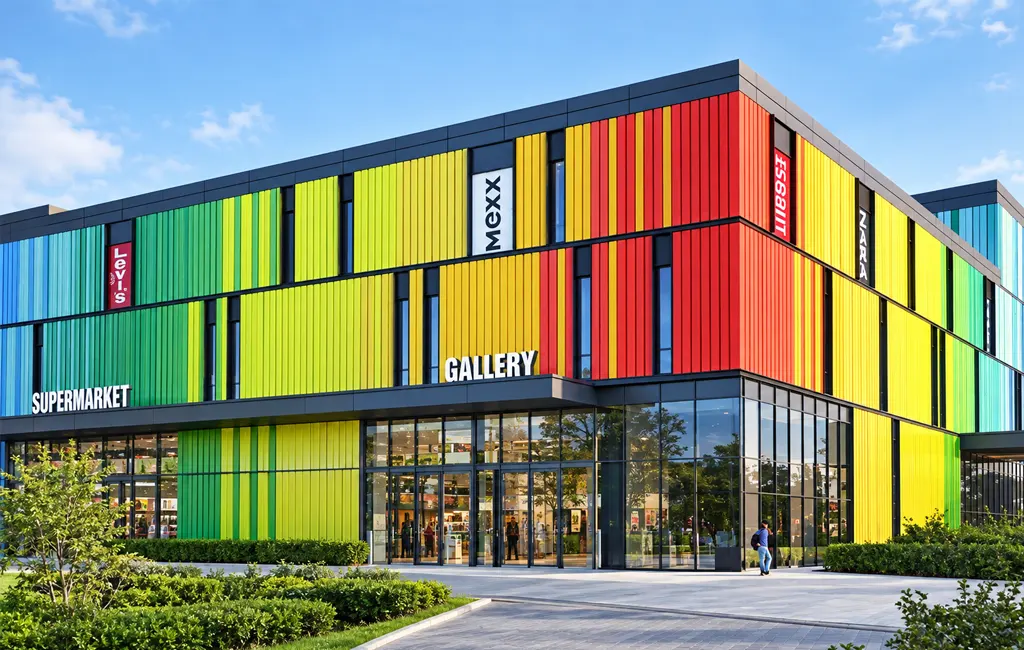
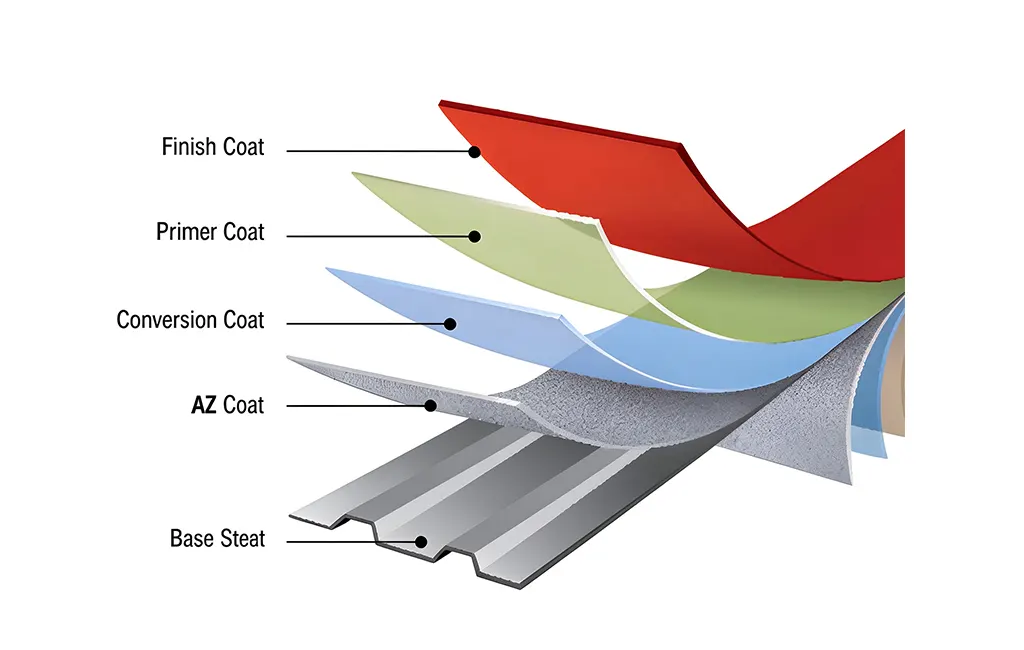
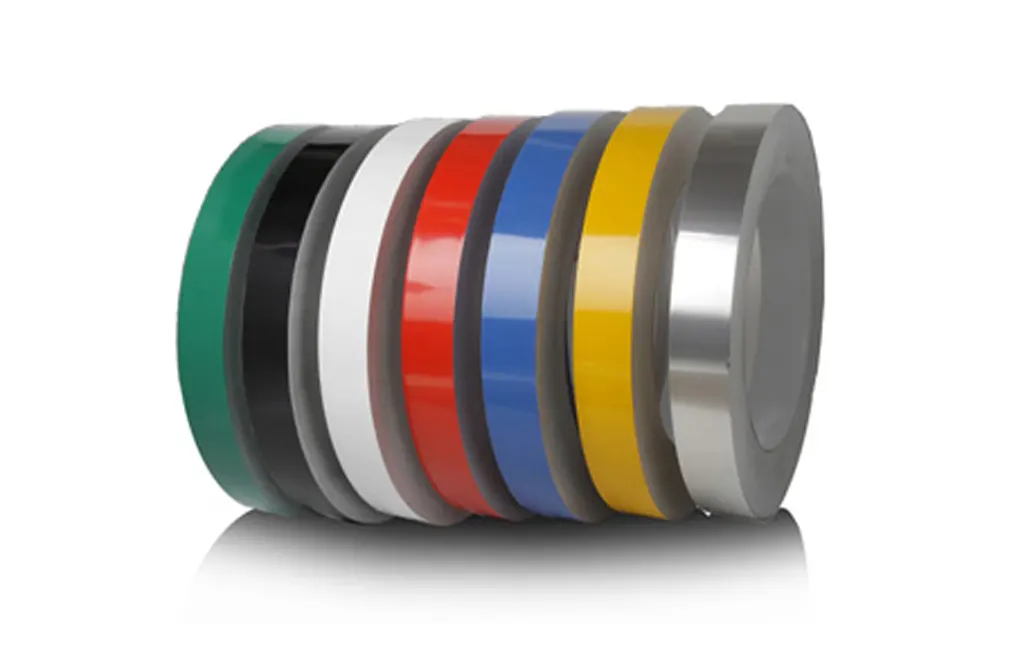
Dark color-coated aluminum facades stain primarily due to chalking, thermal-induced hydrophobic breakdown, atmospheric particulate deposition, and chemical etching. Darker pigments (such as carbon black or iron oxides) absorb higher amounts of solar radiation, raising surface temperatures up to 80°C. Thermal cycling accelerates binder degradation in lower-grade coatings, causing resin erosion and free-pigment exposure (chalking). Furthermore, environmental pollutants (sulfur dioxide, acid rain, NOx) interact with dew and rain to form localized acidic droplets that etch the surface resin, causing permanent water spotting, streaking, and uneven loss of gloss. High-performance coatings compliant with AAMA 2605 prevent this through fluoropolymer resin stability [1]and inorganic colorants.
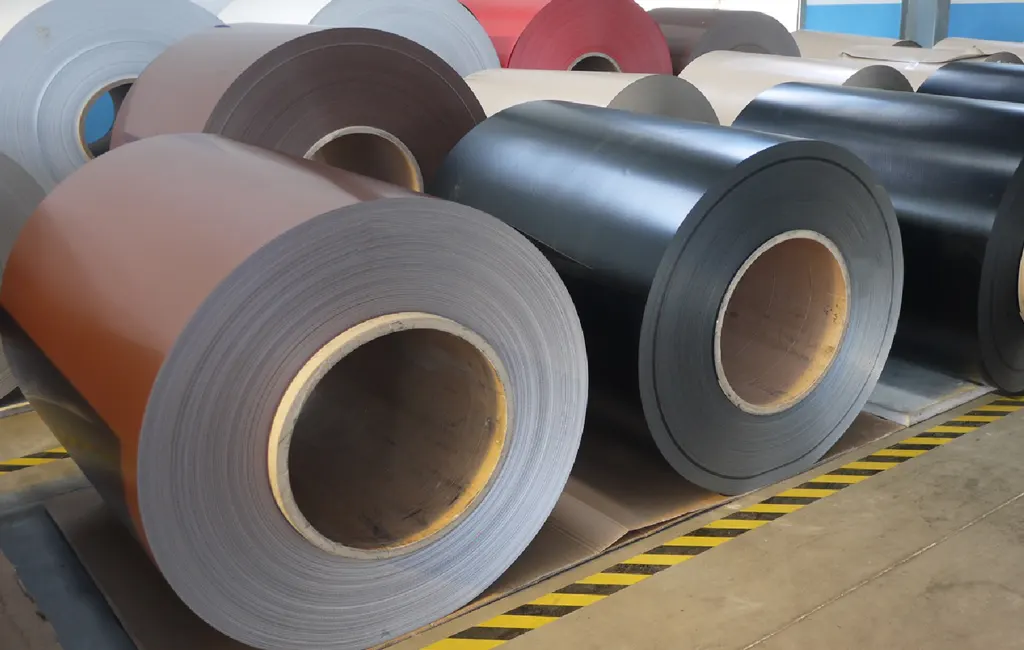
Technical Performance Matrix: Coating Types for Dark Facades
The selection of coating technology directly dictates the facade’s resistance to thermal degradation, chalking, and chemical staining under severe environmental exposure.
| Technical Parameter | PVDF (Polyvinylidene Fluoride) Coating | FEVE (Fluoroethylene Vinyl Ether) Coating | Super Durable Polyester (SDP) | Standard Polyester (PE) Coating |
| Applicable Standards | AAMA 2605 / ISO 12206 | AAMA 2605 / ISO 12206 | AAMA 2604 | AAMA 2603 |
| Substrate Compatibility | AA3003, AA5052, AA6061 | AA3003, AA5052, AA6061 | AA1100, AA3003 | AA1100, AA3003 |
| Coating Thickness (Dry) | 25–35 μm (2 or 3-coat) | 25–30 μm (2-coat) | 20–25 μm | 15–20 μm |
| Resin System Ratio | 70% PVDF / 30% Acrylic | 100% FEVE Fluoropolymer | Premium Thermosetting Polyester | Standard Monomeric Polyester |
| Accelerated Weathering (UV) | >4,000 Hours (QUV-A) | >4,000 Hours (QUV-A) | >2,000 Hours (QUV-A) | <1,000 Hours (QUV-A) |
| Salt Spray Resistance | >4,000 Hours (ASTM B117) [2] | >4,000 Hours (ASTM B117) | >3,000 Hours (ASTM B117) | <1,000 Hours (ASTM B117) |
| Color Retention (\Delta E) | \Delta E < 5 after 10–20 years | \Delta E < 5 after 10–20 years | \Delta E < 5 after 5 years | Rapid fading within 2–3 years |
| Chalking Rating | Rating \ge 8 (ASTM D4214) | Rating \ge 8 (ASTM D4214) | Rating \ge 6 (ASTM D4214) | Severe chalking (Rating < 4) |
| Recommended Application | High-rise curtain walls, harsh marine climates | Gloss-retention facades, architectural trim | Low-rise commercial cladding | Interior panels, temporary structures |
Degradation Mechanisms of Dark Color-Coated Aluminum
Dark pre-painted aluminum panels require strict thermal management and UV stabilization because their solar reflectance index (SRI) is significantly lower than that of light-colored panels.
UV Degradation and Resin Hydrolysis
High-energy shortwave UV rays (UV-A and UV-B, wavelengths 290–400 nm) [3]break the chemical bonds within organic binder resins. Standard polyester coatings feature carbon-oxygen ester linkages easily broken by UV irradiation and moisture via hydrolysis. When the polymer matrix degrades, encapsulated pigments loose structural anchor points, leading to surface micro-cracking and pigment migration.
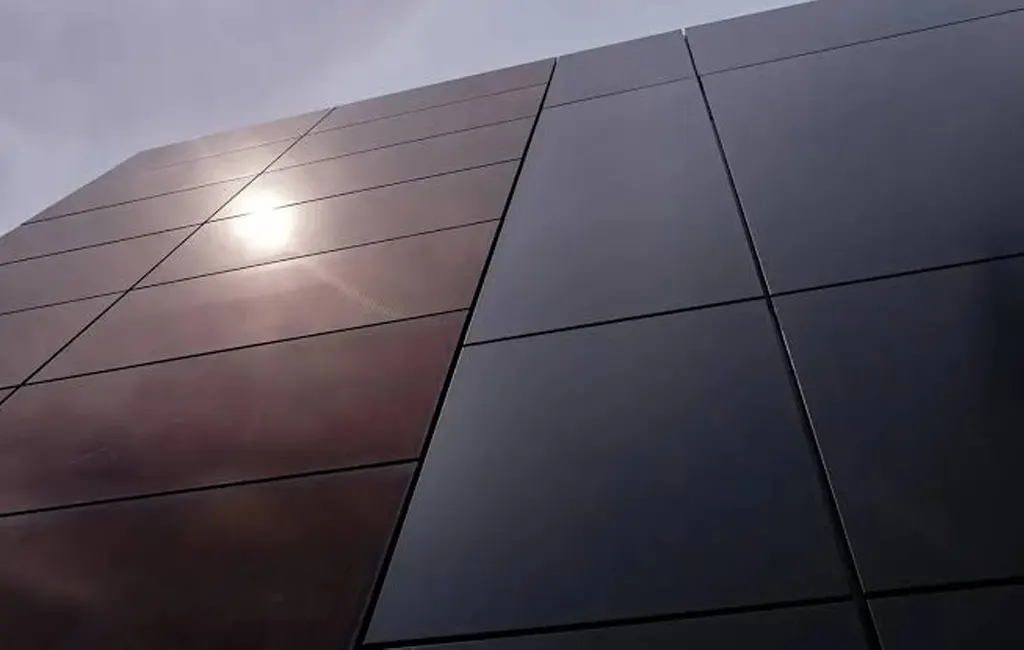
Preventative Design, Installation, and Maintenance Standards
Preventing stains on installed dark architectural aluminum facades involves managing runoff patterns, preventing contact with incompatible materials, and implementing systematic cleaning cycles.
Architectural Joint & Runoff Management
- Drip Deflection Flashing: Ensure all parapets, windowsills, and horizontal projections feature overhang drip edges with minimum 15° slopes to prevent dirty water from dripping down vertical facade faces.
- Non-Bleeding Sealants: Utilize structural silicone sealants classified under ASTM C1248 (Standard Test Method for Staining of Substrates by Joint Sealants). Low-grade polyurethane or mastic sealants leach unreacted plasticizers under heat, resulting in irreversible fluid migration streaks down dark panel surfaces.
Preventive Maintenance and Rinsing Regimes
To preserve appearance and maintain AAMA 2605 warranty compliance:
- Cleaning Frequency: Wash coastal and heavy industrial facades twice annually; standard commercial urban environments once annually.
- Washing Protocol: Use clean water pressurized below 400 PSI (2.76 MPa) combined with mild, non-abrasive industrial neutral detergents (\text{pH } 6.0\text{–}8.0).
- Prohibited Practices: Avoid strong alkaline cleaners (\text{pH} > 10), acidic solutions (\text{pH} < 5), organic solvents (e.g., MEK, acetone), or abrasive scouring pads, which strip thin clear-coat layers and destroy gloss uniformity.
References
[1] Wikipedia.Polyvinylidene fluoride[EB/OL]. 2026-10-20.
[2] Wikipedia.Salt spray test[EB/OL]. 2026-10-20.
[3] Wikipedia. Ultraviolet[EB/OL]. 2026-10-20.