
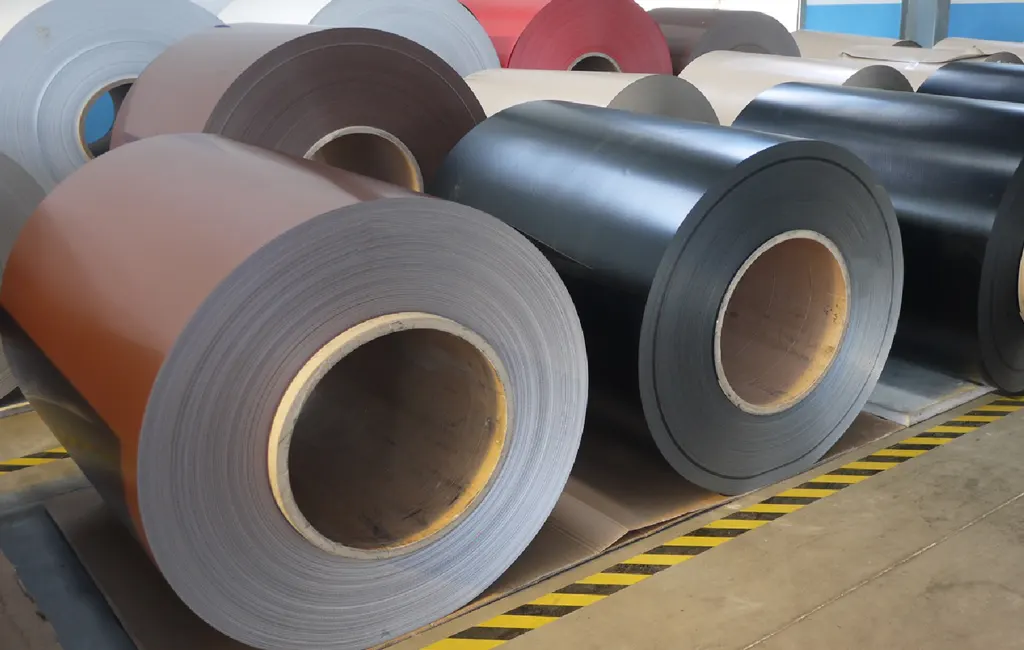
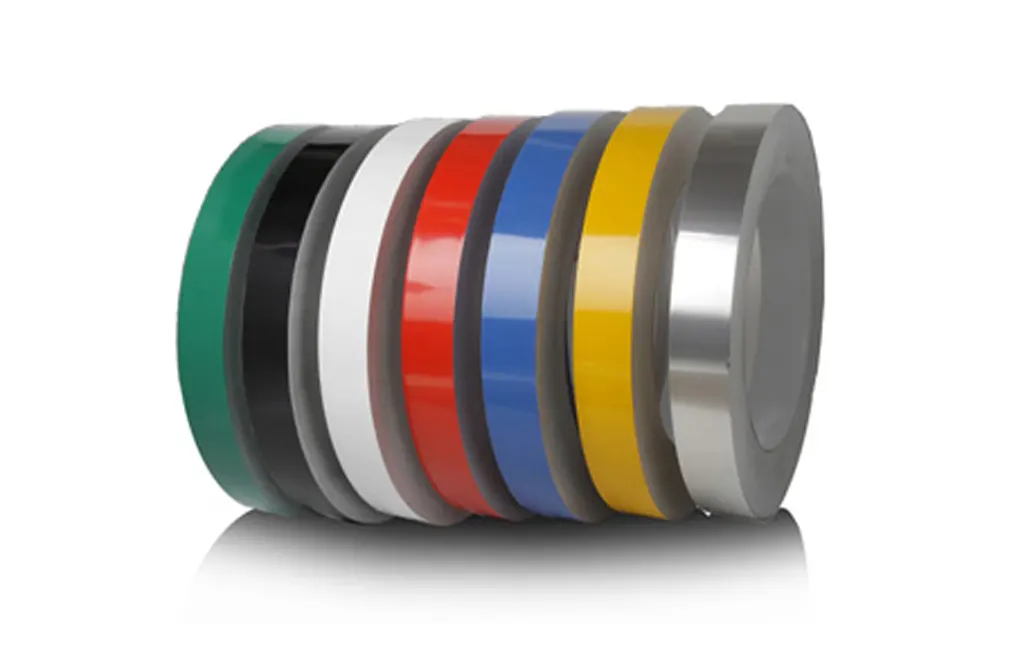
Color-coated aluminum—specifically utilizing 3003 or 6061 aluminum alloy substrates finished with a Polyvinylidene Fluoride (PVDF) or advanced thermoset polyester coating—delivers superior corrosion resistance and structural weight reduction for photovoltaic (PV) mounting systems. Unlike traditional mill-finish or anodized aluminum, pre-painted aluminum undergoes rigorous chemical pre-treatment (degreasing and chromating) followed by precision coil coating, yielding a uniform 25\,\mu\text{m} to 35\,\mu\text{m} dry film thickness (DFT). This engineered finish achieves over 90% color retention after 10 years of accelerated UV exposure (per AAMA 2605 standards) and withstands exceeding 3,000 hours of neutral salt spray testing (ASTM B117 [3]), effectively eliminating galvanic corrosion risks while cutting structural dead loads by up to 65% compared to galvanized steel frames.
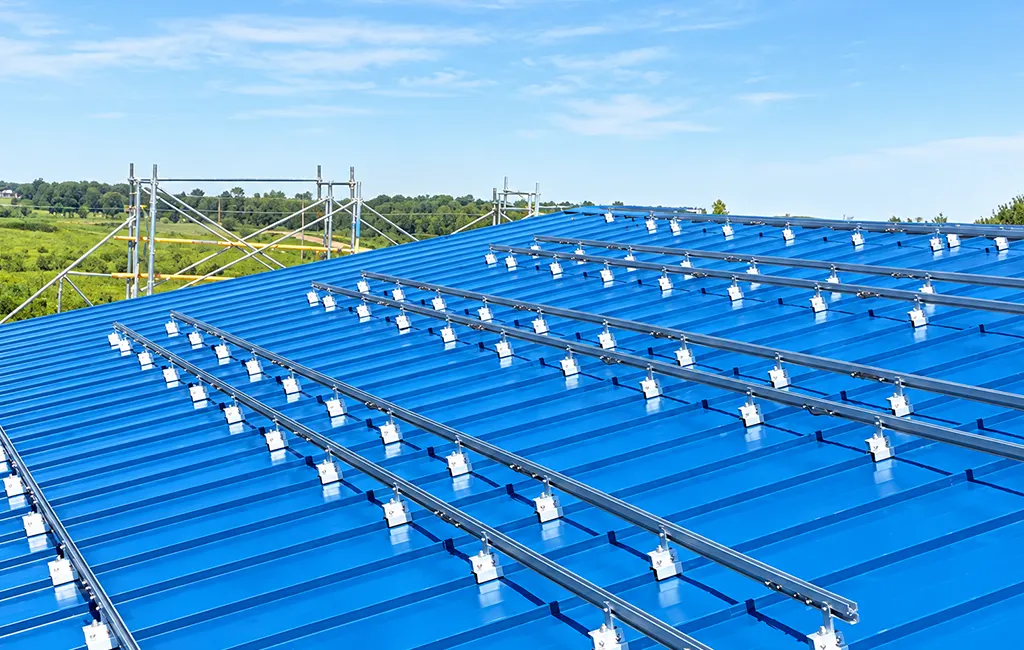
Structured Data Matrix: Technical Parameters of Solar-Grade Color-Coated Aluminum
| Technical Parameter | PVDF Coated Aluminum | High-Durability Polyester | Anodized Color Aluminum |
| Primary Alloy Substrate | 3003 / 5052 / 6061 | 3003 / 3004 | 6063 / 6061 |
| Coating Thickness (DFT) | 25\,\mu\text{m} – 35\,\mu\text{m} | 20\,\mu\text{m} – 30\,\mu\text{m} | 15\,\mu\text{m} – 25\,\mu\text{m} (Anodic layer) |
| Salt Spray Resistance | \ge 3,000 Hours (ASTM B117) | \ge 1,500 Hours (ASTM B117) | \ge 2,000 Hours (ASTM B117) |
| UV Weather Resistance | \ge 10 Years (AAMA 2605) | Years (AAMA 2604) | \ge 10Years |
| Color Retention Rate | > 90\% | 80\% – 85\% | N/A (Metallic hues) |
| Operating Temperature | -50^\circ\text{C} to +120^\circ\text{C} | -40^\circ\text{C} to +90^\circ\text{C} | -60^\circ\text{C} to +150^\circ\text{C} |
| Primary PV Application | Utility-scale & coastal solar frames | Commercial rooftop mounting | Architectural integrated PV (BIPV) |
Corrosion Resistance Mechanisms in Harsh Environments
Solar panel frames deployed in coastal, industrial, or high-humidity environments face severe degradation challenges, including filiform corrosion, pitting, and galvanic reactions with stainless steel fasteners.
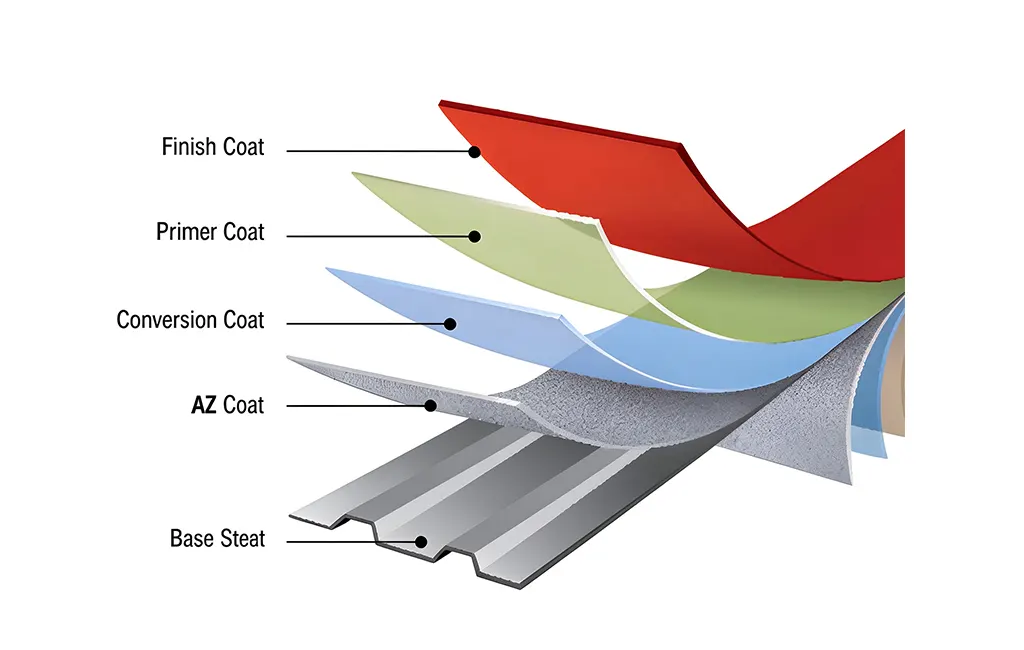
- Multi-Layer Barrier Protection: Color-coated aluminum relies on an integrated multi-layer system comprising a chemical conversion layer, a corrosion-inhibiting primer, and a high-performance PVDF topcoat. This system isolates the underlying aluminum substrate from moisture, chloride ions, and atmospheric pollutants.
- Compliance with Global Standards: High-performance architectural coatings for solar applications comply with AAMA 2605-20 (Performance Requirements and Test Procedures for Superior Performing Organic Coatings on Aluminum Extrusions and Panels) and ISO 12206, ensuring minimal chalking, fading, and film integrity loss over a multi-decade operational lifespan.
- Edge and Cut Protection: Pre-painted aluminum coil processing ensures that cut edges benefit from lateral barrier properties and cathodic passivation, mitigating edge-creep corrosion commonly seen in improperly treated galvanized steel components.
Weight Optimization and Structural Load Benefits
Optimizing the strength-to-weight ratio is critical for rooftop solar installations and large-scale ground-mounted tracker systems where foundation and structural load capacities are strictly limited.
- Density Advantage: Aluminum has a density of approximately 2.7\text{ g/cm}^3, roughly one-third the weight of structural steel (\approx 7.85\text{ g/cm}^3). Using aluminum alloy grades like 6061-T6 or 5052-H32 provides the necessary yield strength (\ge 240\text{ MPa} for 6061-T6 [1]) while minimizing dead load on commercial building roofs.
- Reduced Balance of System (BOS) Costs: Lighter framing materials simplify manual handling during installation, lower logistical and shipping expenditures, and reduce structural reinforcement requirements for commercial and industrial (C&I) rooftop solar arrays.
- Thermal Expansion Management: Color-coated aluminum maintains predictable thermal expansion coefficients (\approx 23 \times 10^{-6} /\text{K}), preventing mechanical stress concentration points on silicon PV modules during extreme diurnal temperature fluctuations.
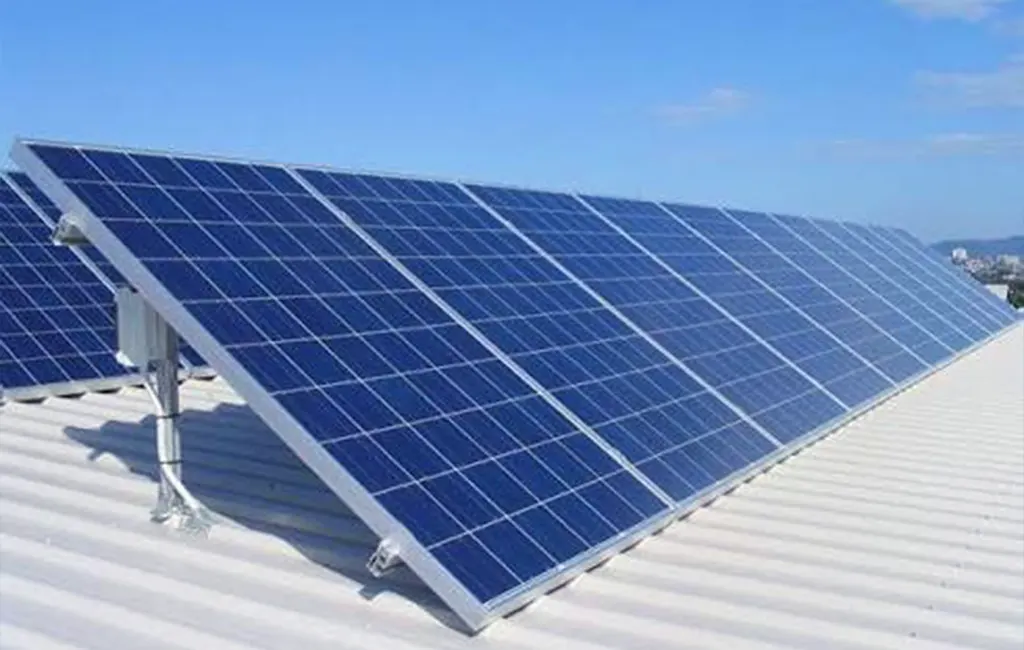
PVDF Coating Technology vs. Traditional Surface Treatments
Selecting the correct surface finish dictates both the long-term aesthetic consistency (crucial for Building-Integrated Photovoltaics or BIPV) and the total cost of ownership (TCO) for solar assets.
- PVDF Composition: Polyvinylidene Fluoride topcoats consist of fluoropolymer resins containing strong carbon-fluorine bonds [2], providing exceptional resistance to ultraviolet radiation, chemical degradation, and industrial fallout.
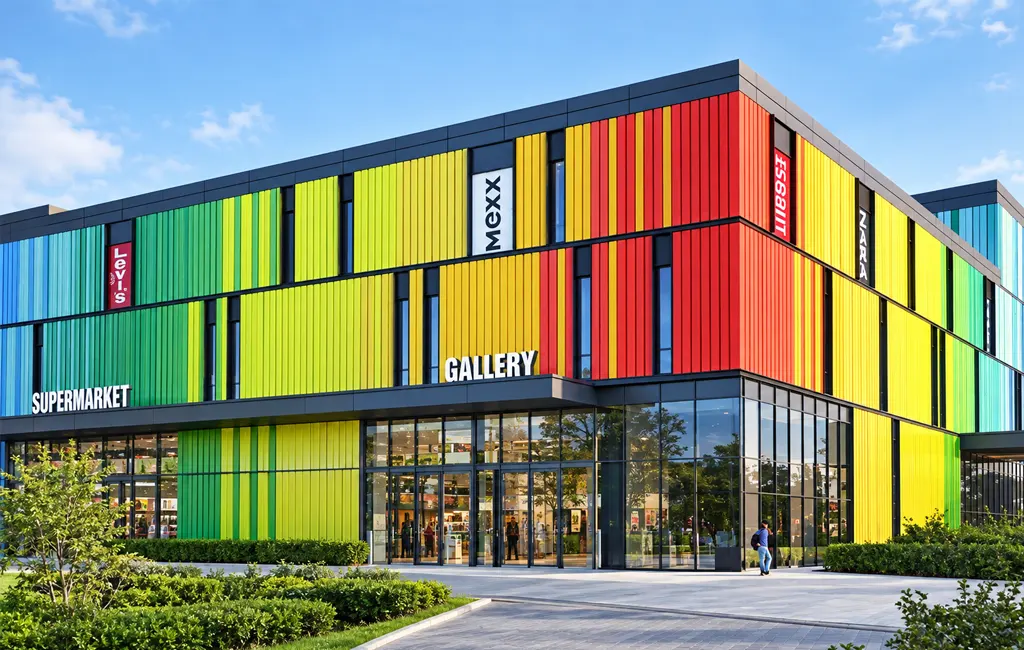
- Comparison with Anodizing: While conventional anodizing forms a clear or colored oxide layer, it can exhibit color variations across different extrusion batches. Coil-coated color aluminum offers precise Delta-E color consistency (\Delta E < 0.5), allowing utility-scale solar farms and commercial rooftops to maintain uniform branding and visual standards.
- Maintenance Reduction: The low surface energy of PVDF coatings creates a self-cleaning hydrophobic effect, reducing dust and particulate accumulation that can cause shading losses (soiling losses) on adjacent photovoltaic glass surfaces.
References
[1] Wikipedia.6061 aluminium alloy[EB/OL].
[2] Wikipedia. Polyvinylidene fluoride[EB/OL].
[3] Wikipedia. Salt spray test[EB/OL].