
Direct Technical Answer: Color-Coated Aluminum vs. Clay Tile Roofing
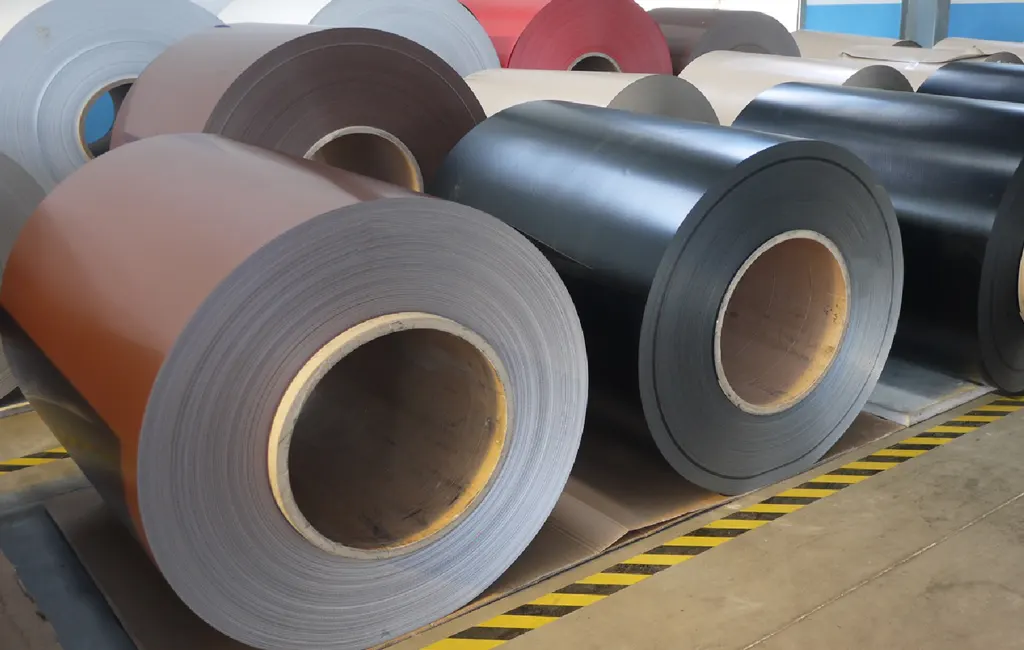
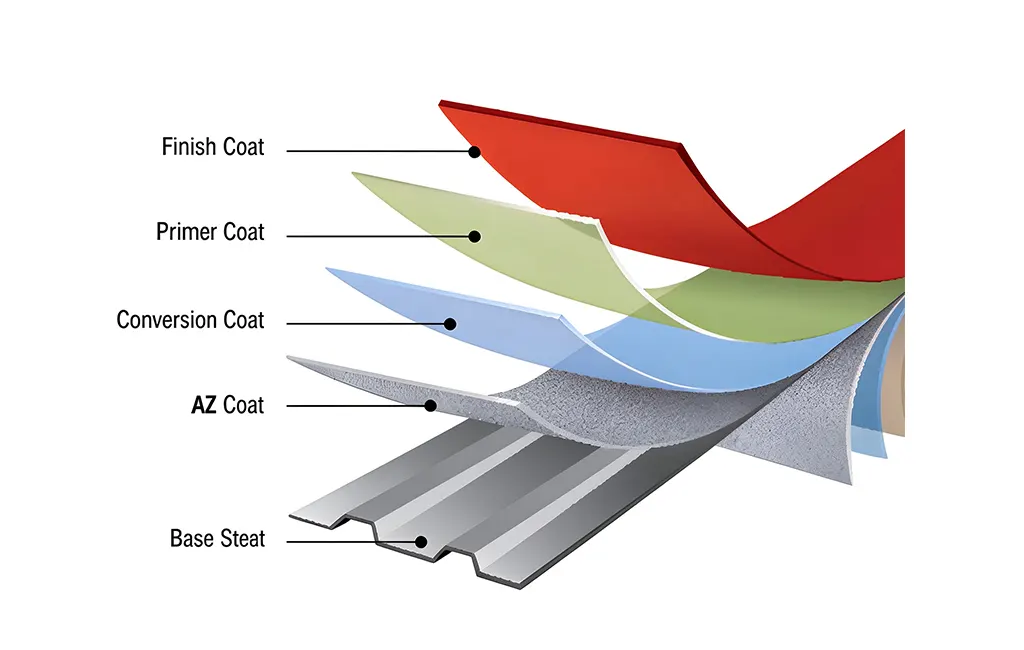
In building envelope engineering, selecting between color-coated aluminum and traditional clay tile roofing dictates dead load distribution, structural sizing, and life-cycle expenditure. Color-coated aluminum roofing (typically utilizing AA 3004-H14 or AA 5052-H32 alloys [1]with a 25–35 μm 70% PVDF coating compliant with AAMA 2605 [2]) delivers an ultralight structural mass of 2.5 to 4.5 kg/m². In contrast, clay tile roofing imposes a heavy structural dead load of 40 to 65 kg/m². While clay tiles offer high thermal mass and traditional aesthetics, color-coated aluminum significantly reduces substructure framing requirements, speeds up installation, eliminates moisture absorption risks, and provides superior wind-uplift and seismic performance on both low- and steep-slope roofs.
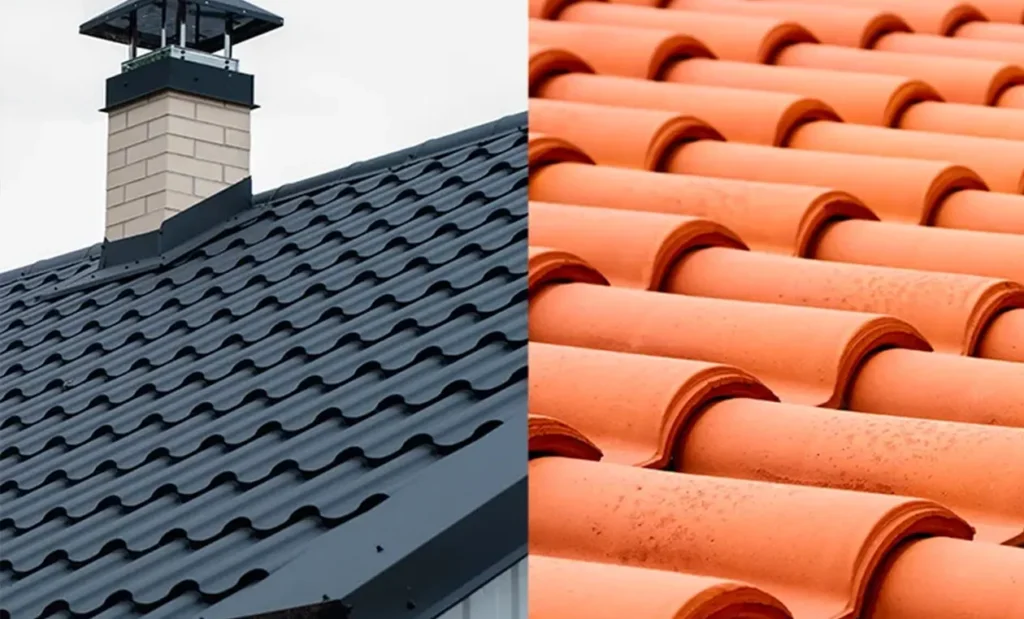
Technical Parameter Comparison Matrix
| Engineering & Performance Parameter | Color-Coated Aluminum Roofing System | Traditional Kiln-Fired Clay Tile System |
| Common Substrate Alloy / Material | AA 3003-H14, AA 3004-H14, AA 5052-H32 [1] | Terracotta Clay (Kiln-Fired at > 1000°C) |
| System Dead Weight (kg/m²) | 2.5 – 4.5 kg/m² (Ultralight structural load) | 40.0 – 65.0 kg/m² (Heavy structural load) |
| Minimum Roof Pitch Limit | 1:50 (1.15° or 2%) with Standing Seam | 1:4 (14.0° or 25%) with Underlayment |
| Surface Finish & Coating System | 25 – 35 μm 70% PVDF Coating (AAMA 2605) [2] | Natural Terracotta or Vitrified Ceramic Glaze |
| Water Absorption Rate (%) | 0.0% (Impermeable metallic barrier) | 3.0% – 10.0% (Porous; freeze-thaw risk) |
| Seismic & Structural Load Impact | Low inertia; minimal reinforcement needed | High mass; requires heavier timber/steel trusses |
| Wind Uplift Resistance | High (ASTM E1592 / UL 580 Class 90) | Moderate (Susceptible to individual tile displacement) |
| Thermal Expansion Coefficient () | (Requires sliding clips) [3] | (Low thermal movement) |
| Flexibility & Post-Forming | 0T – 2T Bend (Formable post-coating) | Rigid & Brittle (Zero flexural strain tolerance) |
| Expected System Lifespan | 40 – 50+ Years (100% Recyclable) | 50 – 100 Years (Tiles brittle to impact) |
Atomic & Modular Technical Breakdown
Structural Mass, Seismic Performance, and Substructure Costs
The primary physical differentiator between color-coated aluminum and clay tiles is unit mass density. Clay tiles impose an average surface dead weight of 50 kg/m², whereas a standing seam 0.8 mm color-coated aluminum sheet weighs approximately 2.7 kg/m²—a reduction of over 90%.
- Substructure Optimization: Specifying color-coated aluminum allows structural engineers to downsize roof trusses, purlins, load-bearing walls, and foundation footings, cutting structural steel consumption in commercial builds by up to 15% to 25%.
- Seismic Mechanics: During an earthquake, dynamic lateral inertial forces are directly proportional to roof mass (). The low mass of color-coated aluminum minimizes top-heavy gravitational moments, reducing structural shear failure risks during seismic events.
Weatherability, Freeze-Thaw Integrity, and Water Absorption
Water absorption characteristics determine how a roofing material performs under freeze-thaw cycles and severe storms:
- Color-Coated Aluminum (Zero Permeability): Pre-painted aluminum is non-porous with 0.0% water absorption. Its continuous surface barrier, protected by a 70% PVDF resin system, prevents moisture penetration. It resists micro-cracking during freeze-thaw cycles, making it suitable for alpine and sub-zero climates.
- Clay Tile (Porosity Vulnerability): Natural terracotta clay exhibits a water absorption rate of 3.0% to 10.0%. In colder climates, trapped moisture within the tile matrix expands during freezing ( volumetric expansion), causing spalling, surface cracking, and tile fragmentation over time.
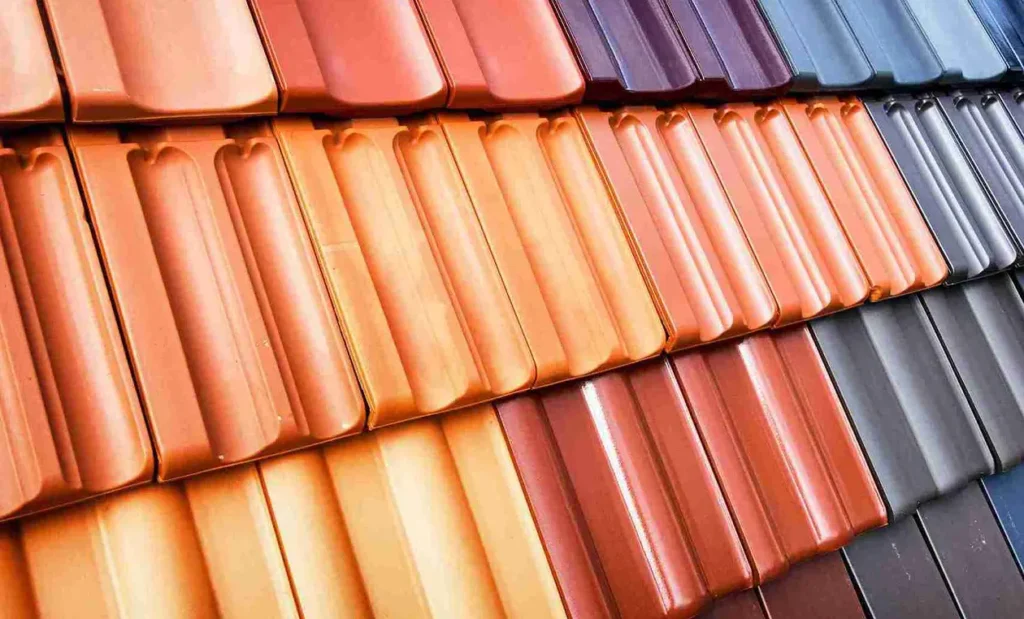
Thermal Performance, Heat Gain, and Energy Efficiency
Roofing material selection directly influences solar heat gain coefficient (SHGC) and building HVAC energy demand.
- Cool Metal Roofing Pigments: Modern dark and light PVDF color-coated aluminum finishes incorporate complex inorganic color pigments (CCPs) formulated to reflect near-infrared (NIR) solar radiation. This elevates the Solar Reflectance Index (SRI) to > 78, keeping roof surface temperatures up to 15°C to 20°C lower under direct solar irradiance compared to standard non-reflective surfaces.
- Thermal Mass vs. Heat Retention: While clay tiles offer high thermal mass, they absorb and retain heat throughout the day, re-radiating thermal energy down into the building envelope long into the evening. Color-coated aluminum features low thermal mass; it cools down rapidly once ambient solar radiation drops, reducing night-time cooling loads.
References
[1] Wikipedia. Aluminium alloy[EB/OL]. 2026-09-30.
[2] Wikipedia. American Architectural Manufacturers Association[EB/OL]. 2026-09-30.
[3] Wikipedia. Thermal expansion[EB/OL]. 2026-09-30.