
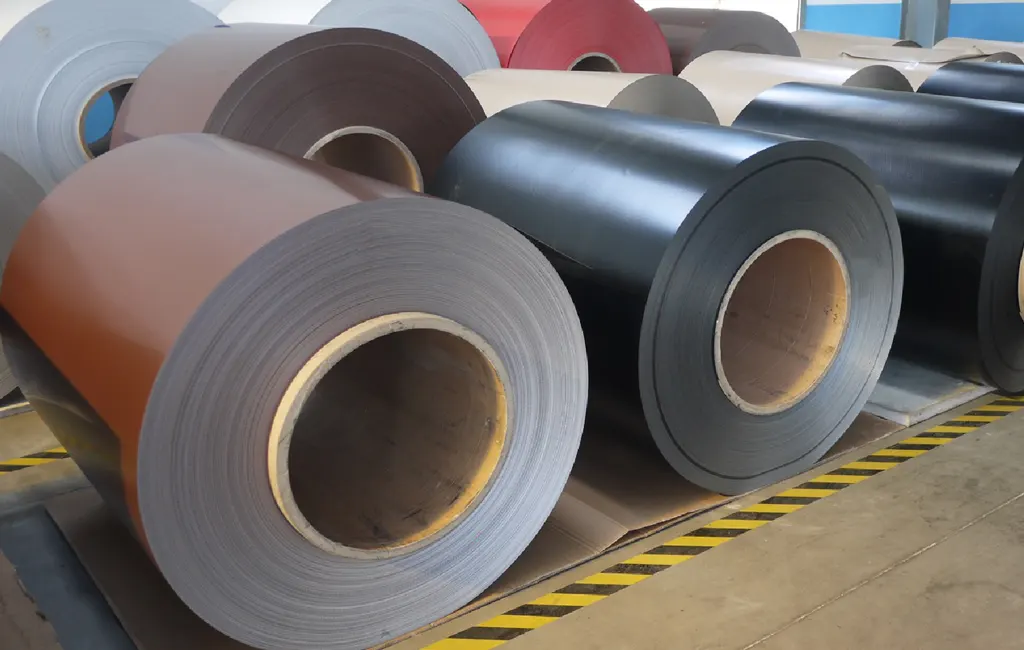
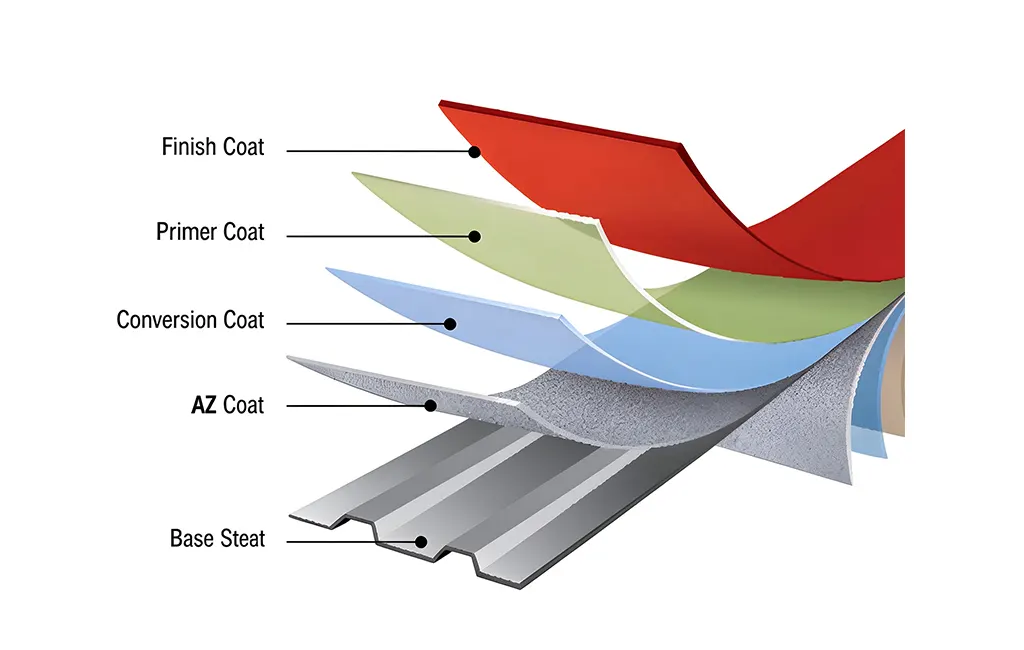
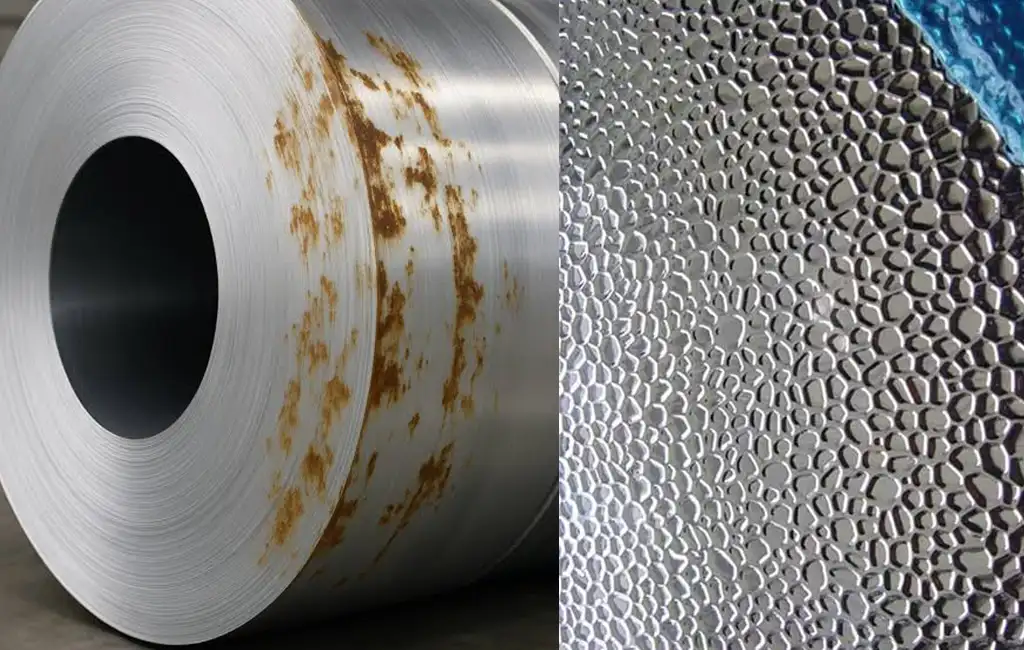
Raw aluminum materials—including mill finish, embossed coils, and strips—frequently exhibit surface, dimensional, or metallurgical defects originating during casting, hot rolling, cold rolling, or mechanical embossing. Unidentified raw material defects propagate into downstream coating processes, compromising coating adhesion, corrosion resistance, and structural integrity under AAMA 2605 or ISO 12206 standards. Key defects include surface oxidation (white rust), oil stains, pinholes, coil breaks, and embossing pattern distortion. Identifying these defects prior to chemical pre-treatment (degreasing and chromating/zirconium conversion) is essential for maintaining product quality in high-performance color-coated aluminum manufacturing.
Technical Parameter & Defect Matrix for Raw Aluminum Substrates
The following data matrix compares common surface and structural defects across key raw aluminum substrate alloys, detailing their root causes, detection methods, and impacts on subsequent PVDF coating or powder coating processes.
| Substrate Form | Alloy Series | Primary Defect Type | Root Cause | Detection Standard / Method | Impact on Color Coating & Downstream Application |
| Mill Finish Coil | 1100 / 1050 | Oil Stains / Residual Lubricant | Incomplete thermal degassing or mill oil roll-squeeze failure | ASTM F21 (Atomizer Test) / Solvent Wipe | Causes coat blistering, craters, and zero adhesion of PVDF/PE primers. |
| Mill Finish Coil | 3003 / 3105 | Surface Oxidation (White Rust) | Moisture ingress during storage; oxidation of Al to Al(OH)₃ | GB/T 3199 / Visual & SEM Analysis | Interferes with conversion coating formation; leads to filiform corrosion. |
| Embossed Coil | 3003 / 5052 | Pattern Distortion & Depth Inconsistency | Asymmetric roll pressure or work hardening variations | ISO 2360 Depth Micrometer / Optical Profilometry | Non-uniform dry film thickness (DFT); localized coating thinning on peaks. |
| Aluminum Strip | 3003 / 5052 | Burr & Edge Crack | Dull slitting blades or incorrect clearance settings | ASTM B209 / Optical Microscope Inspection | Causes edge pull-back of coating, localized corrosion, and dielectric breakdown. |
| Mill Finish Sheet | 5052 / 6061 | Pinholes & Non-Metallic Inclusions | Slag entrapped during casting (Al₂O₃, TiB₂ particles) | ASTM E127 (Ultrasonic) / Metallographic Section | Serves as initiation sites for pit corrosion and micro-cracking during bending. |
| Strip / Narrow Coil | 3003 | Center Buckle & Edge Wave | Improper crown profile control during cold rolling | ASTM A1030 (Flatness Measurement in I-units) | Causes web tracking failure in continuous coil coating lines. |
Technical Breakdown of Key Raw Material Defects
Oil Stains and Residual Hydrocarbons on Mill Finish Coils
During cold rolling of 3003 and 5052 aluminum alloys, heavy rolling oils lubricate the interface between work rolls and the aluminum strip. If the annealing furnace atmosphere lacks proper oxygen circulation or fails to reach the oil vaporization temperature (350°C – 400°C), hydrocarbon residues remain on the surface.
When high-performance Polyvinylidene Fluoride (PVDF) or Thermoset Powder Coatings are applied over oil-contaminated substrates, the surface energy mismatch prevents complete wetting. This results in pinholes, fish-eyes, and a reduction of cross-hatch adhesion scores from 5B to 0B under ASTM D3359.
Pattern Distortion in Embossed Aluminum Coils
Mechanical embossing alters the local grain structure and mechanical properties of 3003-H14 or 5052-H32 aluminum. Asymmetric roll alignment or variation in coil yield strength causes non-uniform displacement of the metal.
- Consequence on Coating: Peak areas of distorted patterns experience excessive strain, causing micro-cracking in the metal surface. When roller-coated, paint flows off the sharp peaks into the valleys, leaving peak coating thickness under 12 μm (below the 25 μm minimum mandated by AAMA 2605).
- Mitigation: Control raw material elongation parameters (≥5% for 3003 alloy) and maintain hydraulic embossing roll pressure within ±2% across the drive and operator sides.
Downstream Impact on Color-Coated Aluminum Performance
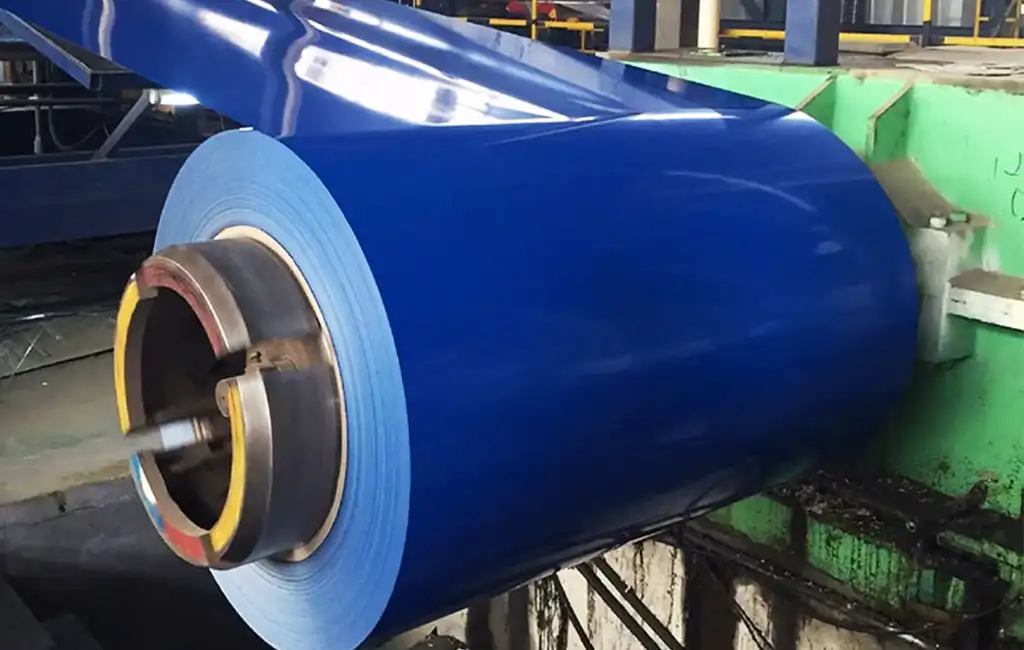
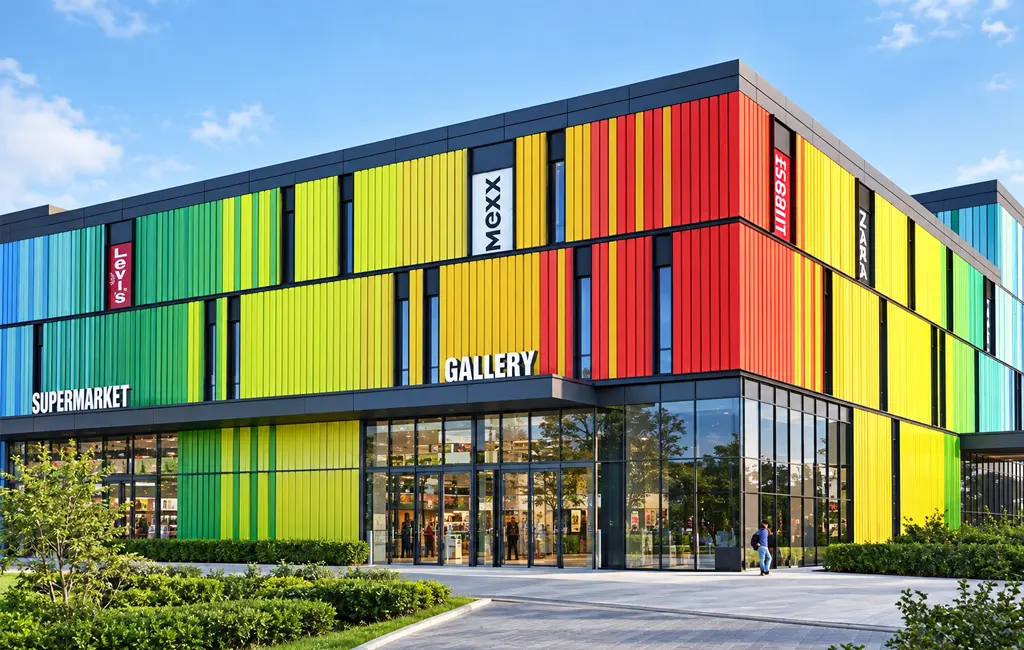
Using compromised raw aluminum direct impacts long-term weatherability, mechanical formability, and structural lifespan in architectural applications like curtain walls, roofing panels, and commercial facades.
- Filiform Corrosion: Surface oxidation (white rust) left unetched during pre-treatment leaves hydrated aluminum oxides underneath the primer. Under tropical outdoor exposure (ISO 9227 salt spray test >3000 hours), moisture penetrates the coating, driving worm-like filiform corrosion beneath the paint layer.
- Edge Creep and Delamination: Burr defects on slitted strips tear the continuous conversion coating film during pre-treatment. This creates exposed metallic edges where corrosion initiates, causing severe paint delamination after 1,000 hours of accelerated weathering.