
Specifications and Standards of Embossed Aluminum Coils
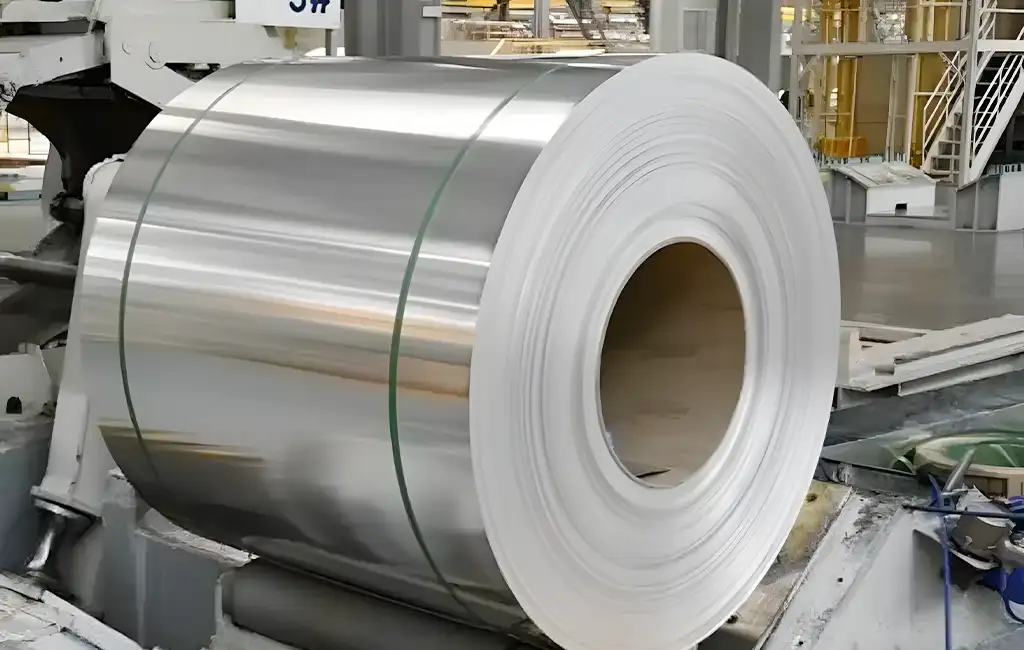
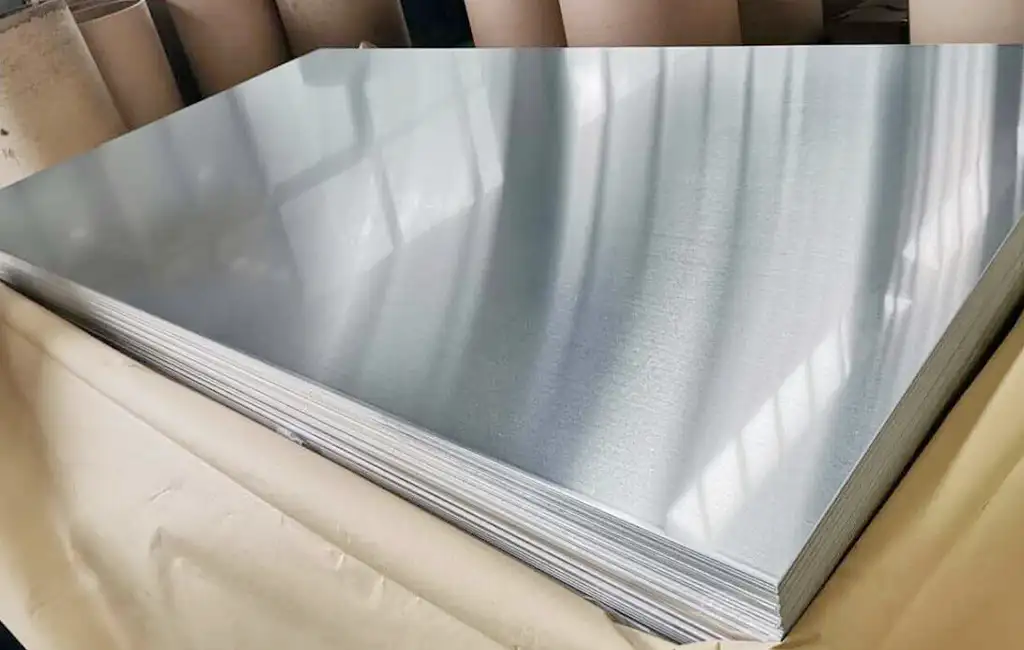
Embossed aluminum coils are continuous flat-rolled aluminum substrates mechanically textured using high-pressure engraved steel rollers to form raised geometric patterns. Manufactured primarily from 1000 series (1050, 1060, 1100), 3003 (Al-Mn), 3105, and 5052 (Al-Mg) alloys compliant with ASTM B209, EN 485, and GB/T 3880 standards, these coils offer an optimized strength-to-weight ratio. The mechanical embossing process increases section flexural rigidity by 15–20%, diffuses optical reflection, hides sub-surface handling defects, and improves mechanical bonding surface area. Pre-painted variants featuring PVDF (Polyvinylidene Fluoride) or PE (Polyester) coil coatings deliver weatherability exceeding 2,000 hours in neutral salt spray testing (ASTM B117).
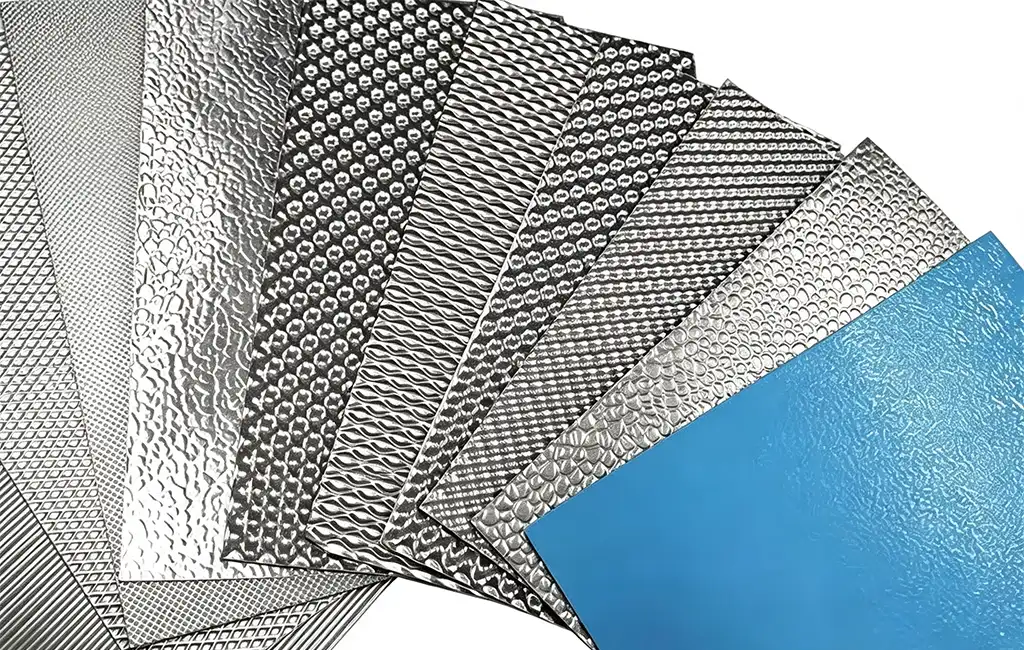
Technical Parameter Matrix of Embossed Aluminum Coils
The matrix below compares key technical parameters, coating specifications, and performance metrics across common alloy series used for embossed aluminum production:
| Alloy Grade & Temper | Common Thickness Range (mm) | Coating System & Thickness | Tensile Strength / Yield Strength (MPa) | Weathering & Corrosion Resistance | Primary Industry Applications |
| AA 1050 / 1060 / 1100 (H14 / H24) | 0.20 – 1.50 mm | Mill Finish or PE Coating (15–18 μm) | Tensile: 95–140 Yield: 80–120 | Neutral Salt Spray: > 500 Hours | HVAC Air Duct Insulation, Refrigerator Liners, Heat Exchangers |
| AA 3003 / 3105 (H14 / H24) | 0.30 – 3.00 mm | PVDF Coating (25–30 μm) or PE Coating | Tensile: 145–195 Yield: 115–160 | AAMA 2605 Compliant Salt Spray: > 2,000 Hours | Architectural Roofing, Exterior Facade Panels, Metal Ceiling Tiles |
| AA 5052 (H32 / H34) | 0.80 – 6.00 mm | Anodized (10–25 μm) or Mill Finish | Tensile: 215–265 Yield: 160–200 | Marine Salt Spray: > 3,000 Hours | Marine Decking, Transportation Toolboxes, Industrial Walkways |
| AA 8011 (H18 / H22) | 0.15 – 0.80 mm | Epoxy Primer / Wash Coat (5–8 μm) | Tensile: 130–180 Yield: 100–150 | Moisture & Vapor Barrier: 100% Impermeable | Cold Storage Insulation Jacketing, Appliance Back Panels |
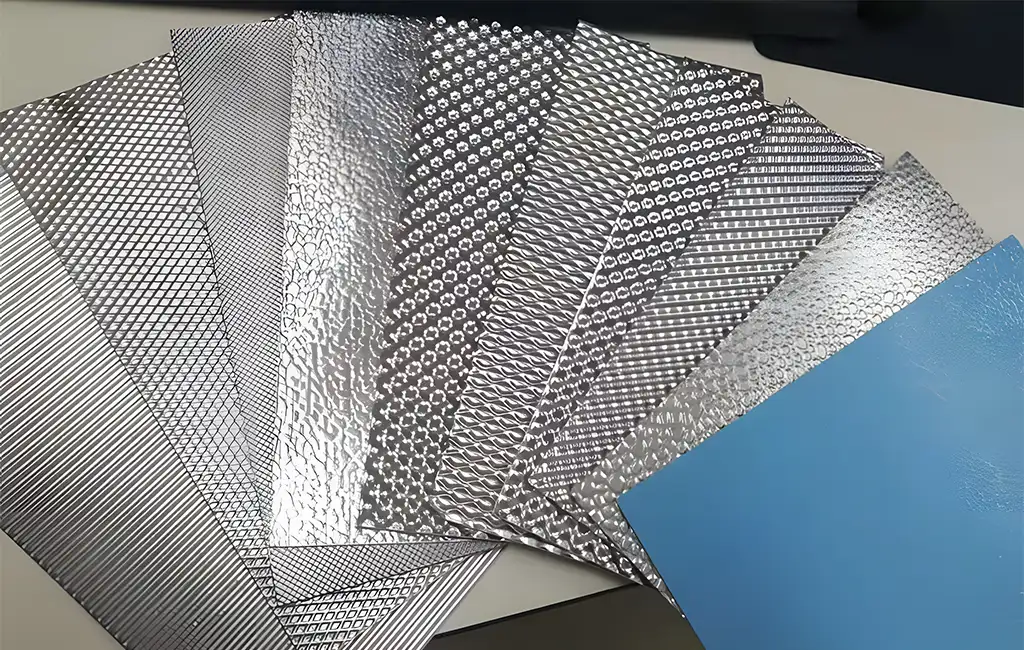
Regular Embossed Patterns and Engineering Benefits
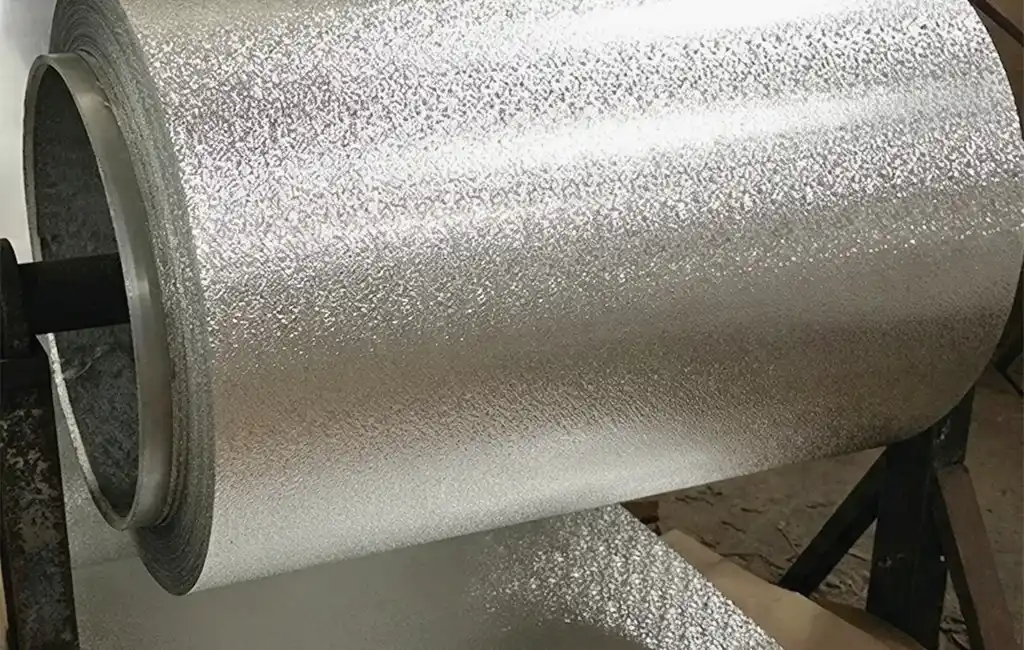
Stucco (Orange Peel) Pattern
Stucco embossing applies a randomized, organic pebble texture to the aluminum surface through hardened steel impression rolls.
- Optical Anti-Glare: Reduces direct specular reflectance below 15%, eliminating visible glare on exterior roofing and architectural cladding.
- Thermal Dissipation: Increases functional surface area by approximately 8%, boosting radiant heat transfer in HVAC evaporator units and refrigeration cabinet interiors.
- Oil-Canning Suppression: Disrupts planar light reflection to conceal the natural thermal wave distortion (“oil-canning”) common in flat gauge sheet metal.
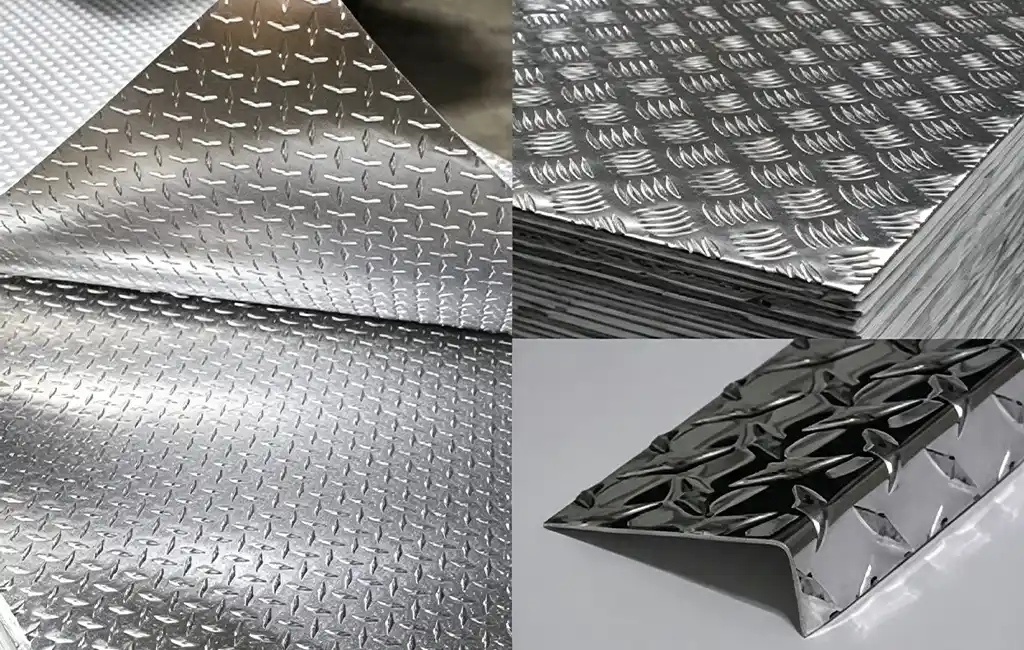
Diamond (Tread Plate) and Multi-Bar Patterns
Featuring raised single-diamond or multi-bar (2-bar, 3-bar, 5-bar) directional ribs, this pattern provides high structural shear resistance.
- Slip Resistance: Achieves a dynamic coefficient of friction (CoF > 0.60 under wet testing), satisfying international industrial safety standards for high-traffic steps and floor panels.
- Mechanical Reinforcement: Increases section modulus, allowing engineers to specify 10–15% thinner gauges without losing structural bending strength.
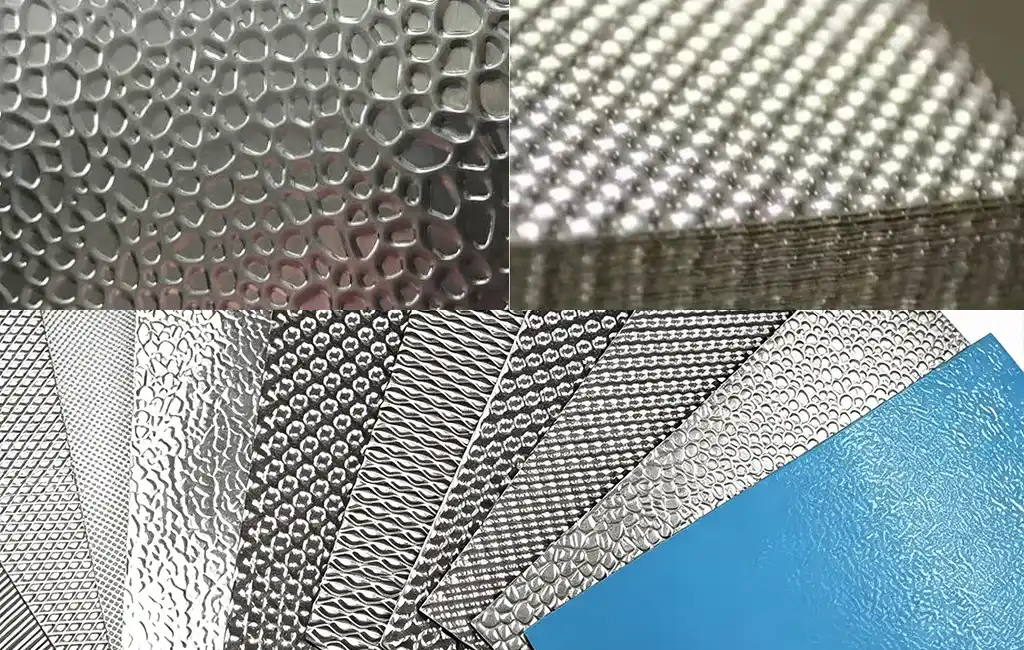
Hemispherical, Pebble, and Custom Geometries
Regular spherical depressions or custom geometric grids offer uniform multi-directional physical properties.
- Acoustic Wave Diffusion: Scatters incident sound waves inside high-velocity air ducts, dampening mechanical airflow noise.
- Mechanical Interlocking: Enhances shear adhesion strength when laminating the coil to polyurethane (PU), polyisocyanurate (PIR), or expanded polystyrene (EPS) insulating cores.