

What Is Mill Finish Aluminum Coil, Sheet & Foil?
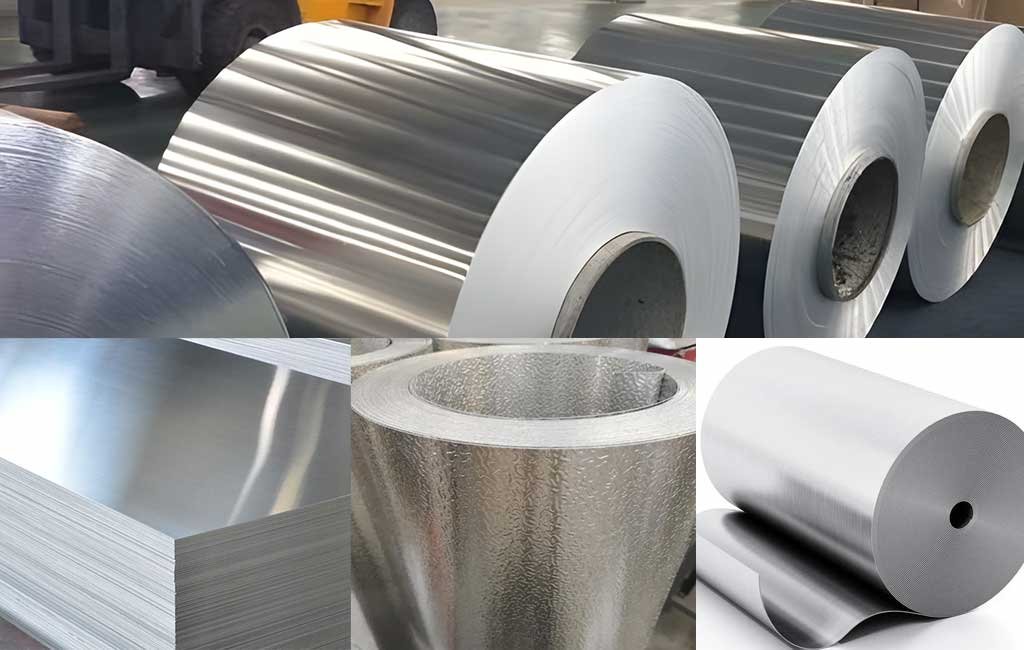
Mill finish aluminum refers to raw aluminum coil, sheet, or foil as it emerges directly from the rolling mill without any secondary mechanical surface finishing, anodizing, or organic paint coating (such as PVDF, PE, or powder coating). Characterized by a light silvery-grey appearance with fine directional mill lines and a thin, naturally occurring aluminum oxide ($\text{Al}_2\text{O}_3$) passivation layer (2–5 nm), mill finish metal retains trace rolling lubricants and light surface oxidation. Manufactured in compliance with ASTM B209, EN 485, and ISO 6361 standards, it serves as the foundational substrate for downstream fabrication, chemical pre-treatment, continuous coil coating, or applications where raw metallic conductivity and structural economy outweigh strict decorative requirements.
Technical Parameter Matrix: Mill Finish Aluminum Products
| Product Form | Common Alloy Series | Standard Tempers | Gauge Range (Thickness) | Surface Roughness (Ra) | Tensile Strength (MPa) | Primary B2B Application Scenarios |
| Aluminum Foil | 1235, 8011, 8079 | O, H18, H22 | 0.006 mm – 0.20 mm | 0.05 – 0.20 μm | 75 – 180 | Flexible packaging, HVAC fins, transformer windings, battery current collectors |
| Aluminum Sheet | 1100, 3003, 5052, 6061 | O, H14, H24, H32, T6 | 0.30 mm – 6.00 mm | 0.25 – 0.60 μm | 110 – 310 | Ductwork, busbar enclosures, automotive heat shields, stamped structural parts |
| Aluminum Coil | 3003, 3105, 5005, 5052 | H14, H24, H34, H111 | 0.20 mm – 4.00 mm | 0.20 – 0.50 μm | 140 – 260 | Feedstock for continuous coil coating, roll-formed roofing, flashing, thermal jackets |
When to Choose Mill Finish Over Color-Coated or Anodized Aluminum
Selecting mill finish over pre-painted (PVDF/PE) or anodized color aluminum is driven by specific engineering, economic, and manufacturing parameters:
1. In-House Post-Fabrication Finishing
Choose mill finish when components require extensive deep drawing, welding, bending, or stamping prior to surface coating. Pre-painted coatings can crack or mar under extreme mechanical deformation or high-heat joining operations (e.g., TIG/MIG welding or laser cutting). Mill finish allows complete component assembly before batch powder coating, anodizing, or electro-deposition (E-coat).
2. Unexposed or Functional Internal Components
For applications where aesthetics play no role—such as HVAC internal ducting, transformer shielding, automobile heat deflectors, cable tray liners, and structural sub-framing—mill finish eliminates unnecessary coating material overhead, yielding a 20% to 40% reduction in direct raw material cost.

3. Maximum Electrical and Thermal Conductivity
Organic paint films (PVDF/PE) and thick anodized layers act as electrical and thermal insulators. When high surface conductivity is mandatory—such as in electrical busbars, grounding strips, transformer foil windings, or heat exchanger fins—mill finish metal ensures direct metal-to-metal thermal and electrical transmission.
4. Feedstock for Continuous Coil Coating Lines
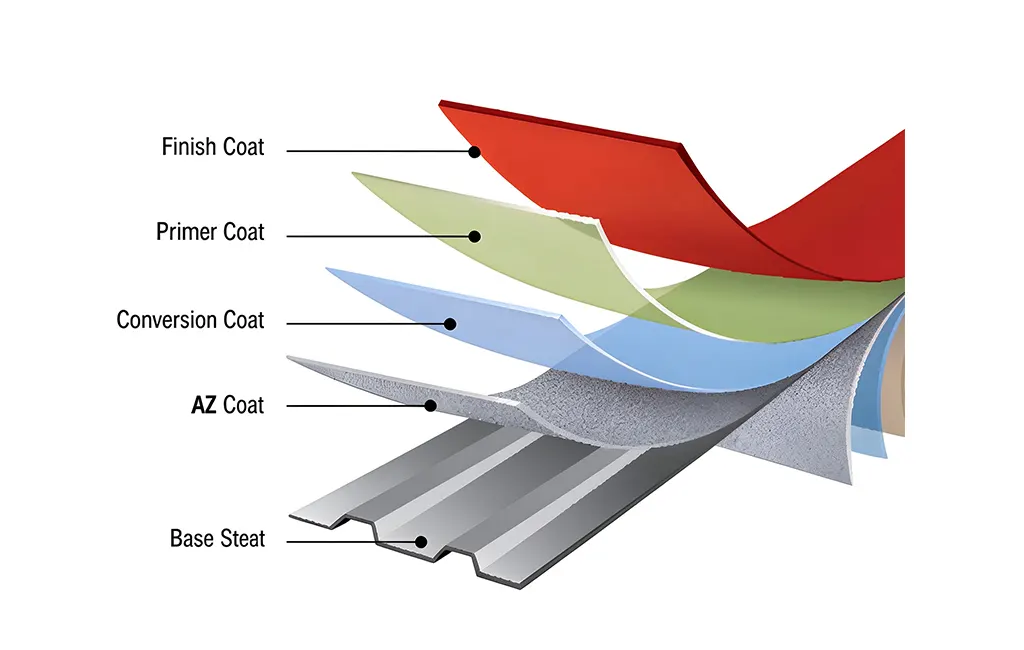
Industrial coil coaters utilize high-purity mill finish coils as their core raw material. The mill finish coil undergoes continuous inline degreasing, chemical conversion (chromate or zirconate pre-treatment), primer application, and high-temperature curing to manufacture architectural color aluminum coils.