
Understanding Pressure-Sensitive Protective Film Residue on Color-Coated Aluminum
Pressure-sensitive protective films (PE/PET) applied to color-coated aluminum leave acrylic or rubber adhesive residue when the bond strength exceeds the cohesion of the adhesive layer. This glue contamination typically occurs due to UV degradation of the polymer backbone, excessive thermal exposure, or improper peel angles. Under direct sunlight, un-stabilized acrylic adhesives undergo cross-linking, causing the adhesive to harden and transfer from the protective carrier film directly onto the PVDF or PE (Polyester) topcoat. Selecting films with tailored adhesion levels (1.5–3.5 N/25mm) and UV stability ratings prevents surface contamination during transport, fabrication, and installation.
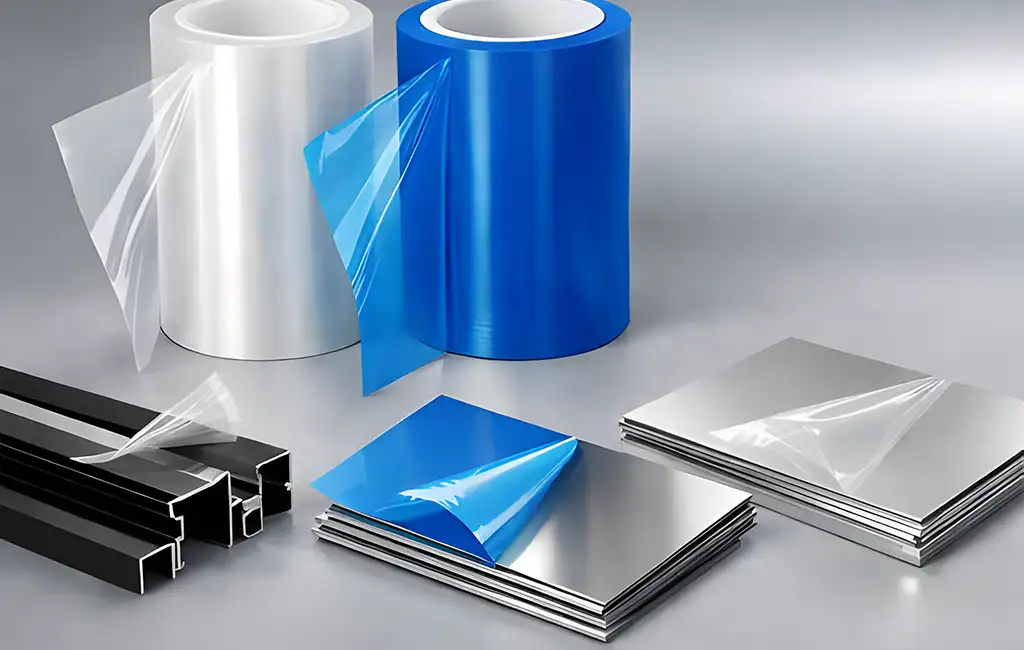
Technical Specifications for Protective Films on Color Aluminum
| Parameter | Standard Exterior (PVDF Coated) | Heavy Fabrication / Deep Draw | High-Gloss Interior | Test Standard |
| Aluminum Alloy Substrate | 3003-H14 / 5052-H32 | 3003-O / 5052-O | 1100-H14 / 3003-H14 | ASTM B209 |
| Base Film Carrier | Black/White PE (60–80 μm) | Clear/Blue PE (80–100 μm) | Clear PE/PET (50–60 μm) | ISO 527-3 |
| Adhesive Type | Solvent-based Acrylic | Rubber-based / Modified Acrylic | Water-based Acrylic | ASTM D907 |
| Peel Adhesion Force | 1.8 – 2.5 N/25mm | 3.0 – 4.5 N/25mm | 0.8 – 1.5 N/25mm | ASTM D3330 |
| UV Resistance Limit | 6 Months (Outdoors) | 3 Months (Outdoors) | Indoor Only (1 Month) | ISO 4892-2 |
| Operating Temp Range | -20°C to +70°C | -10°C to +60°C | +5°C to +50°C | ASTM D3103 |
| Substrate Compatibility | PVDF / FEVE Topcoat | High-Build Polyester | Anodized / Mill Finish | AAMA 2605 |
Causes of Protective Film Adhesive Transfer
Adhesive transfer occurs when the chemical bond between the adhesive and the protective carrier film fails, causing the adhesive mass to remain on the color-coated aluminum panel.
UV-Induced Polymer Degradation
Standard polyolefin film backings and acrylic adhesives lack long-term UV stabilizers (HALS). Solar ultraviolet radiation (UV-A and UV-B) breaks the polymeric bonds within the acrylic matrix, creating lower-molecular-weight sticky fragments while simultaneously cross-linking the interface with the PVDF coating.
Thermal Softening and Pressure
During transit in enclosed containers or storage in direct sunlight, surface temperatures on dark-colored aluminum (e.g., RAL 7016 Anthracite Grey) can exceed 70°C. High thermal energy lowers the viscoelastic viscosity of the pressure-sensitive adhesive, driving it deep into the micro-cavities of the color coating.
Safe Cleaning Methods for Adhesive Removal
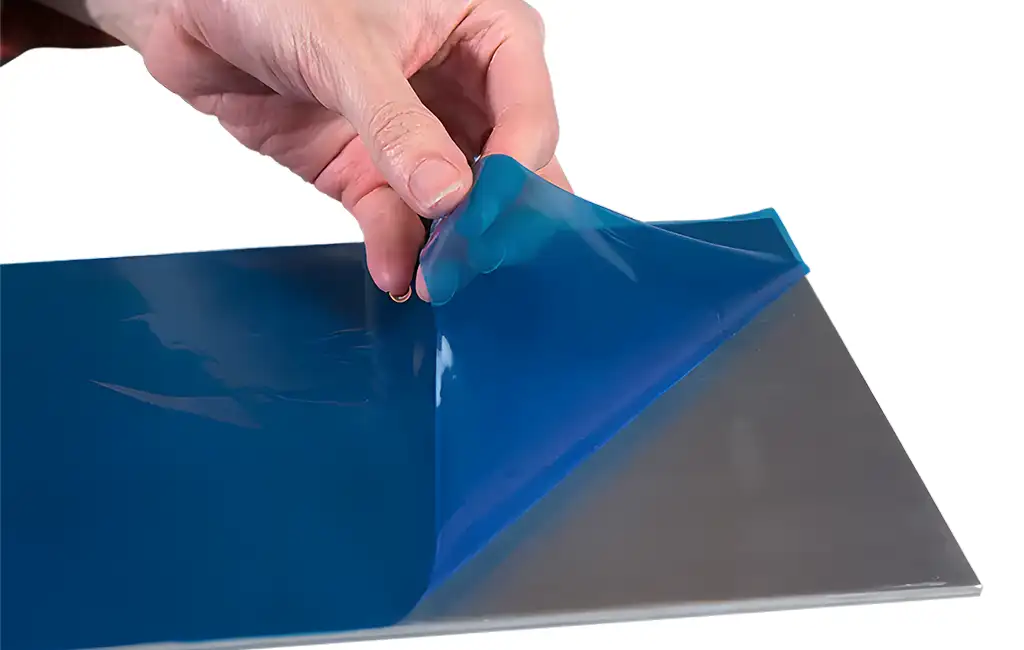
When adhesive residue compromises the surface aesthetics of color-coated aluminum, remediation must preserve the integrity of the factory-applied paint system.
Solvent Wipe Down
- Use Isopropyl Alcohol (IPA) 99% or Heptane for acrylic-based residues. Apply the solvent directly to a lint-free cloth and perform light, circular wipes.
- Avoid chlorinated hydrocarbons, ketones, and aromatic esters; these chemical agents strip the clear coat layer and void performance warranties under GB/T 5237.5 and ISO 12206.
Mechanical Peel Assistance
- For heavily degraded films that tear into small fragments, heat the surface uniformly with an industrial hot-air gun set to 50°C–60°C to soften the tack matrix before peeling.
- Never use metal scrapers, steel wool, or abrasive compounds. Plastic razor blades held at a 15° angle may be used on hard PVDF surfaces only.