
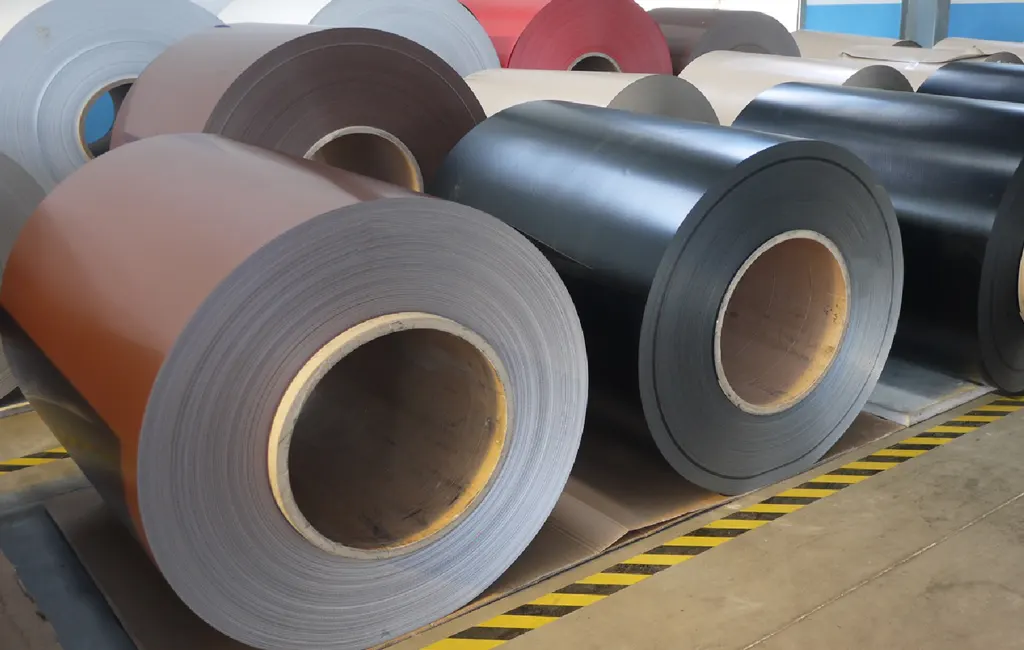
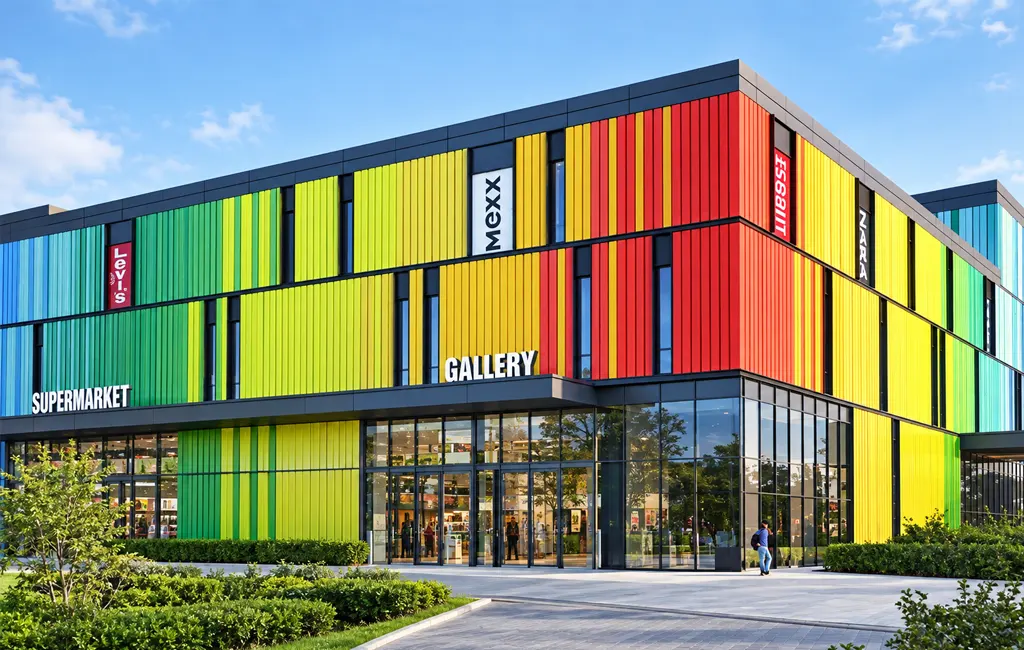
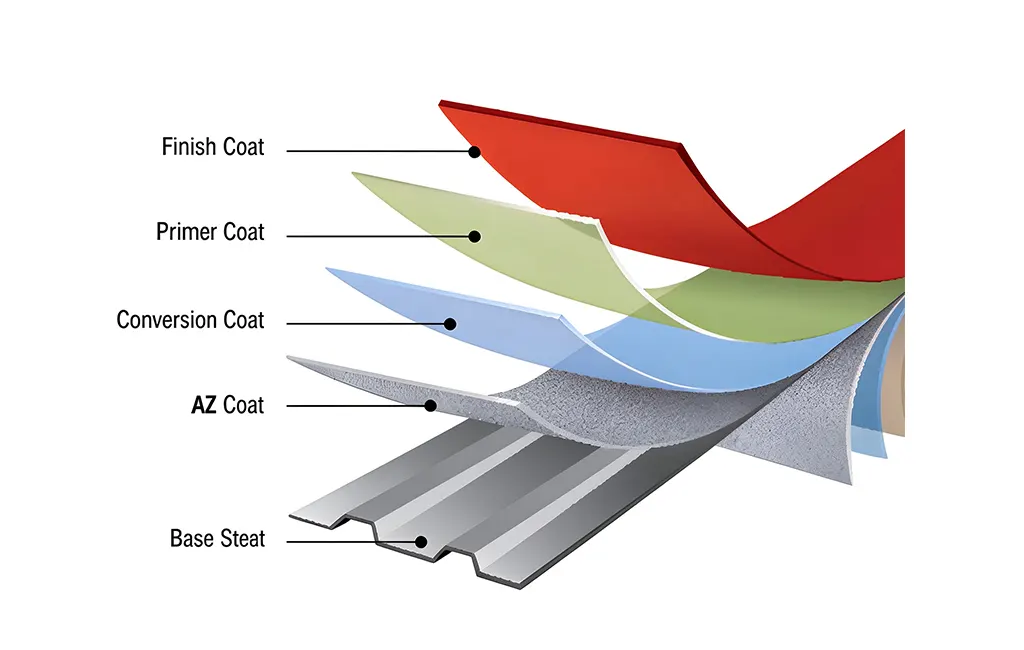
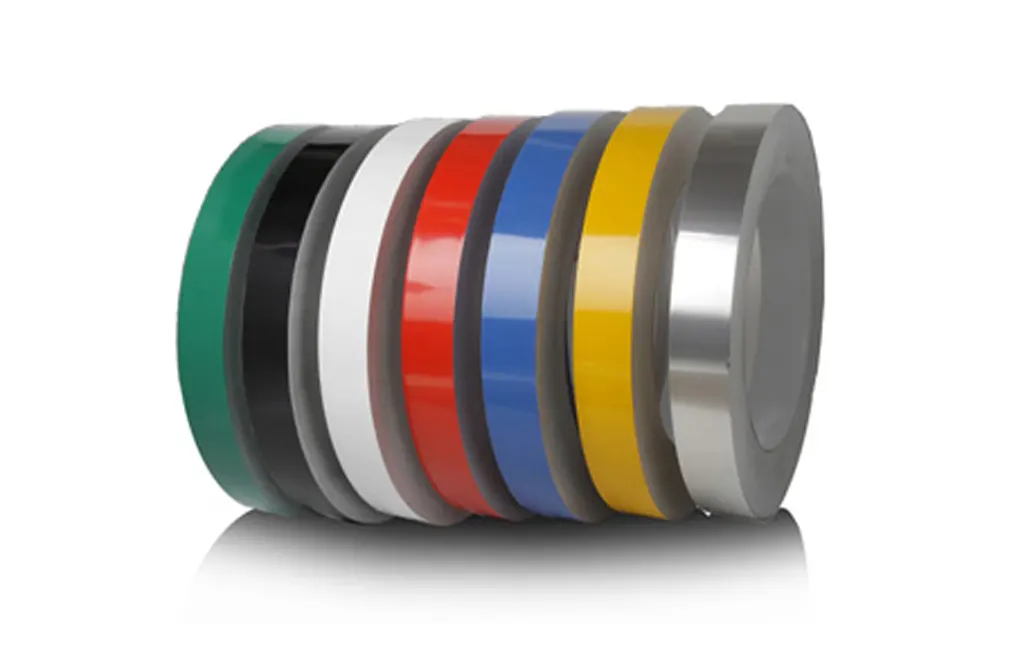
Architectural color-coated aluminum facades rely on the RAL color system[1]—specifically RAL CLASSIC (4-digit) and RAL DESIGN (7-digit)—to establish precise visual standardization across global supply chains. Selecting the optimal RAL shade requires matching pigment lightfastness and solar reflectance index (SRI) with high-performance resin systems, primarily Polyvinylidene Fluoride (PVDF)[2]and Super Durable Polyester (SOP). Superior facade specification balances aesthetics with thermal performance, ensuring coating systems conform to AAMA 2605 or EN 13523 standards to resist UV degradation, chalking, and color shifting () over a 20-to-30-year service life.
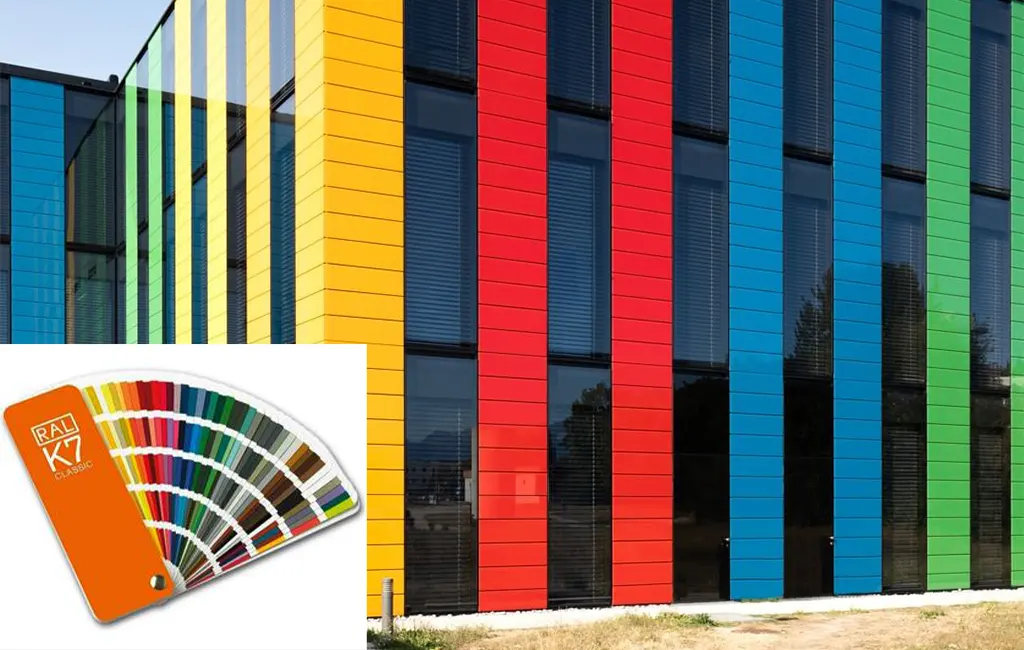
Technical Specification Matrix: Architectural Color Aluminum Finishes
| Technical Parameter | PVDF (70/30) Coated | Super Durable Polyester (SOP) | Anodized Effect Powder |
| Substrate Grade | AA3003 / AA5052-H24 | AA3003 / AA1100-H14 | AA5052 / AA6063-T6 |
| Nominal Coating Thickness | 25 – 35 μm (2-Coat or 3-Coat) | 60 – 80 μm (1-Coat Powder) | 60 – 90 μm |
| Applicable Standards | AAMA 2605, GB/T 5237.5 | AAMA 2604, EN 12206 | AAMA 2604, ISO 7599 |
| Accelerated Weathering (QUV-A) | |||
| Salt Spray Resistance (ASTM B117)[3] | |||
| Gloss Level (60° Geometry) | 20% – 35% (Matt/Satin) | 30% – 80% (Medium/High) | 10% – 25% (Low Matt) |
| Color Retention Rate () | (after 20 years) | (after 10 years) | (after 10 years) |
| Primary Architectural Use | High-rise commercial facades | Low/Mid-rise residential | Interior accents & curtain walls |
Thermal and Environmental Considerations by RAL Tone Category
Dark Shades (e.g., RAL 7016 Anthracite Grey, RAL 9005 Jet Black)
- Thermal Dynamics: Dark shades absorb significantly higher solar radiation, causing surface temperatures on aluminum facade panels to reach up to 80°C (176°F) in peak summer conditions.
- Structural Impact: Requires precise structural calculations for thermal expansion ( for aluminum alloys) to prevent oil-canning and panel warping.
- Pigment Specification: Must incorporate Cool Pigment Technology (complex inorganic color pigments / CICPs) to reflect near-infrared (NIR) radiation while maintaining visual depth.
Metallic Shades (e.g., RAL 9006 White Aluminum, RAL 9007 Grey Aluminum)
- Application Physics: Metallic RAL colors utilize microscopic aluminum or mica flakes suspended within the coating resin. Directional orientation of flakes during high-speed coil application affects light scattering.
- Quality Control: Panel installation must maintain consistent directional grain alignment (indicated by protective film directional arrows) to prevent visual panel-to-panel color mismatching on large curtain wall elevations.
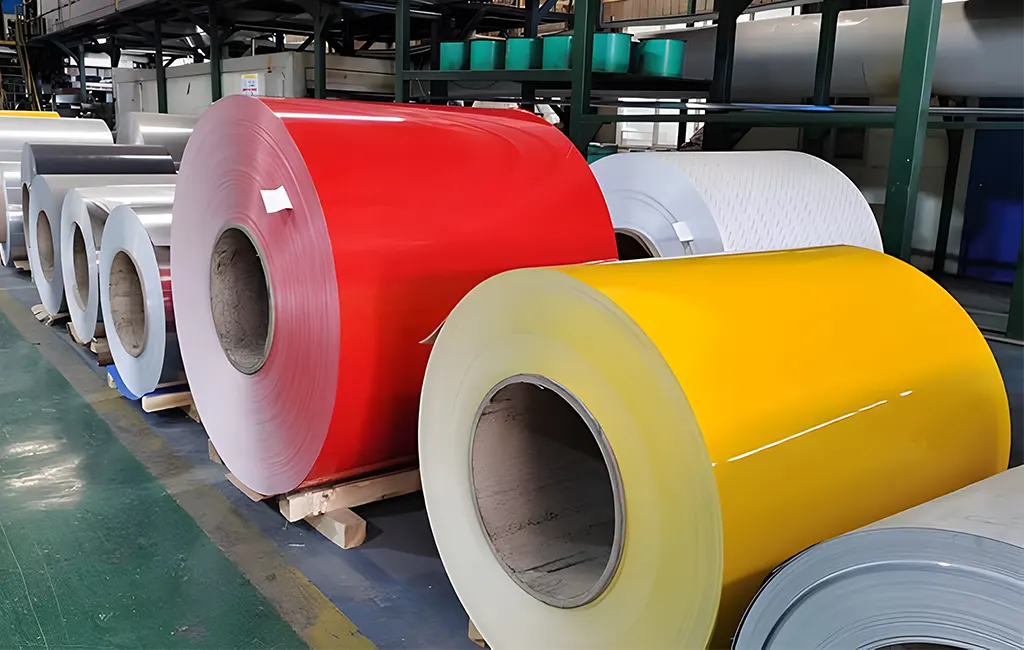
Industry Compliance and Quality Assurance Standards
To guarantee a minimum 20-year structural and aesthetic performance, architectural color-coated aluminum facade panels must meet or exceed the following international standards:
- AAMA 2605-20: Voluntary Specification, Performance Requirements and Test Procedures for Superior Performing Organic Coatings on Aluminum Extrusions and Panels.
- EN 13523 Series: Coil coated metals — Test methods for resistance to atmospheric corrosion, flexibility, gloss, and adhesion.
- ISO 12206-1: Paints and varnishes — Coating of aluminium and aluminium alloys for architectural purposes.
- GB/T 5237.5: Wrought aluminium alloy extruded profiles for architecture — Part 5: Fluorocarbon paint coating profiles.
References
[1] Wikipedia.RAL colour standard[EB/OL]. 2026-09-28.
[2] Wikipedia. Polyvinylidene fluoride[EB/OL]. 2026-09-28.
[3] Wikipedia. Salt spray test[EB/OL]. 2026-09-28.