
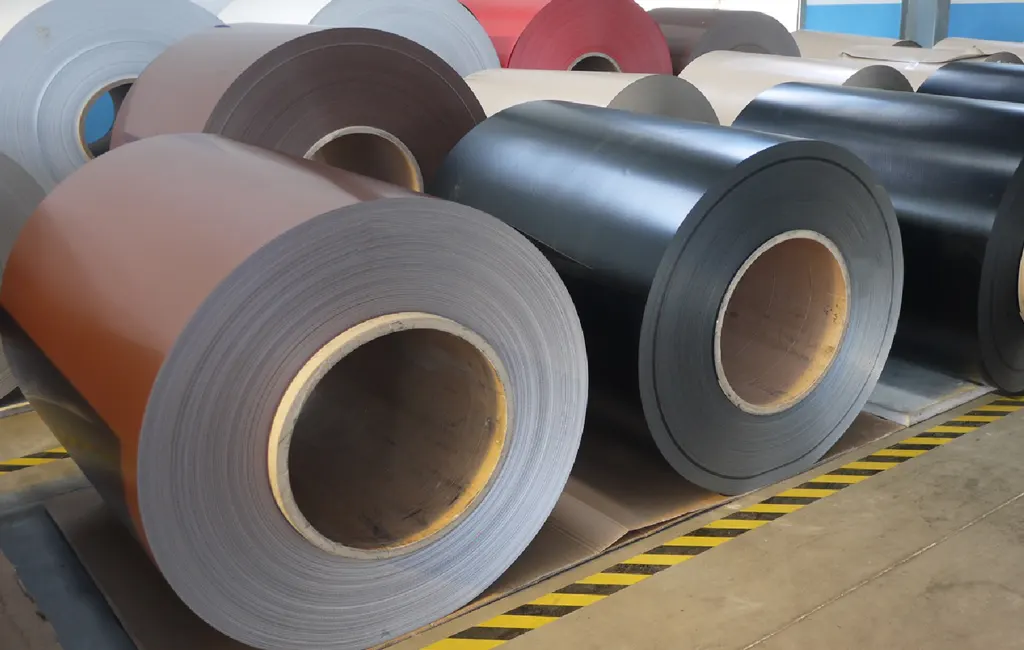
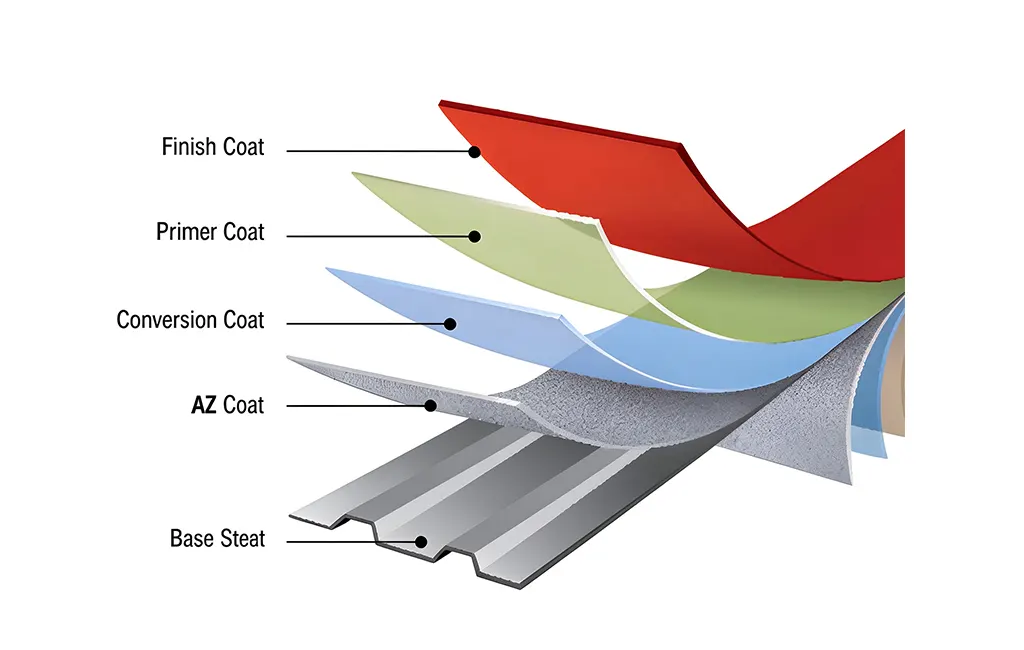
Pre-painted aluminum coils shipped via ocean freight face severe risks of coil-core corrosion—primarily driven by moisture entrapment, high relative humidity (RH > 80%), and extreme temperature fluctuations inside freight containers that trigger the “container rain” phenomenon. When water vapor condenses between tightly wound coil wraps, capillary action draws moisture deep into the core. Deprived of oxygen, the bare aluminum edges and micro-fissured coating interfaces suffer rapid galvanic and crevice corrosion, producing white rust () and paint delamination. Preventing coil-core degradation requires strict compliance with export packaging standards, such as using high-density VCI (Vapor Corrosion Inhibitor) films, desiccants, and maintaining controlled tension winding during coil processing.
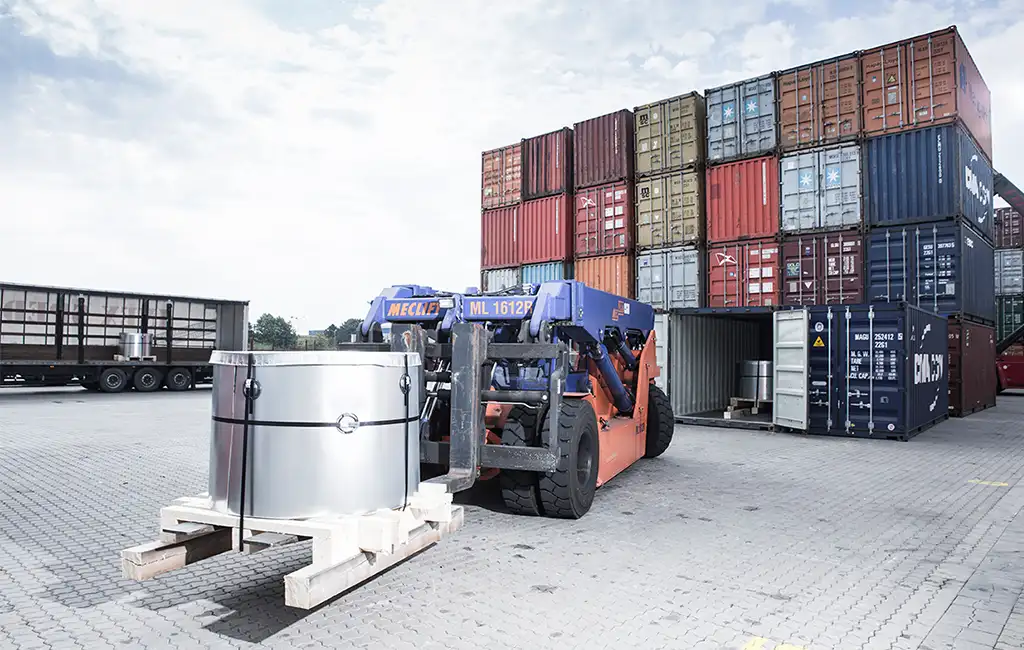
Ocean Shipment Protective Packaging & Corrosion Resistance Matrix
| Parameter / Packaging Specification | Standard Domestic Packaging | Sea-Freight Tropical/Ocean Spec | High-Humidity Long-Transit Spec |
| Applicable Base Alloys | AA1100, AA3003, AA3105 | AA3003, AA3004, AA5052 | AA3004, AA5052, AA5083 |
| Primary Barrier Material | Neutral Kraft Paper + HDPE Film | VCI (Vapor Corrosion Inhibitor) Film + Kraft | Laminate Metal-Foil VCI Composite |
| Desiccant Requirement (per m³) | Optional (100g Silica Gel) | 1,000g Calcium Chloride / Active Clay | ≥ 2,000g High-Absorption Calcium Chloride |
| Outer Protection Wrap | Corrugated Paper Sheeting | Galvanized/Aluminum Outer Steel Sleeve | Full Structural Aluminum Shell + Hardboard |
| Core Protection Eye Sleeve | Paper Fiber Core Ring | Galvanized Steel Inner & Outer Eye Rings | Steel Inner Eye + VCI Core Disc Insert |
| Salt Spray Resistance (ASTM B117) | 500 Hours (Coated Face) | 1,500 Hours (Wrapped Assembly) | > 3,000 Hours (Sealed System) |
| Humid-Thermal Test (ASTM D2247) | Pass 500 Hours | Pass 1,000 Hours | Pass > 2,000 Hours (Zero White Rust) |
Thermodynamics of Coil-Core Corrosion Mechanisms
Capillary Moisture Entrapment and Crevice Corrosion
During multi-week ocean transits, micro-gaps between tightly wound coil layers act as capillary channels. As ambient humidity inside the shipping container rises above the critical 80% threshold, water vapor condenses at the exposed coil edges. Capillary pressure forces liquid water up to several inches into the coil interior. Once trapped, the restricted air movement exhausts local oxygen, creating a differential aeration cell:
This reaction yields hydrated aluminum oxide () and aluminum hydroxide (), commonly referred to as white rust or storage stain. The volumetric expansion of these corrosion products disrupts the adhesion of adjacent PVDF or PE paint layers, causing severe intercoat blistering and film flaking.
Thermal Cycling and Container Rain
Containers on vessel decks experience daily temperature swings ranging from 10°C at night to over 60°C under direct solar radiation. Air inside the container expands and absorbs ambient sea moisture during warm periods. As temperatures drop rapidly at night, the air reaches its dew point, generating heavy condensation on the container ceiling (“container rain”) and directly on the cold thermal mass of the aluminum coils.