
Advantages of Pre-Painted Aluminum for Refrigerator and Fan Components
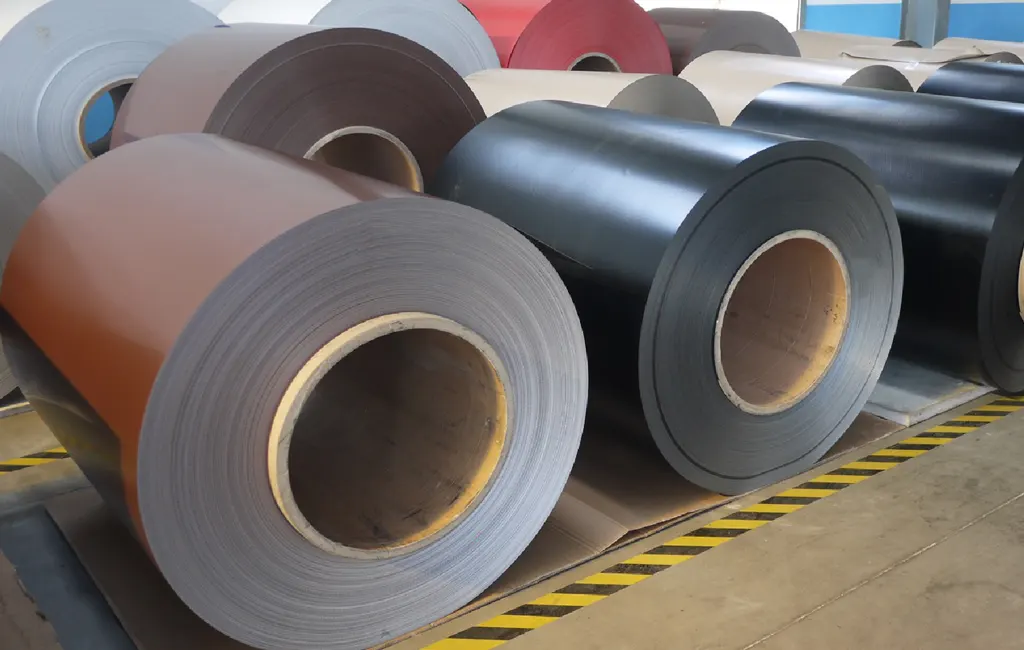
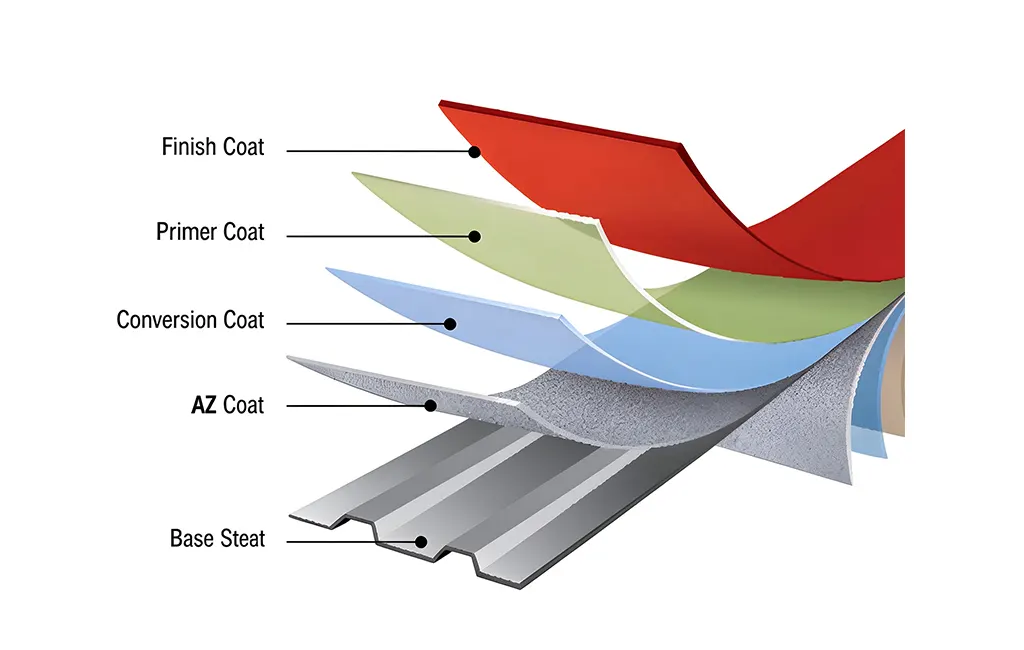
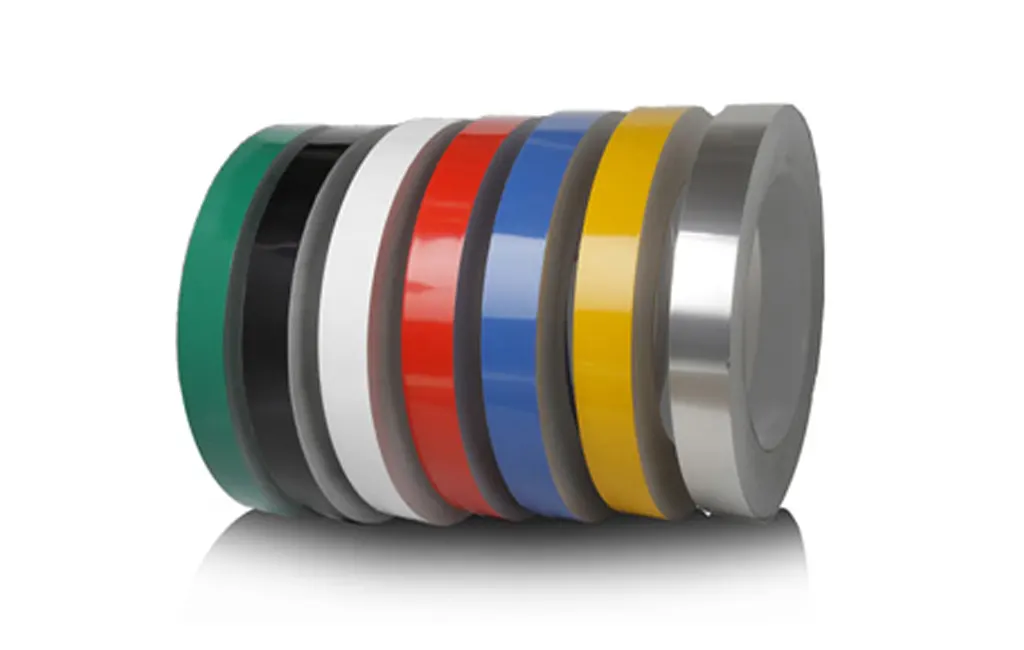
Pre-painted aluminum (color-coated aluminum) provides home appliance manufacturers with high thermal conductivity, superior corrosion resistance, structural weight reduction, and lower lifecycle fabrication costs. Utilizing alloy substrates such as AA 1050, AA 1100, or AA 3003 with a 15–25μm Epoxy, Polyester (PE), or Fluoropolymer topcoat, pre-painted aluminum coils eliminate the need for post-stamping batch painting. This material delivers a heat transfer coefficient of approximately 160–220 W/(m·K) while resisting severe condensation, environmental humidity, and chemical cleaning agents. Its high formability ensures zero coating delamination or micro-cracking during deep drawing, roll forming, and stamping processes for refrigerator evaporators, door panels, and high-velocity fan blades.
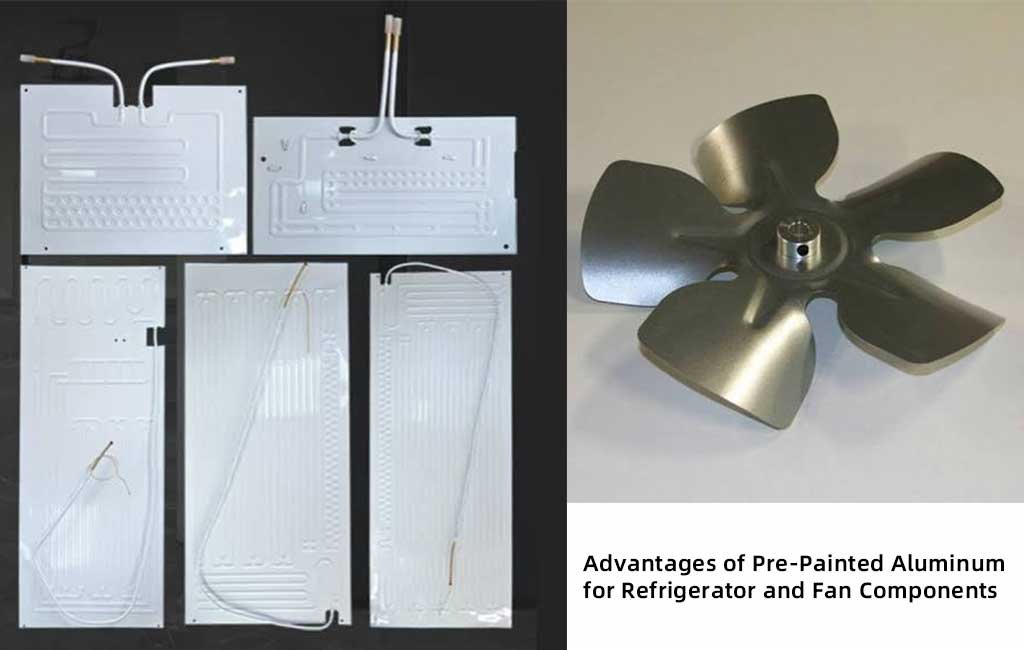
Technical Parameter & Performance Comparison Matrix
The table below details key performance metrics of pre-painted aluminum compared to alternative materials used in refrigeration systems and air-moving components.
| Performance Metric | Pre-Painted AA 3003 (Appliance Grade) | Pre-Painted AA 5052 (High-Strength) | Post-Painted Galvanized Steel (GI) | Stainless Steel (AISI 304) |
| Density (g/cm³) | 2.73 | 2.68 | 7.85 | 7.93 |
| Thermal Conductivity | 160 – 190 W/(m·K) | 130 – 150 W/(m·K) | 45 – 55 W/(m·K) | 16.2 W/(m·K) |
| Coating Thickness (μm) | 15 – 25 (PE / Epoxy) | 20 – 30 (PVDF / FEVE) | 40 – 80 (Powder Coat) | N/A (Mill Finish) |
| Salt Spray Test (ASTM B117) | > 1,000 Hours | > 1,500 Hours | 400 – 600 Hours | > 2,000 Hours |
| T-Bend Flexibility (ASTM D4145) | ≤ 1.5 T (No Cracking) | ≤ 2.0 T (No Cracking) | 2.0 – 3.0 T | N/A |
| MEK Solvent Resistance | > 100 Double Rubs | > 150 Double Rubs | > 50 Double Rubs | Excellent |
| Primary Component Use | Evaporator Plates, Refrigerator Liners | Fan Blades, Compressor Shrouds | Exterior Cabinets, Base Frames | Premium Doors, Commercial Trim |
Specific Engineering Advantages by Component Type
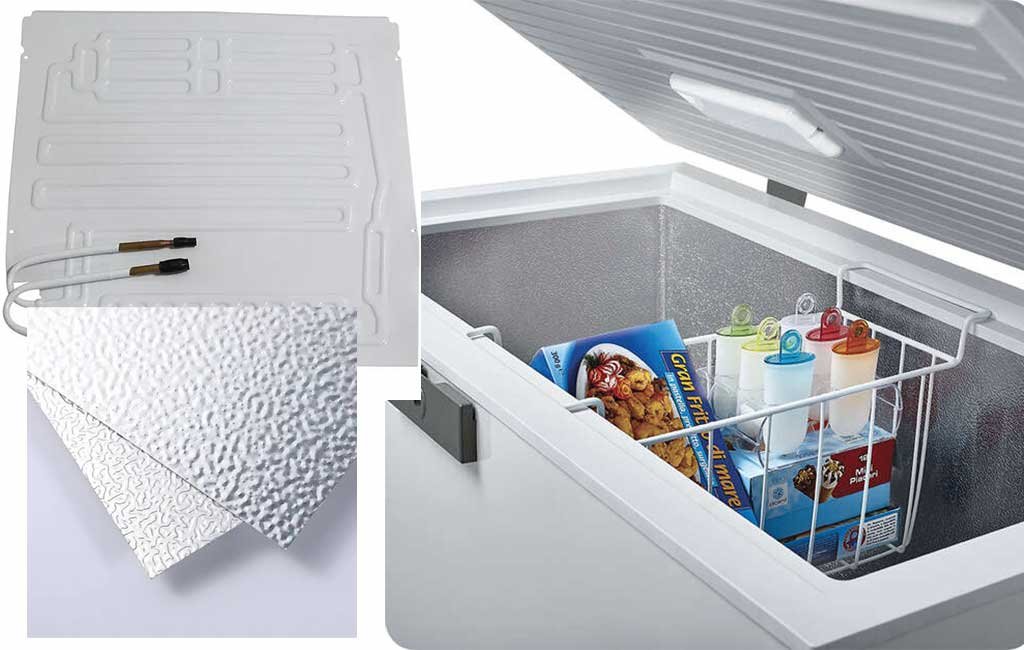
1. Refrigerator Evaporator Plates & Internal Cabinet Panels
- Thermal Efficiency & Rapid Defrosting: Aluminum’s thermal conductivity (160–190 W/(m·K)) outperforms steel (45–55 W/(m·K)) by nearly four times. Pre-painted aluminum evaporator plates accelerate heat absorption from the cold room interior, reducing compressor duty cycles and lowering overall energy consumption.
- Condensation & Chemical Resistance: Refrigerator interiors face constant humidity, food acids, and household detergents. Pre-coated Epoxy or PE primer-topcoat systems form an impermeable barrier over the aluminum oxide layer, preventing white rust (aluminum hydroxide) and pitting corrosion during continuous condensation cycles.
- Elimination of VOCs in Manufacturing: Factory-applied coil coating utilizes closed-loop thermal oxidizers to capture Volatile Organic Compounds (VOCs). Refrigerator OEMs using pre-painted coil eliminate in-house liquid spray booths, lowering VOC compliance costs and reducing factory footprint requirements.
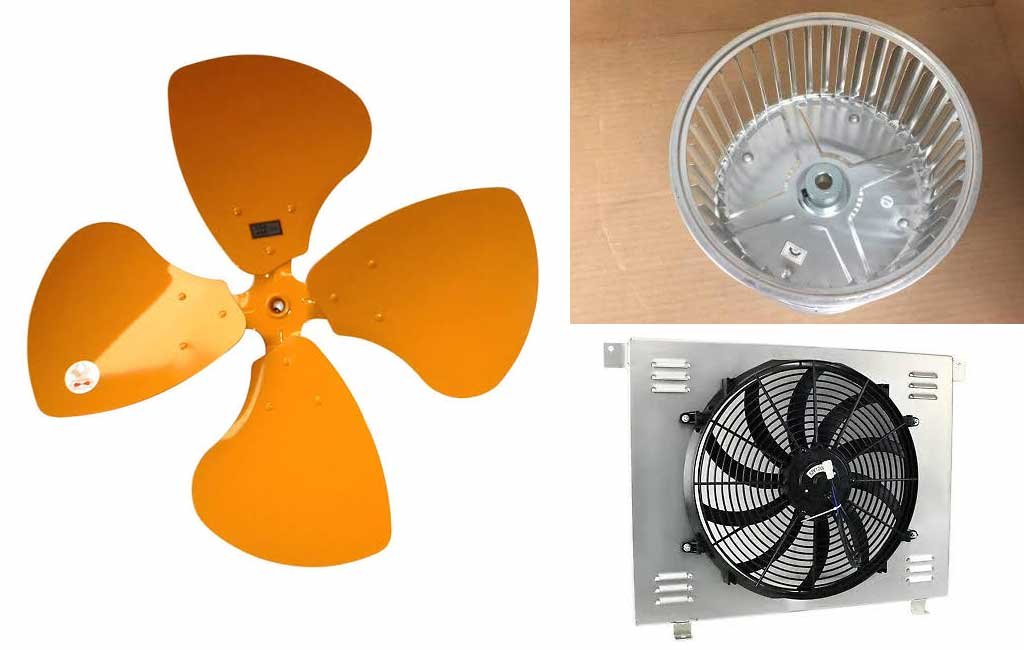
2. Fan Blades, Blower Wheels & Vent Shrouds
- Rotational Inertia & Energy Efficiency: The lower density of pre-coated aluminum (2.70 g/cm³) vs. steel (7.85 g/cm³) reduces fan blade mass by roughly 65%. Lower rotational mass minimizes motor startup torque, reduces strain on bearings, and lowers electrical wattage requirements in HVAC and appliance fan assemblies.
- Dynamic Aerodynamic Balance: Continuous roller coating maintains tight film thickness tolerances (±1.0μm). Unlike post-spray powder coating—which often yields uneven film buildup along trailing edges—pre-painted aluminum coil maintains uniform mass distribution across fan blades, preventing dynamic imbalance and operational vibration.
- Acoustic Dampening: The combination of an AA 3003-H14 alloy substrate and a flexible polymer coating absorbs high-frequency micro-vibrations better than rigid raw steel, reducing decibel output (dB) in residential refrigerator cooling fans and range hood blowers.