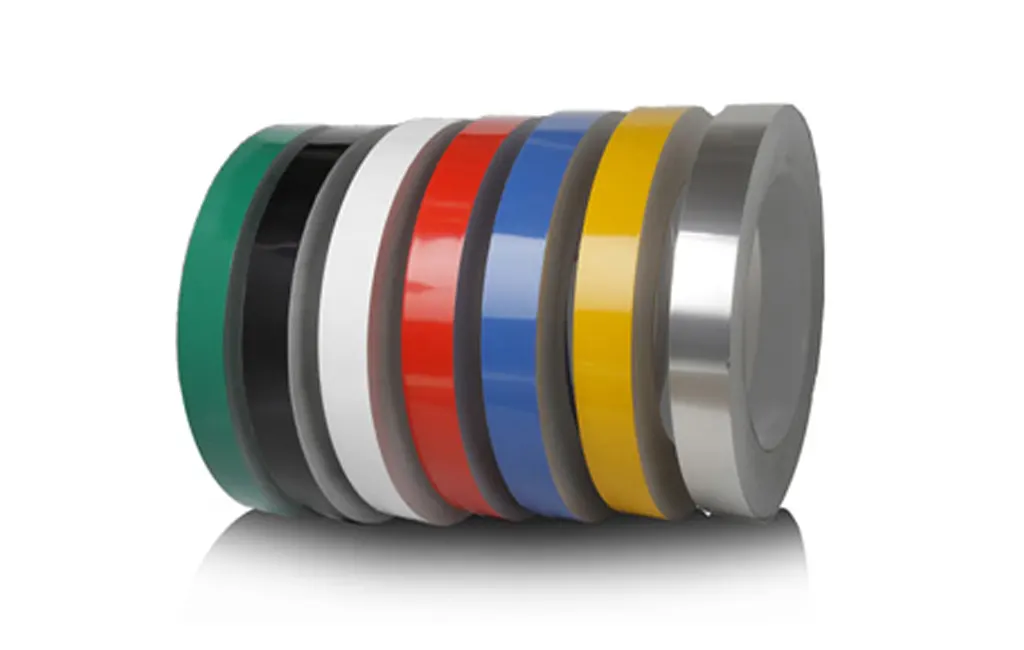
Optimal Thickness Selection for Color Coated Aluminum Roofing
For industrial, commercial, and residential roofing, the required thickness of color coated aluminum coil typically ranges from 0.5 mm to 1.2 mm (0.020″ to 0.047″). The exact specification depends heavily on structural purlin spacing, local wind load requirements, and environmental corrosivity. For standard residential roofing with standard support spacing, a thickness of 0.6 mm to 0.7 mm is the industry baseline. For heavy-duty commercial standing seam systems or regions prone to high wind loads and heavy snow, a minimum thickness of 0.8 mm to 1.0 mm is required to prevent oil-canning and structural deflection under load.
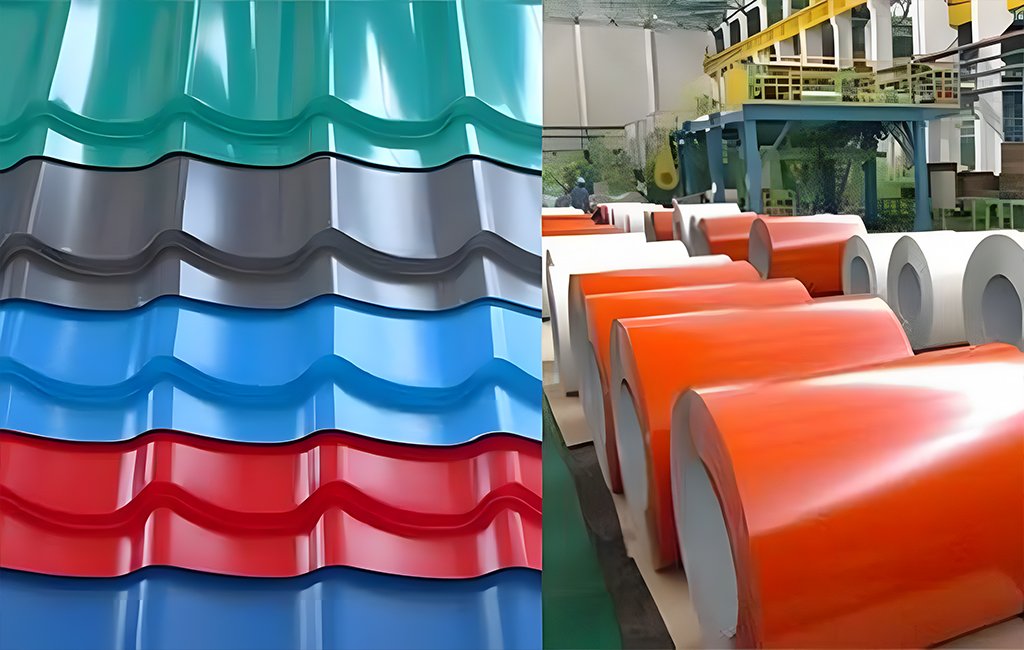
Technical Parameter Matrix for Roofing Aluminum Coils
The following structured data matrix outlines the technical performance and application criteria for color coated aluminum alloys utilized in roofing systems according to global metallurgical and coating standards.
| Aluminum Alloy Grade | Typical Thickness Range (mm) | Coating System Type | Top Coat Thickness (μm) | Salt Spray Resistance (ASTM B117) | UV Resistance Rating (AAMA 2605) | Primary Roofing Applications |
| Alloy 3003 (Al-Mn) | 0.50 – 0.80 | High-Durability Polyester (HDP) | 20 – 22 | ≥ 1,000 Hours | Delta E ≤ 5 over 10 Years | Residential roofing, corrugated panels, agricultural buildings |
| Alloy 3004 / 3105 | 0.60 – 1.00 | Polyvinylidene Fluoride (PVDF 70/30) | 25 – 28 | ≥ 3,000 Hours | Delta E ≤ 5 over 20 Years | Commercial standing seam roofs, industrial plants, coastal facades |
| Alloy 5052 (Al-Mg) | 0.70 – 1.20 | PVDF or FEVE | 28 – 35 | ≥ 4,000 Hours | Delta E ≤ 5 over 20 Years | Marine environments, heavy industrial roofing, high-wind zones |
Architectural Applications & Profile Thickness Configurations
Standing Seam Roofing Systems
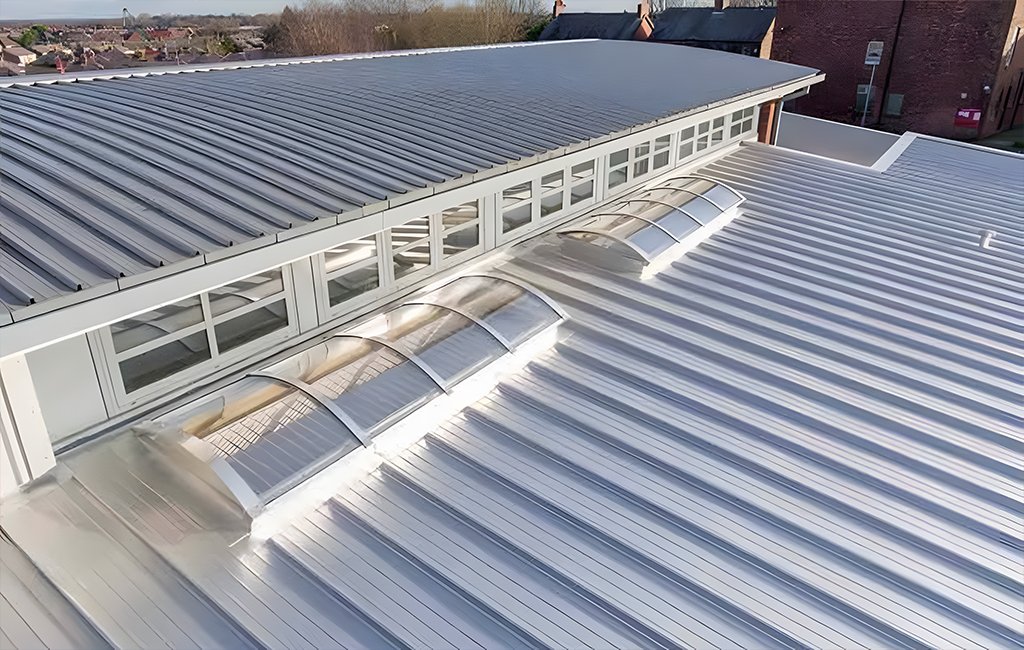
Standing seam profiles place specific mechanical demands on the color aluminum coil during the field-seaming process. These systems typically utilize 0.7 mm to 0.8 mm thick aluminum coils, usually in Alloy 3004 or 5052 with an H24 temper. The 0.7 mm gauge provides the optimal balance between panel stiffness and the ductility needed for robotic seaming machines to lock the male and female ribs together securely. Utilizing a gauge below 0.7 mm in standing seam installations increases the risk of visual distortion known as “oil-canning” due to thermal expansion and contraction.
Corrugated and Trapezoidal Roof Panels
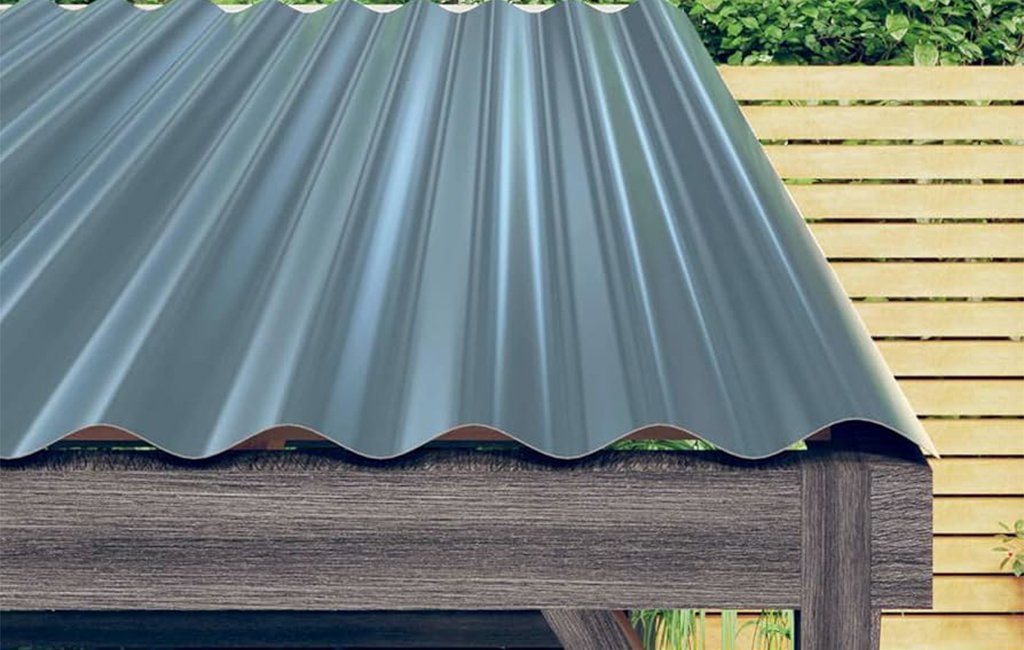
Trapezoidal and sinusoidal corrugated panels rely on geometric profile depth to achieve load-bearing capacity. For industrial warehouses and distribution centers, a coil thickness of 0.5 mm to 0.6 mm in Alloy 3003-H16 or 3105-H16 is standard when supported by closely spaced purlins. Because the corrugation design naturally increases the moment of inertia, thinner gauges can be used effectively over broad areas, reducing overall structural dead loads while maintaining effective water shedding and snow load resistance.