
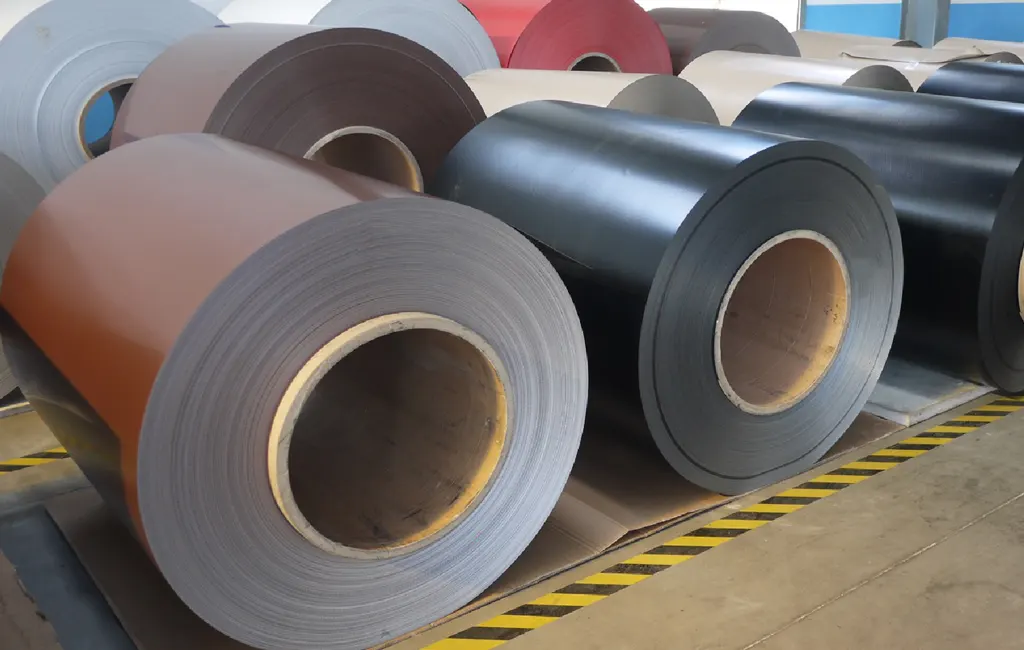
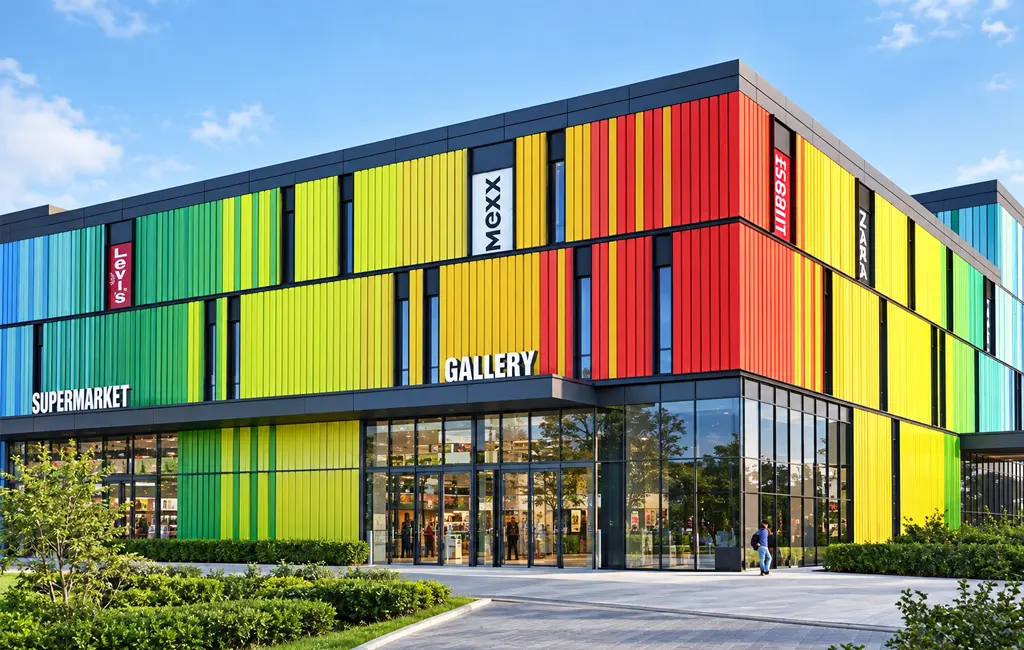
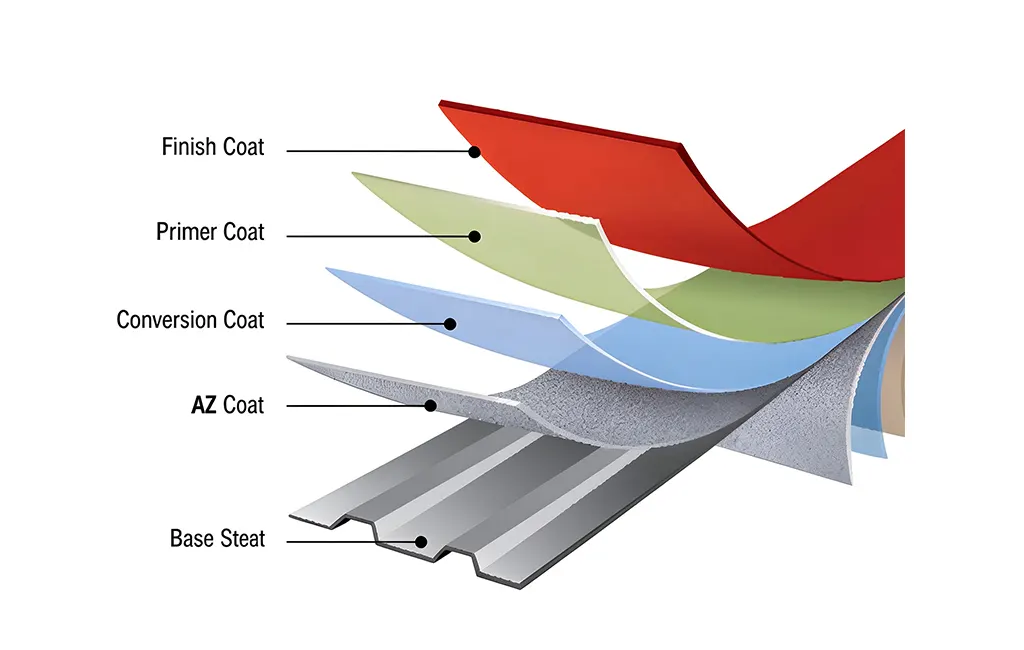
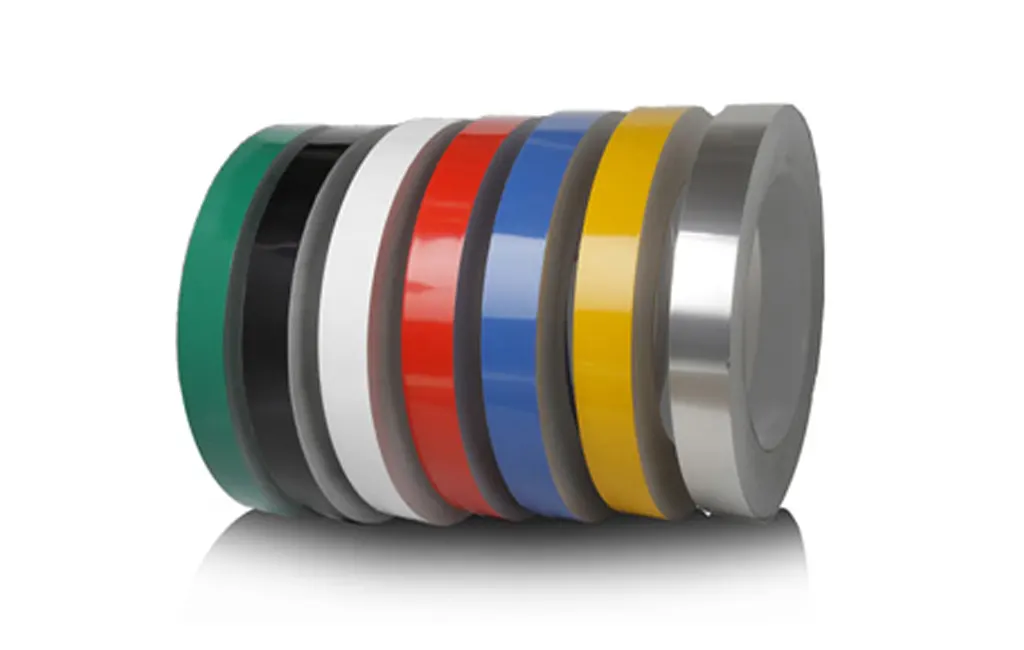
Chalking and fading on color-coated aluminum coils result from UV-initiated degradation of the coating binder and pigment stability, binder migration to the surface, and environmental attack (moisture, temperature cycling, pollution).
Coating system (PVDF/FEVE fluoropolymers vs. standard polyesters), cure quality, film thickness, and surface pretreatment govern resistance. Pigment choice (inorganic vs. organic) and UV stabilizers (HALS, UV absorbers) strongly affect color retention.
Outdoor exposure, coastal or industrial pollution, and improper storage or cleaning accelerate chalking. Prevention relies on selecting fluoropolymer fluorinated coatings, proper cure, adequate dry film thickness, robust pretreatment, and controlled maintenance per standards such as AAMA 2604/2605 and ISO 12944.

Powdering and Control of Colored Aluminum Coating
1.Coating Chemistry & Degradation Mechanisms
Binder degradation: UV exposure cleaves binder chains, causing binder migration to the surface (chalk). Fluoropolymer binders (PVDF, FEVE) exhibit superior UV resistance and lower chalking propensity.
Pigment photobleaching: Organic pigments fade with sunlight; inorganic pigments are more color-stable but may affect opacity and gloss.
Binder migration: Surface waxy films form when degraded binder migrates; mitigated by crosslinking density and UV stabilizers.
2.Environmental Exposure Effects
UV radiation: Primary driver of chalking; higher summer peak accelerates aging.
Temperature cycling and moisture: Accelerates hydrolysis and microcracking, aiding binder loss.
Pollution and salinity: Coastal/industrial salts and ozone accelerate surface degradation and color shift.
Cleaning agents: Harsh cleaners remove surface pigments or abrade the surface, exacerbating chalking.
3.Surface Pretreatment, Application, and Cure
Surface prep: Proper degreasing and pretreatment (etch, conversion coatings) ensure adhesion and reduce micro-delamination where chalk begins.
Cure quality: Incomplete cure yields residual solvents or under-crosslinked networks that chalk more readily.
Film thickness: Adequate total film thickness (DFT) provides UV protection; under- or over-thick coatings can increase chalking risk and film-cracking.
4.Storage, Handling, and Maintenance
Storage: Prolonged outdoor storage before forming or installation accelerates chalking; store in shade, away from direct sunlight.
Handling and cleaning: Use non-abrasive, non-chlorinated cleaners; avoid aggressive washing or abrasive pads that remove surface pigments.
Field repair: Localized touch-ups should use compatible fluoropolymer systems to avoid mismatched chalking behavior.

SOP / Checklist: Chalking Prevention & Control
1.Define service environment
Determine outdoor exposure, UV intensity, humidity, coastal/industrial pollutants, and temperature range.
2.Select coating system
Choose PVDF or FEVE fluoropolymer systems with HALS/UV absorbers for maximum chalk resistance; specify colorfast pigments.
3.Specify film thickness
Target total DFT (25–40 µm for fluoropolymer systems) to balance UV protection and processability.
4.Ensure pre-treatment quality
Implement compliant degreasing, surface etching, and conversion coating per ISO standards.
5.Verify cure and crosslinking
Confirm cure cycle and temperature; document crosslink density and absence of residual solvents.
6.Check pigment package
Use UV-stable inorganic pigments where possible; match pigment load and binder to the service environment.
7.Control storage, handling and surface protection
Store in shaded, ventilated areas; protect coils from moisture; implement FIFO inventory.
Use non-abrasive handling aids; avoid rust/adhesive residues; cap/cover coils during transit.
8.Follow proper cleaning and maintenance
Use mild detergents; avoid chlorine-based cleaners; rinse and dry to prevent surface staining or dulling.
9.Conduct quality testing
Perform accelerated weathering (QUV/G154), color-difference (Delta E), and adhesion tests; record lot data and supplier documents.