
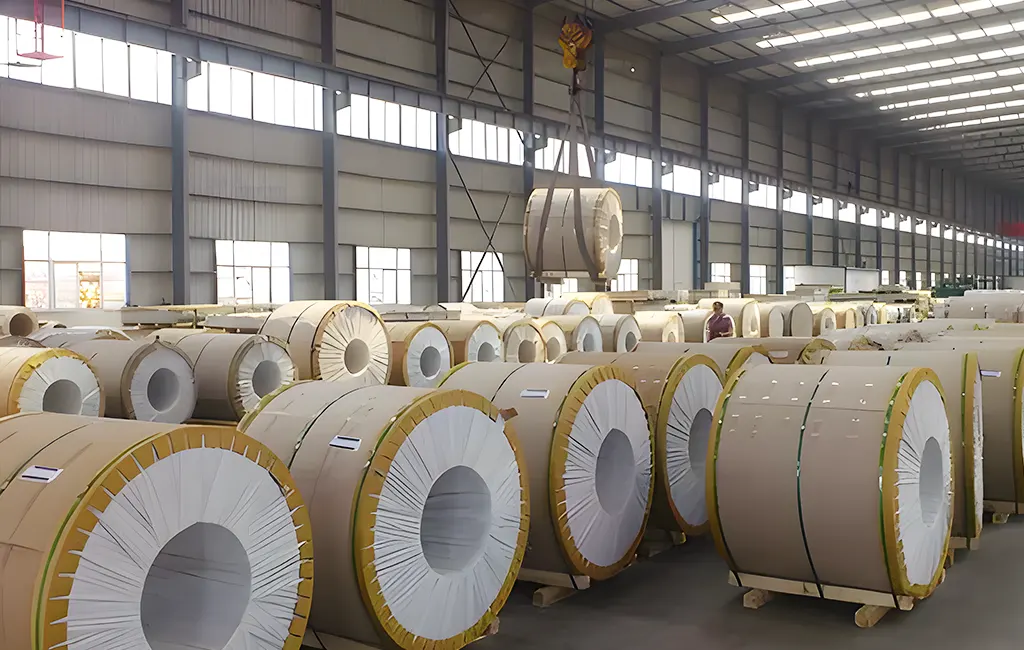

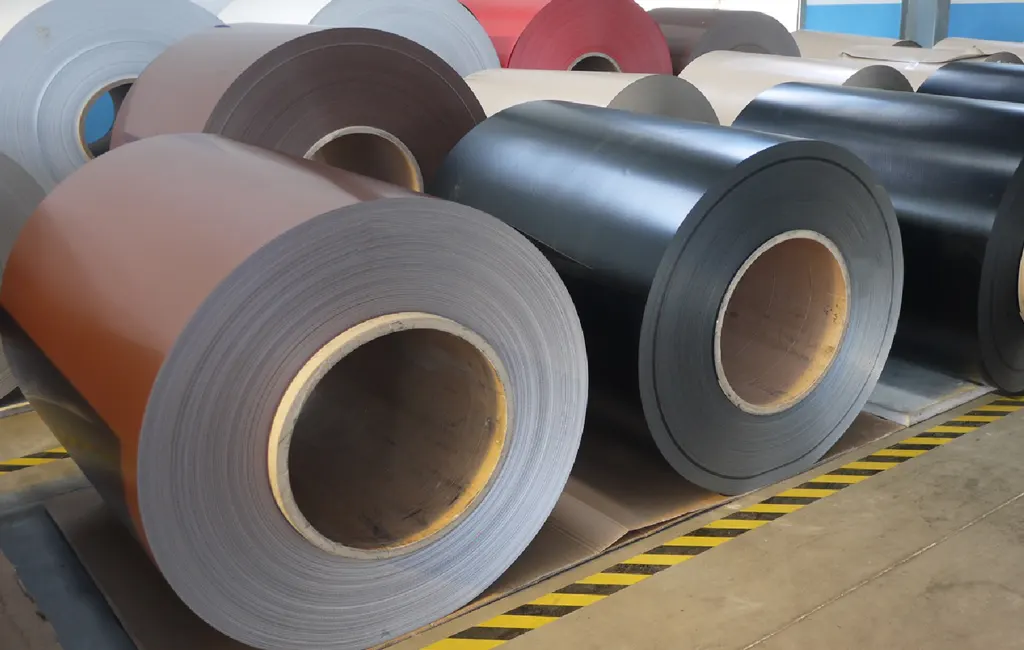
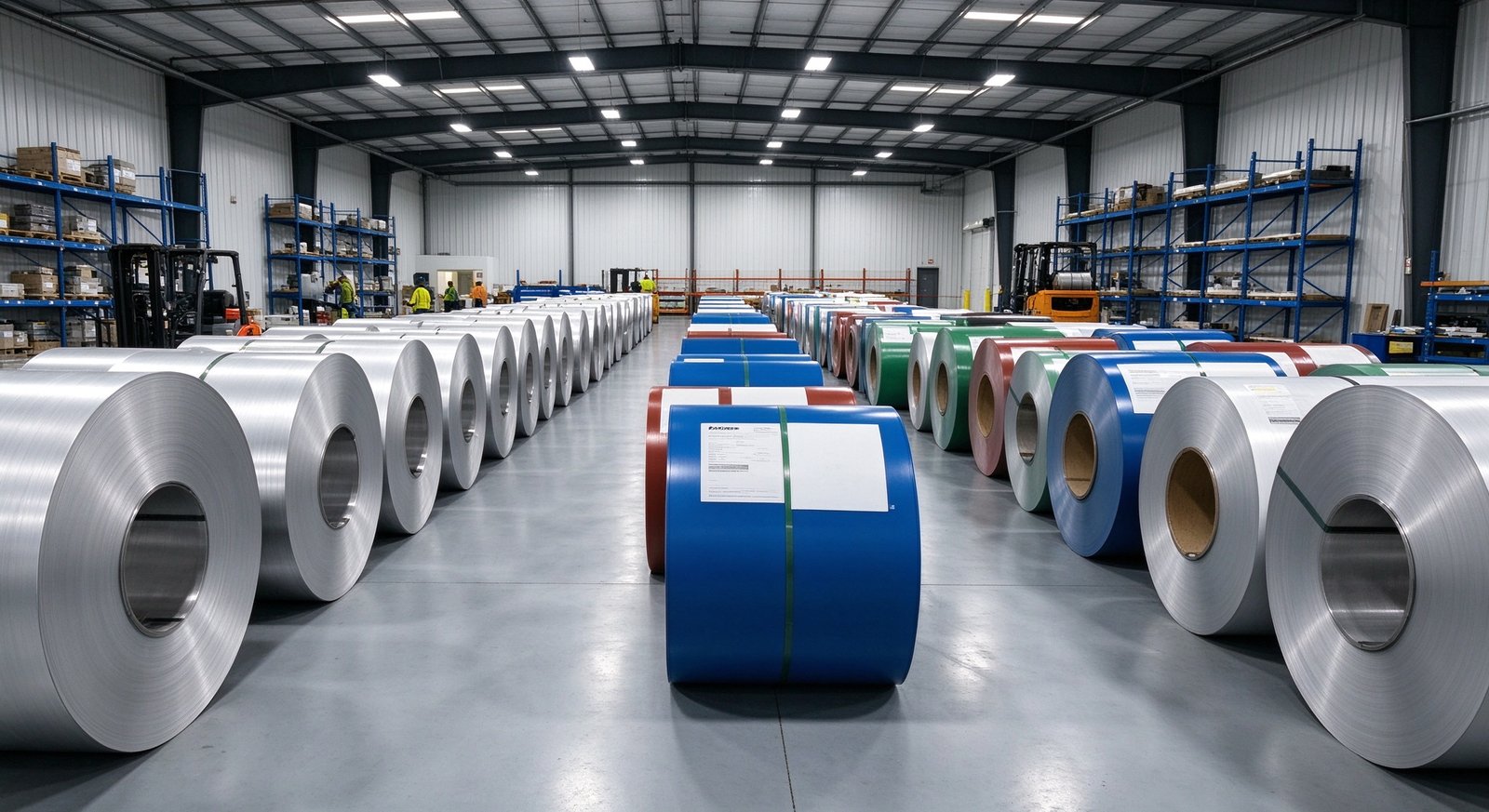
PVDF (Polyvinylidene Fluoride) coated color aluminum is a pre-finished or factory-applied organic coating system on aluminum substrates (primarily 3003, 5052, or 6063 alloys) where the resin binder contains a minimum of 70% PVDF. Typical total dry film thickness (DFT) is 25–35 μm (primer 5–8 μm + PVDF topcoat 20–25+ μm). It meets AAMA 2605-20 (or later) requirements: maximum color change of ΔE ≤ 5, gloss retention ≥50%, and chalk rating ≥8 after 10 years of South Florida exposure, plus 4,000 hours salt spray and humidity resistance. This delivers long-term UV stability, corrosion resistance, and color consistency for exterior architectural use without frequent recoating.

Technical Parameter Comparison Matrix
| Parameter | PVDF (AAMA 2605) | Thermoset Powder Coating (AAMA 2604) | Anodized Color Aluminum | PE (Polyester) Coil Coating |
|---|---|---|---|---|
| Typical Alloy | 3003, 5052, 6063 | 3003, 5052, 6061, 6063 | 5005, 5052, 6061, 6063 | 3003, 3105, 5052 |
| Coating Type | ≥70% PVDF resin + inorganic pigments | Thermoset polyester or FEVE powder | Electrolytic oxide layer (Type II) | Polyester resin |
| Coating Thickness (μm) | 25–35 (2-coat); 35–50 (3-coat) | 60–80 typical | 15–25 (architectural) | 15–25 |
| Weather Resistance | 10 yr South Florida; 4,000 h salt spray; 4,000 h humidity | 5 yr South Florida; 3,000 h salt spray | Excellent integral; limited bright colors | 5–10 yr typical outdoor |
| Color Retention | ΔE ≤5 after 10 years; chalk ≥8 | ΔE ≤5 after 5 years; chalk ≥8 | High for metallic/bronze tones; limited palette | Moderate; faster fade |
| Operating Temperature Range (°C) | −40 to +80 (continuous) | −40 to +80 | −40 to +100+ | −20 to +60 |
| Primary Applications | High-rise curtain walls, coastal facades, monumental cladding | Commercial cladding, windows, mid-tier facades | Architectural extrusions, trim, heritage metallic look | Interior, low-exposure roofing, signage |
Data aligned with AAMA 2605/2604, GB/T 5237.5 (PVDF paint profiles), and common coil-coating practice (front-side total DFT ≥25 μm for PVDF).
PVDF Coated Color Aluminum
PVDF coating consists of a polyvinylidene fluoride resin (minimum 70% by weight of the binder, typically Kynar 500 or Hylar 5000 base) combined with acrylic co-resin and ceramic/inorganic pigments. The strong carbon–fluorine bonds resist UV photodegradation.
- Composition and application: Continuous coil coating or spray on pretreated aluminum. Standard 2-coat system: corrosion-inhibiting primer (5–8 μm) + PVDF topcoat (20–25+ μm). 3-coat systems (primer + color + clear) reach 35–50 μm for metallics or enhanced durability.
- Performance metrics: Complies with AAMA 2605-20 — ΔE ≤5 and ≥50% gloss retention after 10 years South Florida (45° south-facing); chalk rating ≥8 (ASTM D4214); ≤10% film erosion. Salt spray (ASTM B117) and humidity resistance both 4,000 hours with limited creepage and no significant blistering.
- B2B value: Reduces lifecycle maintenance costs on difficult-to-access facades. Color consistency supports phased construction or future panel replacement matching. Typical warranties cover film integrity and color for 15–30 years under proper specification.
- Applications: Commercial curtain walls, high-rise cladding, roofing systems, and coastal or high-UV environments where recoating is impractical.
Pretreatment (degreasing + chromate or chrome-free conversion coating) is mandatory for adhesion and corrosion performance under AAMA and GB/T 5237.5.
Aluminum Alloy Selection for Color Aluminum
Alloy choice balances formability, strength, and corrosion resistance with the coating system.
- 3003 (Al-Mn): Excellent formability and corrosion resistance. Common for coil-coated sheet in general cladding and roofing. Moderate strength; suitable for moderate environments.
- 5052 (Al-Mg): Higher strength and superior resistance in marine/coastal or industrial atmospheres. Preferred for demanding outdoor sheet applications and when tighter bend radii are not required at higher tempers.
- 6061 / 6063 (Al-Mg-Si): Heat-treatable; primarily used for extrusions (profiles, framing, curtain-wall systems). Excellent anodizing response and good painted finish adhesion after proper pretreatment.
GB/T 5237.5 covers PVDF-painted architectural extrusions; AAMA 2605 applies to both sheet and extrusions. Match alloy to forming requirements and exposure severity rather than coating alone.
Coating Systems and Pretreatment
Polyvinylidene Fluoride (PVDF) Coating
Factory-applied liquid systems dominate high-performance exterior work. Minimum DFT targets and Florida exposure data are the primary specification tools. Avoid bright organic pigments when maximum color retention is required; inorganic pigments deliver the longest warranties.
Thermoset Powder Coating
Electrostatically applied and thermally cured. AAMA 2604 (or FEVE systems meeting 2605) offers lower VOC emissions and good durability for many commercial projects. Thickness is typically higher (60–80 μm) than liquid PVDF. Less common for continuous coil but widely used on extrusions and fabricated panels.
Anodized Color Aluminum
Electrolytic oxide conversion (typically 15–25 μm for architectural Class I/II). Color is integral (electrolytic or dye + seal). Superior hardness and no organic film to chalk, but limited color range (silvers, bronzes, blacks, some golds). Preferred where metallic appearance and abrasion resistance dominate over broad color matching.
Pre-treatment process (common to organic coatings): Alkaline degreasing → rinsing → conversion coating (chromate or non-chrome) → drying. This creates a corrosion-resistant interface critical for long-term adhesion under humidity and salt exposure.

Real-World Application Examples and Performance Drivers
- Curtain walls and commercial facades: 5052 or 6063 with AAMA 2605 PVDF maintains visual consistency across large elevations for 10–20+ years. Color retention (ΔE ≤5) allows matching replacement panels years later.
- Roofing and cladding: Coil-coated 3003/5052 PVDF reduces weight versus steel while delivering comparable or better corrosion resistance in polluted or coastal zones.
- Automotive trim and industrial panels: Thinner PE or powder systems suffice for moderate exposure; PVDF is specified when long-term color and chemical resistance are required.
- Harsh environments: Coastal salt, industrial pollutants, and high UV accelerate degradation of lower-tier coatings. Specifying AAMA 2605 and appropriate alloy (5052 or sealed anodize) directly addresses maintenance access costs and aesthetic degradation.
Performance is verified by a combination of laboratory tests (salt spray, humidity, adhesion, impact, flexibility ≤2T) and real outdoor exposure rather than accelerated UV alone. Always reference the full coating system (resin content, DFT, pretreatment, and AAMA/GB class) rather than “PVDF” or “color aluminum” alone.
This technical framework supports precise specification, reduces risk of premature failure, and aligns product selection with measurable durability standards.