
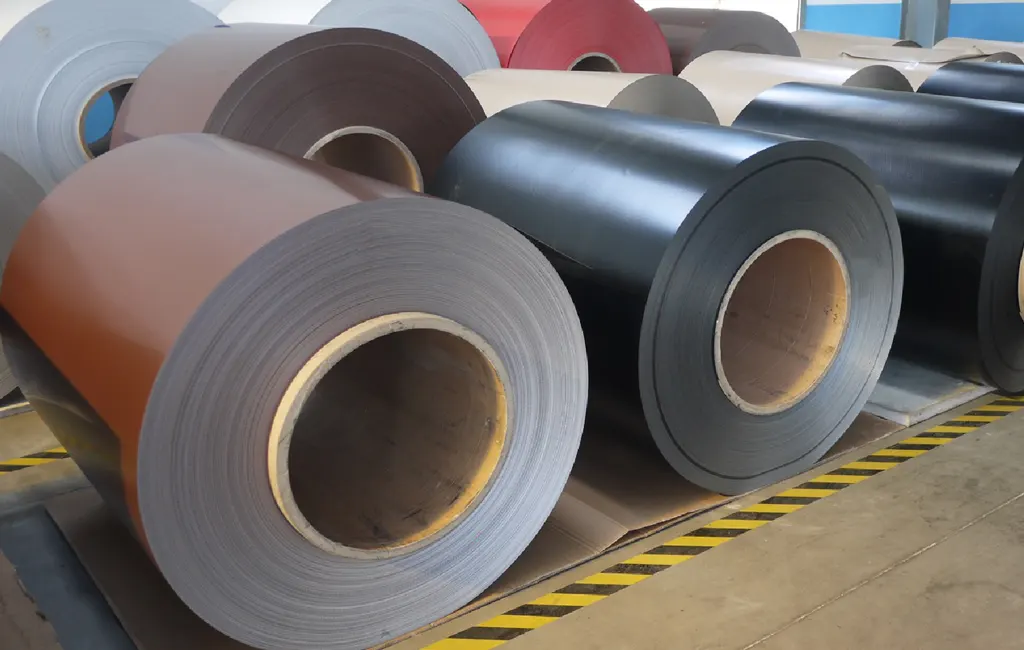
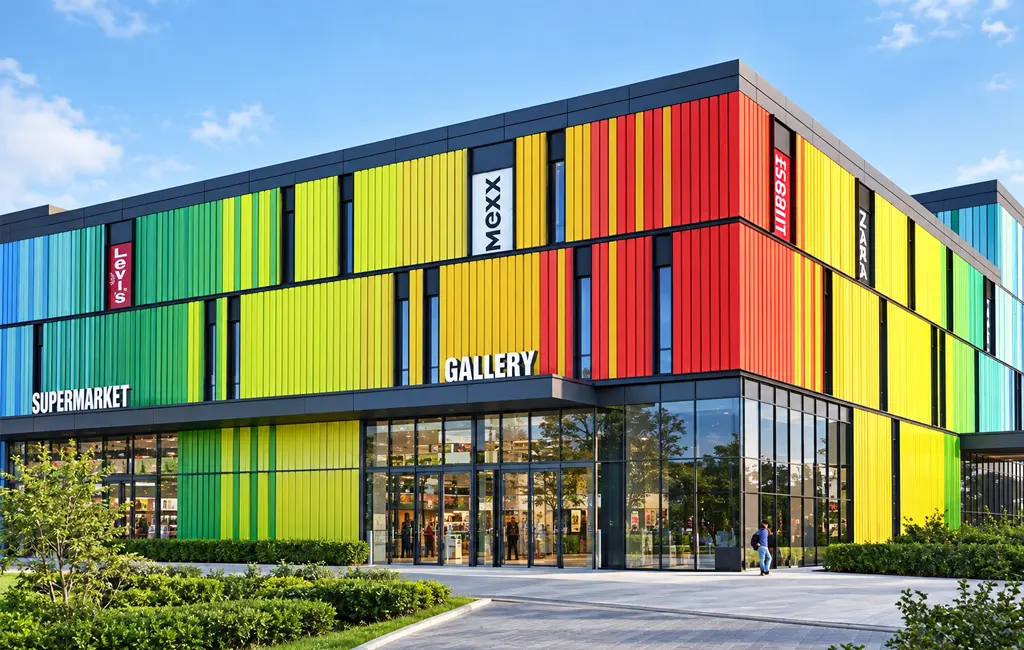
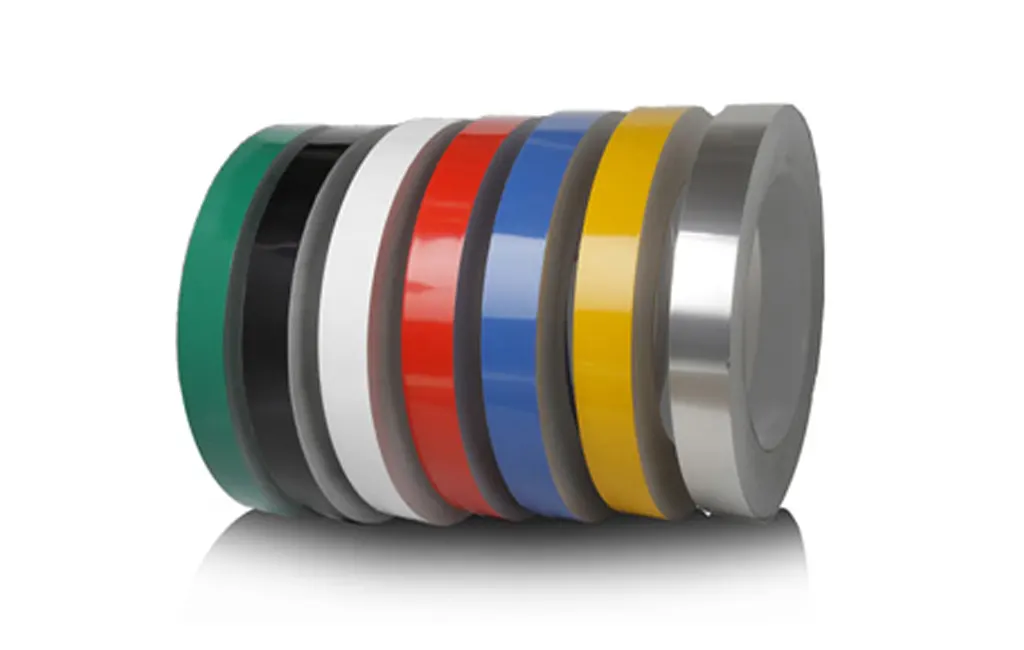
The widespread adoption of color-coated aluminum coils for building exterior walls—while ordinary painted aluminum sheets are relegated to minor interior decoration or temporary signage—comes down to how they are manufactured, how they handle structural shaping, and how they survive the elements.

Continuous Coil Coating vs. Batch Spraying
The fundamental difference lies in how the paint is applied and cured.
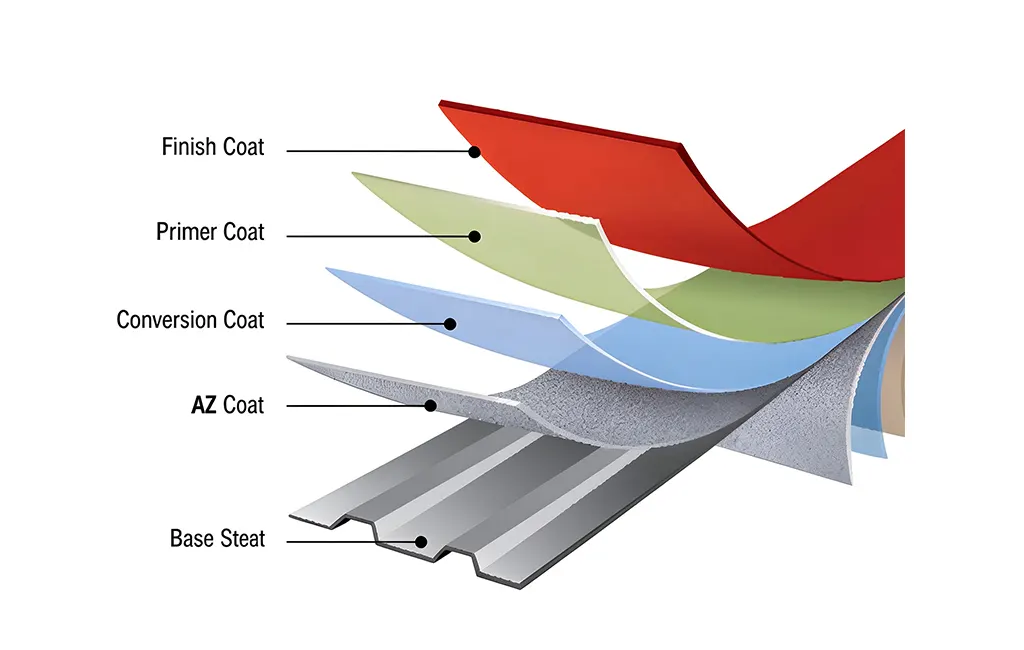
- Color-Coated Aluminum Coils (Pre-painted): These are manufactured using a continuous, automated coil coating process. The aluminum strip is uncoiled, cleaned, chemically pre-treated, primed, coated, and baked in a continuous loop at high speeds. This industrial environment ensures perfectly uniform paint thickness (usually controlled within a tolerance of $\pm 1\,\mu\text{m}$) and flawless thermal curing across miles of metal.
- Ordinary Painted Aluminum Sheets (Post-painted): These are typically produced via batch spray painting on static, pre-cut sheets. This process is highly prone to human error, resulting in uneven coating thickness, orange peel textures, sagging, and microscopic pinholes. Furthermore, static baking ovens cannot achieve the precise, high-temperature curing profile required for high-performance architectural resins.
Advanced Resin Systems (PVDF/FEVE) vs. Standard Polyester
Exterior walls must withstand punishing UV radiation, acid rain, and temperature swings for decades without fading or chalking.
- Color Coils: Architectural color aluminum coils are formulated with high-performance resins like 70/30 PVDF (Polyvinylidene Fluoride) or FEVE (Fluoroethylene Vinyl Ether). The carbon-fluorine ($C-F$) chemical bonds in these fluoropolymer coatings are among the strongest known in chemistry, providing legendary resistance to UV degradation and chemical attacks. They easily achieve AAMA 2605 compliance, ensuring the facade retains its color and gloss for 20 to 30+ years.
- Ordinary Painted Sheets: These typically use low-cost standard polyester (PE) or modified acrylic paints. Under direct sunlight, UV rays rapidly break down the chemical bonds of these interior-grade paints. Within 2 to 5 years of outdoor exposure, ordinary painted sheets will suffer severe chalking (where the paint turns to a powdery residue) and dramatic color fading.
High-Precision Mechanical Flexibility (T-Bend Performance)
An exterior wall is rarely flat; it features sharp corners, column wraps, complex joints, and custom architectural profiles.
- Color Coils: Because the coating is applied before the metal is formed, the paint film is engineered with extreme elasticity. It can undergo intense roll-forming, stamping, and CNC bending without cracking, peeling, or micro-fracturing along the bends (often achieving a 0T to 1T bend rating). The paint stretches seamlessly alongside the aluminum substrate.
- Ordinary Painted Sheets: If a pre-painted ordinary sheet is bent, the rigid, brittle paint layer will immediately crack along the bend axis. If the manufacturer tries to circumvent this by bending a raw aluminum sheet first and spray-painting it afterward, the paint cannot evenly penetrate the tight inner corners and recesses, creating weak spots where the coating will prematurely peel and flake off under wind loads.
Substrate Quality and Alloy Selection
What is under the paint matters just as much as the paint itself.
- Color Coils: Exterior cladding requires high structural strength and wind-pressure resistance. Color aluminum coils typically utilize engineered, manganese-magnesium aluminum alloys like the 3003, 3004, or 5052 series. These alloys offer excellent tensile strength, yield strength, and elongation properties.
- Ordinary Painted Sheets: These are often made from low-grade, recycled aluminum or the 1000 series (pure aluminum). While cheap and easy to process, they lack the structural rigidity required to withstand high-altitude wind pressures. Over time, large panels made from ordinary sheets will suffer from “oil-canning”—a wavy, distorted appearance caused by thermal expansion and lack of structural integrity.
Summary of Architectural Differences
| Feature | Architectural Color-Coated Coil | Ordinary Painted Aluminum Sheet |
|---|---|---|
| Primary Resins | 70/30 PVDF / FEVE Fluorocarbon | Standard Polyester (PE) / Acrylic |
| Coating Uniformity | Extremely high (±1 µm precision) | Poor (Manual/automated batch spray variance) |
| UV & Weather Resistance | 20 to 30+ Years (No chalking/fading) | 2 to 5 Years (Rapid degradation outdoors) |
| Processing Sequence | Coated first → Formed/Bent later | Formed first → Sprayed later (or brittle pre-paint) |
| Corner/Bend Integrity | Perfect adhesion, zero micro-cracking | High risk of paint peeling or thin corner coverage |
| Typical Application | Airport terminals, skyscrapers, premium curtain walls | Indoor ceilings, partitioning, temporary billboard backings |