
Thermal Shock Mechanisms in Color-Coated Aluminum: A Technical Overview
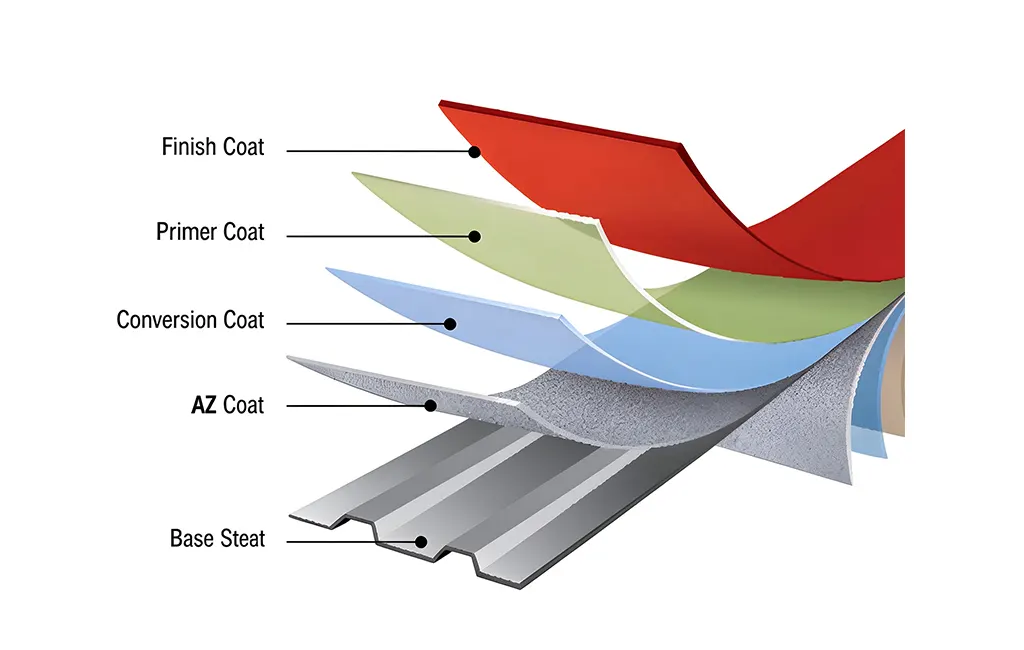
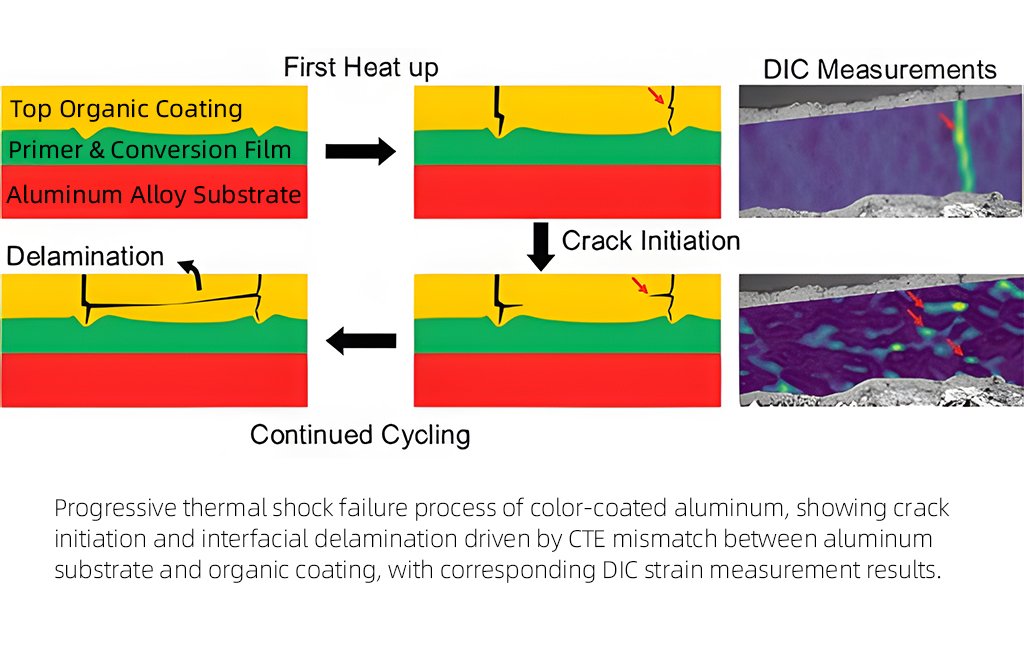
Temperature cycling, or thermal shock, accelerates coating degradation primarily through differential thermal expansion. Color-coated aluminum integrates an aluminum alloy substrate with an organic polymer coating (such as PVDF, HDP, or PE). Aluminum possesses a high coefficient of linear thermal expansion (), whereas organic coatings exhibit CTE values that can be three to ten times higher. Rapid fluctuations between extreme temperatures generate severe interfacial shear stress. When these cyclic stresses exceed the interfacial adhesive strength or the tensile strength of the cured polymer matrix, micro-cracking, delamination, and peeling occur, compromising the system’s long-term barrier protection.
Technical Parameter Matrix: Coating Performance Under Thermal Stress
The following matrix contrasts how different color-coated aluminum configurations respond to thermal cycling and environmental stress based on standardized testing parameters.
| Aluminum Alloy Grade | Coating Type | Coating Thickness (μm) | Thermal Cycling Resistance (Cycles, -40°C to 80°C) | Salt Spray Test Resistance (ASTM B117) | 10-Year Color Retention (ΔE, ASTM D2244) | Primary Application Scenario |
| AA 3003-H14 | PVDF (Fluoropolymer) | 25 – 35 | ≥ 500 cycles (No cracking/peeling) | ≥ 3,000 hours | ≤ 5.0 | High-rise curtain walls, architectural facades |
| AA 5052-H32 | Thermoset Powder | 60 – 80 | ≥ 300 cycles (No visible micro-cracking) | ≥ 4,000 hours | ≤ 6.0 | Marine environments, heavy industrial roofing |
| AA 3105-H16 | High-Durable Polyester (HDP) | 20 – 25 | ≥ 300 cycles (No delamination) | ≥ 1,500 hours | ≤ 8.0 | Residential roofing, roller shutter doors |
| AA 1100-H14 | Standard Polyester (PE) | 15 – 20 | ≥ 150 cycles (Risk of micro-fissures) | ≥ 1,000 hours | ≤ 10.0 | Indoor signage, interior ceiling panels |
Atomic Mechanics of Thermal Stress in Aluminum Coatings
Polyvinylidene Fluoride (PVDF) vs. Thermal Shock
PVDF coatings formulated to meet AAMA 2605 standards offer superior resistance to thermal shock. The carbon-fluorine (C-F) bonds within the molecular structure provide exceptional flexibility and UV stability. This inherent elasticity allows the polymer matrix to expand and contract dynamically alongside the AA 3003 or AA 5052 aluminum substrate without developing micro-fractures.
- Glass Transition Temperature (Tg): The Tg of PVDF is typically below -40°C, meaning the coating remains in its ductile, rubbery state throughout most real-world operating temperatures, drastically lowering the risk of brittle fracturing during cold-weather thermal contraction.
- Long-Term Integrity: B2B projects utilizing PVDF coatings exhibit over 95% color retention and zero peeling after decades of exposure to extreme diurnal temperature swings.
Thermoset Powder Coatings and Cross-Linking Density
Thermoset powder-coated color aluminum relies on a dense, three-dimensional cross-linked network. While this structure yields exceptional pencil hardness and scratch resistance, it introduces distinct vulnerabilities when subjected to violent thermal shifts.
- The Over-Curing Risk: If the baking profile deviates from the manufacturer’s specification, over-curing increases the cross-linking density beyond optimal limits. This renders the coating brittle.
- Interfacial Stress Concentration: When an over-cured powder coating faces sudden temperature drops, its inability to rapidly relax its internal molecular structure causes stress concentrations at the interface, leading to catastrophic delamination.