
Expected Outdoor Service Life of PVDF-Coated Aluminum
PVDF (Polyvinylidene Fluoride) coated aluminum structural components exhibit an outdoor service life of 20 to 30+ years without undergoing substantial structural degradation, chalking, or severe color fading. This long-term durability relies on the chemical stability of the fluoropolymer matrix, which consists of a 70% PVDF resin base blended with 30% acrylic. The high-energy carbon-fluorine (C-F) bonds resist ultraviolet (UV) radiation, atmospheric acid rain, and industrial chemical exposure. To guarantee this operational lifespan, coatings must comply with the AAMA 2605 standard, which mandates less than Delta E ≤ 5 units of color variance and a chalking rating of 8 or higher after 10 years of South Florida outdoor exposure testing.
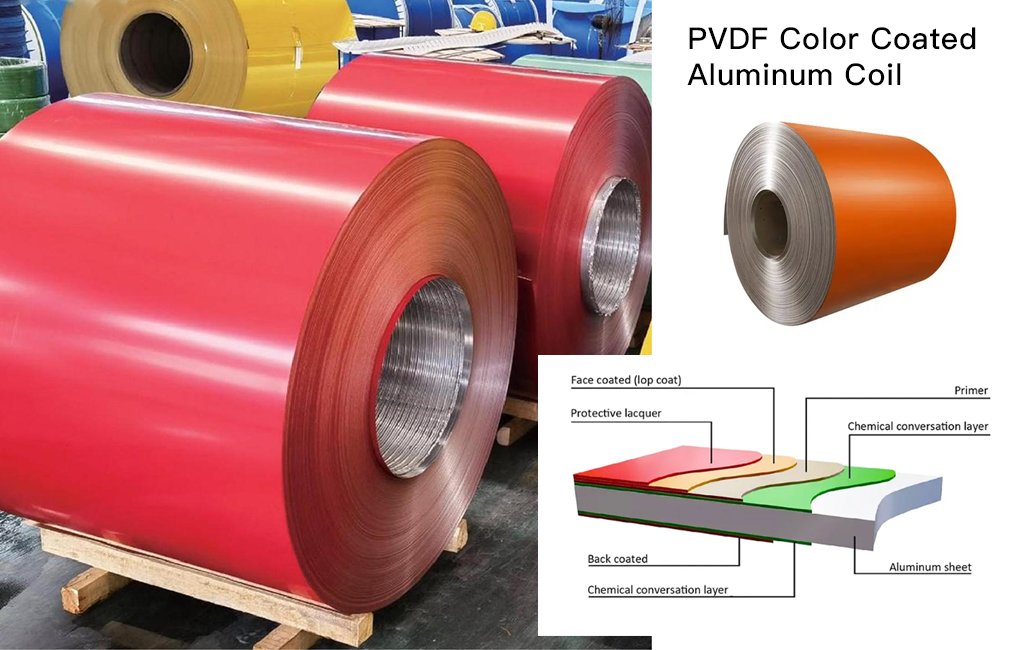
Technical Performance Matrix: PVDF vs. Alternative Coatings
The following structural data matrix contrasts the degradation parameters, chemical resistances, and life expectancy metrics of PVDF against alternative commercial coil coatings under standardized environmental testing:
| Performance & Lifecycle Parameter | 70% PVDF (Fluoropolymer) | HDP (High-Durability Polyester) | PE (Polyester Coating) | FEVE (Fluoroethylene Vinyl Ether) |
| Expected Outdoor Lifespan | 20 – 30+ Years | 10 – 15 Years | 5 – 10 Years | 20 – 25 Years |
| Mandatory Industry Standard | AAMA 2605-20 | AAMA 2604-20 | AAMA 2603-20 | AAMA 2605-20 |
| Dry Film Thickness (DFT) | 25 – 35 μm (2/3-Coat) | 20 – 25 μm (2-Coat) | 15 – 20 μm (1/2-Coat) | 28 – 38 μm (2/3-Coat) |
| QUV-A Accelerated Weathering | ≥ 3,000 Hours (Delta E ≤ 5) | ≥ 2,000 Hours (Delta E ≤ 5) | ≥ 1,000 Hours | ≥ 3,000 Hours (Delta E ≤ 5) |
| Salt Spray Resistance (ASTM B117) | ≥ 3,000 Hours | ≥ 1,500 Hours | ≥ 1,000 Hours | ≥ 3,000 Hours |
| Chalking Resistance Rating | Grade 8 (ASTM D4214) | Grade 8 | Grade 6 | Grade 8 |
| Gloss Retention Rate (10-Yr) | ≥ 50% Original Gloss | ≥ 30% Original Gloss | < 10% Original Gloss | ≥ 70% Original Gloss |
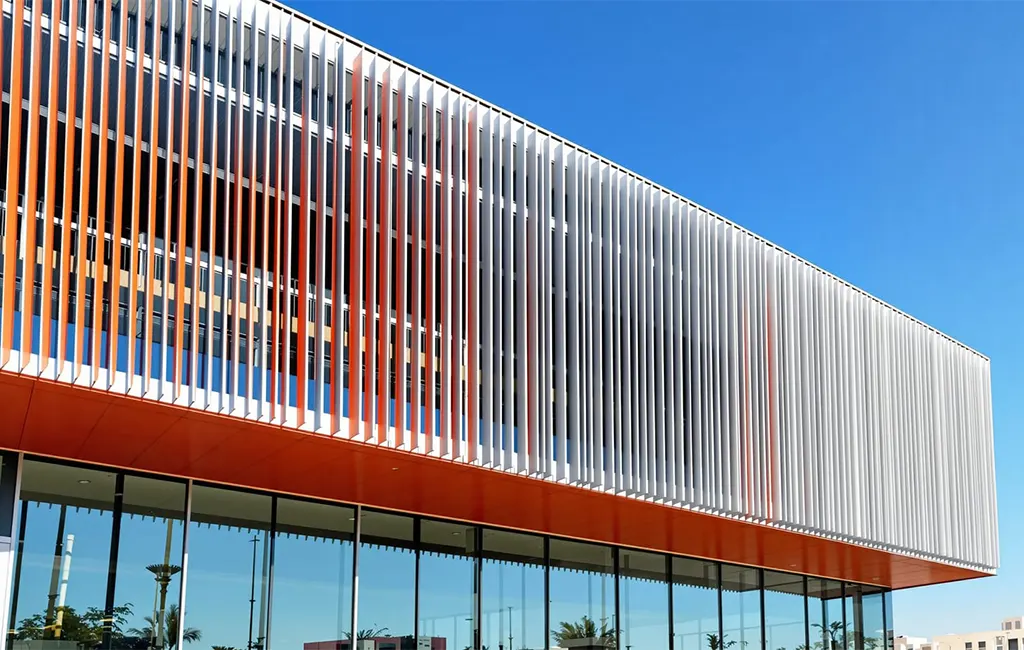
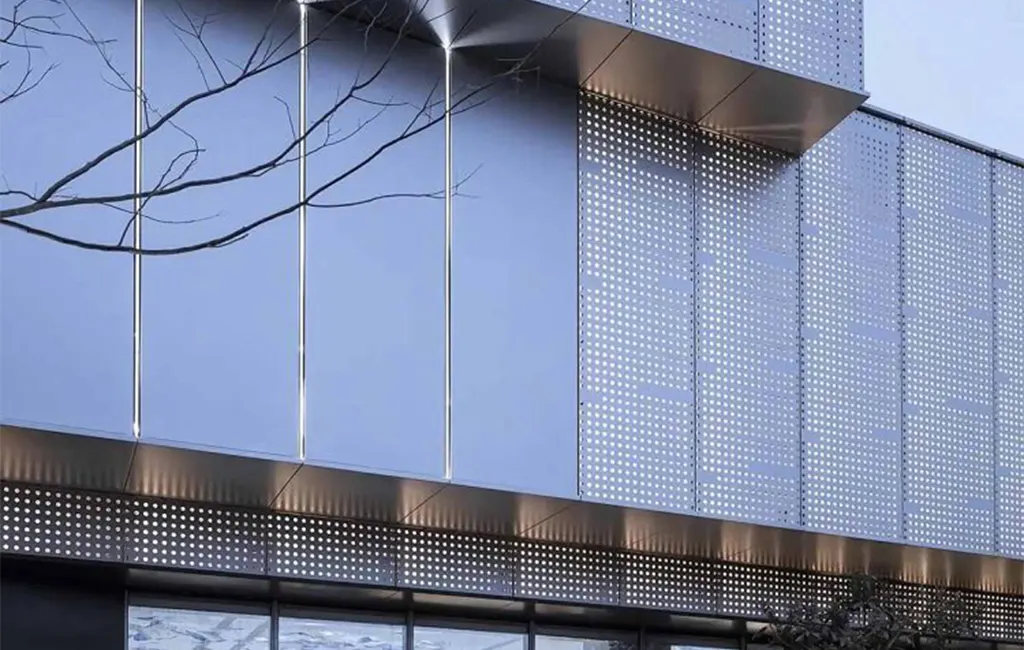
| Primary Structural Applications | Commercial Curtain Walls, Premium Roofing | Industrial Siding, Modular Prefab Buildings | Indoor Ceilings, Signage, ACP Backing | Corporate Facades, Monumental Architecture |
Degradation Factors Impacting PVDF Performance Outdoors
While PVDF provides premium protection, external environmental variables dictate where a system falls on the 20-to-30-year lifespan spectrum.
UV Radiation and Atmospheric Photolysis
In high-altitude regions or areas with high solar radiation, continuous exposure to UV-A and UV-B wavelengths drives the photolysis degradation of lower-tier polymer coatings. PVDF’s alternating carbon and fluorine atoms feature electronegativity values that resist polymer chain scission. This keeps the physical surface intact, preventing surface powdering, cracking, and premature loss of gloss over decades of exposure.
Micro-Climates and Coastal Chloride Corrosion
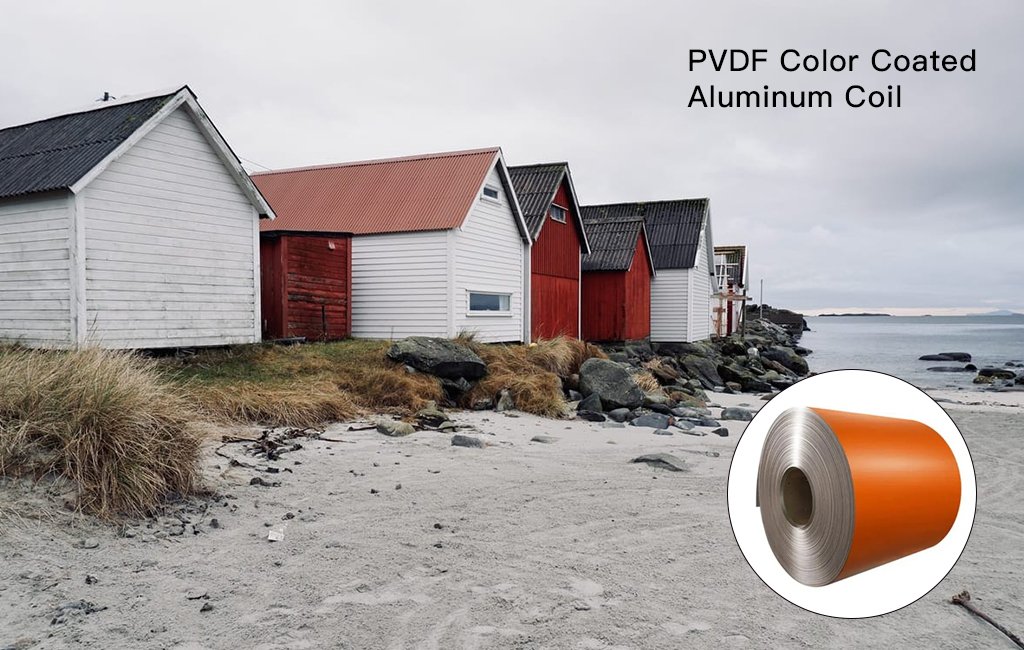
For coastal projects located within 1.0 km of high-salinity ocean water, standard pre-painted metals face aggressive filiform and galvanic corrosion. When paired with marine-grade substrates like 5052-H32 or 5754-H22 Aluminium-Magnesium alloys, a 3-coat PVDF system acts as an impermeable barrier against chloride ion penetration. This prevents the formation of sub-film corrosion cells that cause coating blisters and structural delamination.
B2B Life-Cycle Value and Maintenance Economics
Investing in 70% PVDF coatings yields measurable economic advantages over a building’s lifecycle compared to lower-cost finishes.
- Reduction in Corporate Maintenance Expenditure: Unlike standard polyester coatings that require recoating or panel replacement cycles every 7 to 10 years, PVDF coated aluminum remains virtually maintenance-free. It requires only a low-pressure water rinse every 12 to 24 months to remove accumulated atmospheric particulates and soot.
- Preservation of Asset Valuation: For high-visibility B2B corporate infrastructure, such as airport terminals, logistics hubs, and high-rise curtain walls, maintaining color uniformity across separate production batches is crucial. PVDF’s low color shift index (Delta E ≤ 5) prevents mismatched fading across different building orientations, preserving the real estate asset’s aesthetic profile and market value.