
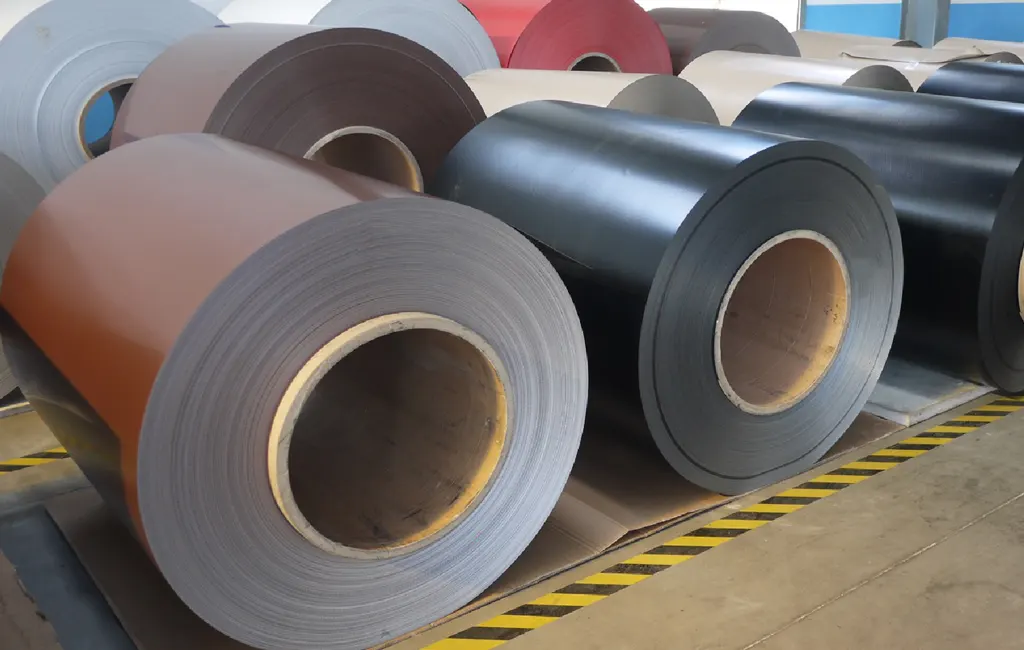
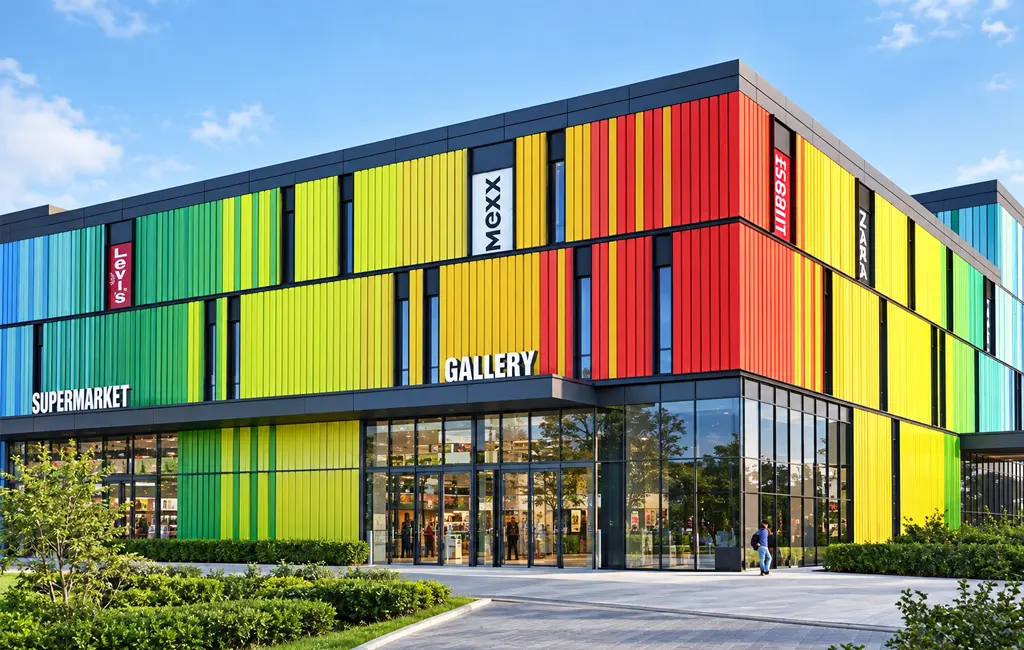
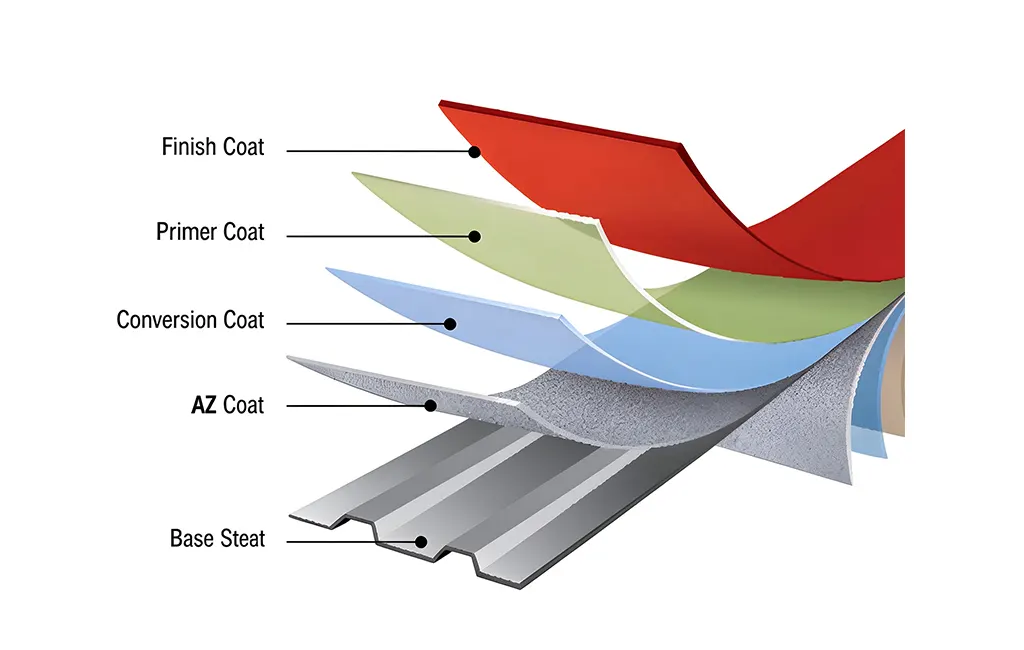
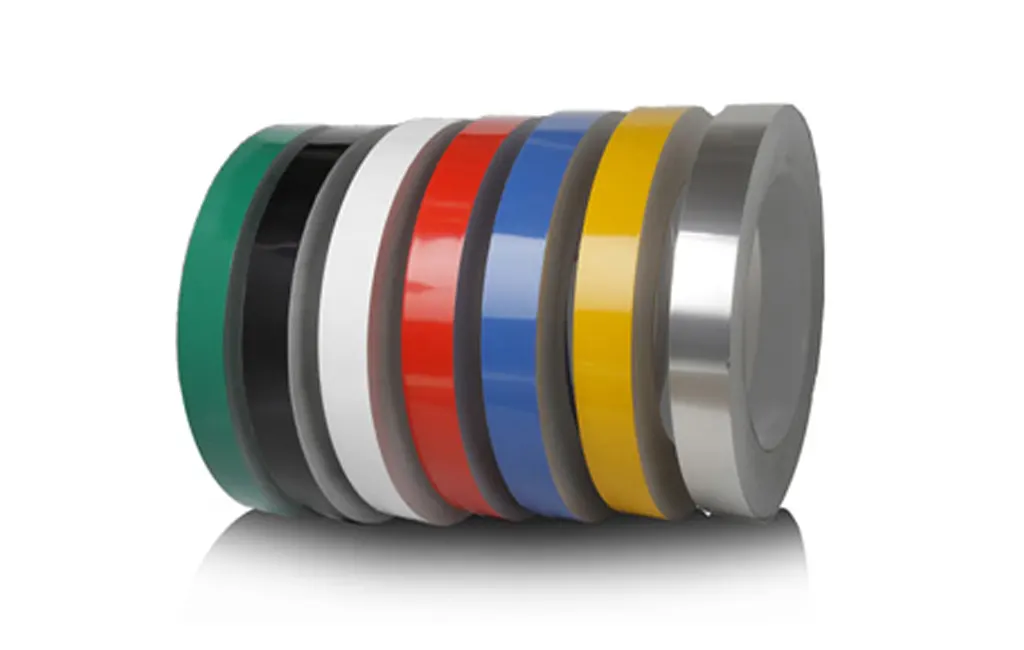
For illuminated advertising channel letters, Pre-painted 3003-H14 or 5052-H32 aluminum coils coated with high-durability Polyester (PE) or Polyurethane (PU) work best. Channel letter fabrication requires high material flexibility to endure sharp 90° bends without coating cracking, paired with structural rigidity to withstand wind loads. A substrate thickness of 0.6 mm to 1.2 mm with a 15–20 μm front coating provides the optimal balance. Furthermore, the interior side must feature a high-reflectivity white backing coat (reflectance ≥ 85%) to maximize LED light output, minimize hot-spotting, and lower overall energy consumption.
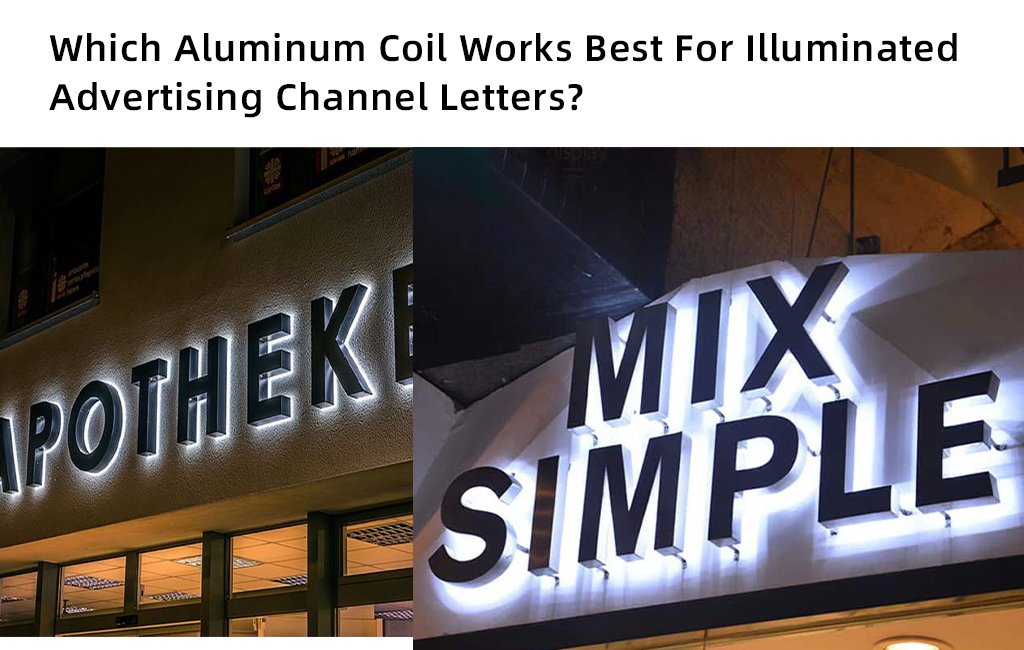
Technical Parameter Matrix for Advertising Signage Coils
| Technical Parameter | High-Reflectivity Channel Letter Coil | Heavy-Duty Exterior Signage Coil | Budget-Grade Interior Trim Coil |
| Aluminum Alloy & Temper | 3003-H14 / 5052-H32 | 5052-H34 / 3003-H16 | 1100-H24 / 3105-H14 |
| Coating Type | Modified Flexible Polyester (PE) | Polyvinylidene Fluoride (PVDF) | Standard Polyester (PE) |
| Coating Thickness (Front) | 15–18 μm | 25–28 μm (Double Coat) | 12–15 μm |
| Backing Coat Specification | ≥ 85% Reflective White (5–8 μm) | Standard Primer / Service Coat | Service Coat (3–5 μm) |
| T-Bend Flexibility (ASTM D4145) | ≤ 1T (Zero micro-cracking) | ≤ 2T | ≤ 2T |
| Pencil Hardness (ASTM D3363) | ≥ H | ≥ 2H | ≥ F |
| Salt Spray Resistance (ASTM B117) | ≥ 1,000 Hours | ≥ 3,000 Hours | ≥ 500 Hours |
| UV Resistance (AAMA Compliance) | AAMA 2603 / Delta E ≤ 5 (5 Yrs) | AAMA 2605 / Delta E ≤ 5 (10+ Yrs) | Indoor Use Only |
| Primary Application Scenarios | LED Channel Letter Returns, Trimless Signage | High-rise Pylon Signs, Corporate Facades | Indoor Exhibition Displays, POP Graphics |
Material Substrates: 3003 vs. 5052 Alloys for Signage Returns
3003-H14 Aluminum Alloy: The Industry Standard
The 3003-H14 alloy (Manganese-stabilized) is the premier choice for standard commercial channel letters. It delivers excellent workability and a moderate tensile strength (140–180 MPa). This allows fabricators to form complex serif fonts, script lettering, and intricate logos easily on CNC bending equipment without wearing out tooling components.
5052-H32 Aluminum Alloy: High Wind-Load Performance
For large-scale, high-rise architectural signage or coastal installations, 5052-H32 (Magnesium-stabilized) is preferred. It offers a higher tensile strength (210–260 MPa) and superior fatigue resistance. This ensures the structural sidewalls (returns) of the letters resist oil-canning and structural deformation under high dynamic wind pressures, while offering excellent salt-spray survivability.
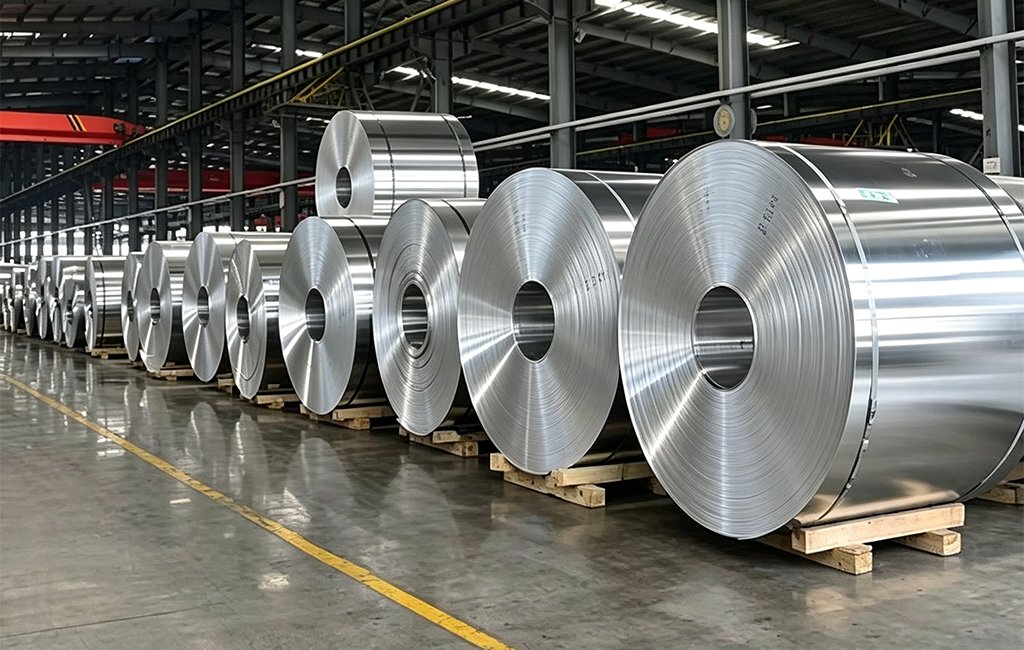
Coating Technologies for Automated Bending and Optical Performance
Flexible Polyester (PE) and Polyurethane (PU) Coatings
Automated channel letter production subjects the pre-painted aluminum strip to severe mechanical stresses during the flanging, slotting, and bending phases. Standard architectural coatings can snap under these conditions. Signage-grade flexible PE and PU coatings are engineered with high-molecular-weight linear polymers that elongate alongside the aluminum substrate, maintaining total surface encapsulation.
Optical Optimization via High-Reflectivity Backing Coats
The interior processing of the color-coated coil is as critical as the exterior aesthetics. Applying a highly reflective, specialized white backing coat directly influences the sign’s final energy efficiency:
- Reduction of LED Count: High internal reflection allows sign makers to space LED modules further apart, cutting component costs by 15–20%.
- Thermal Management: Efficient light bouncing reduces internal heat trapping, extending the lifespan of the LED drivers and diodes.