
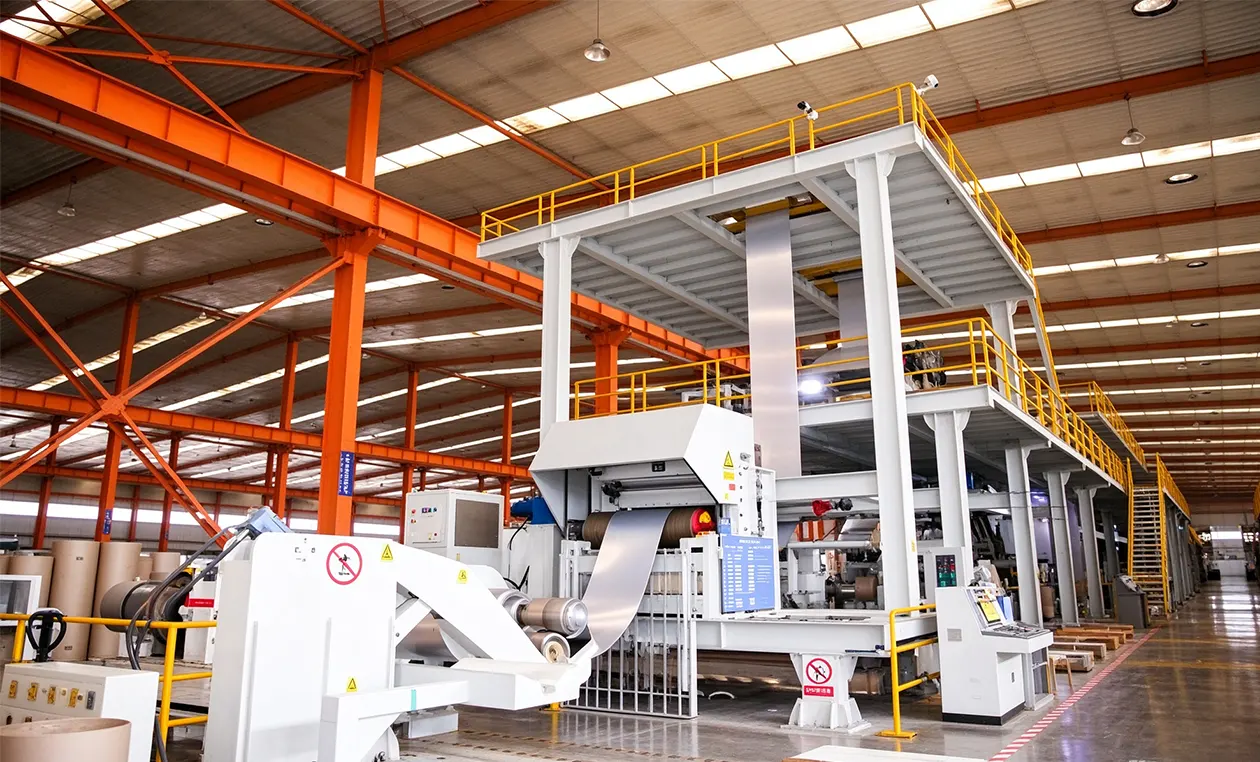
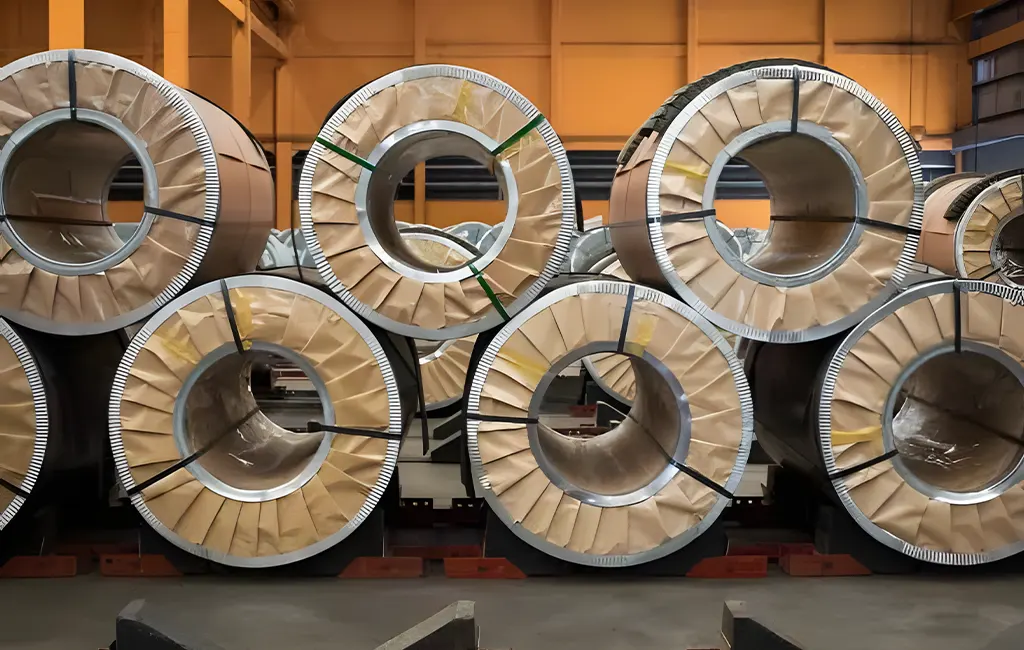
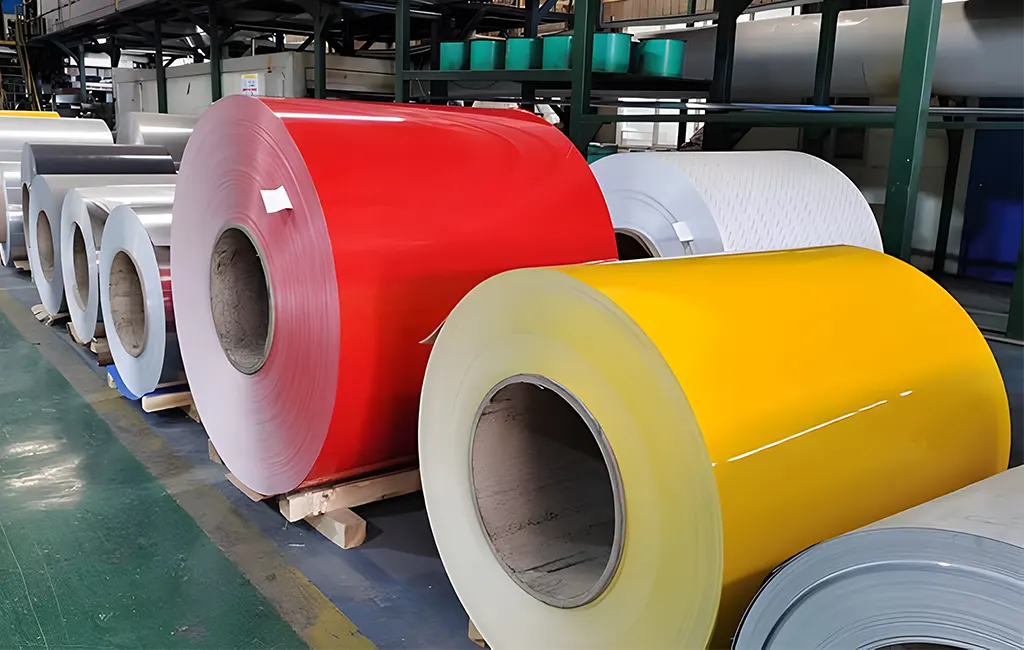
Color‑coated aluminum coil, also known as prepainted aluminum coil, is manufactured through a continuous coil‑coating production process. Aluminum substrate goes through degreasing, chemical passivation pretreatment, roller coating of primer and topcoat, followed by high‑temperature curing before rewinding into finished coils. Unlike on‑site spray‑painting, factory coil‑coating delivers stable, uniform colour and film‑thickness over the whole material length.
Thanks to its comprehensive performance in weight‑reduction, corrosion‑resistance, aesthetic diversity and recyclability, it has expanded far beyond building decoration into transportation, signage and home‑appliance sectors.
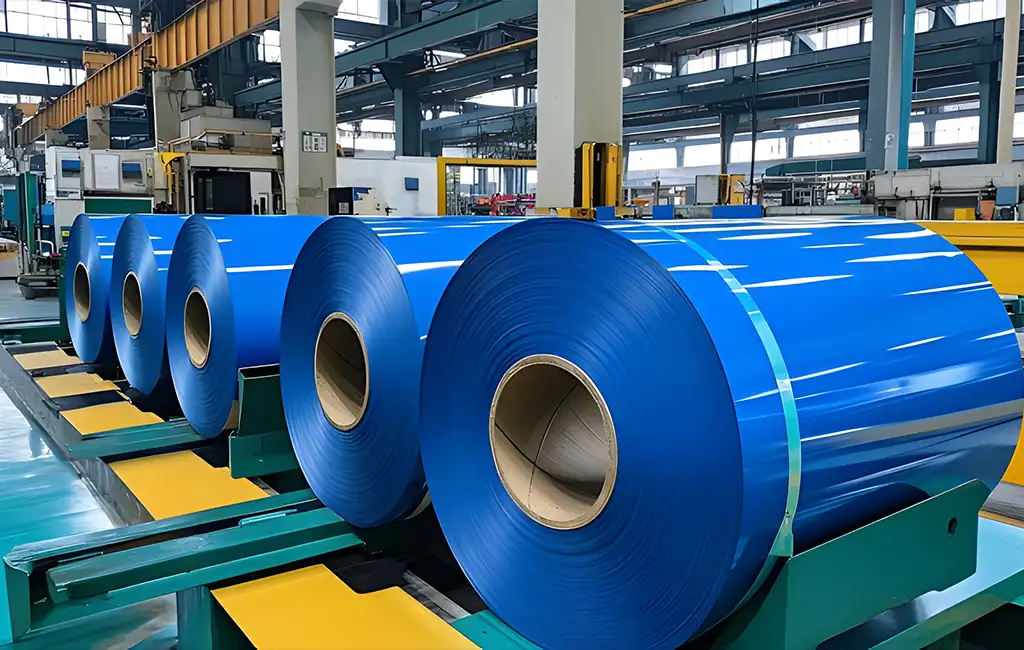
Core Advantages of Color‑Coated Aluminum Coil
1. Light‑weight and high structural safety
Aluminum alloy has roughly one‑third the density of steel, greatly reducing dead load on building sub‑structures. This simplifies structural design for new projects and lowers reinforcement costs for renovation works. 3003‑H24 and 3005‑H24 aluminum‑manganese alloys are the most widely‑used outdoor substrate grades, balancing mechanical strength and formability.
2. Excellent weather‑resistant and anti‑corrosion performance
The natural oxide‑film of aluminum together with organic coil‑coating forms dual‑layer protection. Properly‑specified PVDF fluorocarbon coated aluminum can resist ultraviolet ageing, coastal salt‑spray and industrial‑polluted atmosphere, maintaining stable appearance for more than 20 years without frequent repainting work.
3. Rich aesthetic options and outstanding formability
Coil‑coating supports RAL, Pantone custom colours, metallic, matte‑gloss finishes, wood‑grain and stone‑imitation textures. Good bending and roll‑forming performance allows fabrication into curved panels, complex roofing profiles and special‑shaped decorative components, satisfying diversified modern‑architectural design requirements.
4. High construction efficiency and whole‑life‑cycle economy
Painting work is fully completed inside the factory. Fabricators can directly cut, bend and process finished coils, eliminating messy on‑site spraying procedures, shortening construction periods and reducing on‑site VOC pollution. Although initial material cost may be higher than ordinary coated‑steel products, low‑maintenance features bring obvious long‑term economic benefits for building owners.
5. Eco‑friendly and high recyclability
Aluminum can be recycled infinitely without major loss of mechanical performance, complying with green‑building evaluation standards. Modern coil‑coating production facilities effectively collect volatile organic compounds generated in curing procedures, lowering industrial‑emission impacts on the environment.
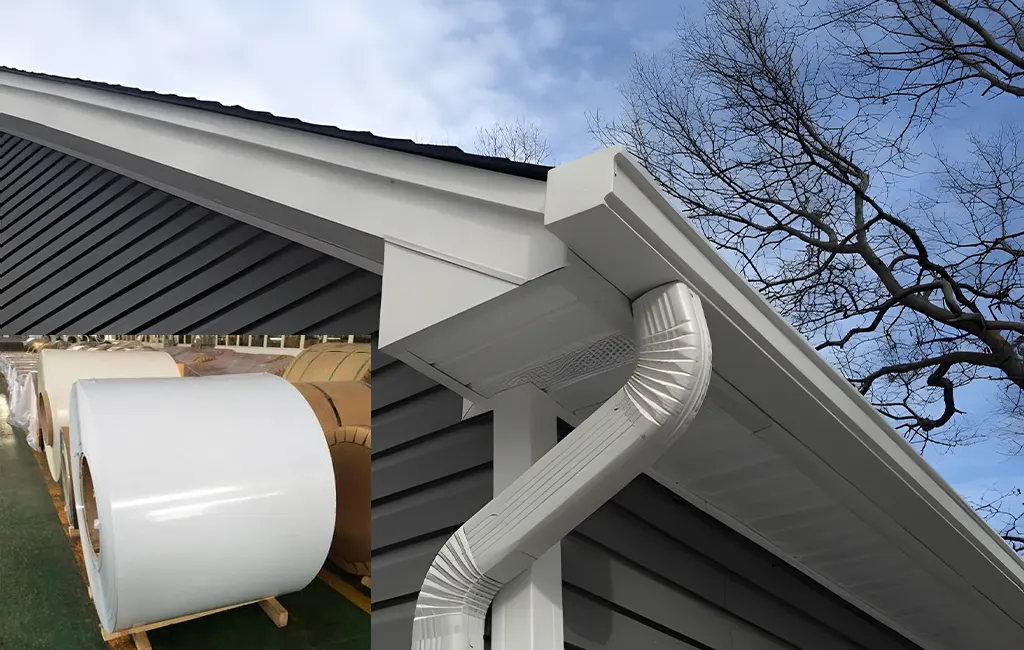
Typical Application Scenarios
Building and construction (largest‑consumption field)
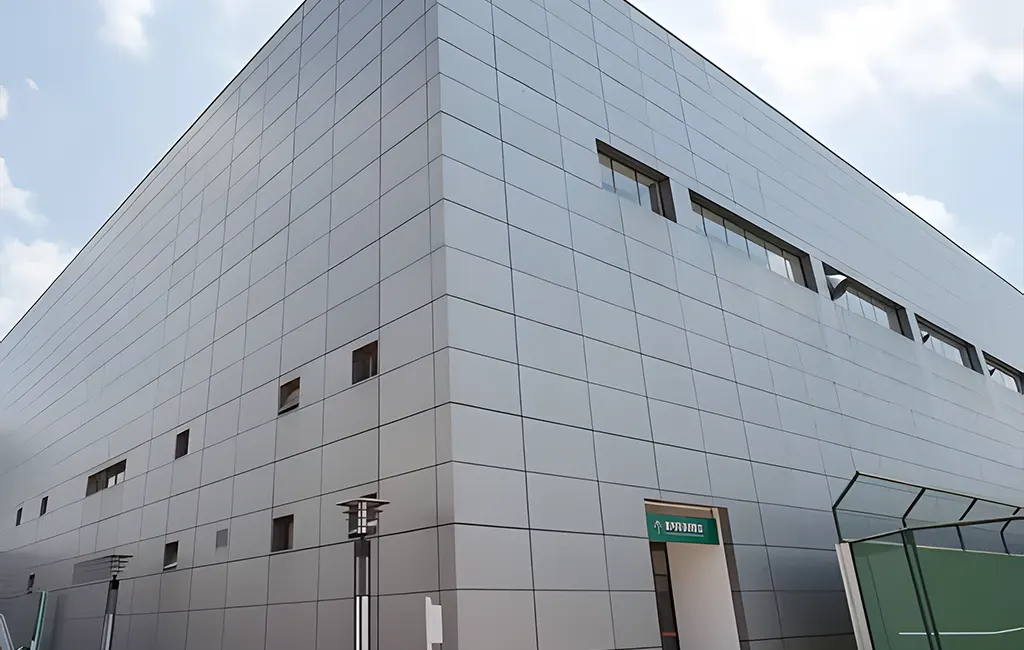
- Exterior systems: Curtain‑wall facades, rain‑screen cladding, standing‑seam roofing, eaves, fascia panels, gutters and down‑pipes; PVDF or HDP coatings are recommended for coastal and high‑UV outdoor environments.
- Interior decoration: Clip‑in ceilings, baffle ceilings, interior wall decorative panels, sun‑shade louvers; cost‑effective PE‑polyester coating is the mainstream choice.
Transportation industry
Used for bus and metro interior panels, caravan and truck‑box shells, vehicle decorative trim parts. Light‑weight properties help reduce vehicle dead‑weight and improve energy‑saving performance.
Signage and advertising industry
Outdoor large‑size billboards, traffic‑sign substrates, commercial display panels; customized colour and surface textures meet visual‑design requirements.
Household appliances and electronic equipment
Air‑conditioner shell panels, refrigerator and washing‑machine decorative covers, electrical‑equipment cabinet panels, mostly adopting PE‑coated indoor‑grade aluminum coil.
Application‑Oriented Specification Reference Table
| Application Field | Typical Product Parts | Recommended Alloy Grade | Suggested Coating System | Key Notes |
|---|---|---|---|---|
| Outdoor building facade & premium roofing | Curtain‑wall panels, large‑area roof panels | 3005‑H24 / 5005 | PVDF / HDP | Coastal projects prefer PVDF for salt‑spray resistance |
| General‑purpose roofing & rainwater components | Standing‑seam roof, gutter, downspout | 3003‑H24 / 3105 | HDP / SMP / PE | Focus on bending formability during roll‑forming |
| Indoor ceilings & interior decoration | Baffle ceiling, interior wall panels | 3003‑H14 | PE Polyester | Indoor non‑corrosive environment, cost priority |
| Transportation equipment | Bus interior, caravan housing panels | 3003 / 5052 | HDP / PE | Balance weight, impact‑resistance and forming capacity |
| Outdoor advertising & signage | Billboard substrate, traffic‑sign panels | 3003‑H24 | HDP / PE | Outdoor long‑term service needs UV‑resistant coating |
| Home‑appliance decorative panels | Refrigerator, air‑conditioner shell panels | 3003‑O / H14 | PE Polyester | Focus on surface flatness and printing adaptability |
Practical Specification Reminders
- Match substrate alloy and coating grade with actual service environment, do not blindly pursue high‑end coating for indoor‑only scenarios.
- Tender documents shall clearly define alloy‑temper, pretreatment requirements, coating‑system classification and dry‑film‑thickness parameters, rather than evaluating quality only from surface‑colour samples.
- Request mill‑test reports for key‑performance indicators such as salt‑spray resistance, coating‑adhesion and T‑bend forming performance.
- Pay attention to protection of cut‑edges during fabrication to prevent local substrate corrosion from spreading under the coating layer.
References
Wikipedia, Prepainted metal.