
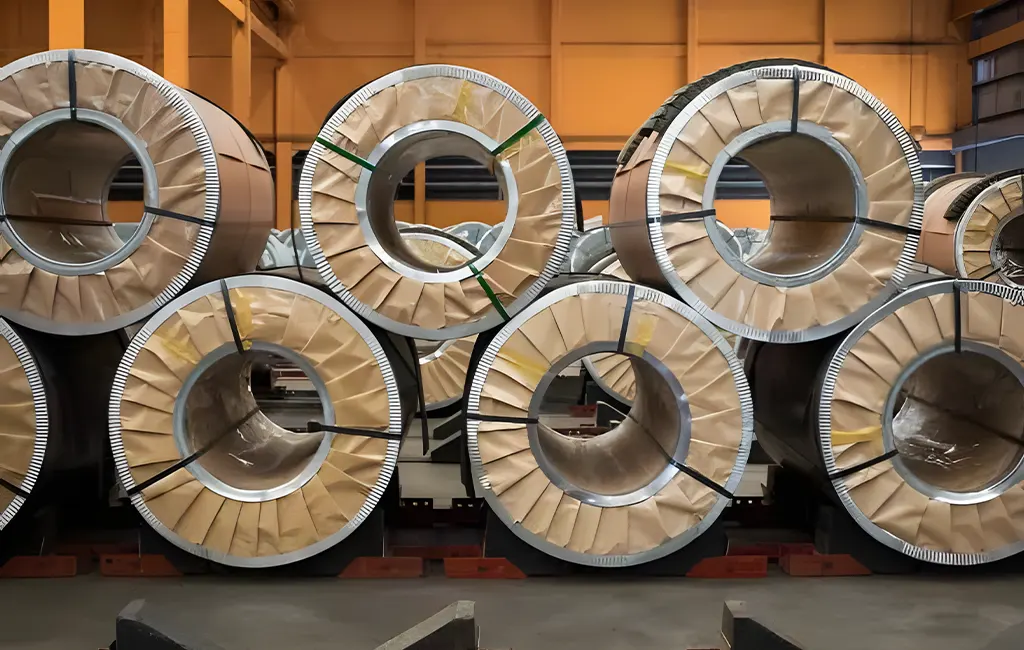
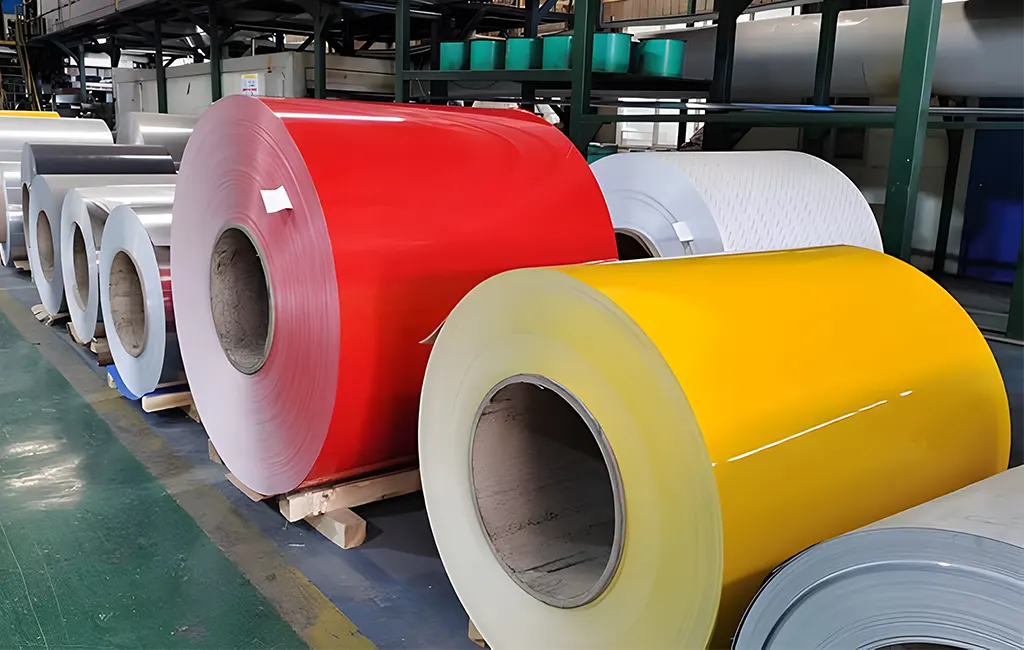
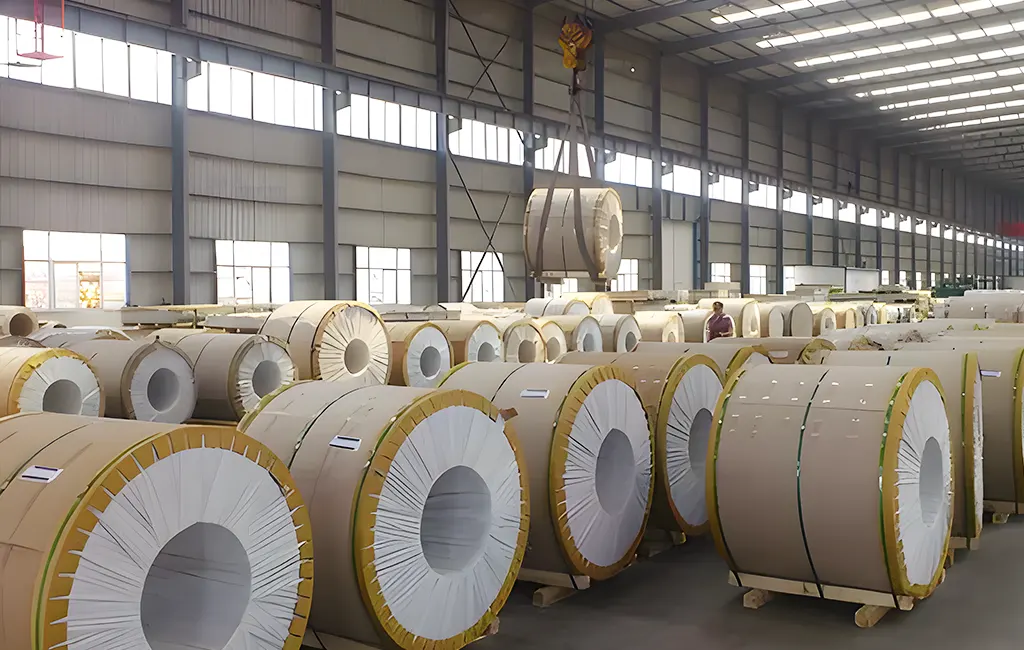
Color-coated aluminum coil consists of aluminum alloy substrate (typically 1xxx, 3xxx, or 5xxx series) processed through continuous coil coating lines with organic coatings such as Polyvinylidene Fluoride (PVDF), thermoset polyester, or silicone-modified polyester (SMP). Standard substrate thicknesses range from 0.15 mm to 1.5 mm, with coating systems applied after chemical pretreatment (degreasing, etching, and chromating or chromium-free conversion coating) to achieve adhesion and corrosion protection. Performance is quantified by coating dry-film thickness (usually 20–30 μm for PVDF topcoats), cross-hatch adhesion (ASTM D3359 rating 5B), and accelerated weathering results meeting AAMA 2605 or equivalent. These coils deliver controlled aesthetics, UV stability, and barrier properties for exterior and interior applications without post-forming painting.
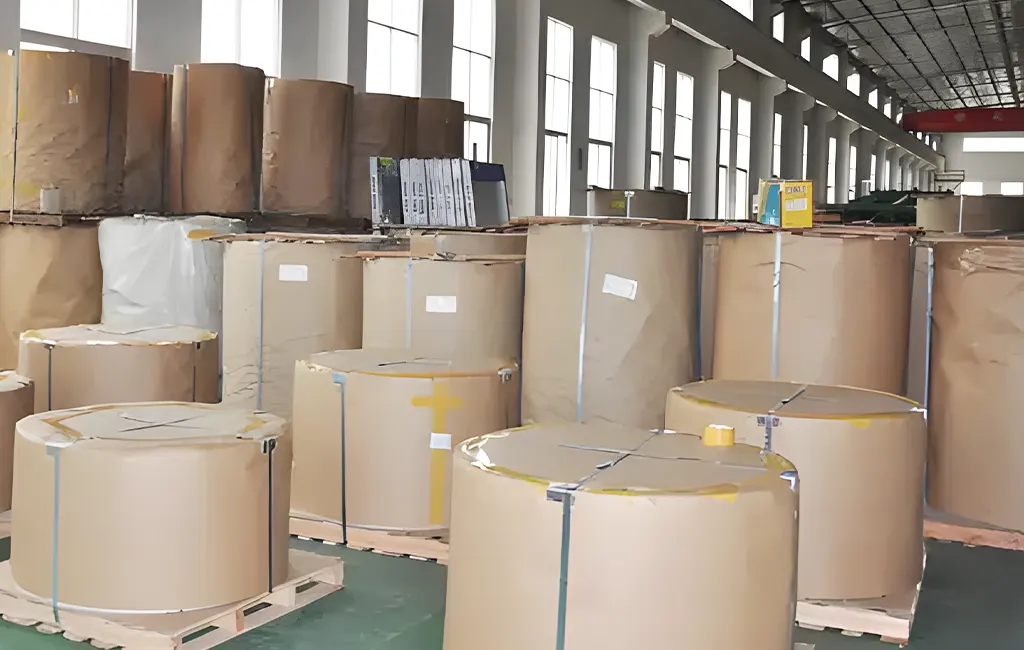
Technical Parameter Comparison Matrix
| Parameter | PVDF-Coated (70% Kynar 500 / Hylar 5000) | Polyester (PE) Coated | Powder-Coated | Anodized Color Aluminum |
|---|---|---|---|---|
| Typical Alloy Grades | 3003, 3004, 5052, 5754 | 3003, 5052, 1100 | 6061, 5052, 3003 | 6063, 5052, 6061 |
| Coating Thickness (μm) | 20–25 (primer + topcoat) | 15–20 | 60–100 | 5–25 (oxide layer) |
| Weather Resistance (QUV-B hours) | ≥ 4,000–6,000 | 1,000–2,000 | 2,000–3,000 | Limited organic fade; oxide stable |
| Salt Spray (ASTM B117, hours) | ≥ 3,000–4,000 | 500–1,000 | 1,000–2,000 | ≥ 1,000 (depending on seal) |
| Color Retention after Outdoor Exposure | ≥ 90–95% after 10–15 years | 70–85% after 5–7 years | 80–90% after 8–10 years | Excellent (inorganic pigments) |
| Operating Temperature Range (°C) | −40 to +80 (continuous) | −20 to +60 | −40 to +100 | −40 to +120 |
| Primary Application Scenarios | High-rise curtain walls, roofing, facades in coastal/industrial zones | Interior panels, signage, appliances | Architectural extrusions, outdoor furniture | Window frames, trim, high-wear architectural elements |
Data aligned with AAMA 2605-20, AAMA 2604, and typical coil-coater technical data sheets. Actual values vary by formulation and line parameters.
PVDF-Coated Color Aluminum Coil
Polyvinylidene Fluoride (PVDF) Coating systems use 70% PVDF resin blended with acrylic resin and ceramic inorganic pigments. After pretreatment, a 5–7 μm epoxy or polyurethane primer is applied, followed by a 20–25 μm PVDF topcoat, then oven-cured at approximately 230–250 °C.
Key measured properties include chalking resistance (ASTM D4214 rating ≥ 8 after 4,000 h QUV), gloss retention, and chemical resistance to acids, alkalis, and industrial pollutants. These coils meet AAMA 2605-20 (high-performance exterior organic coatings) and are commonly specified for 15- to 20-year warranted building envelopes.
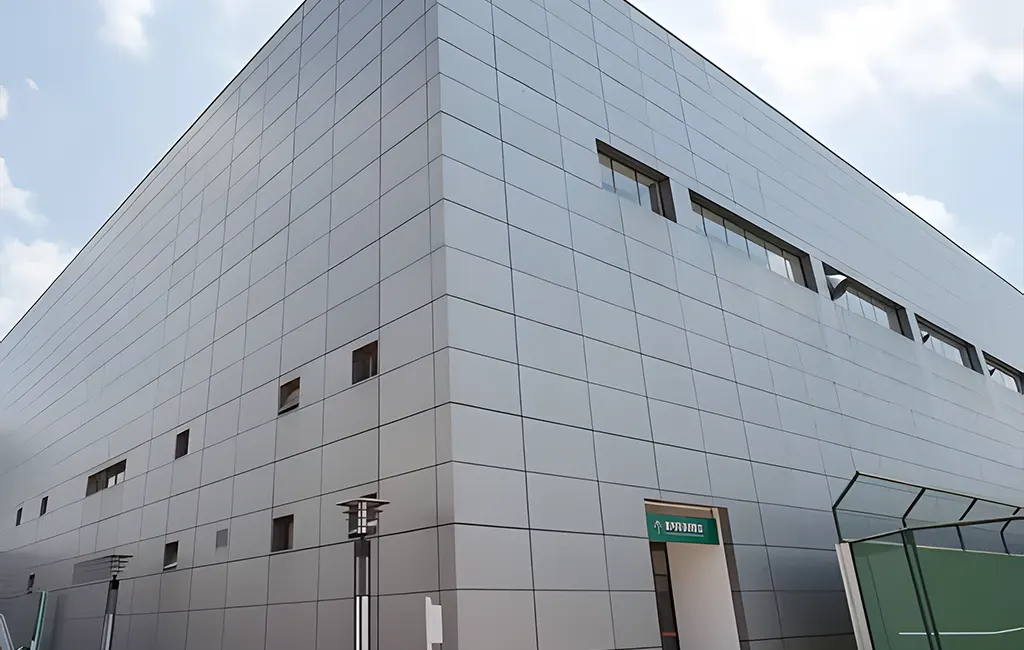
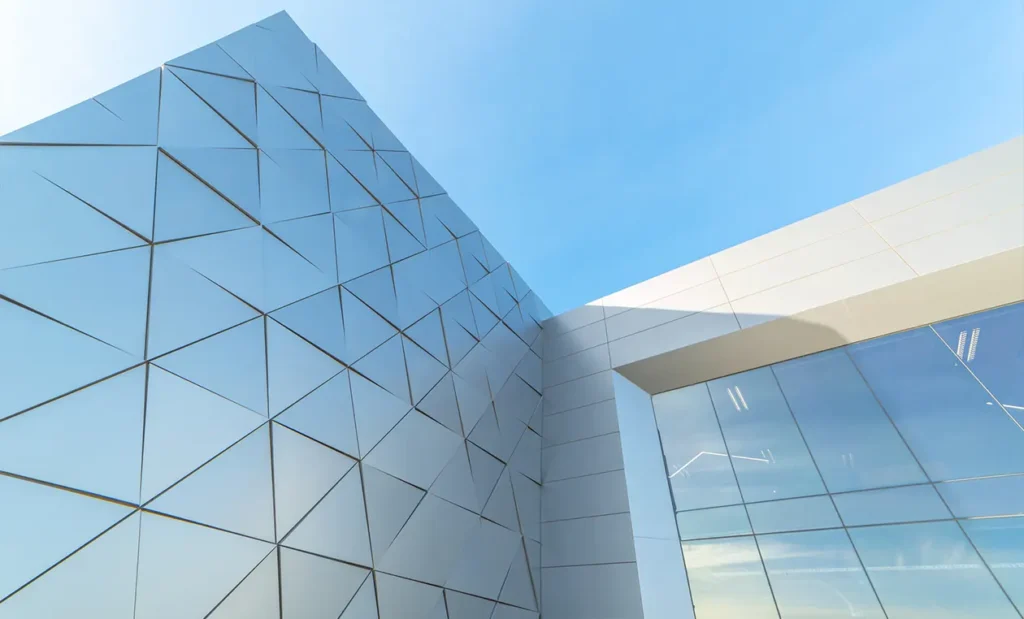
Typical use cases are aluminum composite panel (ACP) skins, standing-seam roofing, and curtain-wall panels in coastal or high-UV climates where color consistency and low maintenance are required. Alloy choice (e.g., 5052 aluminum alloy for formability and strength) is matched to forming radius and structural loads.
Polyester and SMP Coated Systems
Polyester (PE) coatings rely on saturated polyester resins with organic or inorganic pigments, applied at 15–20 μm total dry-film thickness. They provide adequate hardness and flexibility for roll-forming but exhibit earlier chalking and color shift under prolonged UV exposure compared with PVDF.
Silicone-modified polyester (SMP) increases silicone content (typically 30–50%) to improve weatherability, extending useful life to intermediate levels between PE and PVDF. Both systems follow the same pretreatment sequence (degreasing, conversion coating) and are cost-effective for indoor architectural panels, appliance exteriors, and signage where AAMA 2603 or 2604 performance is sufficient.
Color fastness is verified by ΔE measurements after accelerated testing; PE typically shows higher ΔE after 1,000–2,000 h QUV-B than SMP or PVDF.
Anodized Color Aluminum
Anodized color aluminum is produced by electrochemical oxidation of the substrate (commonly 6063 or 5052) to form a controlled aluminum-oxide layer (5–25 μm), followed by electrolytic or integral coloring and sealing. The oxide layer is integral to the metal rather than an applied organic film, yielding high hardness (typically 300–500 HV) and abrasion resistance.
Performance is governed by standards such as ISO 12206 and AAMA 611. Color is achieved with inorganic pigments or metallic salts, resulting in excellent long-term color stability without organic binder degradation. Limitations include restricted color range relative to organic coatings and higher process cost for complex shapes. Primary applications are architectural extrusions, window systems, and high-traffic trim where mechanical durability outweighs the need for arbitrary color matching.
Pre-Treatment and Process Controls
Coil coating begins with alkaline degreasing, rinsing, and conversion coating (chromate or zirconium/titanium-based chromium-free systems). Conversion-coating weight is controlled (typically 10–50 mg/m² for chromium-free) to ensure coating adhesion and under-film corrosion resistance.
Line speed, oven profile, and coating viscosity are adjusted so that dry-film thickness stays within ±1–2 μm of target. Post-cure tests include pencil hardness (ASTM D3363), impact resistance (ASTM D2794), and T-bend flexibility (ASTM D4145). These controls enable consistent batch-to-batch color (ΔE < 0.5 under controlled lighting) and performance across large production runs.
Application-Driven Alloy and Coating Selection
- Commercial facades and curtain walls: 3003 or 5052 substrate with 25 μm PVDF meeting AAMA 2605; prioritizes color retention and salt-spray performance in urban or marine atmospheres.
- Roofing and cladding: Higher-strength 5052 or 5754 with PVDF or SMP; focuses on formability for standing-seam or trapezoidal profiles and thermal-expansion compatibility.
- Automotive trim and transportation: 5052 or 6061 with powder coating or specialized PVDF; emphasizes chip resistance, chemical resistance to road salts, and precise color matching to vehicle standards.
- Interior and appliance: PE-coated 3003 or 1100; balances cost with adequate corrosion protection and decorative finish under controlled environments.
Selection balances mechanical properties of the alloy (yield strength, elongation), required coating warranty, and total installed cost versus maintenance interval. Documented performance data from accelerated and outdoor exposure testing (e.g., Florida or Arizona exposure sites) support specification decisions and reduce field failure risk.