
What is the typical grain size requirement for aluminum substrates used in high-quality color-coated coils, and how does it impact coating adhesion?
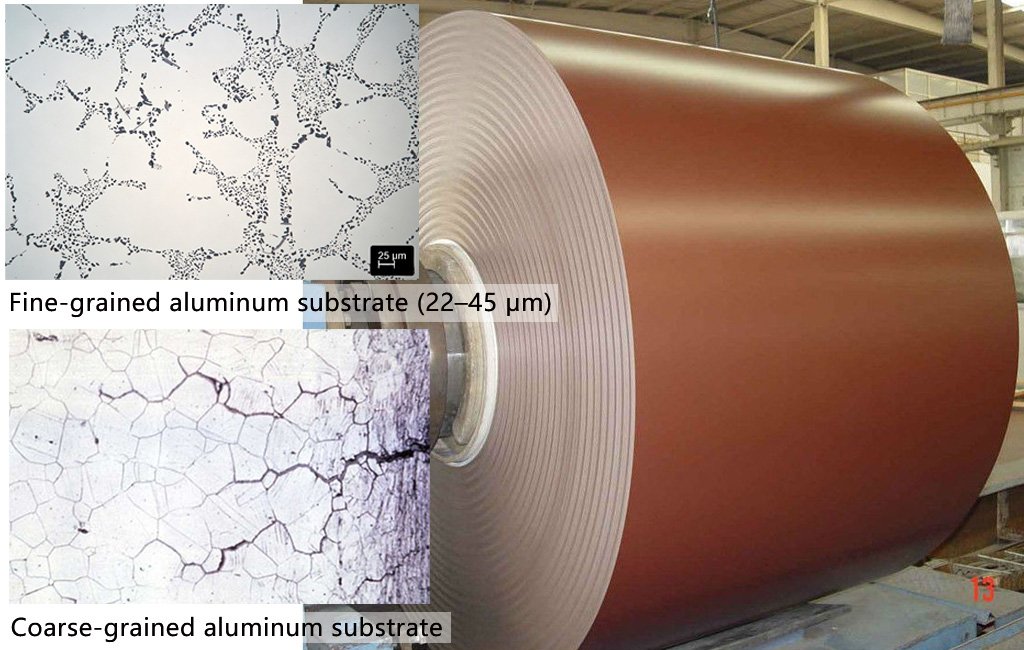
Aluminum Substrate Grain Size Requirements for High-Performance Color Coating For high-quality color-coated aluminum coils, the typical grain size requirement for the aluminum substrate (typically 3000 or 5000 series alloys) is generally targeted at ASTM Grain Size Number 6 to 8 (approx. 22 to 45 μm). Fine, uniform grain structures are critical because they dictate the […]
How does the temper (H14, H24, O) of the aluminum substrate affect the performance of color-coated coils for different applications?
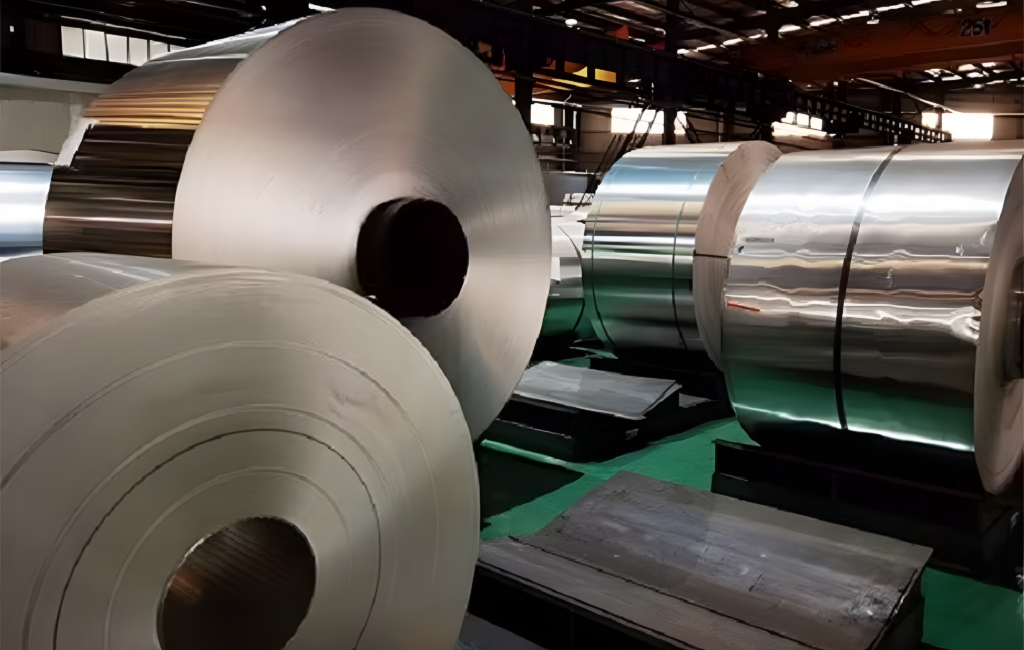
Influence of Aluminum Substrate Temper (H14, H24, O) on Color-Coated Coil Performance The temper of an aluminum substrate—specifically H14 (Work Hardened), H24 (Work Hardened and Partially Annealed), and O (Annealed)—directly dictates the mechanical properties, formability, and surface integrity of color-coated coils. In the color-coating process, the substrate must balance yield strength with elongation to survive […]
What are the technical differences between industrial-grade and residential decorative aluminum coils in terms of substrate grain structure, impurity content, and pinhole control?
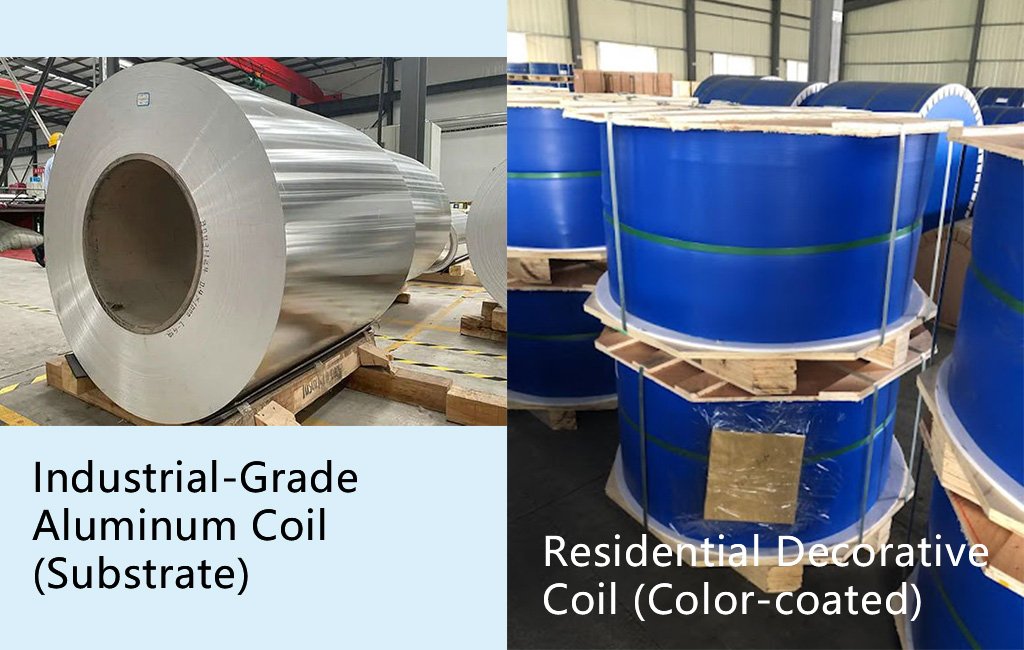
Technical Distinctions: Industrial vs. Residential Decorative Aluminum Coils The primary technical divergence between industrial-grade and residential decorative aluminum coils lies in the microstructural integrity and metallurgical purity required for high-stress applications versus aesthetic finish. Industrial coils, often utilizing 3000 or 5000 series alloys, prioritize a refined, uniform equiaxed grain structure to withstand deep drawing and […]
What is the expected service life of color-coated aluminum coils in different climate zones, and how to extend it?
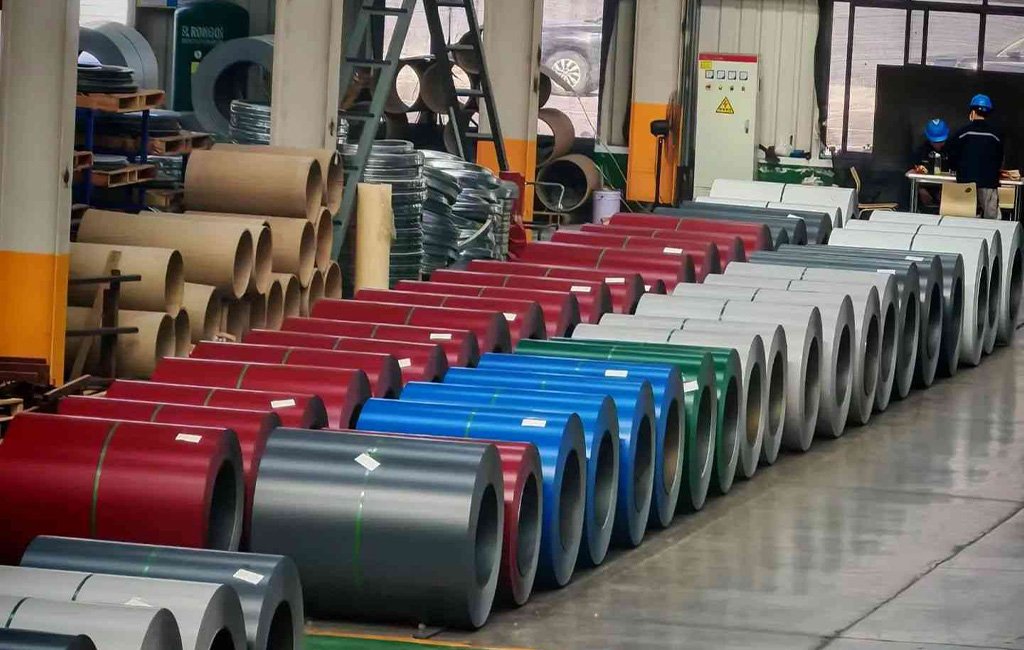
Service Life Expectancy of Color-Coated Aluminum Coils The service life of color-coated aluminum coils typically ranges from 15 to 50 years, primarily determined by the synergy between the aluminum alloy substrate (e.g., 3003, 5052), the coating polymer type (PVDF vs. PE), and the ISO 12944 Corrosivity Category of the installation site. In mild C2 environments, […]
How do different curing temperatures impact the hardness and flexibility of color-coated aluminum coatings?
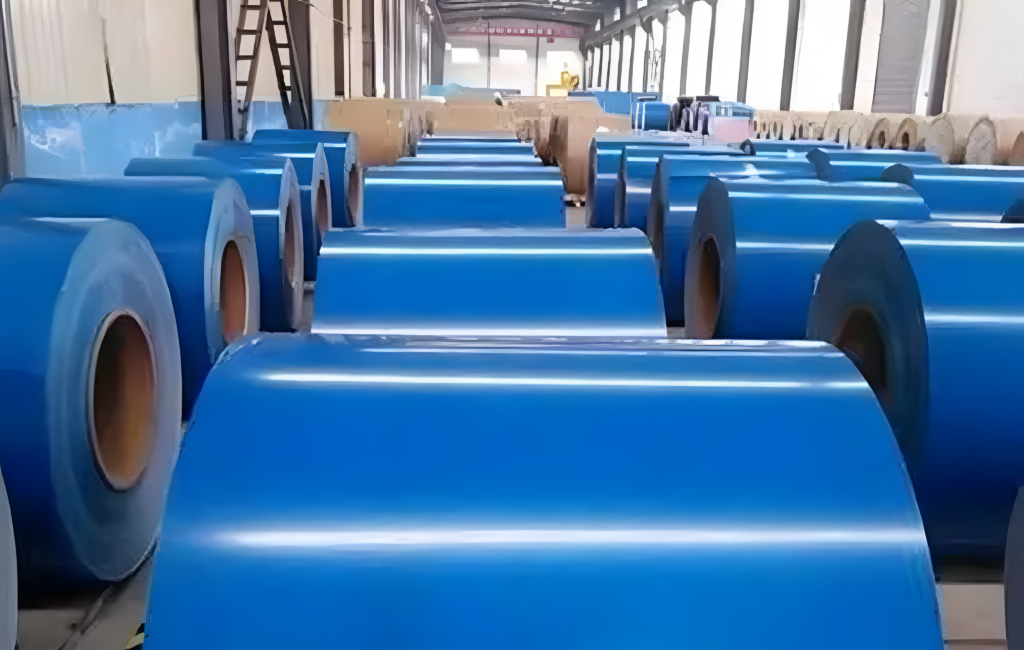
Curing Temperature Impact on Coating Hardness and Flexibility The curing temperature—specifically the Peak Metal Temperature (PMT)—is the primary determinant of the cross-linking density in color-coated aluminum resins like PVDF and PE. If the temperature is too low, the resin fails to fully polymerize, resulting in a soft coating with poor adhesion and low chemical resistance. […]
What are the common installation mistakes that lead to early failure of color-coated aluminum roofing?
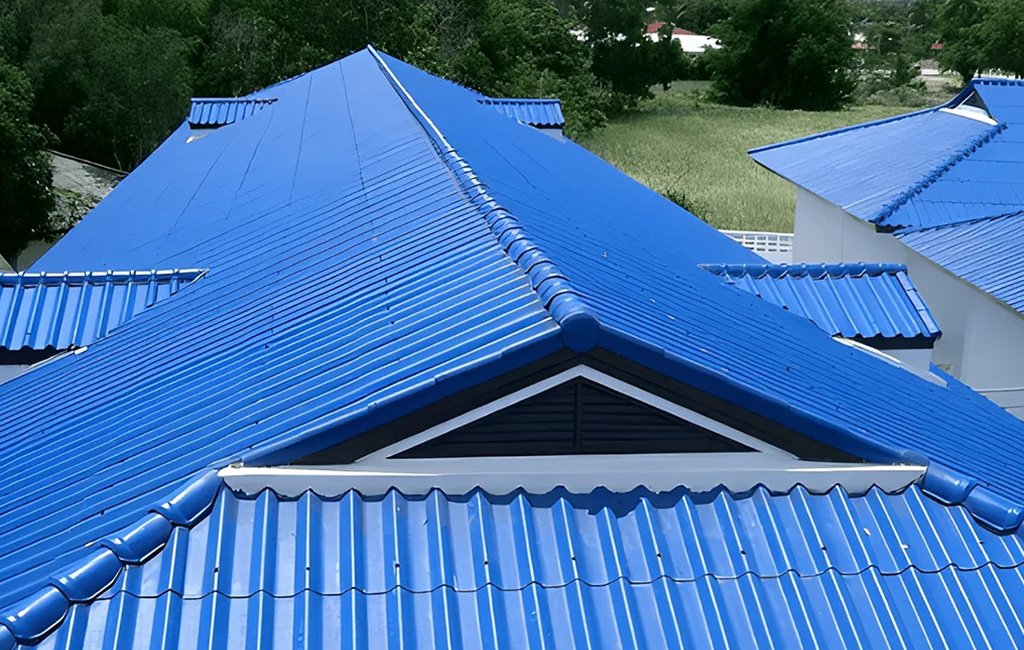
Critical Installation Failures in Color-Coated Aluminum Roofing The early failure of color-coated aluminum roofing is rarely due to the material itself, but rather mechanical or chemical errors during the installation phase. Color-coated aluminum, typically using 3003 or 3004 alloy substrates with PVDF (Polyvinylidene Fluoride) coatings, is engineered for 20-30 years of service. However, premature degradation—such […]
How to handle and store color-coated aluminum coils to avoid scratches, dents, or contamination before installation?
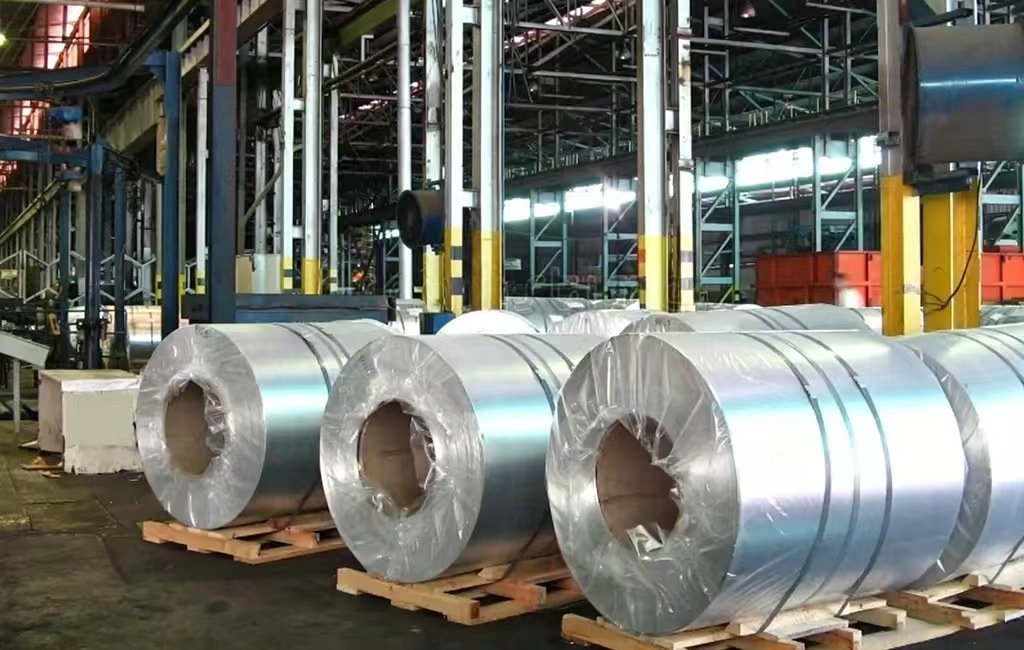
Professional Handling and Storage Protocols for Color-Coated Aluminum Coils To maintain the structural integrity and aesthetic finish of color-coated aluminum coils, handling must prioritize the prevention of mechanical deformation and coating delamination. Proper storage requires a controlled environment to avoid interlayer corrosion (white rust) and pressure mottling. Coils should be stored in a dry, ventilated […]
Thermal Expansion and Coating Integrity in Color-Coated Aluminum
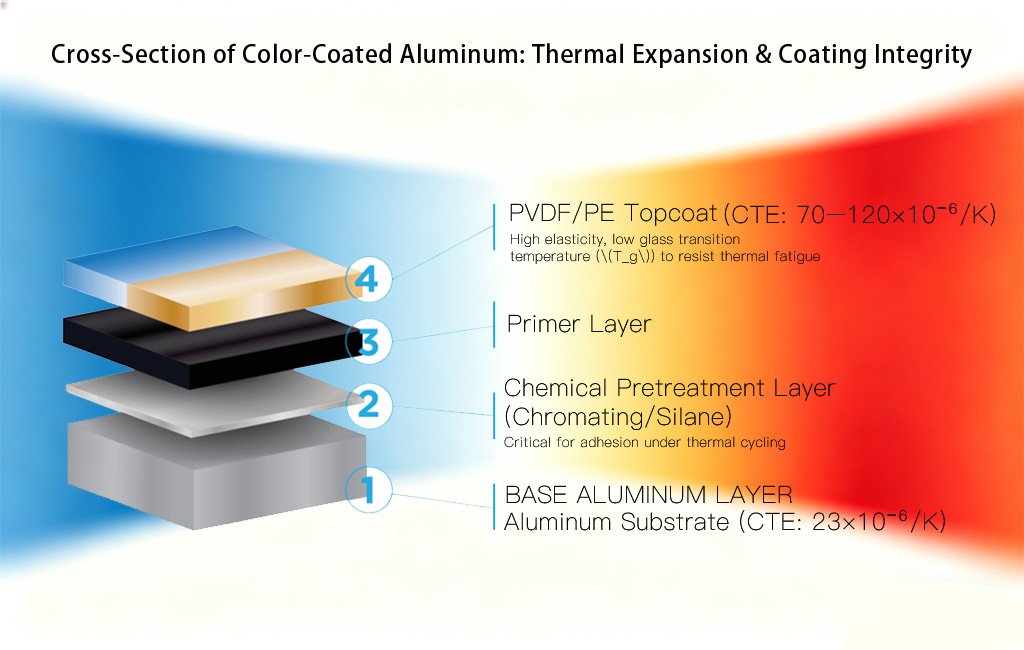
Thermal expansion and contraction impact coating integrity through the Coefficient of Thermal Expansion (CTE) mismatch between the aluminum substrate and the organic coating (typically PVDF or PE). Aluminum has a high CTE (approx. $23 \times 10^{-6}/K$), while polymer coatings expand at different rates. In temperature cycling environments, this creates interfacial shear stress. Repeated cycling can […]
What is the impact of pollution (acid rain, industrial emissions) on color-coated aluminum panels?
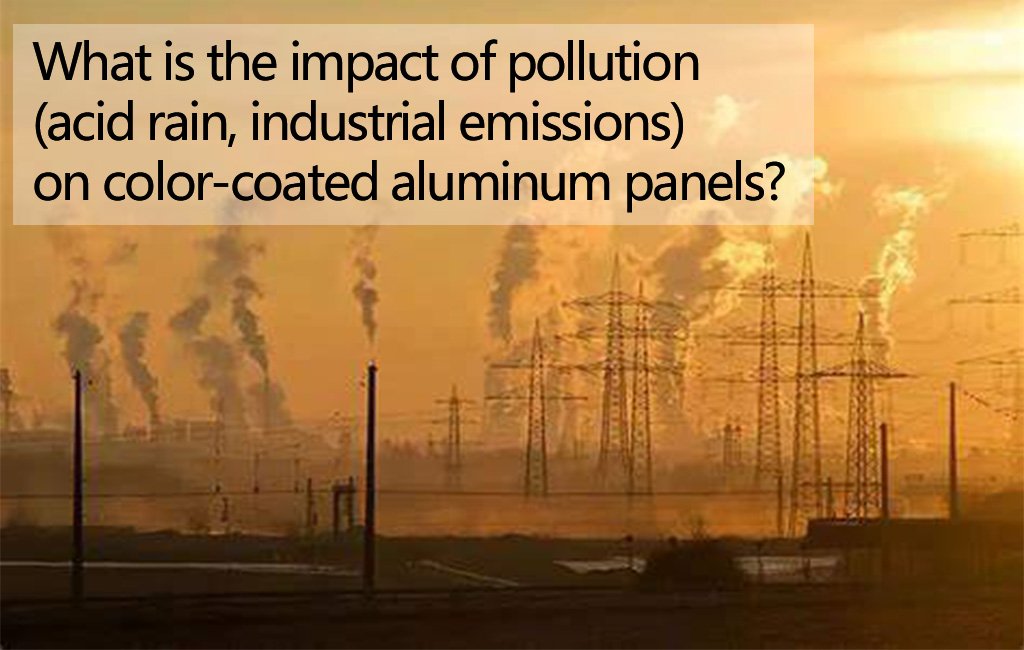
Pollution deposits acidic species (e.g., sulfuric and nitric acids in acid rain, SO2/NOx-derived acids) onto color-coated aluminum panels, stressing the organic topcoat and the pretreatment/primer system.The primary risks are coating degradation (chalk, fade, gloss loss, and micro-scratches), edge/interlayer corrosion if the coating breaches the barrier, and accelerated substrate corrosion at damaged areas.High-quality fluoropolymer coatings (PVDF/FEVE) […]
What causes “coil coating delamination” and how can it be prevented during manufacturing and installation?
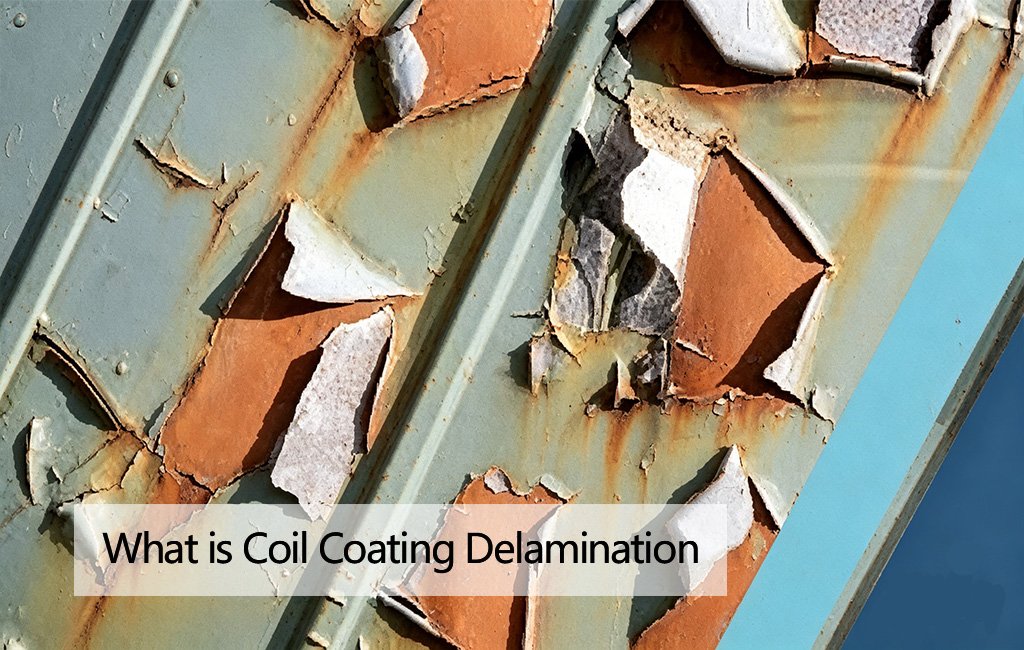
Coil coating delamination occurs when the coating layers separate from the metal substrate or between coating layers (e.g., primer–topcoat) in coil-coated metal (commonly aluminum or steel).Root causes include insufficient surface preparation, improper pretreatment, incompatible coating systems, inadequate cure, moisture entrapment, and mechanical damage during handling or bending.Environmental exposure (UV, heat, humidity) and substrate mismatch in […]
What is the role of primer and topcoat in the coating system for color-coated aluminum?
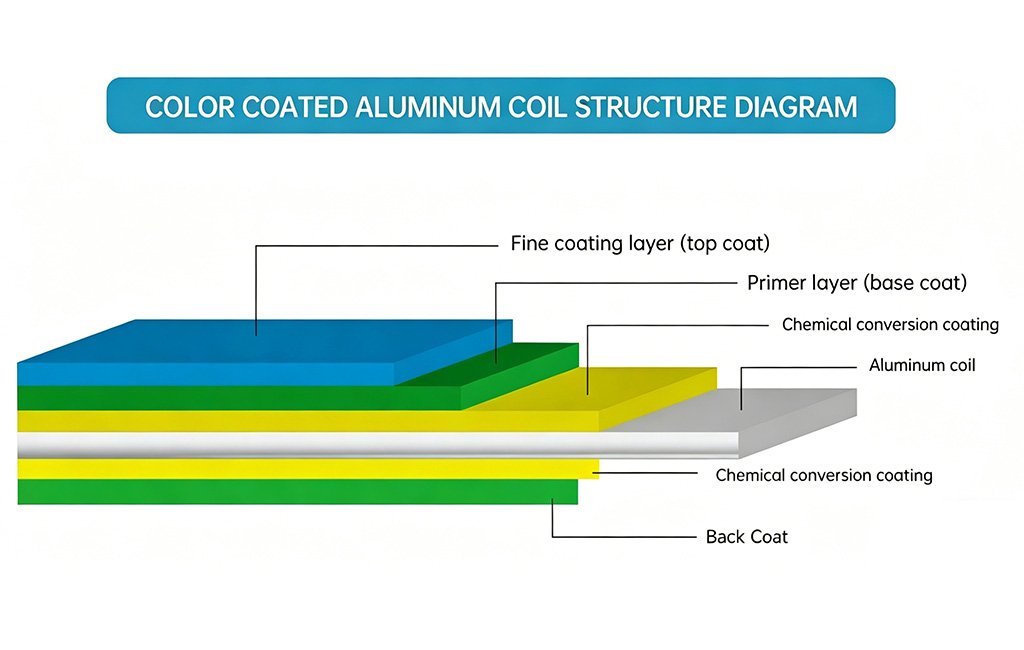
Primer on color-coated aluminum acts as an adhesion promoter and corrosion barrier between the aluminum substrate (often pretreated) and the outer topcoat.It fills surface porosity, improves bonding, and can include corrosion inhibitors or conversion coatings to slow oxidation.The topcoat provides the primary weathering performance: color, gloss, UV resistance, chemical resistance, and dirt shedding.In architectural systems, […]
What is the difference between PVDF, FEVE, and PE coatings for color-coated aluminum in terms of weathering resistance?

PVDF and FEVE are fluoropolymer topcoats with superior weathering performance; PE is a polyethylene-based coating with significantly lower UV and color-retention performance.FEVE generally delivers the best long-term color stability, gloss retention, and stain resistance in harsh climates, followed by PVDF, which already offers excellent performance and wide industry acceptance.PE coatings are more cost-driven and typically […]