
Are the aluminum coils used in household homes and those used for exterior walls the same type?
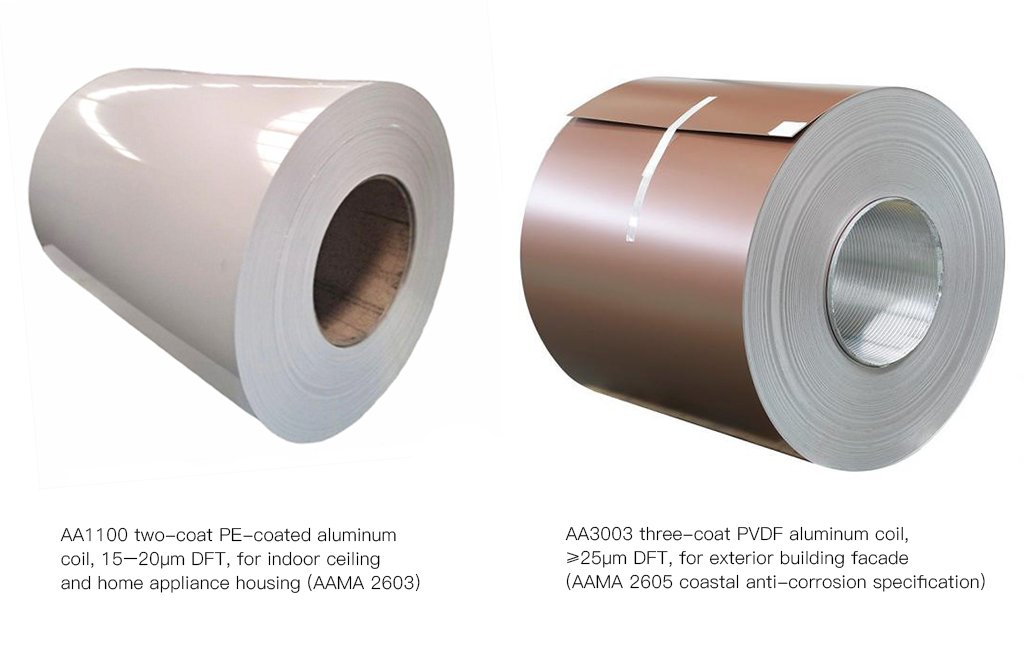
The Technical Divergence: Residential vs. Structural Exterior Aluminum Coils No, aluminum coils used for household appliances or interior applications are not the same as those engineered for building exterior walls. They differ fundamentally in alloy substrate chemistry, coating polymer technology, and dry film thickness (DFT). Residential coils typically utilize low-strength alloys like AA1100 or AA1060 […]
Why must buildings in coastal areas use three-coat aluminum coils?
Architectural Durability: Why Coastal Buildings Require Three-Coat PVDF Aluminum Coils Coastal architectural environments expose building envelopes to a high-salinity, high-humidity atmosphere combined with intense ultraviolet (UV) radiation. Standard two-coat paint systems fail prematurely under these conditions due to accelerated chemical degradation and filiform corrosion. Coastal structures require Three-Coat Polyvinylidene Fluoride (PVDF) pre-coated aluminum coils to […]
Can a salt spray test represent its actual lifespan?
Salt Spray Testing vs. Real-World Lifespan of Color-Coated Aluminum No, a salt spray test (ASTM B117 / ISO 9227) cannot directly predict or calculate the precise chronological lifespan of color-coated aluminum in real-world environments. Salt spray testing is an accelerated, standardized quality control tool designed to evaluate coating continuity, adhesion, and relative corrosion resistance under […]
What does the “salt spray test” for colored aluminum coils measure?
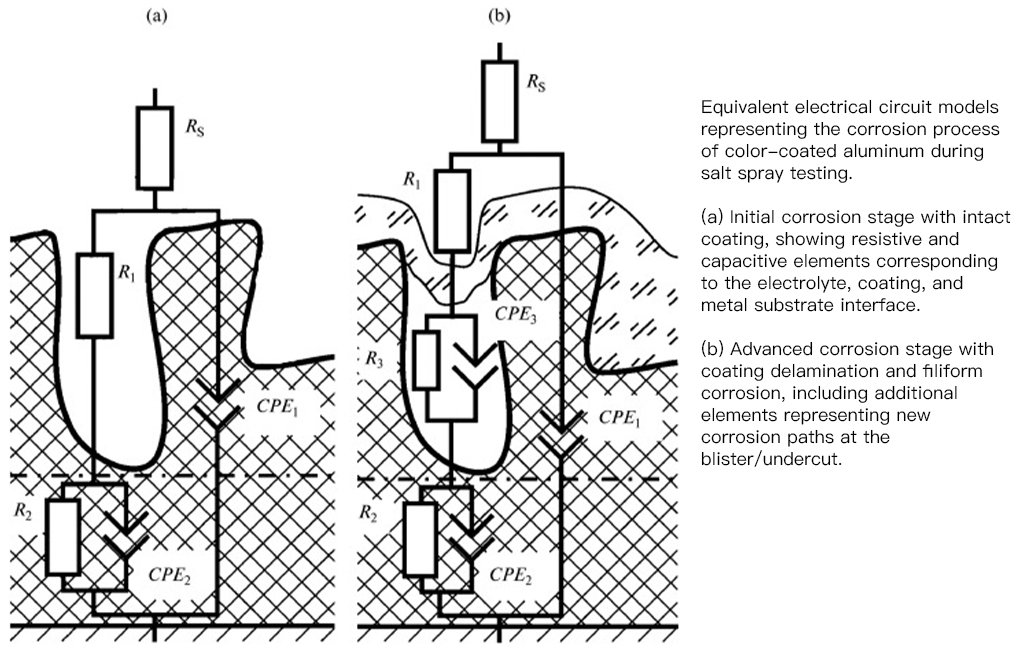
The Salt Spray Test for Color-Coated Aluminum Coils: Core Metrics The salt spray test (specifically ASTM B117 or ISO 9227) for color-coated aluminum coils measures the corrosive undercut resistance, coating adhesion, and filiform corrosion susceptibility of the prepainted aluminum system. By exposing the specimen to a continuous, atomized 5% sodium chloride (NaCl) solution at a […]
Is a higher “dry film thickness (DFT)” for aluminum foil coils always better?

No, Excessive Dry Film Thickness (DFT) Compromises Performance In pre-coated aluminum coil manufacturing, a higher Dry Film Thickness (DFT) is not universally superior. While an optimal DFT enhances UV resistance and corrosion protection, excessive coating thickness introduces severe engineering liabilities. Specifying DFT beyond recommended parameters—such as exceeding 25–35μm for a standard two-coat PVDF system or […]
Why are PVDF fluorocarbon coated aluminum coils said to be more sun-resistant?
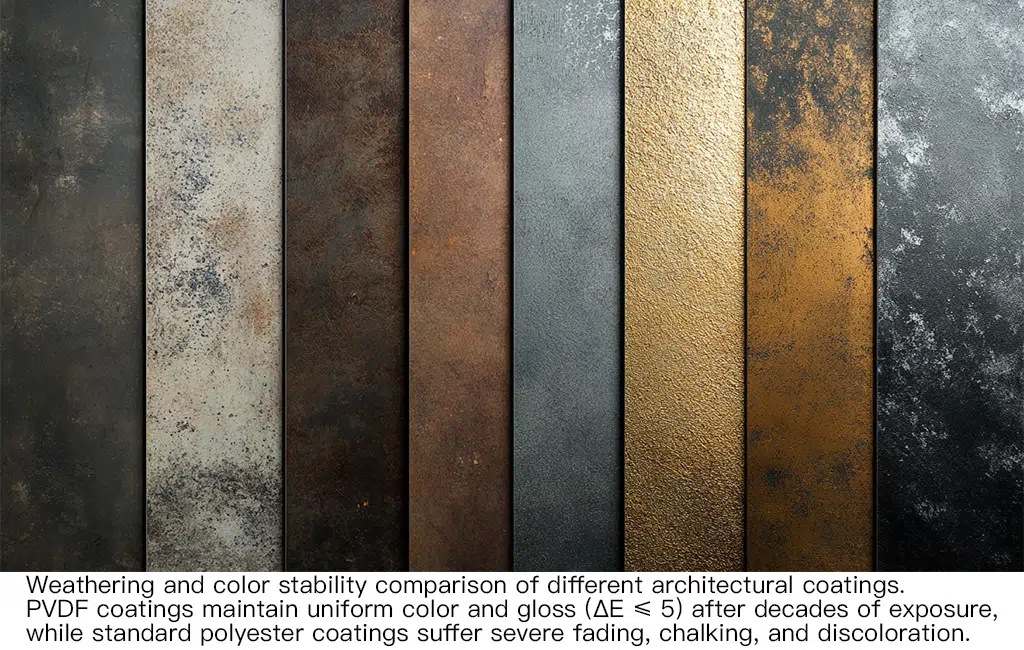
Photo-Chemical Mechanism of PVDF Coating Solar Resistance PVDF (Polyvinylidene Fluoride) fluorocarbon-coated aluminum coils exhibit superior solar and UV resistance due to the exceptionally high bond dissociation energy of the carbon-fluorine (C-F) bond, which reaches approximately 485 kJ/mol. Solar ultraviolet radiation, particularly UV-A and UV-B spectra, spans wavelengths from 290 to 400 nm, carrying photon energies […]
What is the coating structure of colored aluminum coils? What is the function of each layer?

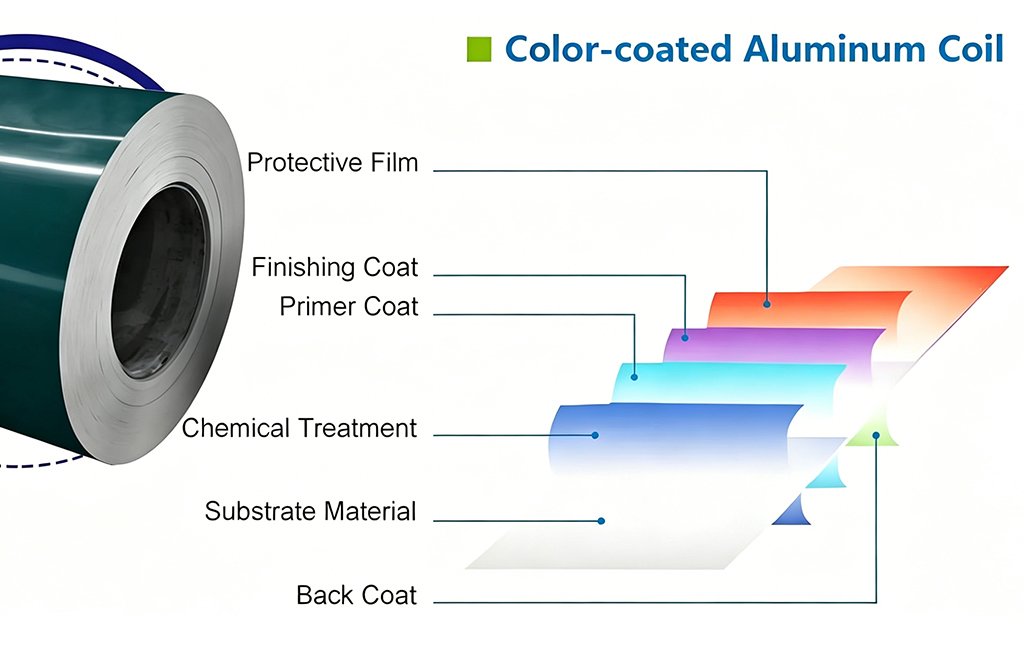
Multi-Layer Architecture of Pre-Coated Aluminum Coils The coating structure of colored aluminum coils (pre-coated aluminum) typically consists of a multi-layer composite system applied via a continuous coil coating process. For high-performance exterior applications, a standard three-coat, two-bake (3C2B) or two-coat, two-bake (2C2B) system is utilized. The architecture comprises an aluminum alloy substrate (typically 3003 or […]
Why can colored aluminum coils be widely used on building exterior walls, while ordinary painted aluminum sheets cannot?

The widespread adoption of color-coated aluminum coils for building exterior walls—while ordinary painted aluminum sheets are relegated to minor interior decoration or temporary signage—comes down to how they are manufactured, how they handle structural shaping, and how they survive the elements. Continuous Coil Coating vs. Batch Spraying The fundamental difference lies in how the paint […]
Color-coated aluminum coils and color-coated steel coils look very similar. How can you tell them apart at a glance?

While color-coated aluminum and color-coated steel coils can look identical on a pallet—especially when covered in protective PE film—they have fundamentally different physical properties. If you need to tell them apart instantly on a factory floor or job site, here are the quickest, most reliable methods to differentiate them at a glance. 5 Quick Ways […]
How are the colors applied to aluminum coils?
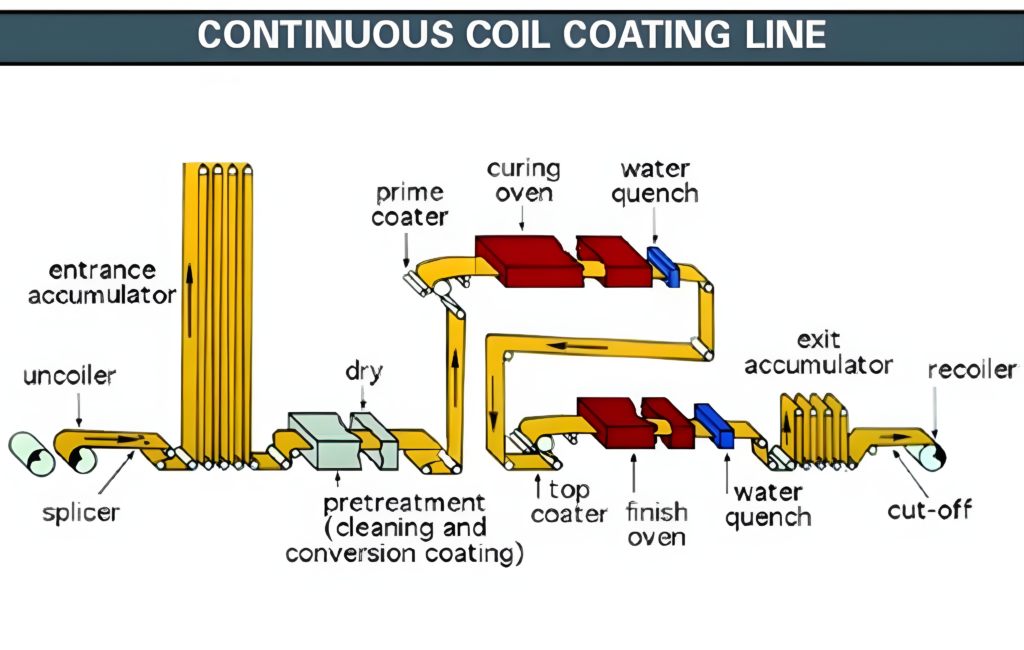
Continuous Coil Coating: The Application of Color to Aluminum Coils Colors are applied to aluminum coils through a highly automated, continuous industrial process known as coil coating (pre-painting). This method involves uncoiling the aluminum strip (typically 3003-H24 or 5052-H32 alloys), executing a multi-stage chemical pre-treatment to ensure interfacial adhesion, and applying liquid resins via precision […]
What is the difference between 1-coat, 2-coat, and 3-coat systems for color-coated aluminum, and when should each be used?
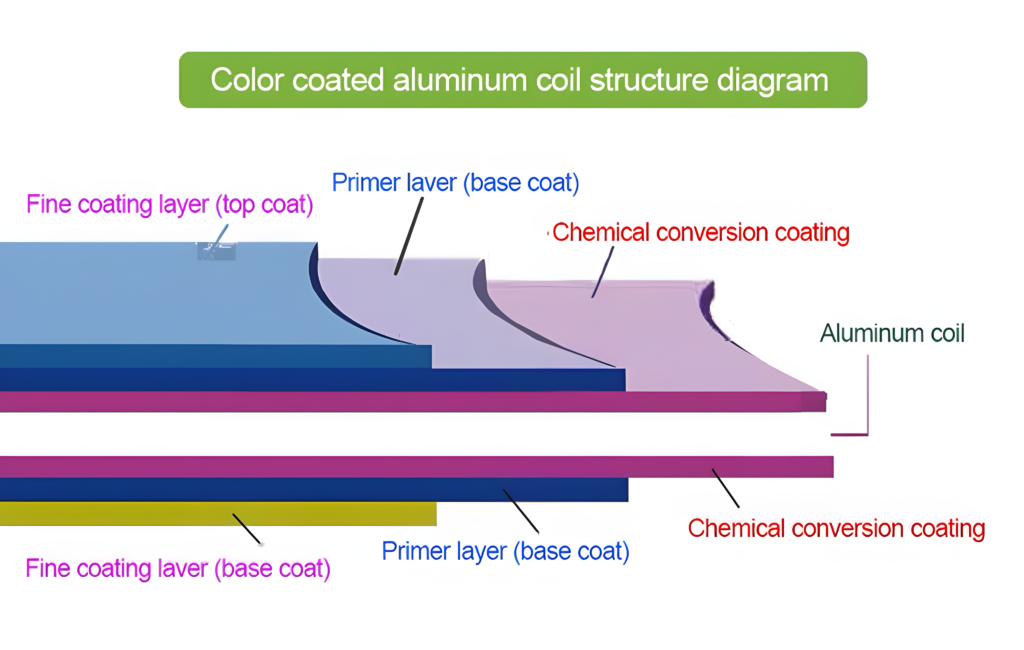
Understanding 1-Coat, 2-Coat, and 3-Coat Systems for Color-Coated Aluminum The fundamental difference between 1-coat (single-bake), 2-coat (two-bake), and 3-coat (three-bake) liquid coating systems on coil-coated aluminum lies in the dry film thickness (DFT), layer composition, and resulting long-term weatherability. A 1-coat system applies a single composite layer (typically polyester or modified polyester) directly over pre-treated […]
How do impurities like iron or silicon in aluminum alloys influence the long-term performance of color-coated coils in outdoor environments?
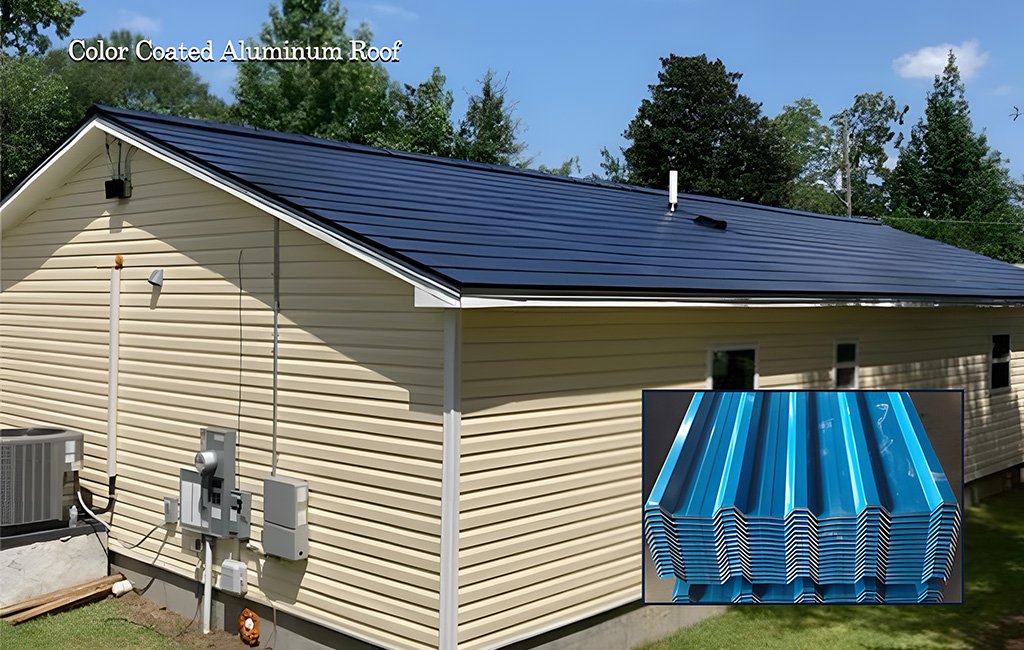
Impact of Iron and Silicon Impurities on Color-Coated Aluminum Coils Impurities like iron (Fe) and silicon (Si) in aluminum alloy substrates—typically 3000 series (Al-Mn) or 5000 series (Al-Mg)—critically accelerate the degradation of color-coated coils in outdoor environments. High iron content forms coarse, insoluble $\mathrm{Al_3Fe}$ or $\mathrm{Al-Fe-Mn}$ intermetallic phases, which act as localized cathodic sites relative […]