
How does the choice of fastener material (stainless steel vs. galvanized steel) affect the corrosion of color-coated aluminum roofing panels?
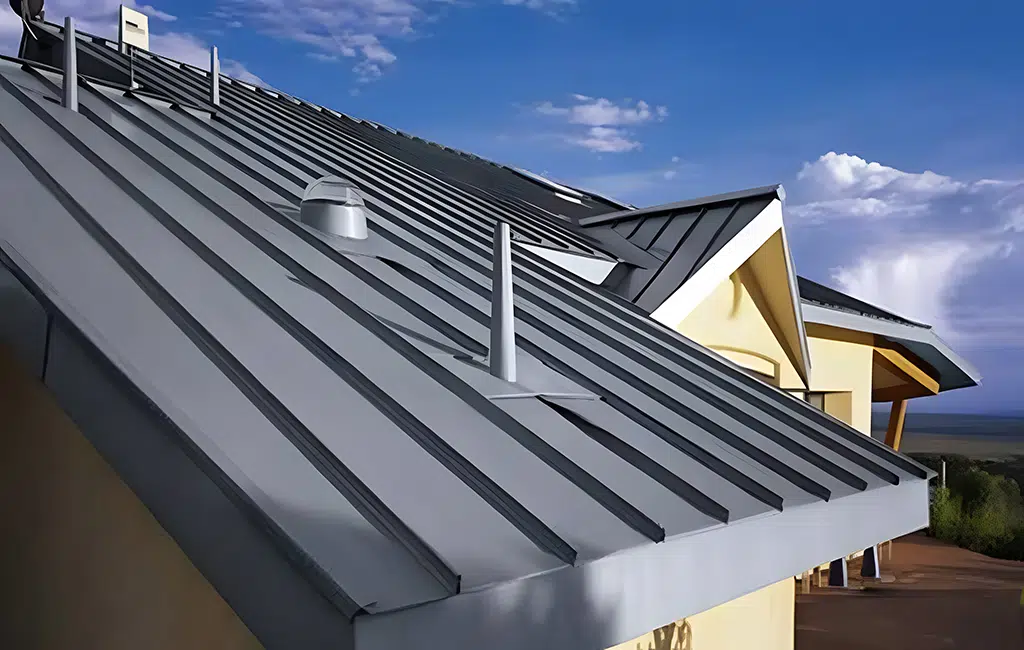
Galvanic Corrosion and Fastener Selection for Color-Coated Aluminum Roofing The choice of fastener material directly dictates the long-term structural integrity of color-coated aluminum roofing panels by mitigating or accelerating galvanic corrosion. When two dissimilar metals contact each other in the presence of an electrolyte (such as rainwater or coastal moisture), a galvanic cell is formed. […]
What specific considerations should be taken when using color-coated aluminum coils for curved roof profiles to avoid coating damage?

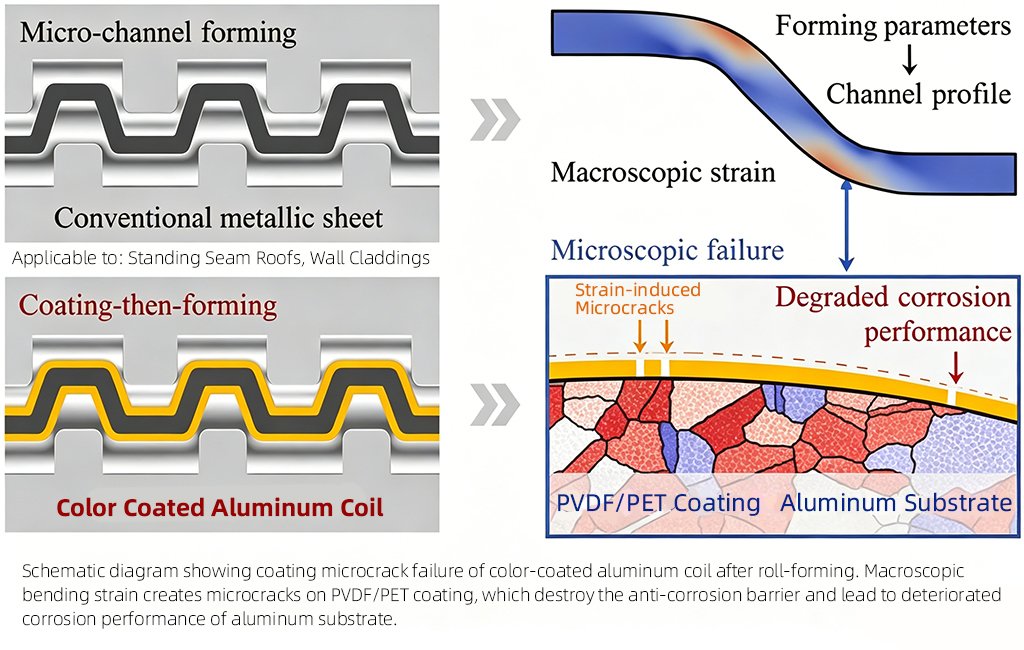
Preventing Coating Damage in Curved Roof Profiles Using Color-Coated Aluminum Coils Fabricating color-coated aluminum coils into curved roof profiles requires strict control over the material’s structural and mechanical limits to prevent micro-cracking, tension whitening, or delamination of the protective layer. The primary consideration is balancing the minimum bend radius of the selected aluminum alloy with […]
How do scratch resistance and abrasion resistance of color-coated aluminum coatings affect their performance during installation and service life?
Mechanical Durability of Color-Coated Aluminum: Impact of Scratch and Abrasion Resistance The scratch resistance and abrasion resistance of color-coated aluminum coatings directly determine the material’s structural integrity, aesthetic longevity, and total lifecycle cost. During installation, coatings are subjected to mechanical stresses including shearing, riveting, and tool impact; during service life, they face windblown particulate erosion […]
How does temperature cycling (thermal shock) affect the risk of cracking or peeling in color-coated aluminum coatings?
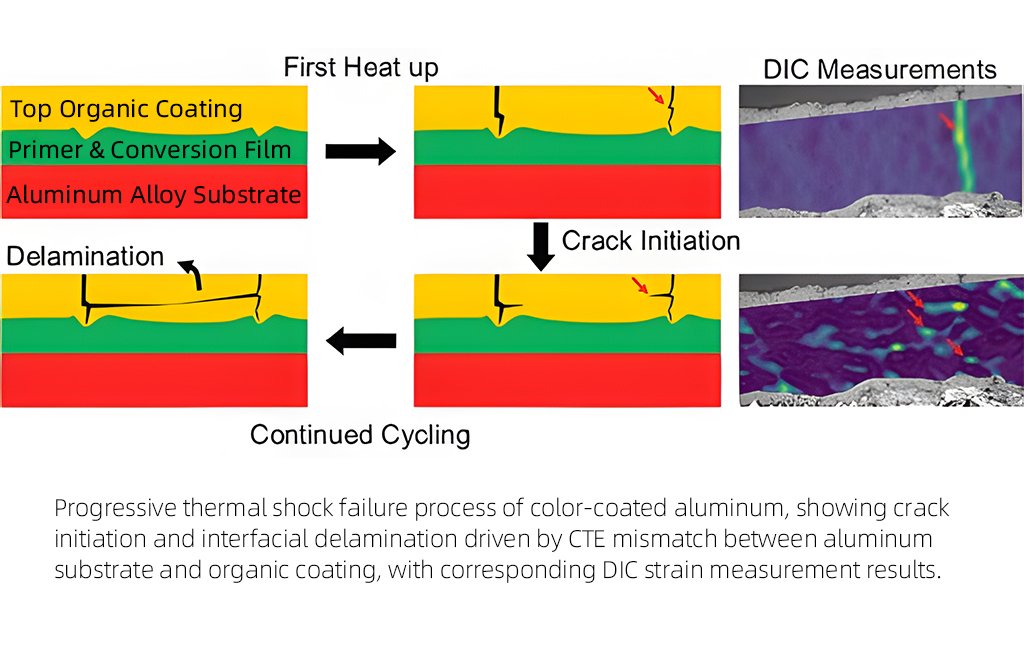
Thermal Shock Mechanisms in Color-Coated Aluminum: A Technical Overview Temperature cycling, or thermal shock, accelerates coating degradation primarily through differential thermal expansion. Color-coated aluminum integrates an aluminum alloy substrate with an organic polymer coating (such as PVDF, HDP, or PE). Aluminum possesses a high coefficient of linear thermal expansion (CTE≈23×10−6 K−1CTE \approx 23 \times 10^{-6}\text{ K}^{-1}), […]
What is the impact of UV radiation on different topcoat chemistries for color-coated aluminum coils in tropical climates?
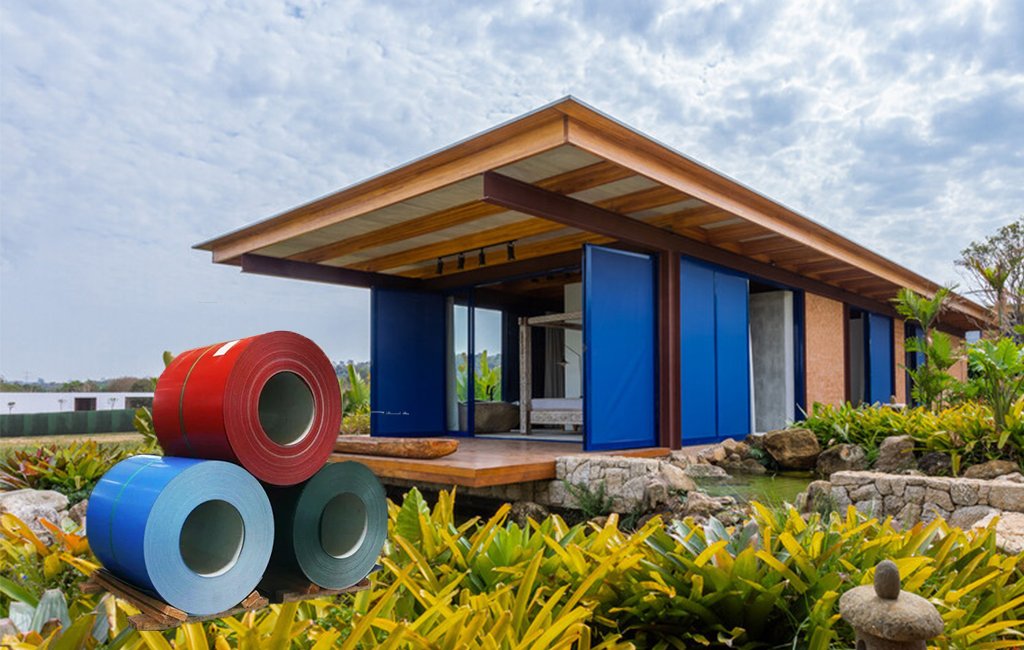
Topcoat Degradation Mechanisms Under High-UV Tropical Exposure In tropical climates, ultraviolet (UV) radiation—specifically high-energy UV-A and UV-B photons—acts as the primary catalyst for the chemical degradation of topcoat polymers on color-coated aluminum coils. This process, known as photodissociation, occurs when the absorption of UV light breaks the covalent chemical bonds within the binder resin matrix. […]
How do different drying oven zones (preheat, curing, cooling) affect the color consistency and hardness of the final coating?
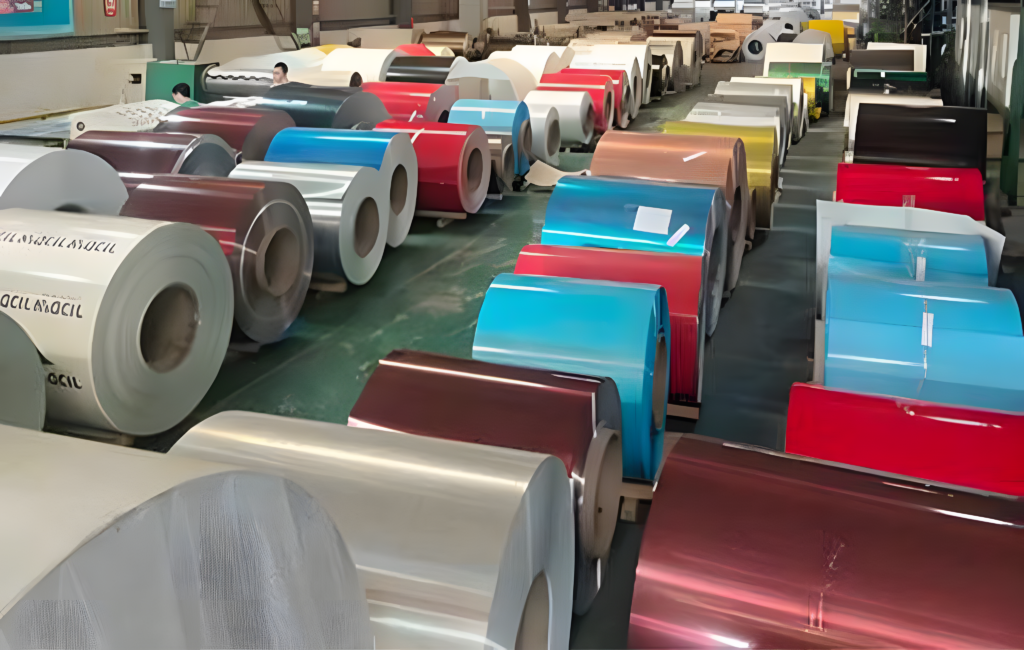
Oven Zone Dynamics: Engineering Color Consistency and Pencil Hardness in Pre-Coated Aluminum The thermal profile of the drying oven—divided into preheat, curing (PMT), and cooling zones—is the primary determinant of color consistency (Delta E ≤ 0.5) and pencil hardness (≥ 2H) in continuous coil coating. Each zone regulates a specific stage of solvent evaporation, polymer […]
What is the purpose of a conversion coating (chromate or chromate-free) in the pretreatment process of color-coated aluminum?
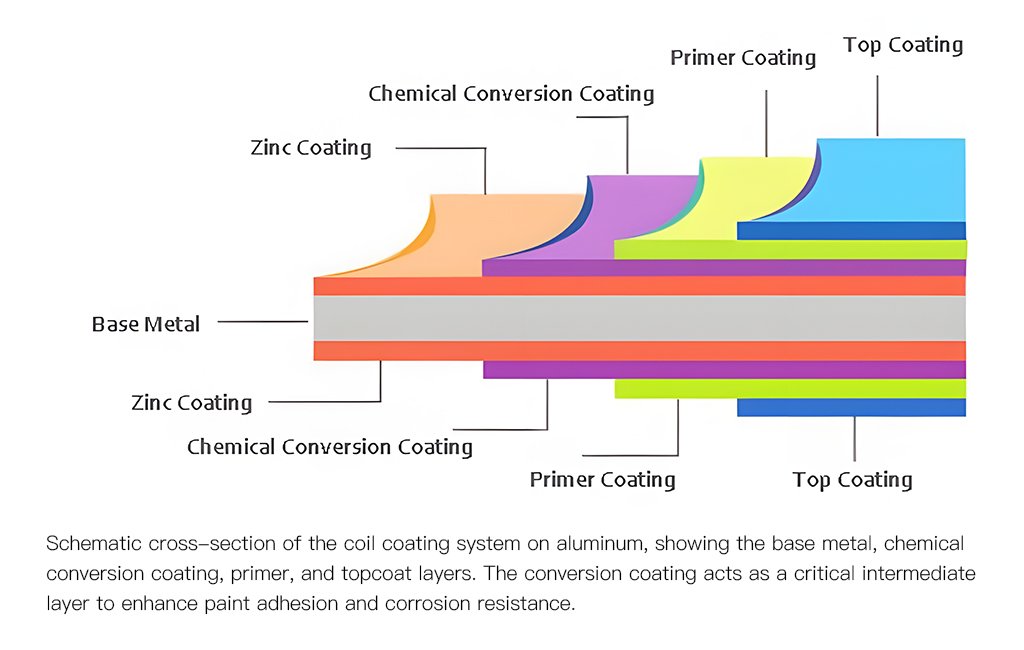
In the continuous coil coating process of aluminum, the conversion coating is a microscopic, chemically formed layer (typically 200–400 mg/m2200\text{–}400\ \text{mg/m}^2, or roughly 10–100 nm10\text{–}100\ \text{nm} thick) that acts as the primary bridge between the raw aluminum substrate and the organic paint primer. Applying liquid paint directly to bare, untreated aluminum yields poor adhesion and rapid corrosion […]
How does the coating line speed affect the curing and final quality of color-coated aluminum coils?
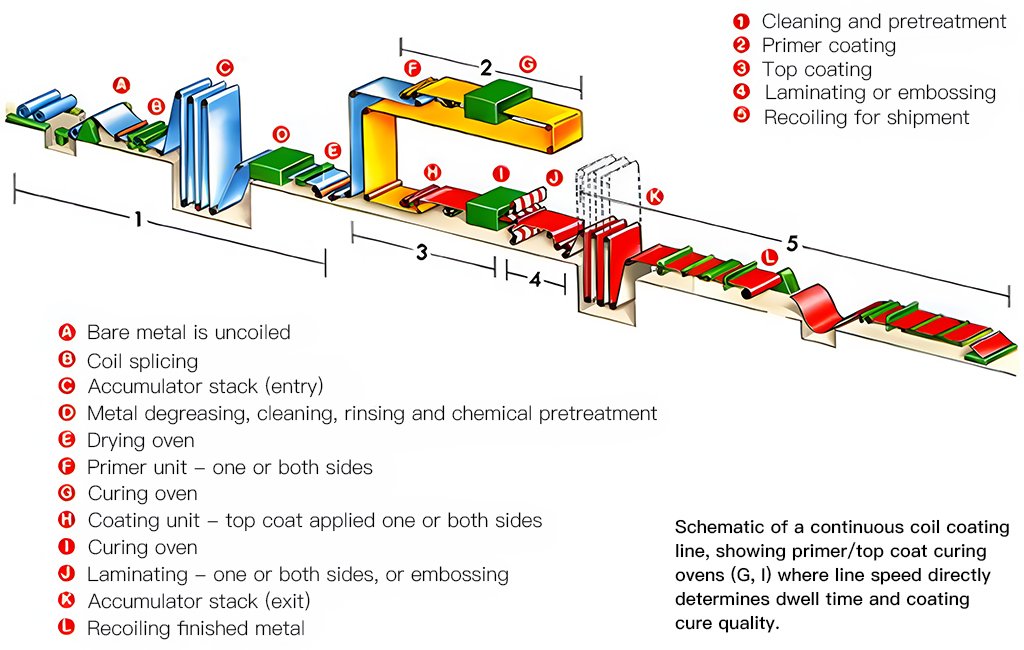
The line speed of a continuous coil coating line is a critical process variable that directly governs the thermal kinetics of the curing oven. Because the aluminum strip moves continuously through a flotation or catenary oven, the line speed determines the exact duration the coating layer spends under specific temperature zones. Optimizing this parameter ensures […]
What should be considered when selecting colored aluminum coils in different regions (rainy south/windy and sandy north/high salt spray along the coast)?
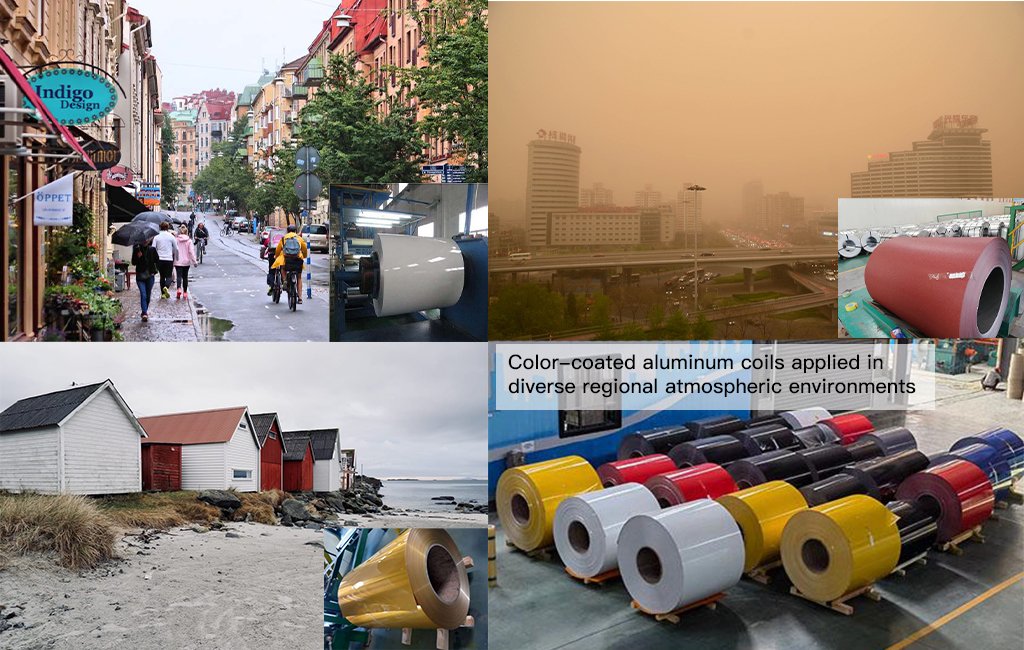
Regional Selection Guide for Color-Coated Aluminum Coils Selecting color-coated aluminum coils requires matching the alloy metallurgy and coating chemistry to local atmospheric corrosivity categories (ISO 9223). Environmental stressors like high rainfall, abrasive windborne sand, and high marine salt spray trigger distinct degradation mechanisms—such as filiform corrosion, coating erosion, and UV-induced photo-oxidation. Optimizing the combination of […]
Why High-End Buildings Prefer Metallic/Pearl-Colored Aluminum Coils for Curtain Walls?
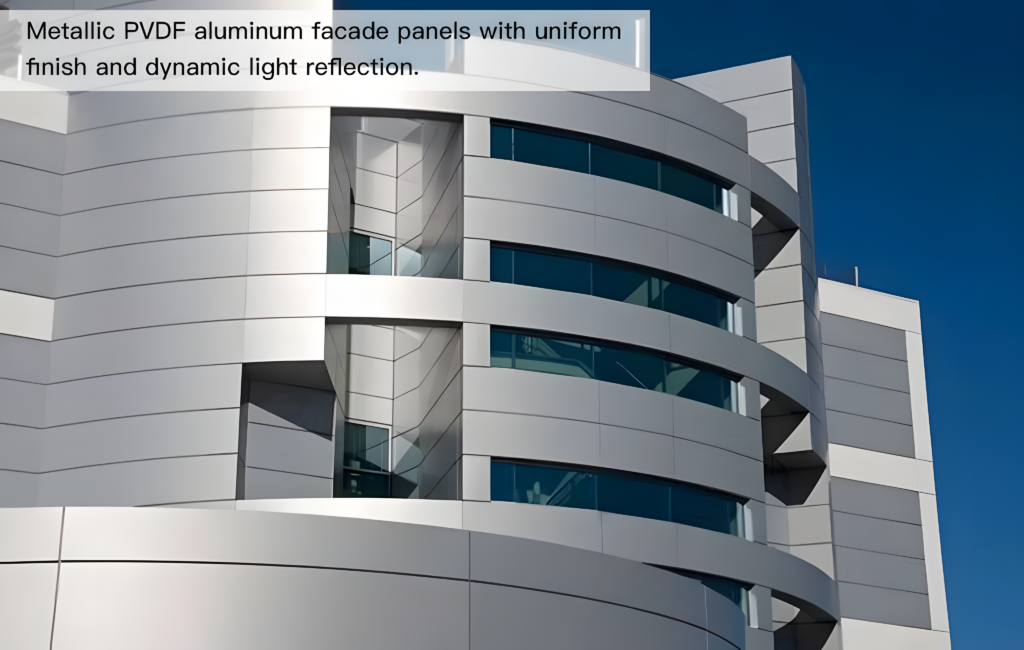
High-end architectural facades specify metallic and pearl-colored aluminum coils primarily due to their dynamic optical properties and long-term structural stability. Unlike solid colors, these finishes incorporate microscopic aluminum flakes or mica-based pearlescent pigments suspended within a high-performance resin matrix, typically Polyvinylidene Fluoride (PVDF). This composition enables multi-angle light reflection, which visually masks structural deflection and […]
What Are the Alternative Application Scenarios of Color Coated Aluminum Coils Beyond Building Exterior Walls?
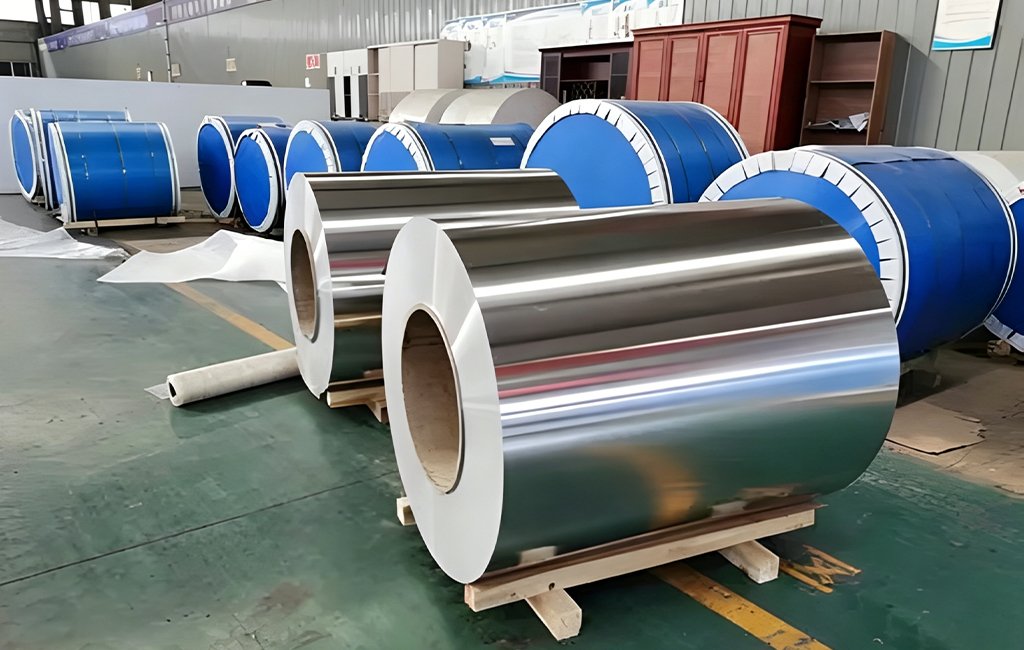
Core Technical Overview of Non-Architectural Applications for Color Coated Aluminum Coils Color coated aluminum coils (PVDF/PE coated) with standard substrates including AA3003, AA3004, AA5052 deliver lightweight formability, graded corrosion resistance, and customizable decorative finishes. Beyond building exterior curtain walls, they serve high-demand sectors including home appliances, transportation, industrial equipment, new energy, packaging, and commercial signage. […]
In harsh environments like chemical plants and seaside locations, how should you choose aluminum coils to ensure they last a long time?
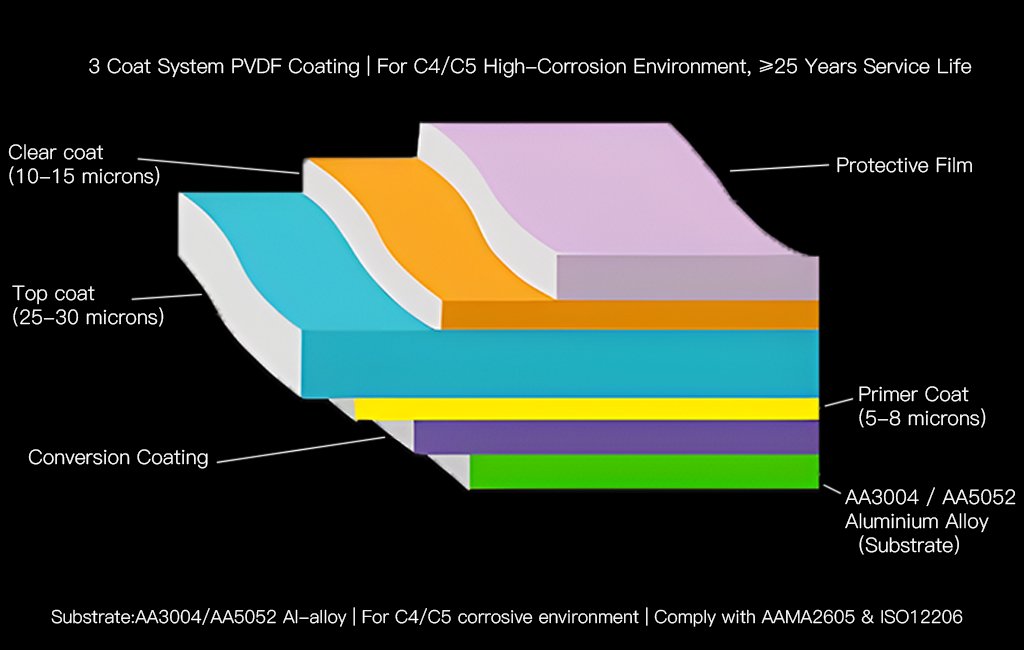
Strategic Selection of Color-Coated Aluminum Coils for C4/C5 Corrosive Environments In highly corrosive C4 (industrial/chemical) and C5 (marine/seaside) environments, selecting color-coated aluminum coils requires balancing substrate metallurgy and coating chemistry. To ensure a service life exceeding 25 years, engineering specifications must mandate AA3004 or AA5052 manganese-magnesium aluminum alloys as the base metal due to their […]