
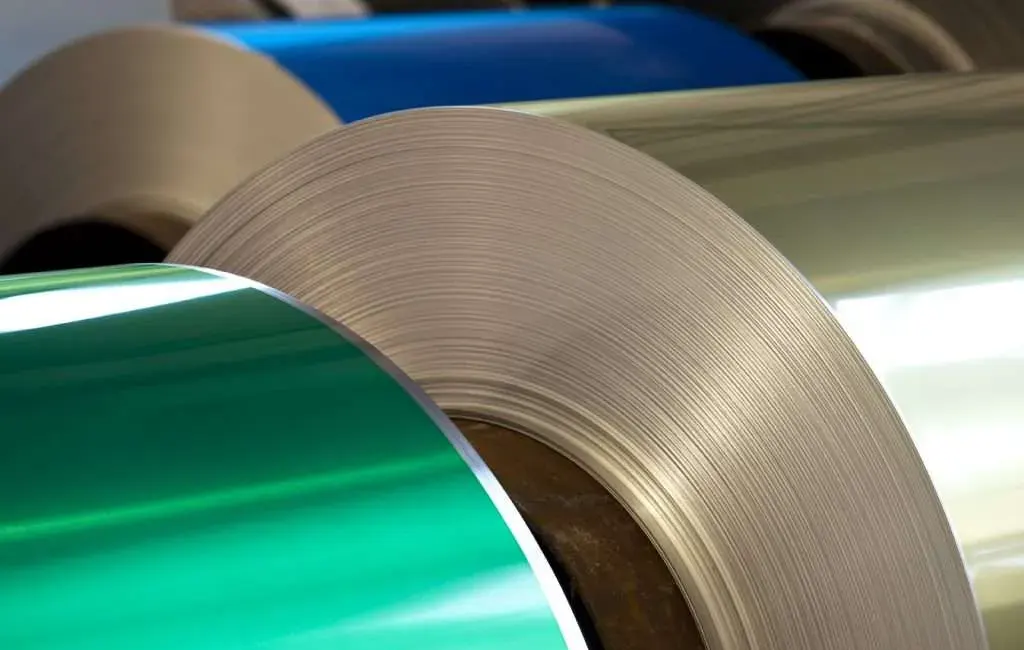

Coastal high‑salt environments bring severe corrosion challenges for building envelopes. Salt‑laden sea‑spray, chloride ions, high humidity and strong UV radiation jointly accelerate material ageing. Many project teams wonder: can color‑coated (pre‑painted) aluminum coil be reliably used for coastal facades and roofing?
The short answer is yes — but not all color‑coated aluminum coil is suitable for coastal service. Its anti‑corrosion performance depends on substrate alloy, chemical pretreatment, coating‑system grade, dry‑film thickness, plus fabrication and installation quality. Ordinary‑grade products will suffer blistering, filiform corrosion and coating peeling within a few years in marine atmosphere, while properly‑specified high‑end systems can deliver 20‑year‑plus stable service life.
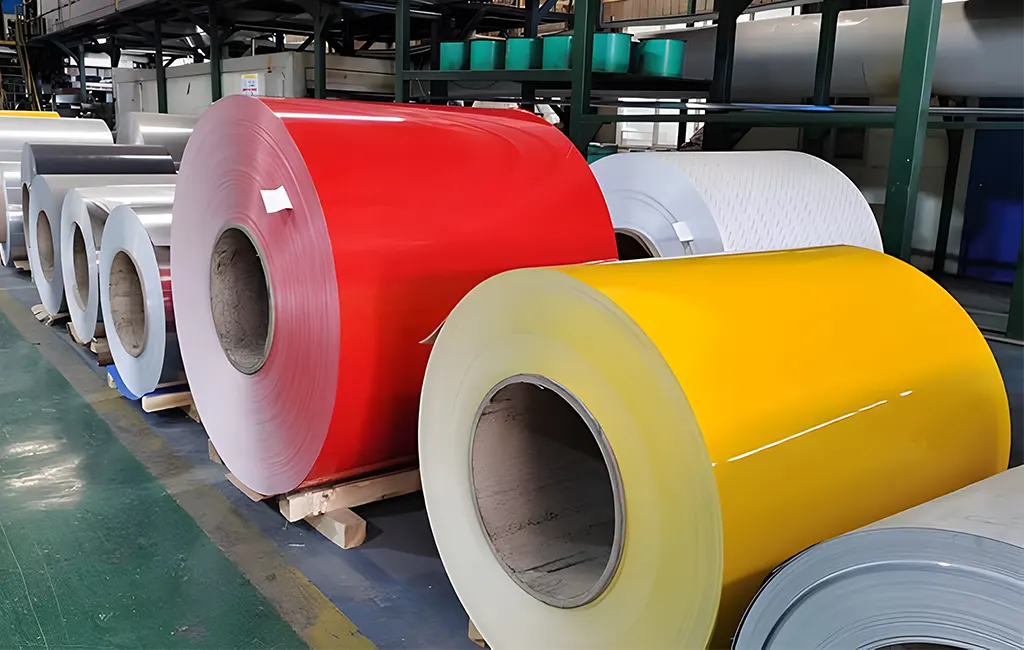
How Salt‑Spray Harms Color‑Coated Aluminum Coil
Chloride ions from coastal salt fog penetrate tiny pores or coating defects, attacking the aluminum substrate underneath the paint layer. Three common failure modes are observed on‑site:
- Filiform corrosion: Salt and moisture spread horizontally between coating and metal substrate, forming thread‑like corrosion trails under intact topcoat, frequently starting from cut‑edges or scratch positions.
- Coating blistering: Corrosion products accumulate and lift the paint film, producing blisters which eventually rupture and cause large‑area peeling.
- Local pitting corrosion: Occurs at damaged coating spots, where bare aluminum is directly exposed to salt‑rich humid air.
Even premium PVDF [3] coating cannot stop corrosion if the pretreatment is defective, coating is scratched during installation, or cut‑edges remain unprotected.
Performance Comparison of Coating‑Systems for Coastal High‑Salt Environments
| Coating Type | Total Dry‑Film Thickness (Primer+Topcoat) | Salt‑Spray Test Reference (ASTM B117) [1] | Coastal Suitability | Key Remarks |
| PE Polyester | 18‑22 μm | 500‑800 h | Not recommended | Poor salt‑resistance; rapid chalking & blistering within 5‑8 years near seashore |
| HDP High‑Durable Polyester | 22‑26 μm | 800‑1200 h | Near‑coast secondary‑buildings only | Acceptable for sites several kilometres inland from coastline; not for direct sea‑spray exposure |
| SMP Silicone‑Modified Polyester | 22‑28 μm | 1000‑1500 h | Limited application | Good gloss retention; insufficient chloride‑resistance for severe marine environment |
| PVDF Fluorocarbon (double‑coat double‑bake) | 25‑35 μm | 1500‑3000+ h | Highly‑recommended for coastal projects | Superior barrier performance against salt‑fog; preferred for seaside landmark facades & roofing |
Important note: Salt‑spray laboratory hours serve only as comparative reference; real‑world service life is also affected by alloy grade, pretreatment, installation protection and local distance from shoreline.
Other Critical Factors for Coastal Anti‑Corrosion Performance
1. Aluminum substrate alloy
3005‑H24 aluminum‑manganese alloy is the mainstream outdoor choice for general coastal projects. For extremely harsh marine sites, 5005 or 5052 Al‑Mg alloys deliver better pitting‑corrosion resistance [2]. Avoid thin‑substrate material; insufficient thickness aggravates pitting risks once coating fails locally.
2. Surface pretreatment
Degreasing plus chromate or qualified chrome‑free passivation is indispensable. Pretreatment determines paint‑to‑metal adhesion. Without good conversion‑film, salt‑ions easily invade along coating‑substrate interface and trigger filiform corrosion, regardless of top‑coat quality.
3. Fabrication and installation details
- Cut‑edge protection: Deburr all shearing / drilling edges and apply matching sealant or touch‑up paint; unprotected cut‑edges are the most common corrosion initiation points in coastal projects.
- Avoid coating damage: Prevent scratches during handling and erection; any penetrated coating becomes a corrosion entry point.
- Galvanic‑corrosion prevention: Use stainless‑steel fasteners compatible with aluminum; add insulating gaskets for dissimilar‑metal joints; clear steel cutting debris from panel surfaces.
- Drainage optimisation: Architectural design shall avoid salt‑water ponding on panel surfaces.
4. Routine maintenance
Coastal buildings need periodic cleaning every 1‑2 years to wash‑off accumulated salt residues on facade and roofing surfaces, slowing long‑term corrosion progression.
Practical Specification Checklist for Coastal Projects
- Select PVDF [3] fluorocarbon double‑coat double‑bake system (25‑35 μm total film thickness) for buildings directly exposed to sea‑spray, complying with AAMA 2605 standard.
- Specify substrate: prefer 3005‑H24 or higher‑grade anti‑corrosion aluminum‑alloy; clearly define chromate or qualified chrome‑free passivation pretreatment requirements [2].
- Request mill test reports including salt‑spray [1], cross‑cut adhesion and filiform‑corrosion test records according to EN 1396 / EN 13523‑8.
- Add mandatory clauses for cut‑edge deburring and sealing protection in fabrication documents.
- Require compatible stainless‑steel fasteners and dissimilar‑metal isolation measures.
- Formulate post‑completion cleaning and inspection schedules for operation phase.
References
[1] Wikipedia contributors. Salt spray test [EB/OL]. 2026-03-29.
[2] Wikipedia contributors. Aluminium alloy [EB/OL]. 2026-03-29.
[3] Wikipedia contributors. Polyvinylidene fluoride [EB/OL]. 2026-03-29.