
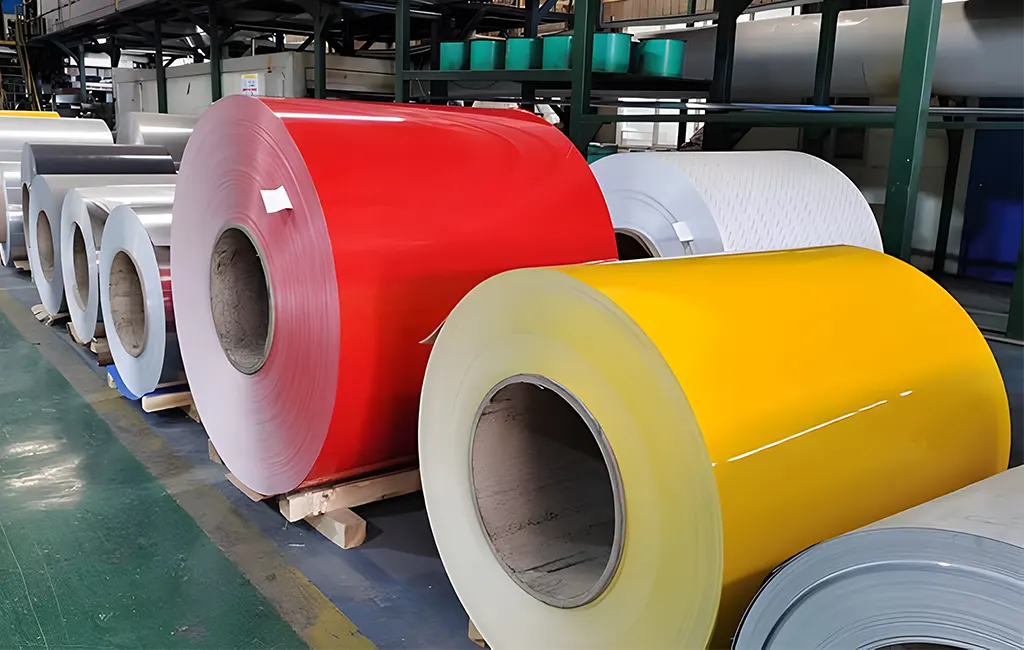
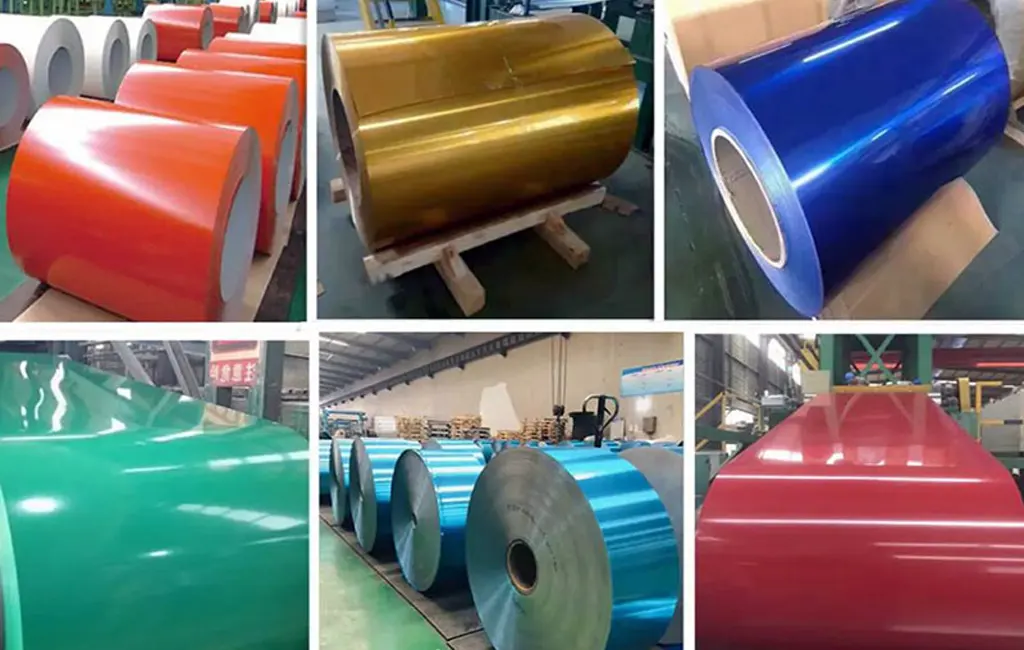
Standard-grade color-coated aluminum coil can be suitable for conventional indoor ceiling applications, but its performance may become unreliable in environments with persistently high humidity, condensation, or poor ventilation. Under these conditions, inadequate coating protection, insufficient surface pretreatment, and poor edge protection can increase the risk of corrosion, coating blistering, peeling, discoloration, and surface deterioration. Although aluminum naturally forms a protective oxide film, this does not eliminate the possibility of localized corrosion, particularly when moisture and contaminants accumulate on the surface. For high-humidity indoor ceilings, buyers should evaluate the complete coating system, including aluminum alloy, pretreatment quality, primer, topcoat, and coating thickness, rather than selecting materials based on appearance and price alone.
1. What Are the Main Quality Risks in High-Humidity Indoor Ceilings?
Indoor ceilings in swimming pools, bathrooms, commercial kitchens, laundry facilities, and poorly ventilated buildings may experience prolonged exposure to moisture. If standard-grade coating systems are not designed for these conditions, several quality problems can develop over time.
| Quality Risk | Main Cause | Possible Consequence | Recommended Inspection |
| Localized corrosion | Moisture and accumulated contaminants | Surface spots and substrate deterioration | Visual inspection and corrosion testing |
| Coating blistering | Moisture penetration or poor adhesion | Raised bubbles beneath the coating | Coating adhesion assessment |
| Coating peeling | Insufficient pretreatment or adhesion | Exposure of the aluminum substrate | Cross-cut adhesion test |
| Color discoloration | Moisture-related degradation or chemical exposure | Uneven ceiling appearance | Color difference measurement |
| White corrosion products | Corrosion of exposed aluminum areas | White deposits around damaged surfaces | Surface and edge inspection |
| Edge corrosion | Unprotected cut edges and accumulated moisture | Progressive deterioration around panel edges | Cut-edge inspection |
These problems may not appear immediately after installation. In many cases, coating defects become visible only after prolonged exposure to humid conditions.
2. Why Does High Humidity Accelerate Coating Deterioration?
High humidity creates conditions in which moisture can remain on aluminum ceiling panels for extended periods. When condensation repeatedly forms and evaporates, contaminants may become concentrated on the surface, increasing the risk of localized corrosion.
Three factors deserve particular attention:
- Condensation: Temperature differences between indoor air and ceiling surfaces can cause water droplets to form, especially around air-conditioning systems and poorly insulated roof structures.
- Chemical Contamination: Cleaning agents, airborne chemicals, and other contaminants may gradually affect coating surfaces if the coating system is not chemically compatible.
- Poor Ventilation: Limited air circulation slows moisture evaporation and increases the duration of surface wetness.
The risk is not determined by relative humidity alone. Temperature fluctuations, condensation frequency, airborne contaminants, and the quality of the coating system all influence actual service performance.
3. How Does Coating Quality Affect Long-Term Ceiling Performance?
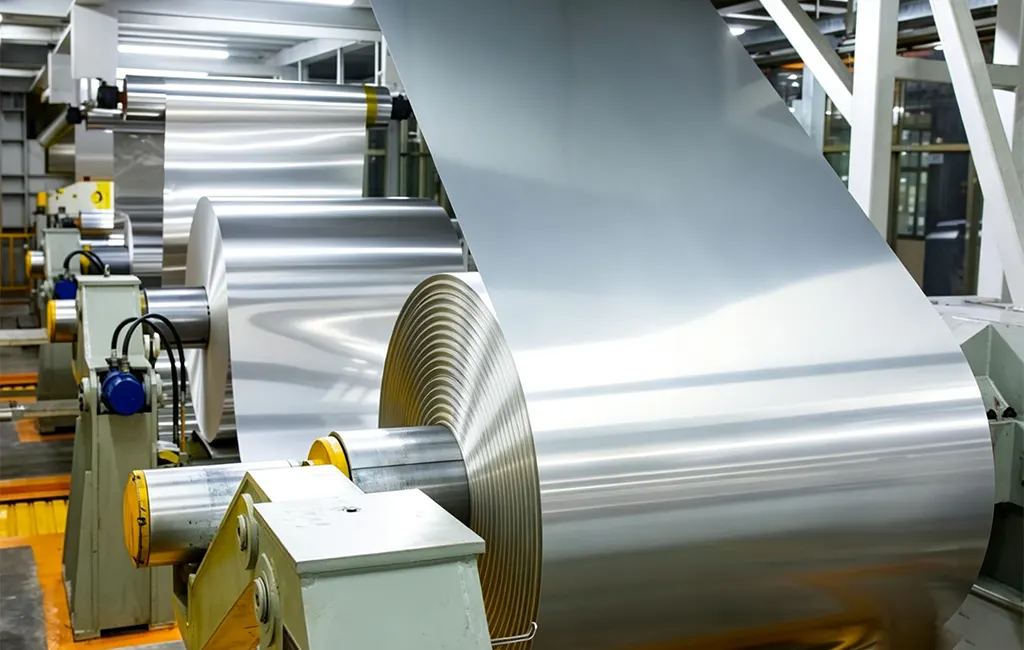
The protective performance of color-coated aluminum coil depends on the complete coating system rather than the topcoat alone.
Important manufacturing factors include:
- Surface Pretreatment: Proper degreasing, cleaning, and chemical conversion treatment help improve coating adhesion and corrosion protection.
- Primer Quality: A suitable primer provides an additional protective interface between the aluminum substrate and the topcoat.
- Coating Thickness: Insufficient dry film thickness may reduce the coating’s ability to protect the substrate.
- Curing Conditions: Inadequate curing can affect coating adhesion, hardness, and chemical resistance.
- Coating Uniformity: Uneven coating application may create weak areas that are more vulnerable to moisture penetration.
For indoor ceiling applications, buyers should select the coating system according to the actual humidity and chemical exposure conditions. A higher coating thickness alone does not guarantee better corrosion resistance if pretreatment and curing are inadequate.
4. What Should Buyers Check When Purchasing Color-Coated Aluminum Coil for High-Humidity Ceilings?
Before placing an order, buyers should establish clear technical specifications with the manufacturer.
| Parameter | What Buyers Should Confirm | Quality Objective |
| Aluminum Alloy | Suitable alloy and temper, such as 3003 or 5052 where appropriate | Formability and substrate suitability |
| Coating Type | PE, SMP, or PVDF according to environmental exposure | Appropriate moisture and chemical resistance |
| Coating Thickness | Primer and topcoat dry film thickness | Consistent protective coverage |
| Pretreatment | Cleaning and chemical conversion process | Reliable coating adhesion |
| Adhesion | Cross-cut or other agreed adhesion testing | Reduced peeling risk [1] |
| Humidity Resistance | Relevant humidity or condensation test | Resistance to moisture-related deterioration |
| Cut-Edge Protection | Edge condition and installation details | Reduced localized corrosion risk |
Relevant evaluation methods may include ASTM D3359 for coating adhesion [1], ASTM D2247 for humidity resistance [2], and ASTM D2244 for instrumental color difference [3]. Test conditions and acceptance criteria should be agreed upon before production.
5. How Can Manufacturers and Buyers Reduce Humidity-Related Quality Risks?
Preventing premature coating deterioration requires cooperation between the aluminum coil manufacturer, ceiling panel processor, and installation contractor.
Manufacturers should maintain consistent pretreatment, coating application, and curing conditions. Buyers should request technical data sheets and relevant test reports rather than relying solely on product descriptions such as moisture-resistant or corrosion-resistant.
During installation, additional attention should be given to:
- Avoiding prolonged water accumulation on ceiling surfaces.
- Ensuring adequate indoor ventilation and moisture control.
- Preventing scratches during cutting, bending, transportation, and installation.
- Protecting exposed edges and ensuring compatible fasteners.
- Selecting cleaning agents that will not damage the coating.
References
[1] Wikipedia contributors. Adhesion [EB/OL]. 2026-03-29.
[2] Wikipedia contributors. Relative humidity [EB/OL]. 2026-03-29.
[3] Wikipedia contributors. Color difference [EB/OL]. 2026-03-29.