
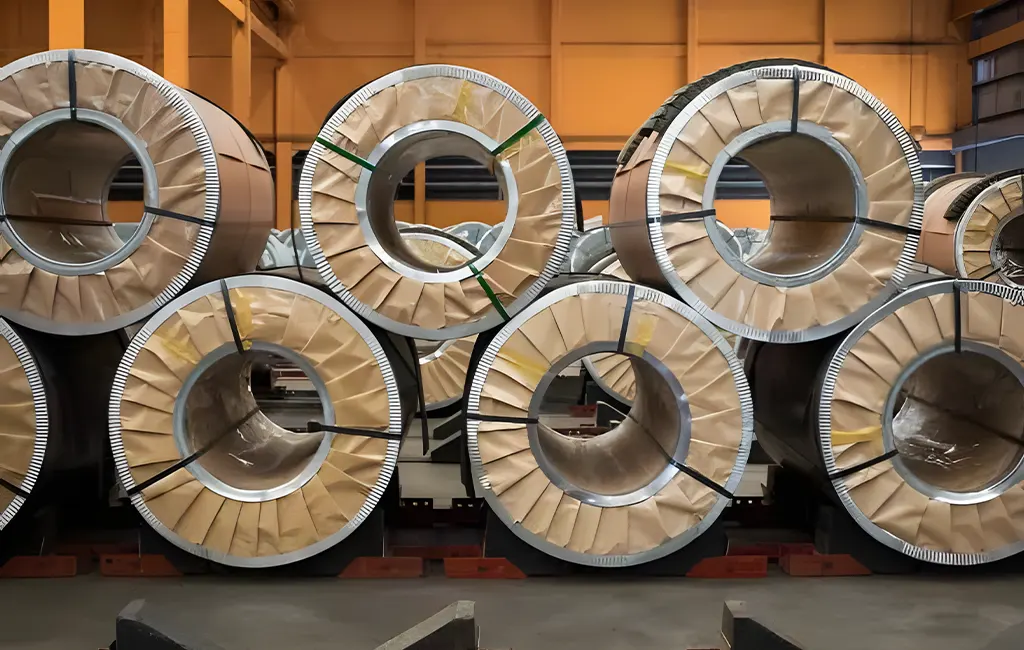
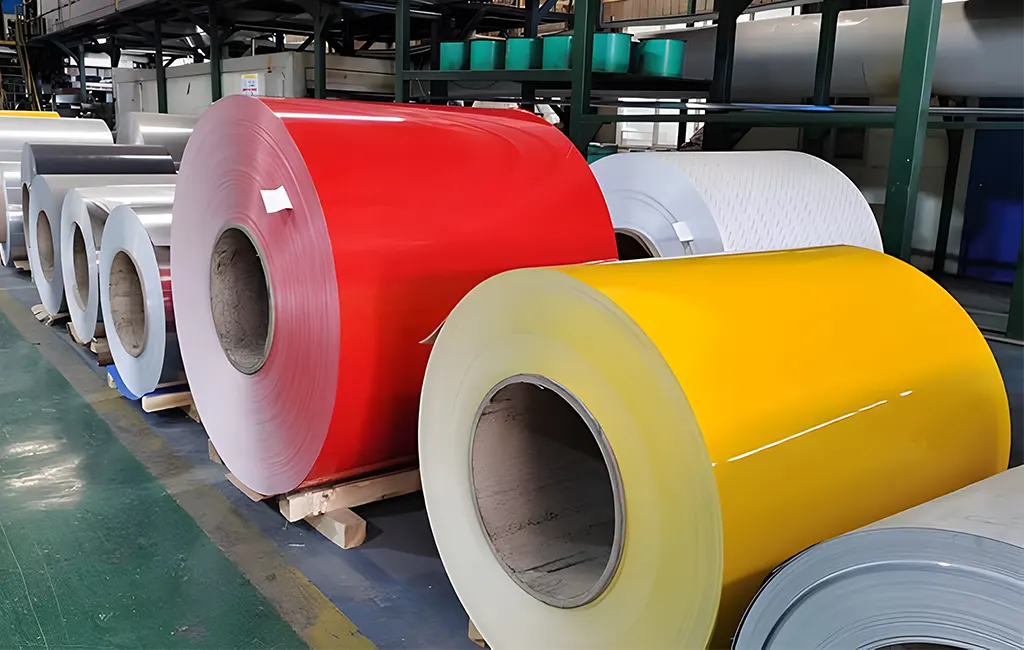
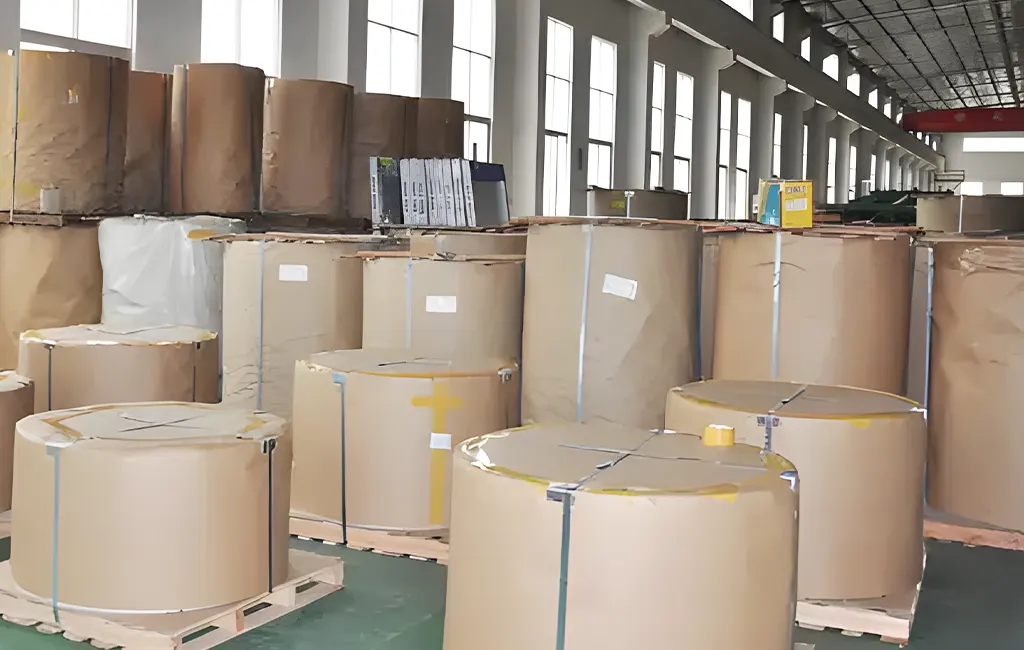
Incorrect coil outer-winding direction can reduce the production yield of color-coated aluminum coil by increasing handling difficulties, equipment adjustments, surface damage, and processing interruptions. During continuous uncoiling, roll forming, and automated fabrication, the coil’s winding direction must match the downstream equipment’s feeding requirements. Although winding direction does not directly change the chemical properties of the coating, an incorrect orientation can increase the risk of coating scratches, surface dents, material handling defects, and production downtime. These problems are particularly important for color-coated aluminum used in roofing panels, ceiling systems, curtain walls, and other applications requiring consistent surface appearance. Therefore, confirming coil winding direction before production is an important part of order specification and manufacturing quality control.
1. What Quality Risks Can Incorrect Coil Winding Direction Cause?
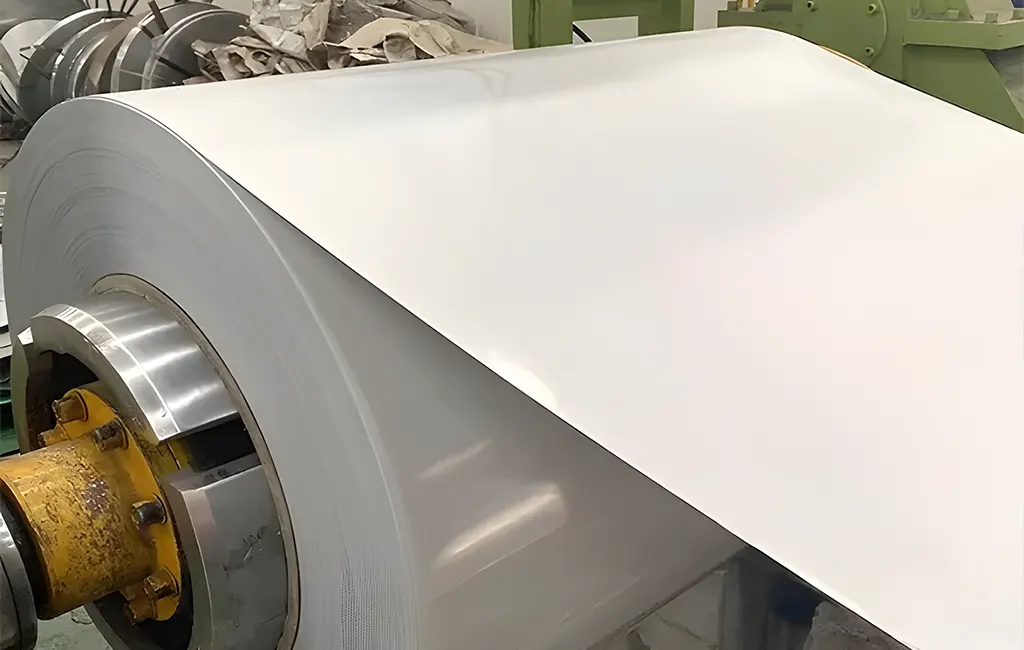
The outer-winding direction determines the initial orientation of the aluminum coil during uncoiling. If it does not match the customer’s equipment requirements, additional coil handling, flipping, or feeding adjustments may be necessary.
| Quality Risk | Possible Cause | Production Impact | Recommended Control |
|---|---|---|---|
| Coating scratches | Incorrect coating-face orientation against guide rollers | Surface defects and rework | Confirm coating face and roller contact |
| Surface dents | Improper coil flipping or handling | Appearance defects and potential rejection | Control lifting and handling procedures |
| Production downtime | Coil orientation incompatible with equipment | Reduced production efficiency | Verify uncoiling direction before production |
| Protective film problems | Film orientation incompatible with processing requirements | Wrinkling or peeling | Confirm protective film application face |
| Feeding or forming problems | Incorrect feeding direction or additional handling | Reduced processing efficiency | Verify equipment feeding requirements |
These risks are especially relevant when multiple coils must be processed continuously and maintain consistent surface quality.
However, incorrect winding direction does not automatically mean the aluminum coil will fail quality inspection. If the equipment can be adjusted safely and the coating surface is not damaged during handling, the impact may be limited to production preparation time and operating costs.
2. Why Does Coil Winding Direction Affect Production Efficiency?
During downstream fabrication, color-coated aluminum coil is typically uncoiled and fed into leveling, roll-forming, stamping, or cutting equipment.
If the coil winding direction does not match the equipment requirements, operators may need to:
- Adjust the uncoiler installation position or coil support.
- Confirm the coating face and front-to-back orientation.
- Perform additional coil handling or material threading.
- Check protective film compatibility with the feeding direction.
- Adjust feeding alignment and forming parameters.
These additional operations increase preparation time and may introduce more opportunities for handling errors.
For continuous production lines, an incompatible winding direction can also cause equipment interruptions. If the coil must be repositioned or flipped, additional handling may increase the risk of edge deformation, surface scratches, and mechanical damage.
3. Can Incorrect Winding Direction Cause Coating Scratches or Peeling?
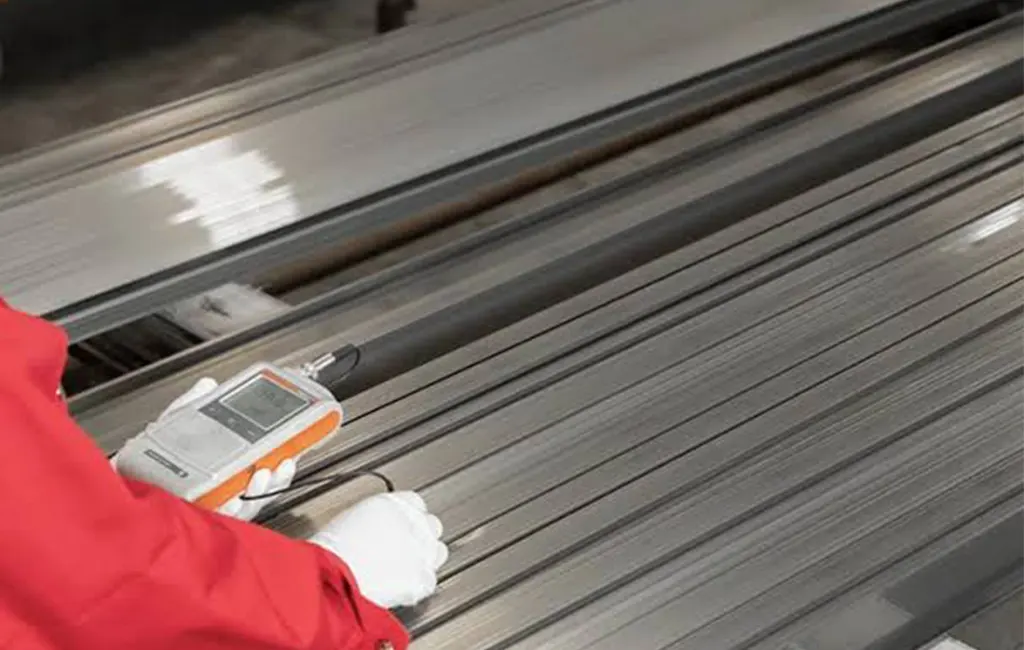
Incorrect winding direction can increase the risk of coating damage, but the actual outcome depends on how the aluminum coil contacts the equipment and how the coating performs during processing.
Important influencing factors include:
- Guide Roller Contact: Contact between the coating surface and unsuitable rollers may cause friction and scratches.
- Coil Flipping: Improper flipping can result in edge collisions, dents, or localized pressure marks.
- Protective Film: Film adhesion, surface integrity, and compatibility with the processing operation influence surface protection.
- Coating Curing: Insufficient adhesion or flexibility may increase the risk of coating damage during mechanical contact or bending.
- Handling Conditions: Improper lifting, forklift handling, or coil support can damage the edges and surface.
Therefore, coil winding direction alone cannot determine coating quality. Surface inspection, coating adhesion testing, and actual processing performance should be considered together.
4. How Should Buyers Specify Coil Winding Direction?
To prevent production losses, buyers and manufacturers should clearly define coil orientation during order confirmation.
| Order Parameter | Required Confirmation |
|---|---|
| Outer-Winding Direction | Required outer-winding or inner-winding configuration |
| Coating Face | Identification of the front and back coating surfaces |
| Uncoiling Direction | Direction in which the coil must unwind when viewed from the specified equipment side |
| Feeding Direction | Direction in which the aluminum coil enters downstream equipment |
| Protective Film | Whether protective film is required and which surface must be covered |
| Packaging | Coil support, lifting, and transportation requirements |
Outer-winding direction, uncoiling direction, and coating-face orientation are related but are not interchangeable. Orders should preferably include a clear orientation diagram instead of relying only on ambiguous descriptions such as forward winding or reverse winding.
For continuous roll-forming, automated stamping, and high-speed uncoiling applications, the coil orientation should be confirmed before production. A first-coil trial can verify equipment compatibility and prevent repeated adjustments during batch processing.
5. How Can Manufacturers Reduce Yield Losses Caused by Incorrect Coil Orientation?
Color-coated aluminum manufacturers should establish an orientation-control procedure covering order confirmation, production packaging, and customer processing.
First, confirm the required winding direction, coating face, uncoiling direction, and equipment feeding requirements during order review. These details should be included in the production work order.
Second, clearly identify coil orientation during packaging. Labels should distinguish the outer-winding direction and coating face. For special processing orders, an orientation diagram can be included with the packaging label and technical documentation.
Finally, conduct a first-coil verification before full production. Check the uncoiling path, roller contact, coating-face orientation, and feeding alignment. If the orientation does not match the equipment requirements, adjustments should be completed before continuous production begins.
References
[1] Wikipedia contributors. Roll forming [EB/OL]. 2026-03-29.
[2] Wikipedia contributors. Coil coating [EB/OL]. 2026-03-29.
[3] Wikipedia contributors. Aluminium [EB/OL]. 2026-03-29.