Understanding 1-Coat, 2-Coat, and 3-Coat Systems for Color-Coated Aluminum
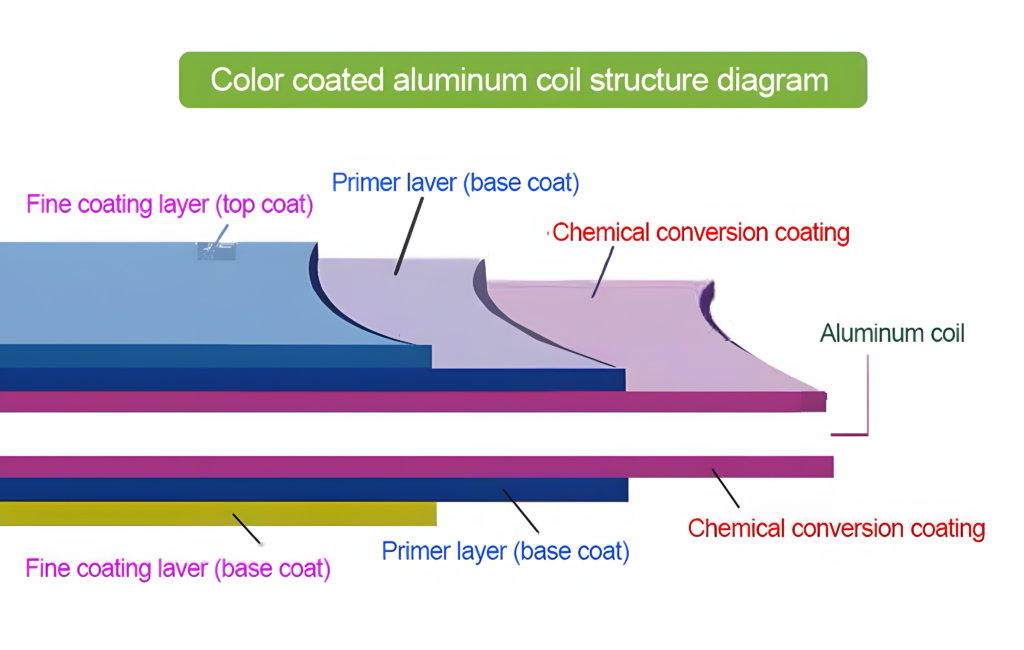
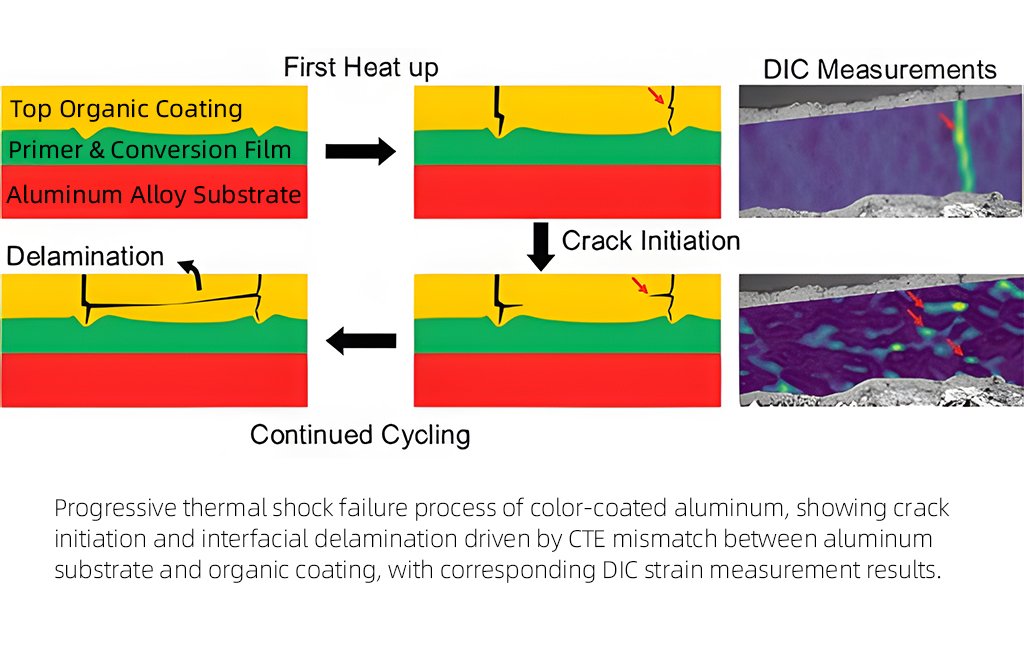
The fundamental difference between 1-coat (single-bake), 2-coat (two-bake), and 3-coat (three-bake) liquid coating systems on coil-coated aluminum lies in the dry film thickness (DFT), layer composition, and resulting long-term weatherability. A 1-coat system applies a single composite layer (typically polyester or modified polyester) directly over pre-treated aluminum, offering basic aesthetics and minimal barrier protection. A 2-coat system introduces a specialized primer layer beneath a topcoat (often PVDF or high-durability polyester), significantly improving substrate adhesion and corrosion resistance. A 3-coat system adds a clear protective topcoat (clear coat) over the primer and color coats, shielding the pigment from ultraviolet (UV) radiation, chemical degradation, and gloss loss.
Technical Parameter Comparison Matrix
The choice between coating layers directly impacts physical performance metrics and compliance with international standards such as AAMA 2605 or EN 13523.
| Performance Metric | 1-Coat System | 2-Coat System | 3-Coat System |
| Typical Layer Structure | Topcoat only (No Primer) | Primer + Topcoat | Primer + Color Coat + Clear Coat |
| Total Dry Film Thickness (DFT) | 15 μm – 18 μm | 23 μm – 28 μm | 35 μm – 45 μm |
| Primary Resin Types | PE (Polyester), Epoxy-PE | PVDF (70%), HDP (High-Durability Polyester) | PVDF (70% Base + Clear), Premium Metallic |
| UV Resistance (QUV-A 3000 hrs) | Delta E $\le$ 5.0 (Moderate color shift) | Delta E $\le$ 2.0 (High color retention) | Delta E $\le$ 1.0 (Excellent color retention) |
| Salt Spray Resistance (ASTM B117) | 500 Hours | 1,000 – 1,500 Hours | 3,000+ Hours |
| Gloss Retention (ASTM D523) | $<50\%$ after 5 years | $\ge70\%$ after 10 years | $\ge85\%$ after 15–20 years |
| Industry Standard Compliance | AAMA 2603 | AAMA 2604 / ISO 12206 | AAMA 2605 / Qualicoat Class 3 |
| Optimal Application Environment | Indoor, low-pollution zones | Standard exterior architectural | Coastal, industrial, high-UV environments |
Deep Dive: Atomic Breakdown of Coating Architectural Systems
1-Coat Systems: Cost-Effective Interior Applications
1-coat color aluminum production combines color formulation and baseline protection into a single pass through the coating lines. Because there is no independent primer layer, the coating relies strictly on the underlying chemical pre-treatment layer for substrate bonding.
- Resin Composition: Typically utilizes Standard Polyester (PE) or modified epoxy resins.
- B2B Value Proposition: Minimizes initial manufacturing costs and shortens processing times, providing an economical solution where environmental stress is negligible.
- Primary Use Cases: Ceiling grids, indoor partitioning walls, appliance wraps, and temporary signage.
2-Coat Systems: The Architectural Exterior Workhorse
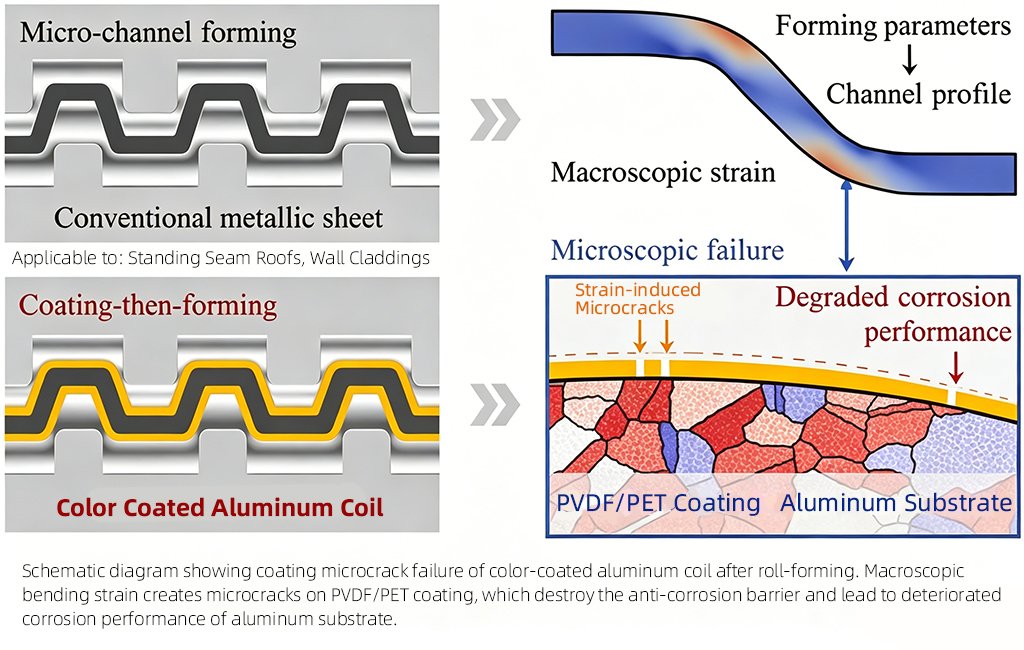
The 2-coat setup is the global baseline for exterior building skins. It utilizes a dedicated polyurethane or epoxy primer formulated specifically for corrosion inhibition and substrate adhesion, paired with a specialized topcoat.
- Resin Composition: Dominated by 70% Polyvinylidene Fluoride (PVDF) or High-Durability Polyester (HDP). The PVDF fluoropolymer molecular configuration (carbon-fluorine bonds) delivers exceptional structural resistance to UV degradation.
- B2B Value Proposition: Delivers a balanced lifecycle cost, achieving over 10–15 years of color fastness and chalking resistance under standard outdoor exposure.
- Primary Use Cases: Commercial facades, industrial roofing, standard curtain walls, and residential rain gutters.
3-Coat Systems: Maximum Protection for Severe Environments
A 3-coat architecture introduces a third, unpigmented fluoropolymer layer (clear coat) on top of the primer and color layers. This clear coat acts as a sacrificial shield, intercepting UV rays and atmospheric acids before they interact with the pigment particles in the middle layer.
- Resin Composition: Typically consists of an epoxy/polyurethane primer, a PVDF color coat heavily loaded with metallic/mica pigments, and a protective PVDF clear topcoat.
- B2B Value Proposition: Drastically lowers long-term building maintenance schedules and avoids structural re-coating costs in highly corrosive or high-solar-radiation areas, providing over 20–25 years of certified performance.
- Primary Use Cases: Coastal structures within 1 km of the high-tide line, high-altitude high-rise towers, chemical processing plants, and premium projects utilizing bright metallic or exotic pigments prone to oxidation.