
Service Life Expectancy of Color-Coated Aluminum Coils
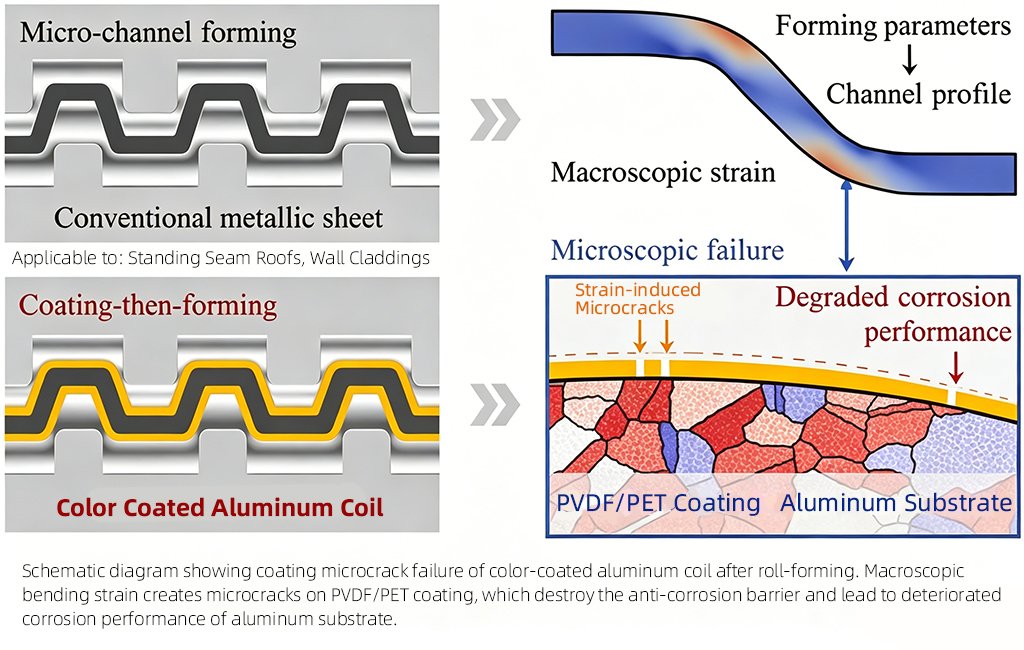
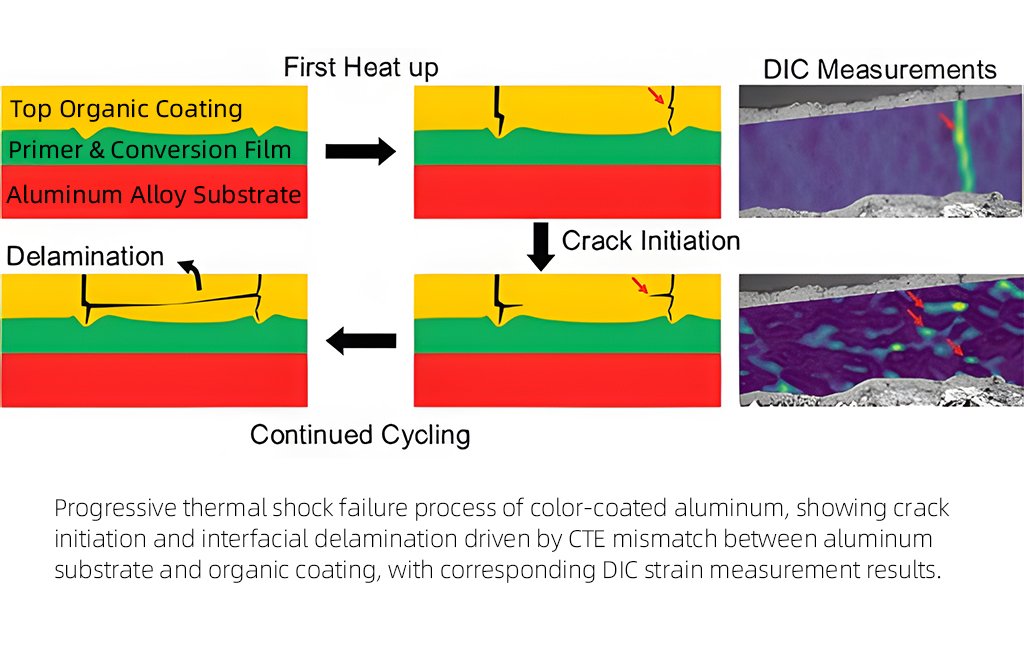
The service life of color-coated aluminum coils typically ranges from 15 to 50 years, primarily determined by the synergy between the aluminum alloy substrate (e.g., 3003, 5052), the coating polymer type (PVDF vs. PE), and the ISO 12944 Corrosivity Category of the installation site. In mild C2 environments, high-performance PVDF coatings can maintain structural integrity and color retention ($ΔE < 5$) for over 40 years. Conversely, in C5-M high-salinity marine zones or heavy industrial areas, the lifespan may reduce to 15–20 years if specifications like coating thickness (min 25μm) and pretreatment quality are not strictly optimized to prevent filiform corrosion and UV degradation.
Technical Performance Matrix by Coating and Environment
The following table outlines the expected performance metrics for color-coated aluminum based on industry-standard coating technologies and environmental stress factors.
| Feature / Parameter | Polyester (PE) | High Durability Polyester (HDP) | Polyvinylidene Fluoride (PVDF) |
| Coating Thickness | 15 – 20 μm | 20 – 25 μm | 25 – 35 μm (2 or 3-coat) |
| UV Resistance (QUV) | 500 – 1000 Hours | 1500 – 2000 Hours | 4000+ Hours |
| Salt Spray Test | 500 Hours | 1000 Hours | 1500 – 3000 Hours |
| Gloss Retention | 40% – 60% (5 Years) | 60% – 80% (10 Years) | >80% (20 Years) |
| Max Service Temp | 80°C | 90°C | 120°C |
| Climate Suitability | Inland, Moderate UV | Coastal, High Humidity | Extreme UV, Marine, Tropical |
| Typical Lifespan | 10 – 15 Years | 15 – 25 Years | 30 – 50 Years |
Standardized SOP for Extending Service Life
To maximize the ROI and structural longevity of color-coated aluminum installations, project managers and engineers should adhere to the following maintenance and selection protocol:
- Site-Specific Specification: For projects within 5km of the coastline, mandate a minimum 5052 H32 aluminum alloy substrate with a 3-coat PVDF system (Primer + Base + Clear) to meet AAMA 2605 standards.
- Verify Pre-treatment Process: Ensure the manufacturer utilizes a multi-stage Chromating or Non-Chrome Chemical Conversion process. This ensures maximum adhesion between the aluminum oxide layer and the organic coating, preventing peeling and under-film corrosion.
- Controlled Installation: Avoid mixing batches to ensure color consistency ($ΔE$ control) and use stainless steel fasteners with EPDM washers to prevent galvanic corrosion between the aluminum coil and the fixing hardware.
- Routine Maintenance Wash: In high-pollution or coastal areas, implement a bi-annual fresh water rinse to remove accumulated salt deposits and industrial pollutants. Avoid abrasive cleaners that could compromise the 25μm coating thickness.
- Edge Protection: During fabrication (slitting/cutting), ensure all exposed edges are treated or tucked to prevent moisture ingress between the coating and the metal interface.
Impact of Climate Zones on Coating Degradation
High UV Tropical Zones (Arizona/Middle East)
In regions with high solar radiation, the primary failure mode is photo-oxidation. Standard PE coatings will experience “chalking,” where the resin binder breaks down, leaving loose pigment on the surface. PVDF coatings, containing at least 70% Kynar 500/Hylar 5000 resin, are essential here due to the strong carbon-fluorine (C-F) bonds that resist UV energy levels.
Marine and High Salinity Environments (Coastal Areas)
Saltwater acts as a powerful electrolyte, accelerating electrochemical corrosion. For these zones, the Salt Spray Resistance metric is critical. Specifying a Polyurethane (PU) or Polyamide Modified (PA) coating can provide enhanced abrasion resistance and barrier protection against chloride ion penetration.
Industrial Corrosive Zones (C4/C5 Categories)
Areas near chemical plants or heavy manufacturing often face acid rain (SO2 exposure). Color-coated aluminum is naturally superior to galvanized steel in these environments because aluminum forms a self-protecting oxide layer. However, a thick-film (35μm+) coating system is recommended to withstand chemical etching and maintain aesthetic standards over a 25-year horizon.