
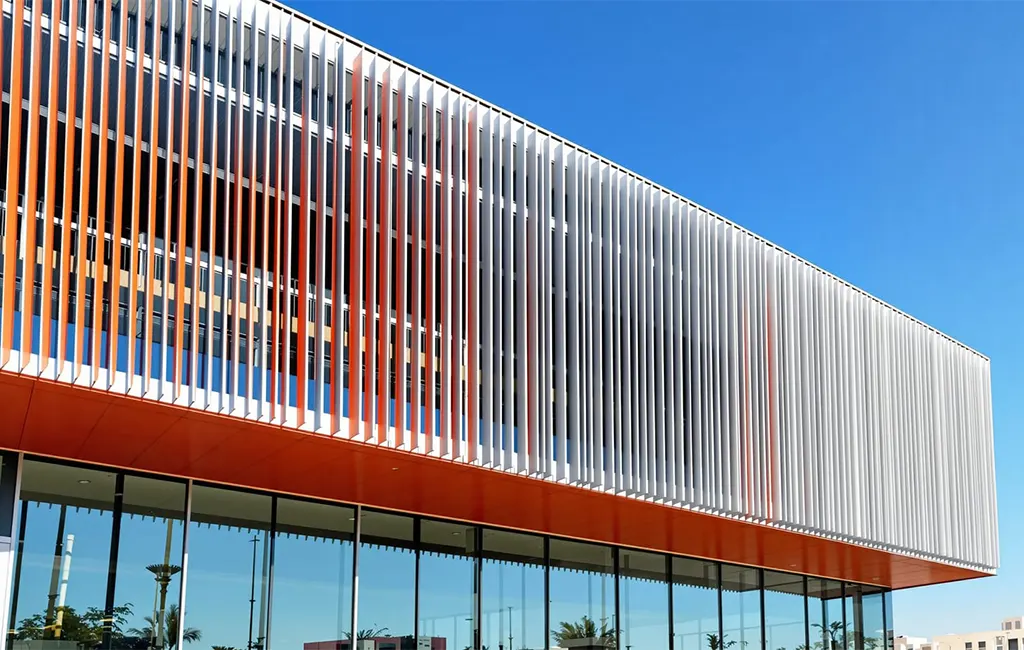
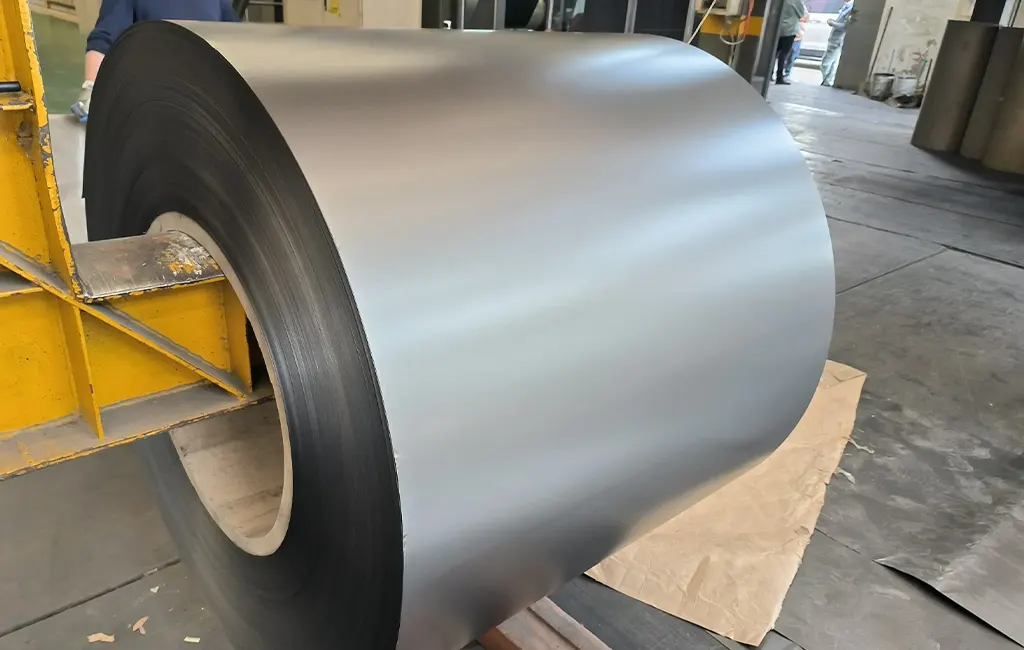
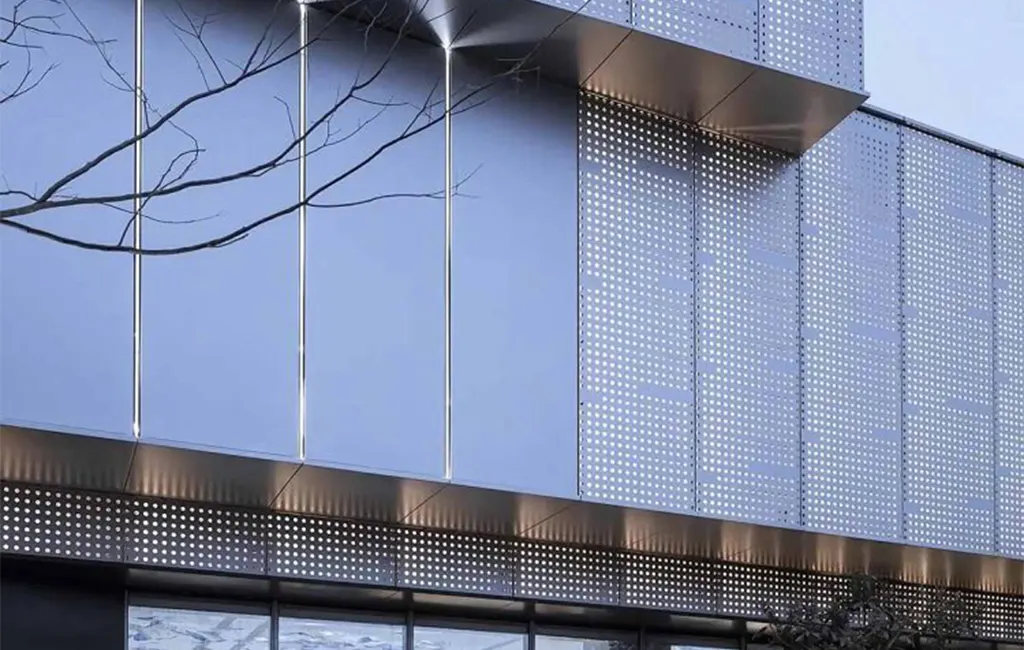

Maximum Service Temperature Limits for PE, SMP, and PVDF Color-Coated Aluminum
Standard service temperature thresholds for architectural and industrial coil-coated aluminum are dictated by resin glass-transition () and thermal-oxidative degradation limits. Polyester (PE) [2] operates safely up to 80°C, Silicon-Modified Polyester (SMP) extends performance up to 110°C–120°C, and Polyvinylidene Fluoride (PVDF) [1] provides continuous thermal stability up to 120°C–130°C (with short-term peak tolerance reaching 145°C). Exceeding these thresholds induces polymer chain scission, micro-cracking, gloss loss exceeding 20 GU, and premature failure of the conversion pre-treatment interface under AAMA 2605 or EN 13523 compliance frameworks.
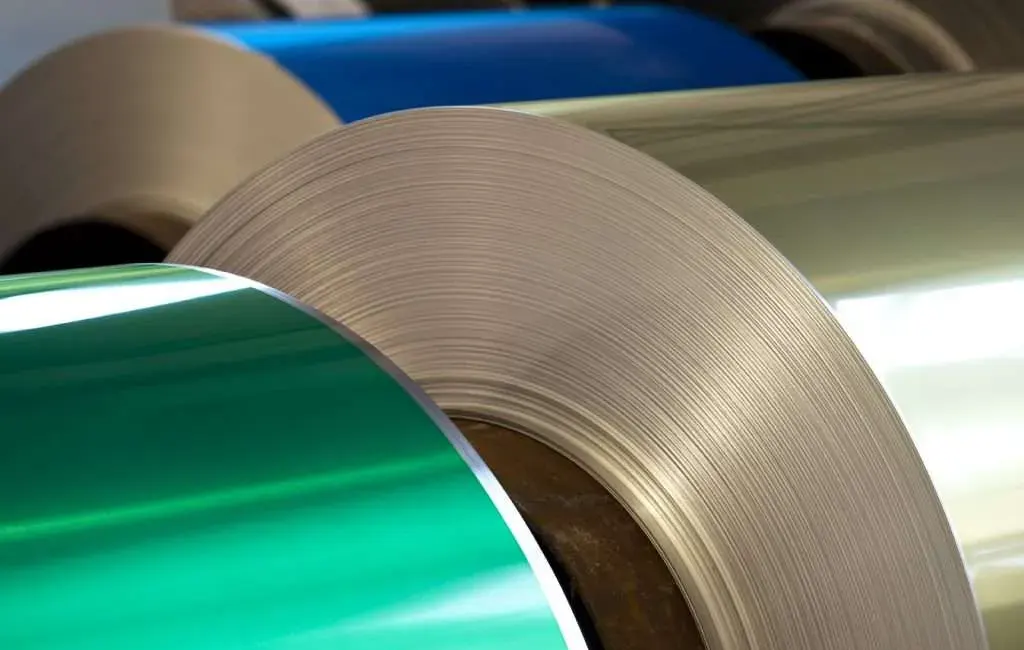
Technical Parameter Matrix: Thermal and Environmental Performance of Coil Coatings
| Parameter / Metric | Standard Polyester (PE) | Silicon-Modified Polyester (SMP) | PVDF (Polyvinylidene Fluoride) |
| Resin Backbone Chemistry | Saturated polyester polyol + amino/isocyanate crosslinker | Silicone-intermediate grafted polyester (30–50% silicone content) | 70% Kynar 500 / Hylar 5000 PVDF resin + 30% acrylic copolymer |
| Continuous Service Temp (°C) | -40°C to +80°C | -40°C to +110°C (peak +120°C) | -50°C to +120°C (peak +130°C) |
| Recommended Aluminum Alloy | 1100, 3003, 3005 | 3003, 3005, 5005 | 3003, 3005, 5052, 5083 |
| Nominal Dry Film Thickness (DFT) | 18–25 μm (Topcoat + Primer) | 25–35 μm (Topcoat + Primer) | 25–30 μm (2-coat system: 5-7μm primer + 20-23μm top) |
| UV Resistance (ASTM G155) | 500–1,000 hours (chalking/fade) | 1,500–3,000 hours (moderate retention) | > 3,000–4,000 hours (Delta E < 5.0) |
| Salt Spray Resistance (ASTM B117) | 500–1,500 hours | 1,500–3,000 hours | > 3,000 hours (filiform creep < 2.0 mm) |
| Color Retention Rate | 60–75% after 3 years outdoor | 80–85% after 5–7 years outdoor | ≥ 95% after 10–20 years outdoor |
| Standard Compliance Baseline | ECCA / GB/T 22412 | AAMA 2603 / GB/T 5237.5 | AAMA 2605-20 / ISO 12206-1 |
Atomic & Modular Sections
PE (Polyester) Thermal Failure Mechanics and Limitations
- Thermal Degradation Profile: Standard polyester thermoset networks undergo thermal softening and ester-linkage hydrolysis or oxidation degradation approaching 85°C–90°C, leading to embrittlement and rapid loss of gloss (>30% drop within 500 thermal cycles).
- Pain Point & Mitigation: Utilizing PE-coated coils on west/south-facing high-insolation spandrel panels causes localized blistering and rapid chalking. Engineers mitigate maintenance liabilities by restricting PE specification to indoor ceiling tiles, interior partition cladding, or protected architectural soffits where skin temperatures remain < 60°C.
SMP (Silicon-Modified Polyester) Thermal-Mechanical Balance
- Thermal Degradation Profile: The siloxane () bond energy (443 kJ/mol) provides superior thermal bond stability compared to standard carbon-carbon polyester backbones, raising safe operational ceilings to 110°C continuous.
- Pain Point & Mitigation: SMP bridges the cost-performance gap for agricultural and industrial metal roofing in temperate or high-solar zones. However, gloss retention degrades faster than PVDF under combined UV and thermal cycling (); specification requires matching color hue (lighter LRV values > 40) to minimize solar heat gain coefficient (SHGC) stress.

PVDF (Polyvinylidene Fluoride) High-Temperature Resilience
- Pain Point & Mitigation: Extreme desert facades or industrial proximity zones risk micro-fissuring if PVDF topcoats experience rapid thermal shock combined with chemical fallout. High-grade architectural execution mandates 70/30 PVDF resin systems over 5052-H32 aluminum alloy with a minimum 25–30 μm total DFT to guarantee AAMA 2605 compliance over a 20-year design life.
- Thermal Degradation Profile: Carbon-fluorine () electronegativity (485 kJ/mol bond dissociation energy) resists thermal-oxidative cleavage up to 120°C–130°C continuous, maintaining fluoropolymer crystal-phase stability and low surface energy.
References
[1] Wikipedia. Polyvinylidene fluoride [EB/OL]. 2026-09-17.
[2] Wikipedia. Polyester [EB/OL]. 2026-09-17.
[3] Wikipedia. Salt spray test [EB/OL]. 2026-09-17.