

Technical Requirements for Pre-Painted Aluminum Strip in Louvers and Sun Shades
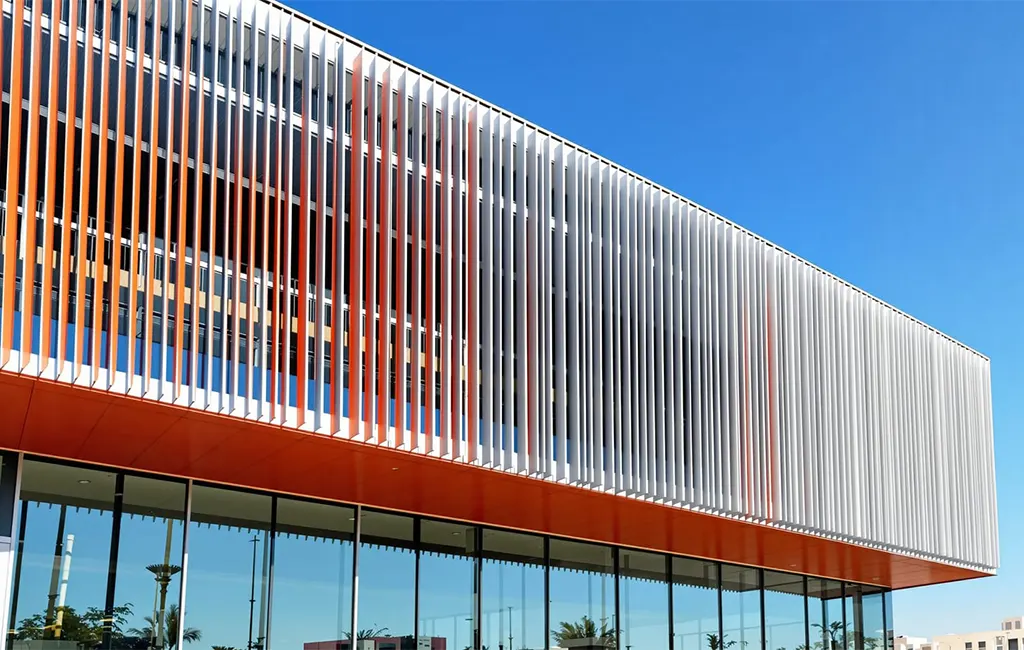
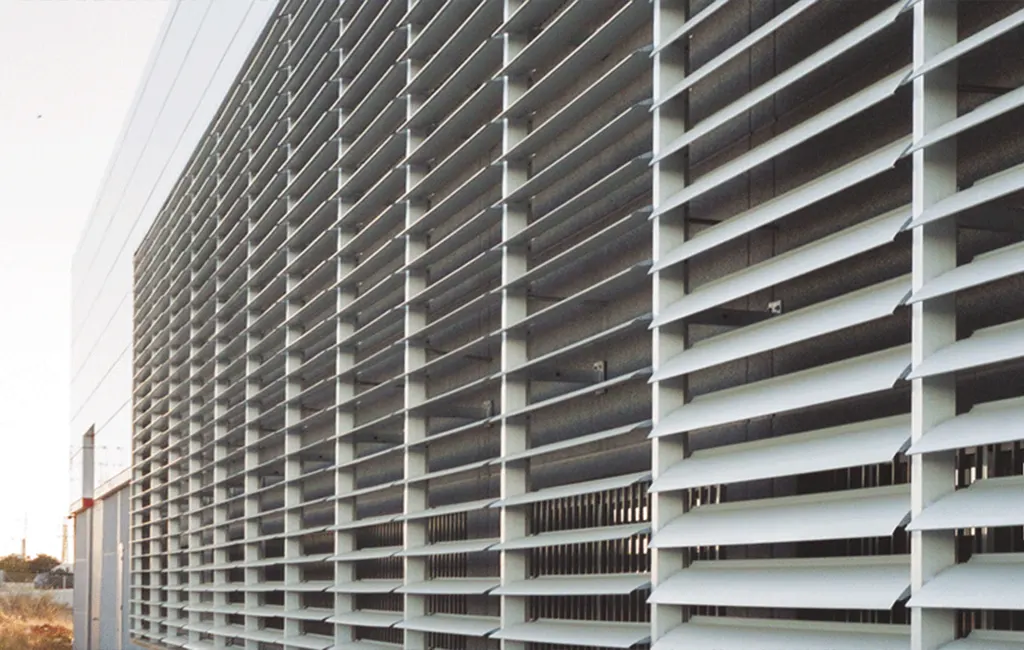
Pre-painted aluminum strips utilized in exterior architectural louvers and sun shades require a precise balance of mechanical yield strength, fatigue resistance, and high-durability surface coatings to withstand dynamic wind loads, UV degradation, and atmospheric corrosion. For exterior installations, optimal performance is achieved using AA3004-H16/H26, AA3105-H16/H26, or AA5052-H34 aluminum alloys with a yield strength () of 160–220 MPa, paired with a Polyvinylidene Fluoride (PVDF) or Fluoropolymer (FEVE) coating system applied at a minimum total Dry Film Thickness (DFT) of 25–35 . This configuration ensures compliance with AAMA 2605-20 [1]standards, offering of salt spray resistance and maintaining color retention under continuous outdoor exposure.
Technical Parameter Comparison for Louver & Sun Shade Aluminum Strips
| Specification / Performance Metric | Exterior Architectural Louvers & Sun Blinds | Interior Light Control Louvers | Testing Standard & Compliance |
| Aluminum Alloy & Temper | AA3004-H16/H26, AA3105-H16/H26, AA5052-H34 | AA1100-H14, AA3003-H14 | EN 573-3 / ASTM B209 [2] |
| Tensile Strength () | 190 – 260 MPa | 120 – 160 MPa | ASTM E8 / ISO 6892-1 |
| Yield Strength () | 160 – 220 MPa | 95 – 130 MPa | ASTM E8 / ISO 6892-1 |
| Coating System Type | 2-Coat / 3-Coat PVDF (70% Kynar 500) or FEVE | High-Durability Polyester (HDP) / PE | AAMA 2605-20 / AAMA 2604 |
| Total Coating Thickness (DFT) | 25 – 35 (Primer 5 + Topcoat 20–30) | 15 – 20 | ISO 2808 / ASTM D7091 |
| Wind Load Resistance | Designed for ultimate loads up to 2.5 – 5.0 kPa | N/A (Internal static loads) | ASTM E330 / ASCE 7-22 [3] |
| Salt Spray Corrosion Resistance | (Rating 10 per ASTM D1654) | ASTM B117 / ISO 9227 [4] | |
| Accelerated Weathering (QUV) | ( units) | ASTM G154 / ISO 16474-3 | |
| T-Bend Coating Flexibility | – (No cracking or flaking) | – | ASTM D4145 / EN 13523-7 |
Mechanical Forces: Wind Load Mitigation and Structural Alloy Selection
Building facades and external sun shades experience continuous, cyclic aerodynamic pressures. Wind passing over louver profiles induces positive pressure on the windward side and negative suction on the leeward side, causing dynamic cyclic bending stress.
- Yield Strength & Deflection Limits: Standard low-strength alloys (such as AA1100 or AA3003-H14) exhibit low yield strengths (), leading to permanent plastic deformation under extreme wind events (). Selecting AA3004-H16 or AA5052-H34 provides elevated elastic limits, keeping deflection within structural limits ( of the span).
- Fatigue Failure Prevention: Dynamic wind vibration induces cyclic stress at fixing points and roll-formed edges. Manganese (1.0–1.5% in 3000 series) and Magnesium (2.2–2.8% in 5052) alloying elements increase fatigue strength to withstand long-term wind chatter without structural cracking around mechanical fasteners.
Surface Chemistry: Degradation Mechanisms of Exterior Coatings
Exterior architectural sun shades operate in aggressive environments characterized by high UV irradiation, thermal cycling, and atmospheric pollution.
- UV-Driven Polymer Scission
- Ultraviolet radiation (specifically UV-A at and UV-B at ) possesses photon energy sufficient to break standard organic chemical bonds in lower-grade polyester coatings ( bond energy ). This bond scission leads to film erosion, loss of gloss, and pigment exposure (chalking).
- PVDF Fluoropolymer Stability
- Fluoropolymer coatings utilizing 70% PVDF resin feature extraordinarily strong Carbon-Fluorine () bonds (). This bond energy exceeds the energy of terrestrial solar UV radiation, preventing chemical breakdown.
- Corrosion Resistance at Formed Edges
- Slit edges and roll-formed bends are primary sites for filiform and galvanic corrosion. Applying a flexible zinc-chromate or chromate-free polyurethane primer (5–8 ) under the PVDF topcoat inhibits moisture creep and edge delamination even when exposed to high-humidity or coastal salt-spray environments.
References
[1] Wikipedia. Architectural Aluminum Finishing [EB/OL]. 2026-01-15.
[2] Wikipedia. ASTM B209 Standard Specification for Aluminum and Aluminum-Alloy Sheet and Plate [EB/OL]. 2025-11-10.
[3] Wikipedia. ASCE 7 Minimum Design Loads and Associated Criteria for Buildings and Other Structures [EB/OL]. 2026-02-01.
[4] Wikipedia. Salt Spray Test Standard (ASTM B117 / ISO 9227) [EB/OL]. 2026-03-05.