
Aluminum Substrate Grain Size Requirements for High-Performance Color Coating
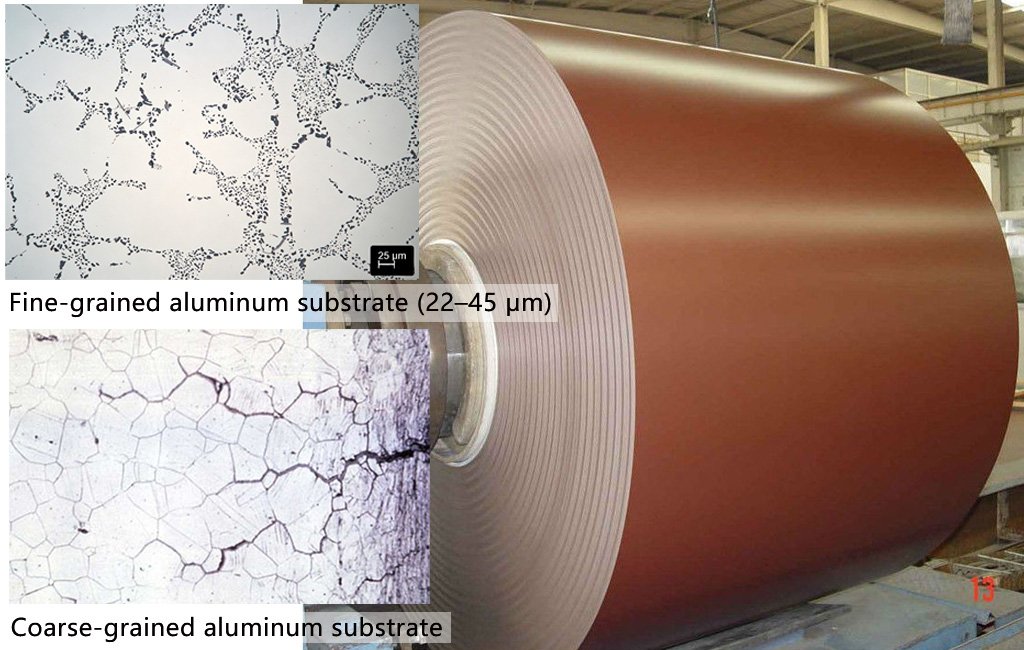
For high-quality color-coated aluminum coils, the typical grain size requirement for the aluminum substrate (typically 3000 or 5000 series alloys) is generally targeted at ASTM Grain Size Number 6 to 8 (approx. 22 to 45 μm). Fine, uniform grain structures are critical because they dictate the surface topography and energy after the pre-treatment phase. Coarse grains (>100 μm) lead to “orange peel” effects during forming and inconsistent etching rates during the chromating or silane pre-treatment. This inconsistency creates “weak links” in the interfacial bond between the aluminum oxide layer and the Polyvinylidene Fluoride (PVDF) or Polyester (PE) primer, significantly reducing peeling strength and long-term adhesion.
Technical Data Matrix: Substrate Properties and Coating Compatibility
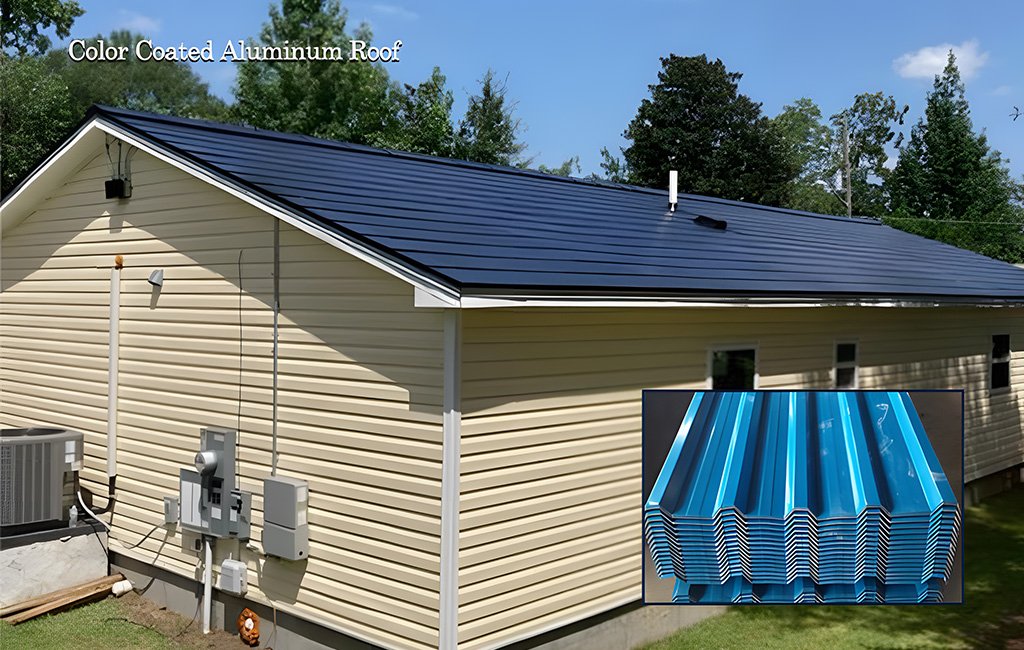
The following table outlines the technical parameters for common aluminum alloys used in the color-coating industry and their performance benchmarks.
| Substrate Alloy | Typical Grain Size (μm) | Common Coating Type | Coating Thickness (μm) | Salt Spray Resistance (h) | Adhesion Grade (Cross-cut) | Primary Application |
| AA 1100 | 35–50 | PE (Polyester) | 15–20 | ≥ 500 | 0 (ISO 2409) | Signage, Interior Trim |
| AA 3003 | 25–40 | PVDF (2-Layer) | 25–30 | ≥ 1000 | 0 (ISO 2409) | Roofing, Facades |
| AA 3105 | 25–45 | PE / PU | 20–25 | ≥ 720 | 0 (ISO 2409) | Rain Gutters, Mobile Homes |
| AA 5052 | 20–35 | PVDF (3-Layer) | 35–45 | ≥ 3000 | 0 (ISO 2409) | Marine, High-Corrosion |
| AA 5754 | 20–30 | Powder Coating | 60–80 | ≥ 2000 | 0 (ISO 2409) | Architectural Louvers |
Impact of Grain Boundary Density on Coating Adhesion
The density of grain boundaries in the aluminum substrate directly influences the mechanical interlocking mechanism of the coating.
Enhanced Chemical Anchor Sites
Fine-grained substrates provide a higher density of grain boundaries per unit area. During the acidic or alkaline etching phase of pre-treatment, grain boundaries etch at a different rate than the grain interiors, creating a microscopic “anchor pattern.” A finer grain structure results in a more uniform and dense distribution of these anchors, allowing the primer (Epoxy or Polyurethane) to penetrate and lock into the surface more effectively.
Prevention of Localized Corrosion
Coarse grains often lead to the segregation of alloying elements (like Magnesium in 5xxx series or Manganese in 3xxx series) at the boundaries. This creates galvanic cells that promote sub-film corrosion. By maintaining a refined grain structure (ASTM 7 or finer), the distribution of these elements remains homogenous, reducing the risk of osmotic blistering and filiform corrosion under the coating layer in high-humidity environments.