
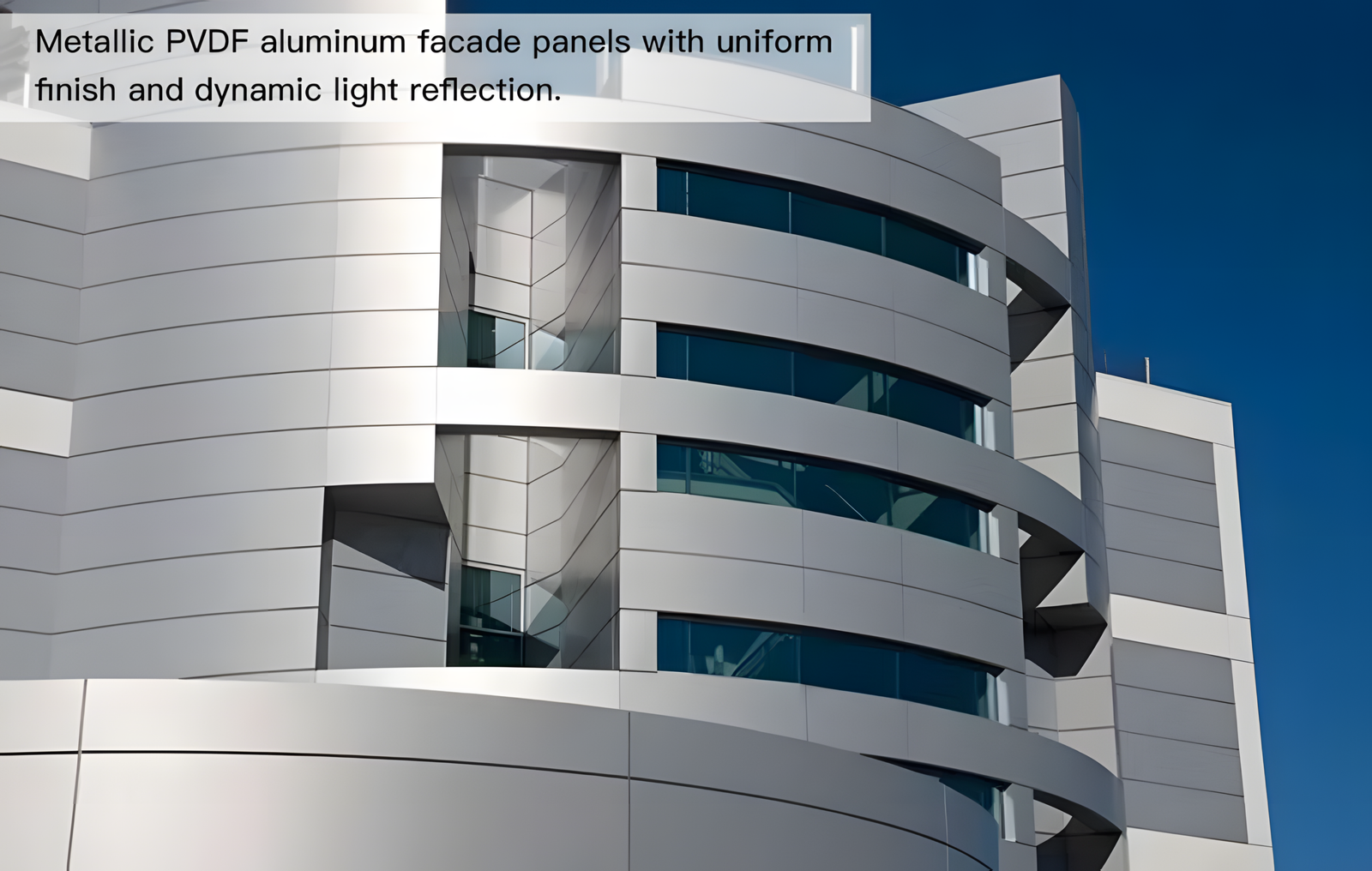
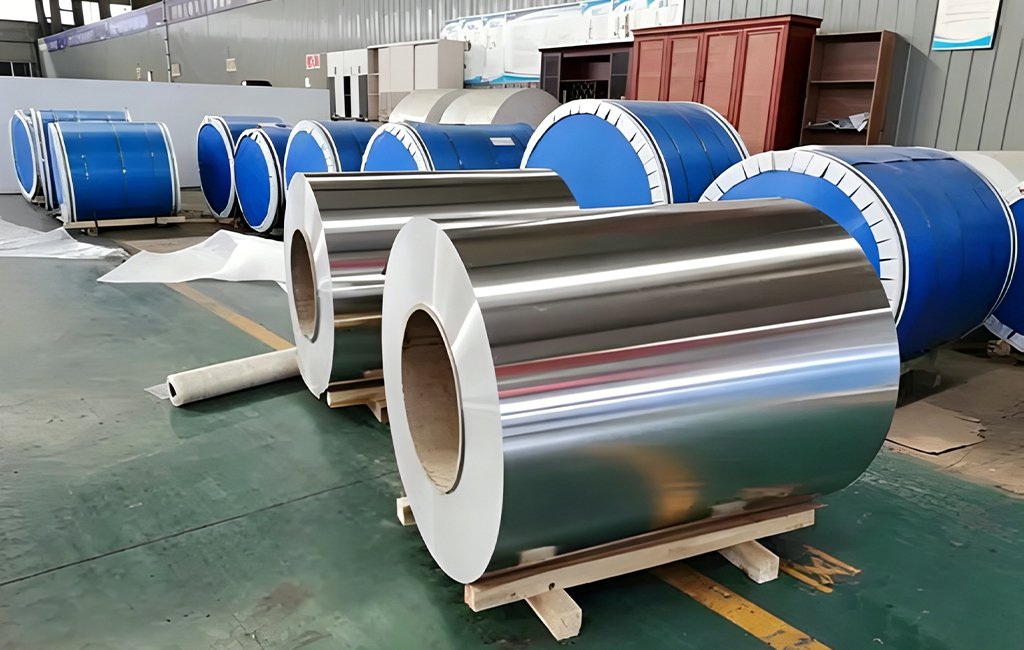
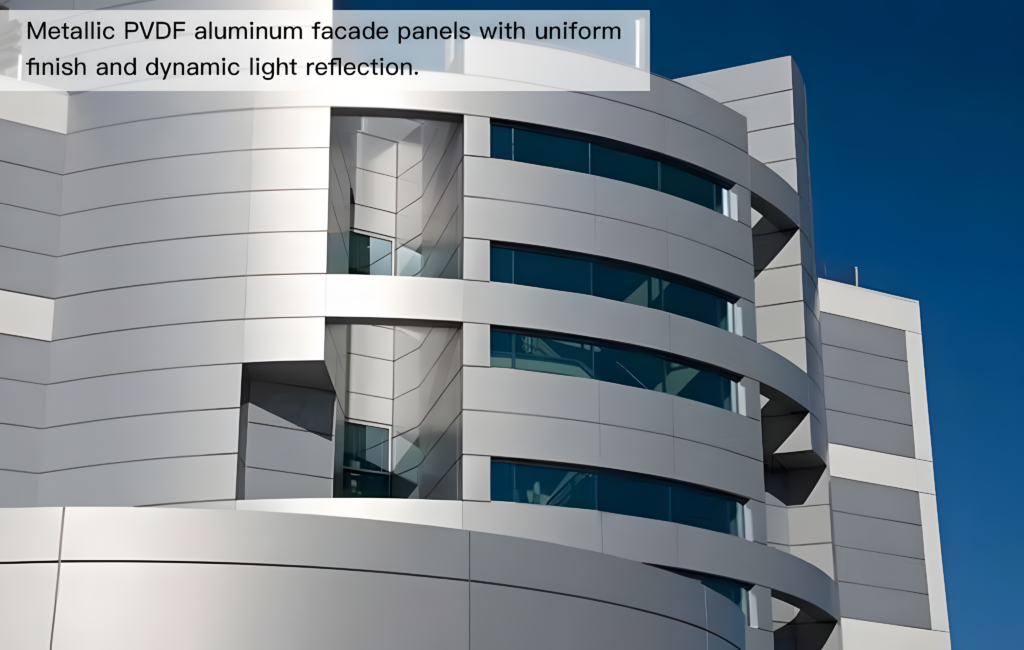
High-end architectural facades specify metallic and pearl-colored aluminum coils primarily due to their dynamic optical properties and long-term structural stability. Unlike solid colors, these finishes incorporate microscopic aluminum flakes or mica-based pearlescent pigments suspended within a high-performance resin matrix, typically Polyvinylidene Fluoride (PVDF). This composition enables multi-angle light reflection, which visually masks structural deflection and thermal expansion distortions on large curtain wall panels. From an engineering standpoint, these coils utilize advanced coil coating (pre-painting) processes that ensure absolute coating uniformity, superior UV resistance compliant with AAMA 2605, and a color retention rate exceeding 95% after 10 years of intense environmental exposure.
Technical Performance Matrix: Facade-Grade Aluminum Coils
The following matrix compares the technical specifications of architectural aluminum coils used in premium curtain wall systems:
| Technical Parameter | Metallic PVDF Coil | Pearl PVDF Coil | Solid Color Powder Coil | Anodized Aluminum Coil |
| Base Aluminum Alloy Grade | 3003-H14 / 5052-H32 | 3003-H14 / 5052-H32 | 1100-H14 / 3003-H14 | 5005-H14 |
| Coating Type | Fluoro-carbon (2-3 Topcoats + Flakes) | Fluoro-carbon (Mica-infused) | Thermoset Polyester/Polyurethane | Aluminum Oxide Layer (Al2O3) |
| Total Coating Thickness (μm) | ≥ 28 μm (3-coat system) | ≥ 28 μm (3-coat system) | 40 – 60 μm | 15 – 25 μm (Oxide film) |
| AAMA Compliance Standard | AAMA 2605-20 | AAMA 2605-20 | AAMA 2604 / 2603 | AAMA 611-20 |
| UV Resistance (QUV 3000 hrs) | ΔE ≤ 5.0 (Color Change) | ΔE ≤ 5.0 (Color Change) | ΔE ≤ 5.0 (at 1000 hrs) | Highly Stable (Inorganic) |
| Salt Spray Resistance (ISO 9227) | ≥ 3000 Hours | ≥ 3000 Hours | ≥ 1500 Hours | ≥ 3000 Hours |
| Specular Gloss Range (at 60°) | 25% – 40% (Medium Gloss) | 15% – 30% (Satin/Matte) | 30% – 80% (Variable) | Dependent on substrate polish |
| Primary Application Scenarios | High-rise corporate facades, luxury hotels | Cultural centers, museums, airports | Industrial parks, residential trims | Coastal zones, high-traffic interiors |
Technical Analysis of Metallic and Pearl Architectural Coils
Optical Dynamics and the Masking of “Oil Canning”
Large-format curtain wall panels are susceptible to a visual phenomenon known as oil canning—a perceived waviness or localized buckling caused by thermal expansion, residual stresses during fabrication, or sub-girt misalignment.
Solid, high-gloss color panels accentuate this waviness due to linear light reflection. In contrast, metallic aluminum coils incorporate microscopic metallic flakes that act as miniature mirrors, scattering incident light in multiple directions.
Pearl aluminum coils utilize iron oxide-coated mica platelets; these platelets create light interference, separating reflected light into its component wavelengths. This multi-directional reflection diffuses visual hot spots, making the facade appear perfectly flat even under direct, harsh sunlight.
Advanced Coating Chemistry: The Role of 70% PVDF Resins
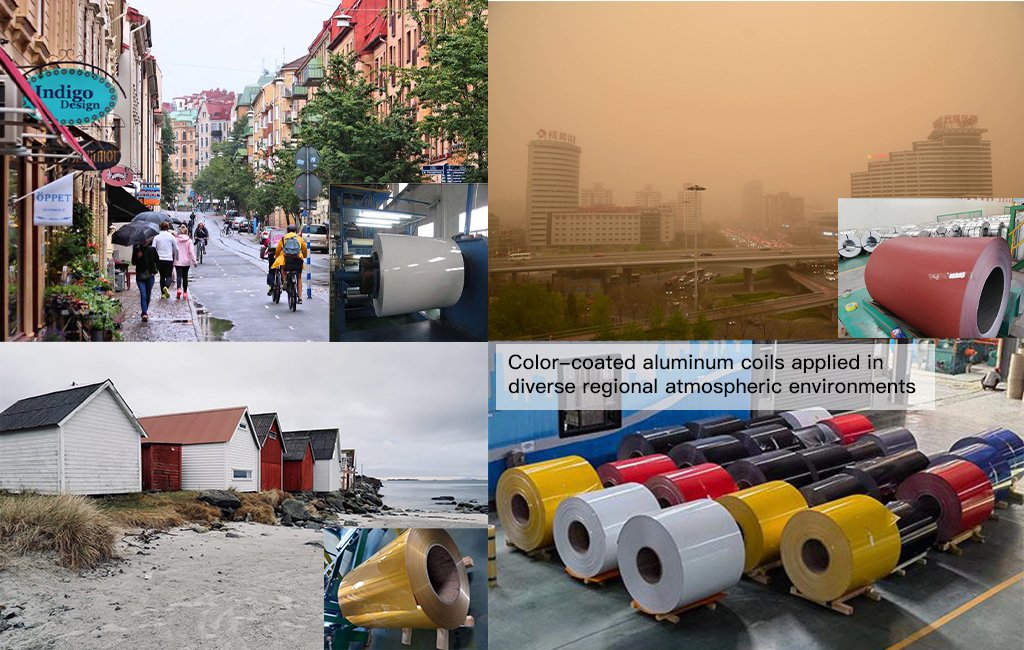
The extreme environments where high-end buildings are constructed require coatings that do not degrade under ultraviolet radiation or atmospheric pollutants. Metallic and pearl finishes specified for these projects are formulated using 70% Polyvinylidene Fluoride (PVDF) resins (such as Kynar 500 or Hylar 5000).
The carbon-fluorine (C-F) bond within the PVDF molecular structure exhibits an exceptionally high bond energy of approximately 485 kJ/mol, which resists breakdown from UV rays. This chemistry protects the embedded aluminum or mica pigments from moisture ingress and atmospheric sulfur dioxide (SO2), preventing graying, chalking, or delamination.
Factory Pre-Coating vs. Field Spraying
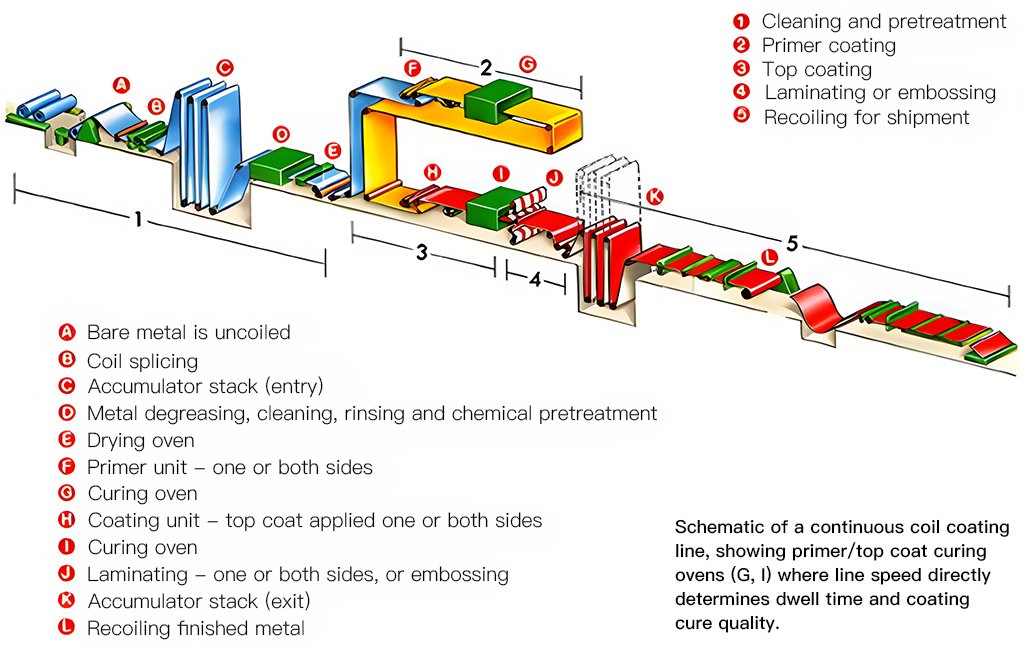
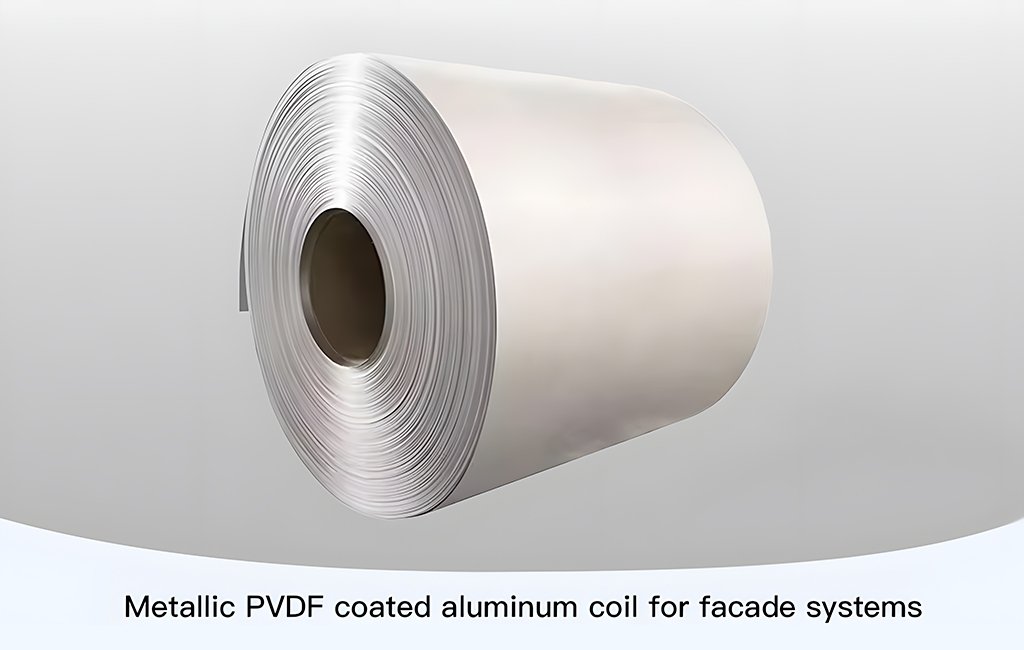
High-end projects specify pre-painted aluminum coils over post-fabricated powder spraying or field painting due to process control. Continuous coil coating applies the chemical pre-treatment, primer, basecoat, and clear coat under precise automated tension and temperature controls.
This ensures that the metallic flake orientation remains parallel to the aluminum substrate throughout the entire production run. This level of microscopic uniformity cannot be replicated via manual spray guns, which are prone to variations in film thickness, orange-peel defects, and inconsistent flake distribution.
Structural Performance and Weight Mitigation
Compared to solid stone, terracotta, or thick composite plates, aluminum curtain walls fabricated from 3003 or 5052 alloy coils significantly lower the dead load of the building’s structural framework.
- Yield Strength: 5052-H32 aluminum provides a yield strength of ≥ 130 MPa, allowing for thinner panels (typically 2.0mm to 3.0mm solid aluminum sheets) while maintaining high wind-load resistance.
- Fabrication Flexibility: The high ductility of these alloy coils permits precise CNC routing, bending, and punching without micro-cracking the metallic PVDF surface film, ensuring sharp architectural lines and intricate geometric patterns remain structurally sound.